
HIFU vs RF Skin Tightening in Mysore: Which Treatment May Suit You?
- Home
- Blog
- About Us
If you have started noticing loose skin around your cheeks, jawline or neck, you may be considering a non-surgical skin-tightening treatment. HIFU and radiofrequency (RF) are two options worth understanding before making a decision.
Although both use energy to heat tissue, they work differently. HIFU uses focused ultrasound, while RF uses electrical energy to generate heat. The treatment that may suit you depends on the area you want to address, the condition of your skin and the specific device being used.
This guide explains the differences between HIFU and RF skin tightening, what results you might reasonably expect, and which questions to ask before choosing a provider in Mysore.
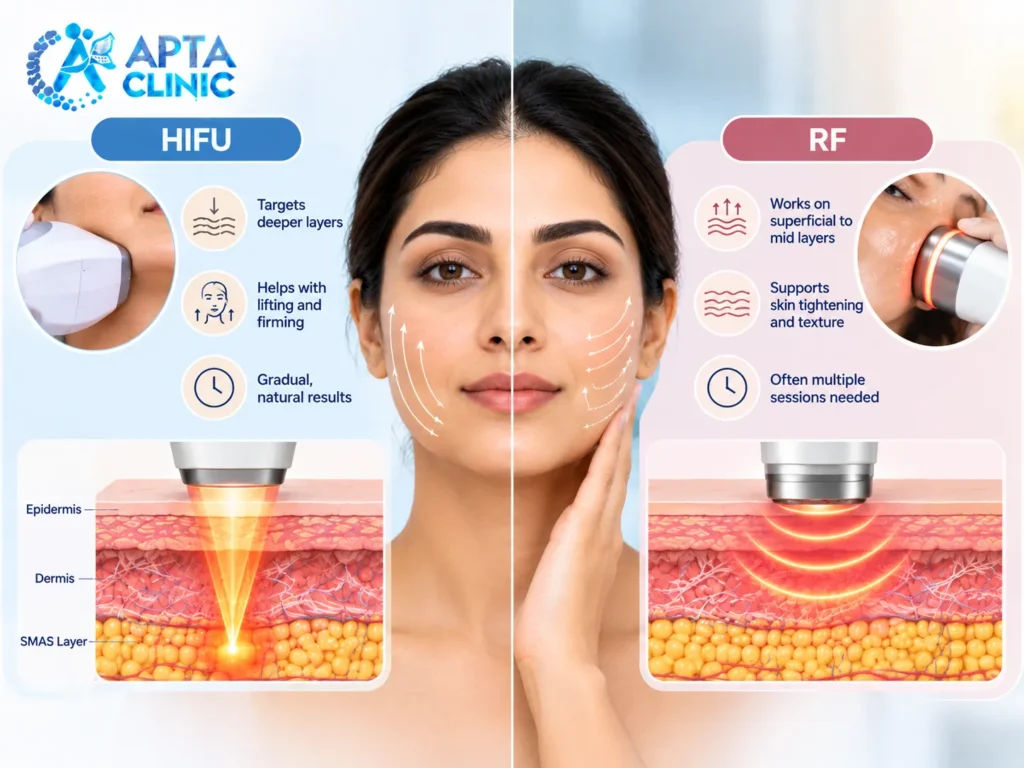
What Is the Difference Between HIFU and RF Skin Tightening?
HIFU stands for High-Intensity Focused Ultrasound. It directs focused ultrasound energy towards selected depths beneath the skin. The resulting thermal effect is intended to stimulate tissue changes, including collagen remodelling.
Radiofrequency skin tightening uses electrical energy to produce heat in tissue. The way that energy reaches the treatment area depends on the device. Some RF systems work through an applicator placed on the skin, while RF microneedling delivers energy through small needles that penetrate the skin.
Both approaches are used for selected aesthetic concerns, but they are not interchangeable. A particular HIFU device may work differently from another HIFU system, just as conventional RF differs from RF microneedling.
The comparison should therefore focus on the actual procedure being offered, not only on the treatment name.
How Does HIFU Skin Tightening Work?
HIFU delivers focused ultrasound energy to selected tissue depths. This creates controlled thermal effects intended to encourage collagen remodelling and improve the appearance of skin firmness over time.
A provider may consider HIFU for certain cases of mild skin laxity or reduced facial definition. It is not suitable for every concern, and it cannot guarantee a particular degree of lifting or a specific facial shape.
Several factors influence whether HIFU is worth considering:
- Treatment area: The face, jawline and neck may require different approaches.
- Degree of skin laxity: Mild looseness and significant sagging are different concerns.
- Facial anatomy: Skin, fat distribution and underlying structures all affect appearance.
- Device and technique: Treatment depth and settings depend on the system used.
- Medical history: Previous procedures and relevant health factors may affect suitability.
A consultation should establish whether HIFU is appropriate for your concern and explain what it is unlikely to change.
How Does RF Skin Tightening Work?
RF skin tightening uses radiofrequency energy to generate heat within tissue. The method of delivery varies by device.
With conventional non-invasive RF, an applicator is placed against the skin. RF microneedling is different because small needles enter the skin and deliver energy at selected depths. These procedures have different recovery requirements and safety considerations.
Depending on the device and treatment plan, RF may be considered for selected concerns involving skin firmness, fine lines or texture. The expected improvement, number of sessions and recovery period vary.
Before agreeing to treatment, ask the provider to explain:
- The exact device being used.
- Whether the procedure is non-invasive RF or RF microneedling.
- The concern the treatment is intended to address.
- The likely benefits and limitations.
- The possible side effects and aftercare requirements.
Knowing which procedure is being proposed helps you compare options accurately.
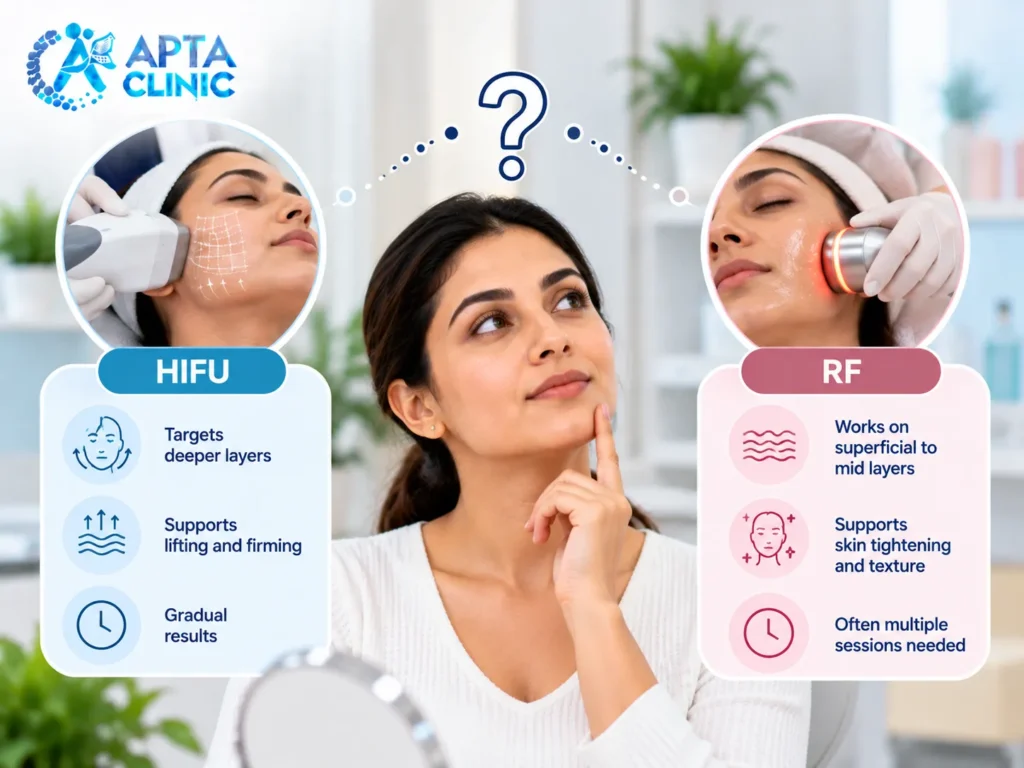
HIFU vs RF: Key Differences
Comparison | HIFU | Radiofrequency (RF) |
Energy source | Focused ultrasound | Radiofrequency electrical energy |
How it works | Focuses energy at selected tissue depths to create thermal effects | Generates heat within tissue |
Treatment method | Depends on the device and treatment protocol | May use a surface applicator or microneedles |
Potential treatment goal | Selected concerns involving skin laxity and firmness | Selected concerns involving firmness, fine lines or texture |
Number of sessions | Depends on the device, area and individual plan | Depends on the device, technique and individual plan |
Recovery | Often limited, although temporary effects can occur | Varies; microneedling may involve more visible recovery |
Suitability | Requires an assessment of the skin concern, anatomy and medical history | Requires an assessment of the concern, device, technique and medical history |
Cost | Depends on the treatment plan and clinic quotation | Depends on the treatment plan and clinic quotation |
This table provides a general comparison. It does not mean that every HIFU device or RF system produces the same effects. Ask the provider to explain the specific procedure being recommended.
Which Treatment May Suit Your Skin Concerns?
The choice depends on what you want to improve. A consultation can help determine whether the concern is related to skin laxity, facial fat distribution, texture or another factor.
If You Have Mildly Sagging Skin
HIFU or an appropriate RF procedure may be considered in selected cases. The decision depends on the area involved, the degree of looseness and the device’s intended use.
Neither treatment should be expected to produce the same effect as surgery when skin laxity is significant. If a provider recommends a procedure, ask what degree of improvement is realistic for your skin.
If You Are Concerned About Fine Lines or Skin Texture
Some RF procedures are used for selected concerns involving fine lines and texture. RF microneedling is a separate procedure from conventional non-invasive RF, with its own potential benefits and risks.
HIFU is generally discussed in relation to focused energy at selected tissue depths and concerns involving firmness. It may not be the best fit for every surface-level skin concern.
Ask the provider which specific problem the proposed treatment is intended to address and what limitations you should understand before proceeding.
If You Want a More Defined Jawline
A less-defined jawline does not always result from loose skin. Fat distribution and natural facial structure can also affect the shape of the lower face.
Skin-tightening treatment may help in selected cases where laxity contributes to the appearance. It should not be presented as a guaranteed way to remove fat or reshape the jawline.
During your consultation, explain what you would like to change. The provider should assess whether the treatment being discussed matches that goal.
If You Prefer Minimal Downtime
Recovery depends on the device and procedure. Some non-invasive treatments involve limited downtime, while procedures that penetrate the skin may have different recovery needs.
Before booking, ask how the treatment could affect your work, exercise, travel and skincare routine. Find out which temporary effects are common and what symptoms would require medical advice.
Do not assume that a procedure is risk-free simply because it is described as non-surgical.
How Long Do Results Take, and How Many Sessions Are Needed?
There is no single timeline or session count that applies to every HIFU or RF treatment. The plan depends on the device, the area being treated, the technique and how your skin responds.
Changes may develop gradually as tissue responds to treatment. Some people may notice a modest improvement, while others may see little change. The degree and duration of the result cannot be guaranteed.
Before starting, ask your provider:
- What improvement is realistic for my particular concern?
- When might I notice a change?
- How will the result be assessed?
- Is one session being considered, or might I need more?
- What temporary effects and recovery time should I expect?
- What would the total cost be if additional sessions were recommended?
A clear treatment plan should explain both the expected benefits and the limitations. Be cautious of promises of dramatic, immediate or permanent results.
What Are the Risks and Limitations of HIFU and RF?
Both treatments can cause temporary effects. Depending on the device, settings, technique and treatment area, these may include discomfort, redness, swelling or tenderness. More serious complications are possible, which is why appropriate training and careful device use matter.
A Specific Safety Consideration for RF Microneedling
On 15 October 2025, the U.S. Food and Drug Administration (FDA) issued a safety communication about serious complications reported with certain uses of RF microneedling devices. These included burns, scarring, fat loss, disfigurement and nerve damage. The FDA also noted that some injuries required medical intervention or surgical repair. Read the FDA safety communication.
This warning specifically concerns RF microneedling. It should not be interpreted as evidence that every conventional RF treatment carries the same risk profile.
Before treatment, take these precautions:
- Ask for the name of the device and the exact procedure being offered.
- Check the provider’s relevant qualifications and training.
- Discuss your medical history, medicines, implanted devices and previous aesthetic procedures.
- Ask about precautions, contraindications and alternatives.
- Request clear aftercare instructions and information about whom to contact if a complication occurs.
If you experience severe or worsening pain, blistering, unexpected skin changes, weakness or another concerning symptom after a procedure, seek prompt medical assessment.
What Affects the Cost of HIFU or RF Treatment in Mysore?
The cost depends on the actual treatment being offered. Two quotations may not cover the same procedure, treatment area or number of sessions.
Factors that can affect the price include:
- Area being treated: The size and location of the area can affect the treatment plan.
- Device and protocol: Different systems may use different treatment methods and settings.
- Treatment amount: The number of lines, shots or passes may matter where relevant.
- Type of RF procedure: Conventional RF and RF microneedling are different treatments.
- Number of sessions: A quotation may cover one session or a wider treatment plan.
- Consultation and follow-up: Ask whether assessment, aftercare and follow-up visits are included.
When comparing clinics, ask for a written quotation that explains exactly what is included. Check whether there are separate consultation charges and whether additional sessions might be recommended.
APTA Clinic’s published HIFU service information does not provide a verified fixed price. Contact the clinic for its current consultation process and HIFU quotation. Do not assume that RF treatment is available there without confirming it directly.
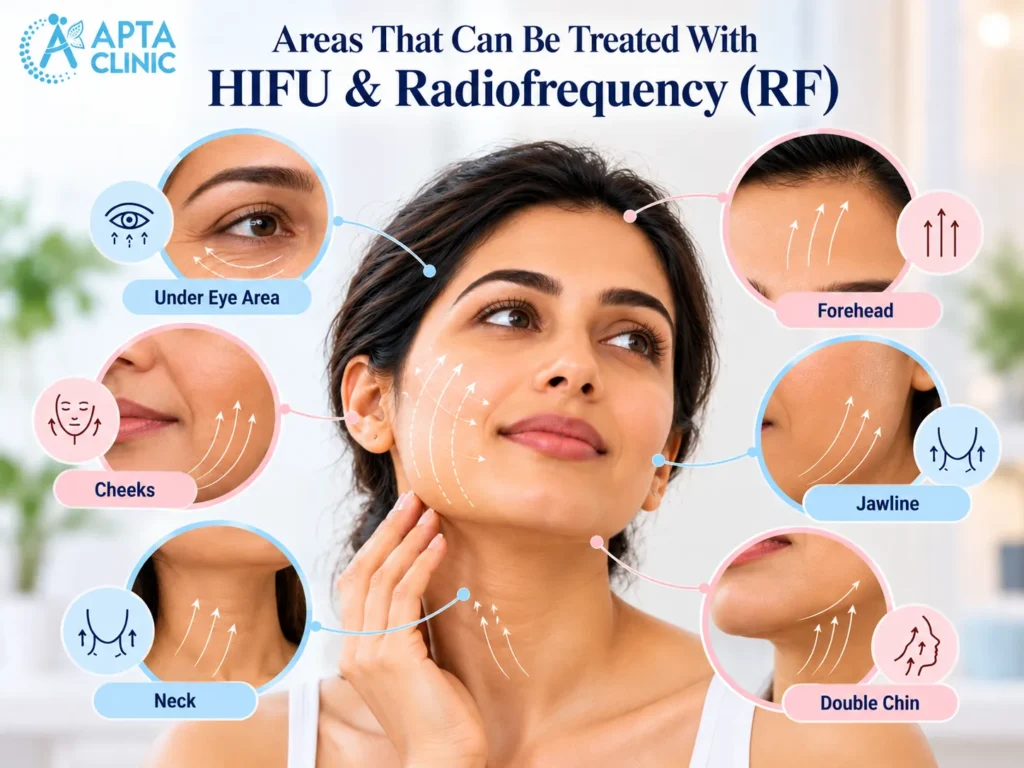
How to Choose a Skin-Tightening Provider in Mysore
The device is only one part of the decision. The quality of the assessment, the provider’s experience with that particular procedure and the way risks are explained also matter.
Use these questions when comparing providers:
- Assessment: Will the provider examine your skin concern and review your medical history before recommending treatment?
- Device: Will you be told the device name, treatment method and intended use?
- Qualifications: Can the clinic explain who will assess you and perform the procedure, including relevant training?
- Realistic expectations: Will the provider discuss likely results, limitations and alternatives without guaranteeing an outcome?
- Safety and aftercare: Will you receive information about possible side effects, precautions and follow-up?
- Total cost: Is the quotation clear about what is included and whether further sessions may cost extra?
- Support after treatment: Do you know whom to contact if you have a concern after the procedure?
Avoid choosing a treatment solely because it is cheaper or described as more advanced. The more useful question is whether the procedure is suitable for your skin and your goals.
Exploring HIFU Treatment at APTA Clinic in Mysore
APTA Clinic publishes information about HIFU treatment in Mysore for selected concerns involving skin firmness and facial contours. If you are considering this procedure, review the clinic’s service information and contact the team to ask about consultation availability, suitability and current pricing.
Contact APTA Clinic
- Phone: +91 7411 707 555
- Email: aptaclinics@gmail.com
- Location listed in the supplied clinic information: Krishnamurthy Puram, Mysore
Confirm the current contact details, address and appointment availability directly with the clinic before visiting. The published information referenced for this article does not confirm whether RF treatment is available at APTA Clinic.
HIFU or RF: What Should You Choose?
HIFU and RF use different forms of energy, and neither is automatically the better choice. Your skin concern, the treatment area, the specific device, your medical history and your expectations all affect the decision.
Before committing to a procedure, ask for an assessment and a clear explanation of the expected benefits, limitations, risks and total cost. If you are researching HIFU treatment in Mysore, APTA Clinic’s published HIFU service page is a starting point for learning about its offering.
Frequently Asked Questions (FAQs)
HIFU uses focused ultrasound energy to create thermal effects at selected tissue depths. Radiofrequency uses electrical energy to heat tissue. Both may be considered for selected skin-tightening concerns, but their effects depend on the device, treatment method and individual assessment.
Neither is universally better. HIFU may be considered for selected concerns involving skin laxity and firmness, while certain RF procedures may be used for concerns such as fine lines or skin texture. The appropriate option depends on your skin concern, medical history and the specific treatment being offered.
Either may be considered in selected cases where skin laxity contributes to reduced jawline definition. However, fat distribution and natural facial structure can also affect the jawline. A clinical assessment can help determine whether skin tightening is likely to help.
The number of sessions varies with the device, treatment area, protocol and individual response. Some plans involve one session, while others may include additional sessions. Ask the provider to explain the proposed schedule and total expected cost.
Recovery depends on the procedure and device. Some non-invasive treatments involve limited downtime, although temporary redness, swelling, tenderness or discomfort may occur. RF microneedling can have different recovery needs from conventional RF. Follow the aftercare instructions provided by your clinician.
Both procedures have potential risks. Safety depends on the device, technique, settings and provider. The FDA has reported serious complications associated with certain uses of RF microneedling, including burns, scarring and nerve damage. Discuss the risks, precautions and alternatives with a qualified healthcare provider before treatment.
The cost depends on the treatment area, device, procedure, number of sessions and what the quotation includes. APTA Clinic’s published HIFU page does not provide a verified fixed price, and its RF treatment availability has not been confirmed in the supplied information. Contact the clinic for current HIFU details and pricing.
APTA Clinic publishes a dedicated HIFU treatment page. The information reviewed for this article does not confirm whether the clinic offers RF treatment. Contact the clinic on +91 7411 707 555 to ask about its current services and consultation options.