
How Long Do HIFU Results Last? What to Know Before Treatment in Mysore
- Home
- Blog
- About Us
If you are considering HIFU for loose skin or reduced facial definition, one question is likely to come up before you book: how long will the results last?
There is no fixed answer. Some people notice an improvement in skin firmness over the weeks and months following treatment, while others see a more modest change. How long the effect remains visible depends on the device used, the area treated, the degree of skin laxity and the individual’s response.
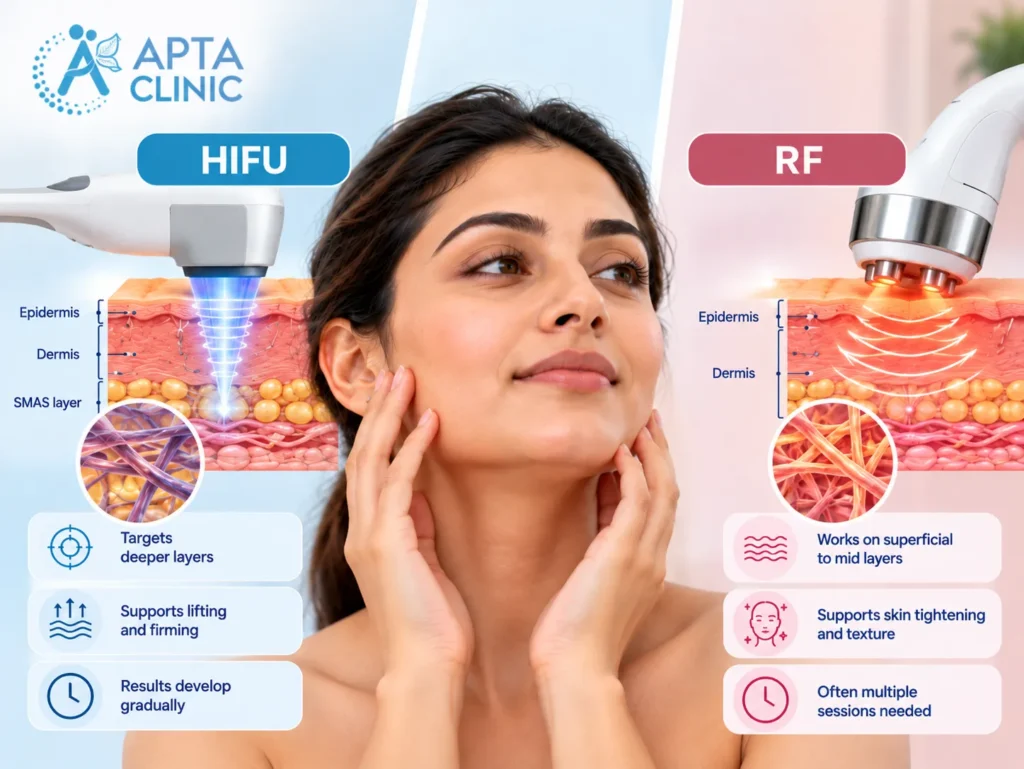
High-Intensity Focused Ultrasound (HIFU) uses focused ultrasound energy to create controlled thermal effects in targeted tissue. In aesthetic treatments, this process is intended to encourage collagen remodelling and improve the appearance of skin firmness. The outcome develops over time and is not the same for everyone.
If you are researching HIFU treatment in Mysore, understanding the expected timeline, the available evidence and the treatment’s limitations can help you make a more informed decision.
How Long Do HIFU Results Last?
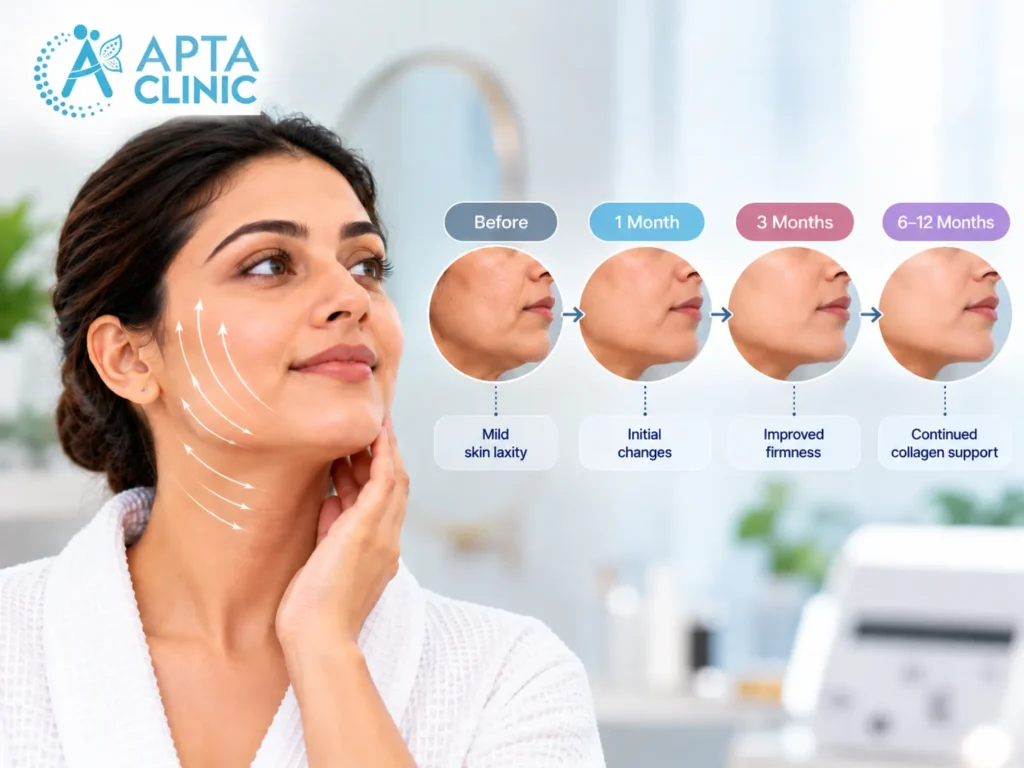
HIFU results may remain visible for several months. A systematic review of microfocused ultrasound studies reported improvements in facial skin tightening and wrinkle reduction that continued for up to one year in some study participants. However, the findings relate to the particular devices, treatment protocols and patients included in those studies. They do not guarantee that every HIFU treatment will produce the same result or duration. Read the systematic review.
The review included 16 studies, all involving female participants. It also noted that longer-term follow-up evidence was limited and that the studies differed in their treatment methods and outcome measurements. This matters when interpreting claims about how long a result will last. Source: systematic review in the International Journal of Environmental Research and Public Health.
Your own result may be influenced by:
- The degree of skin laxity before treatment.
- Whether the face, jawline, chin or neck is being treated.
- The device, settings and treatment protocol.
- Your skin condition and individual response.
- Natural ageing after the procedure.
The practical takeaway: ask what the evidence suggests for the specific device and treatment area being considered. A general claim that HIFU results always last a particular number of months is not a reliable basis for choosing treatment.
When Do HIFU Results Start to Show?
HIFU results generally develop gradually rather than appearing as a finished result immediately after treatment.
Immediately after treatment
Some people notice an early difference in how firm their skin feels or looks. This initial impression does not necessarily reflect the final outcome. Temporary redness, tenderness or swelling may also affect the appearance of the treated area.
Over the following weeks and months
HIFU is intended to create controlled thermal effects that support collagen remodelling. These changes take time, so the result is usually assessed over a longer period rather than immediately after the appointment.
The timeline varies with the device, treatment area, protocol and individual response. Ask your provider when the result should be reviewed and how any improvement will be assessed.
Why patience matters
Assessing the result too early can make it difficult to judge the overall effect. However, it is equally important not to assume that a lack of visible change will automatically lead to improvement later.
If you are concerned about your result, arrange a review with the treating provider before considering further treatment.
What Factors Affect How Long HIFU Results Last?
- Age and existing skin condition
Skin changes naturally with age, including changes in collagen and elasticity. The degree of skin laxity before treatment can influence how much visible improvement is possible.
HIFU may be considered for selected cases of mild to moderate skin laxity. More pronounced sagging may respond less noticeably to a non-surgical approach. A consultation can help determine whether your expectations are realistic.
- The area being treated
The face, jawline, chin and neck have different anatomical features and may require different treatment approaches. The amount of skin laxity and the underlying facial structure also influence the outcome.
A result achieved in one area does not necessarily predict what will happen in another. Ask the provider what improvement is realistic for the specific area you want to address.
- The device and treatment protocol
HIFU is a broad category of technology. Devices can differ in their energy settings, focal depths and treatment protocols. Findings from one system should not automatically be applied to another.
Before treatment, ask which device will be used, whether it is intended for your treatment area and what evidence supports the proposed use. The provider should also explain the risks and limitations associated with that system.
- Individual response
People do not respond to aesthetic procedures in exactly the same way. Skin condition, anatomy, medical history and other individual factors can influence the visible outcome.
A responsible provider should avoid guaranteeing a particular degree of lifting or a specific duration. An assessment of your own skin and treatment goals is more useful than relying on another person’s experience or before-and-after photographs.
- Lifestyle and ongoing skincare
Sun exposure and natural ageing continue after HIFU. Protecting your skin from excessive sun exposure and following a suitable skincare routine can support general skin health, but neither can guarantee that your HIFU result will last longer.
Follow the aftercare instructions provided for your treatment. Be cautious of claims that a particular cream, supplement or skincare product can preserve the result indefinitely.
Are HIFU Results Permanent?
No. HIFU should not be described as a permanent solution to skin ageing or sagging.
The treatment may improve the appearance of skin firmness in suitable patients, but natural ageing continues. Changes in skin elasticity and facial structure can gradually affect the appearance of the treated area.
It is also important to distinguish between an improvement in appearance and a permanent change. HIFU is a non-surgical treatment, and its results should not be equated with those of a surgical facelift.
If you are expecting a dramatic or permanent lift, discuss that goal during your consultation. The provider should explain whether HIFU is likely to meet your expectations or whether another option may be more appropriate.
How Often Should HIFU Treatment Be Repeated?
There is no single repeat-treatment schedule that is appropriate for everyone. The timing of further treatment depends on your original treatment plan, the device used, your response and whether another session is clinically appropriate.
Do not book repeat sessions solely because a fixed period has passed or because a clinic advertises an annual maintenance package. Have the initial result assessed before deciding whether another session is worthwhile.
Before agreeing to repeat treatment, ask:
- Has the result of the original treatment been fully assessed?
- Is further improvement realistically expected?
- Why is another session being recommended?
- What risks could be associated with repeat treatment?
- What would the additional treatment cost?
- Would waiting or considering another option be reasonable?
Repeat treatment is not automatically necessary, and having more sessions does not guarantee a better result.
What Can You Do After HIFU to Support Skin Health?
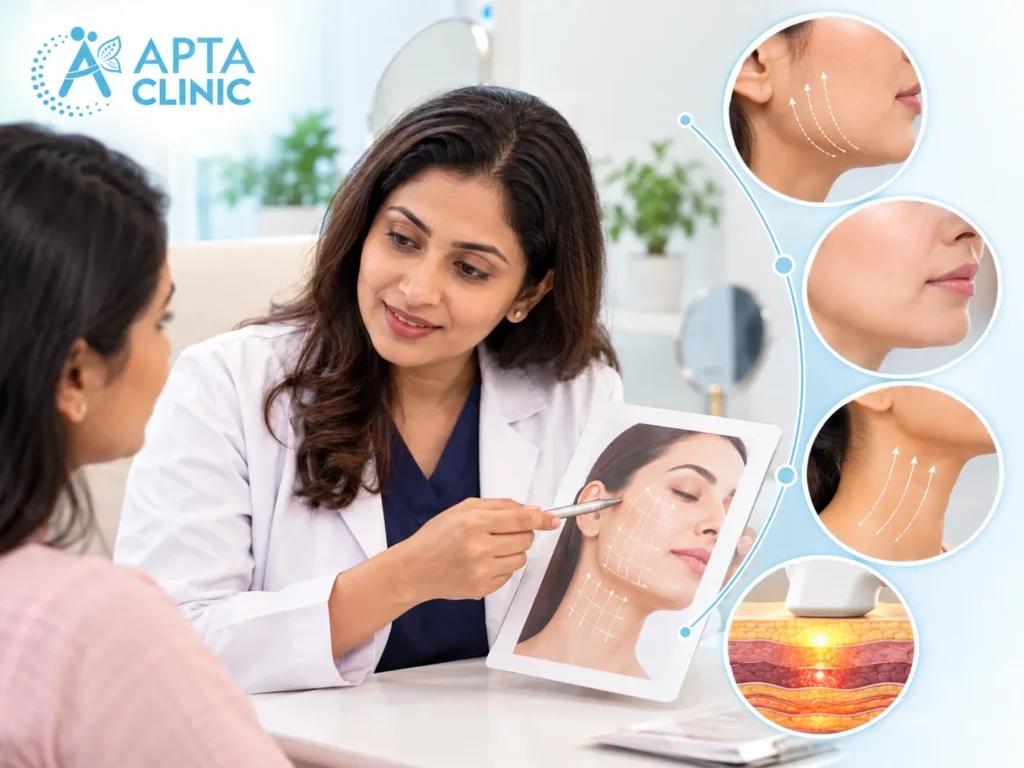
Aftercare instructions vary according to the device and treatment performed. Follow the guidance provided by your treating clinic rather than relying on a generic online routine.
General measures that may support skin health include:
- Using sun protection suited to your skin and daily activities.
- Following a gentle skincare routine recommended by your provider.
- Avoiding unapproved products or procedures on recently treated skin.
- Attending follow-up appointments when advised.
- Contacting the clinic if unexpected or worsening symptoms develop.
These measures support general skin health and appropriate recovery. They cannot guarantee a longer-lasting HIFU result.
What Are the Limitations and Risks of HIFU?
HIFU is a medical aesthetic procedure even though it is non-surgical. Possible effects include discomfort, redness, swelling, tenderness, bruising or temporary changes in sensation. More serious complications, including burns or nerve-related injury, can occur.
The risks depend on the device, treatment area, settings and technique. The U.S. Food and Drug Administration identifies potential thermal and mechanical tissue injuries associated with focused ultrasound systems for aesthetic use and emphasises the importance of appropriate device controls and safety information. Read the FDA guidance.
Before treatment, tell the provider about your medical history, implanted devices, skin conditions in the proposed treatment area and previous aesthetic procedures. Ask which precautions apply to the specific device being used.
Seek prompt medical assessment if you experience severe or worsening pain, blistering, significant skin changes, new weakness or other concerning symptoms after treatment.
Discussing HIFU Results at APTA Clinic in Mysore
APTA Clinic publishes information about HIFU treatment in Mysore for selected concerns involving skin firmness and facial contours. If you are considering treatment, use your consultation to discuss your expectations and understand what may be realistic for your skin.
Useful questions to ask include:
- Is HIFU suitable for my particular concern?
- What result is realistic for my skin condition?
- When should I assess the outcome?
- What risks and limitations apply to the device being used?
- Under what circumstances might repeat treatment be considered?
- What is the current treatment cost?
Contact APTA Clinic
- Phone: +91 7411 707 555
- Email: aptaclinics@gmail.com
- Location listed in the supplied clinic information: Krishnamurthy Puram, Mysore
- Service: HIFU treatment in Mysore
Set Realistic Expectations for HIFU Results
HIFU results develop over time, and their duration varies from person to person. Research on certain microfocused ultrasound treatments suggests that improvements may remain visible for months and, in some studies, up to one year. That evidence does not establish a guaranteed result or timeline for every device or patient.
The most useful next step is to understand the treatment being proposed, discuss its likely benefits and limitations, and agree on an appropriate follow-up plan with a qualified provider.
If you are considering HIFU in Mysore, APTA Clinic’s published service information is a starting point for learning about its treatment offering and making an enquiry.
Frequently Asked Questions (FAQs)
HIFU results may remain visible for several months. Studies of certain microfocused ultrasound treatments have reported improvements lasting up to one year, but duration varies by device, treatment protocol, skin condition and individual response. No fixed duration can be guaranteed.
Some people notice an early change, but results generally develop gradually over the following weeks and months. The timeline depends on the treatment protocol and individual response. Ask your provider when your result should be reviewed.
No. HIFU is not a permanent solution to skin ageing. It may improve the appearance of skin firmness in suitable patients, but natural ageing continues and the visible effect can change over time.
There is no single repeat-treatment schedule for everyone. A provider should assess your initial result, skin condition and treatment history before recommending another session. Annual maintenance or repeated treatment is not automatically necessary.
Factors include the degree of skin laxity, treatment area, device and protocol, individual response and ongoing ageing. Lifestyle and skincare can support general skin health, but no aftercare routine can guarantee a particular duration.
Yes. The visible improvement may gradually change as the skin continues to age. The amount and timing of change vary. If you are concerned that your result is fading, discuss it with the treating provider before considering another session.
HIFU can cause discomfort, redness, swelling, tenderness or temporary changes in sensation. More serious complications, including burns or nerve-related injury, are possible. Risks depend on the device, settings, treatment area and technique, so discuss precautions with a qualified provider.
APTA Clinic publishes a dedicated HIFU treatment page for Mysore. You can call +91 7411 707 555 or email aptaclinics@gmail.com to ask about consultation availability, treatment suitability and current pricing. Confirm the clinic’s current address before visiting.