
What Is Plastic Surgery? Types, Benefits, Risks and Recovery Explained?
- Home
- Blog
- About Us
Plastic surgery is a medical specialty that focuses on changing, restoring or reconstructing parts of the body. Some procedures address appearance, while others help repair damage caused by injuries, burns, congenital conditions or previous surgery.
If you are considering plastic surgery in Mysore, understanding the available procedures and what they involve can help you prepare for a useful discussion with a qualified surgeon. The right approach depends on your health, the concern being treated and what the procedure can realistically achieve.
What Is Plastic Surgery?
Plastic surgery includes cosmetic and reconstructive procedures. Although the two overlap, their main purposes can differ.
Cosmetic surgery generally aims to change or improve a person’s appearance. Reconstructive surgery focuses on restoring form or function affected by an injury, congenital condition, disease or other physical change.
Plastic surgery may involve the face, breasts, abdomen, arms, hands or other parts of the body. Some procedures require major surgery and anaesthesia; others may be less extensive. The appropriate approach depends on the clinical assessment and the patient’s needs.
What Are the Main Types of Plastic Surgery?
Plastic surgery covers a range of procedures. Not every procedure is suitable for every person, and availability varies by provider.
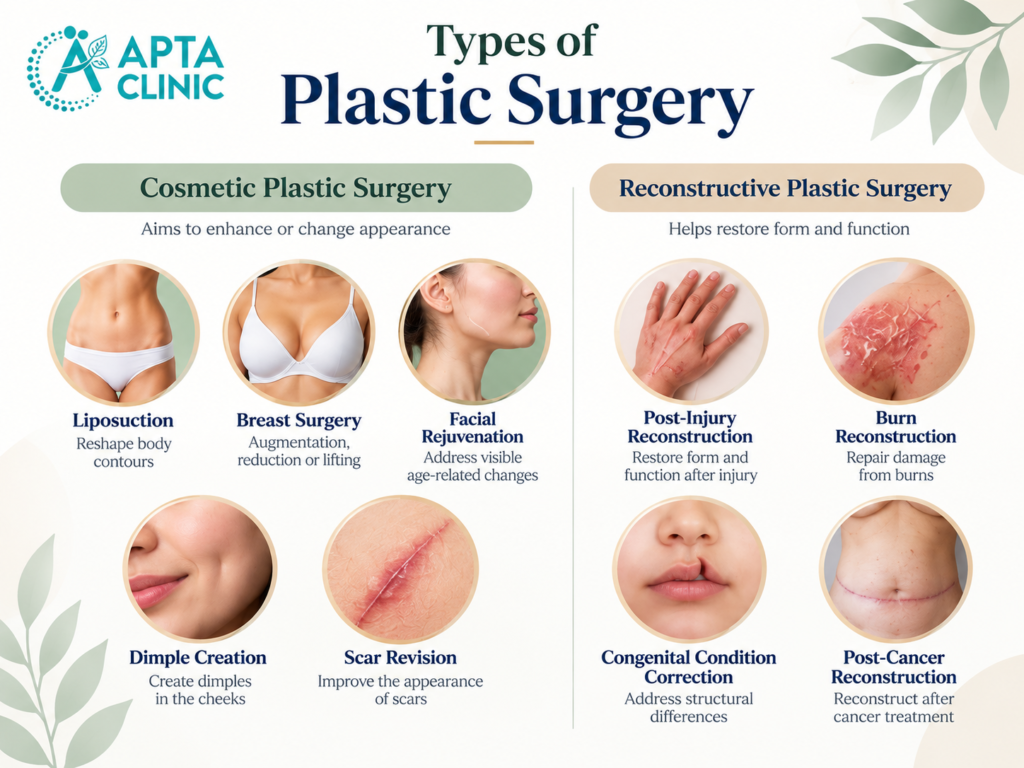
- Cosmetic Plastic Surgery
Cosmetic procedures aim to change a feature or body contour. Examples include:
- Liposuction: Removes localised fat deposits to alter body contours. It is not a substitute for weight-loss treatment.
- Body contouring: Addresses excess skin or changes in body shape, including those that may follow substantial weight loss.
- Breast surgery: May involve breast augmentation, reduction, lifting or reconstruction, depending on the clinical purpose.
- Facial rejuvenation: Includes procedures intended to address visible age-related changes. The options may be surgical or non-surgical.
- Dimple creation: A procedure intended to create dimples in the cheeks.
- Scar revision: Aims to change the appearance or, in some cases, function of a scar.
The likely outcome, incision placement, possible scarring and recovery requirements differ from one procedure to another.
2. Reconstructive Plastic Surgery
Reconstructive surgery aims to restore or improve body structures affected by injury, burns, congenital differences or other conditions.
Depending on the clinical situation, it may involve:
- Repairing selected injuries or tissue defects
- Treating certain burn-related problems
- Revising scars that affect appearance or movement
- Reconstructing affected areas after surgery
- Addressing some congenital differences
The aim is determined by the individual case. A reconstructive procedure may improve function, appearance or both.
3. Facial Plastic Surgery
Facial procedures may address concerns involving facial structure, symmetry, injury or function. Some fall within plastic surgery, while others may be managed by specialists in related fields, such as oral and maxillofacial surgery.
A clinical assessment helps determine which specialist and treatment approach are appropriate.
What Is the Difference Between Cosmetic and Reconstructive Surgery?
The main difference is the reason for the procedure.
Cosmetic surgery is generally chosen to change appearance. Reconstructive surgery is intended to address a structural or functional concern caused by an injury, congenital condition, disease or previous treatment.
For example, liposuction may be considered to change body contours, while reconstructive surgery may be considered to repair tissue damaged by an injury.
Some procedures overlap. Breast surgery, scar revision and facial surgery can have cosmetic and reconstructive purposes. The name of the procedure alone does not determine its purpose; the patient’s condition and treatment goals matter.
What Are the Potential Benefits of Plastic Surgery?
The benefits depend on the procedure and the reason for treatment.
For some patients, surgery may change a feature they have long been concerned about. In reconstructive cases, it may help restore tissue, improve movement or address a problem following an injury or previous operation.
Before proceeding, discuss the specific outcome you hope to achieve with your surgeon. Ask which changes are realistic, what limitations may remain and whether a non-surgical or non-operative approach is worth considering.
Plastic surgery cannot guarantee a particular appearance, improve every aspect of quality of life or remove every physical concern. A careful discussion of expected benefits and limitations helps you make an informed decision.
What Are the Risks of Plastic Surgery?
Plastic surgery is still surgery, even when the main goal is cosmetic. Risks vary with the procedure, the type of anaesthesia, the patient’s health and the setting in which treatment takes place.
Possible risks include:
- Bleeding or infection
- Reactions to anaesthesia
- Blood clots in some procedures
- Wound-healing problems
- Scarring or changes in sensation
- Asymmetry or an outcome that differs from expectations
- The possible need for additional treatment or revision surgery
This list is not exhaustive. Your surgeon should explain the risks specific to the proposed procedure and your medical history.
Before making a decision, ask who will perform the surgery, where it will take place, what anaesthesia is planned and how complications would be managed. Confirm the surgeon’s recognised qualifications and relevant surgical training.
The Association of Plastic Surgeons of India provides patient-safety guidance and questions to ask before undergoing plastic surgery.
How Should You Prepare for Plastic Surgery?
Preparation starts with a consultation. The surgeon needs to understand your health history and treatment goals before deciding whether a procedure is appropriate.
Before your appointment, prepare to discuss:
- Your main concern and the change you hope to achieve
- Existing medical conditions and previous operations
- Current medicines, vitamins and supplements
- Known allergies and any previous reaction to anaesthesia
- Smoking or tobacco use and alcohol consumption
- Previous treatments for the same concern
Be open about your medical history. It helps the clinical team assess risks and plan care.
If surgery is recommended, follow the instructions provided by your treating team. You may need medical tests, changes to certain medicines under medical supervision, fasting before anaesthesia or arrangements for someone to help you after the procedure. Do not stop prescribed medicines without advice from the clinician managing your care.
What Happens During Plastic Surgery Recovery?
Recovery depends on the type and extent of surgery. A smaller procedure may involve a shorter recovery period than a major operation, but the timeline must be discussed individually.
After surgery, you may experience swelling, bruising, tenderness or temporary restrictions on movement. Your team will explain how to care for the surgical area, manage prescribed medicines, attend follow-up appointments and gradually resume normal activities.
Your recovery plan may include:
- Keeping the treated area clean and following wound-care instructions
- Taking medicines only as directed
- Avoiding strenuous activity until your surgeon says it is appropriate
- Attending scheduled reviews
- Reporting unexpected or worsening symptoms promptly
Some changes become apparent early, while swelling and tissue healing may continue for weeks or months. The time needed to assess the final result varies by procedure.
Contact your surgical team if you are concerned about your recovery. Seek urgent medical care for severe breathing difficulty, chest pain, heavy bleeding, fainting or other potentially life-threatening symptoms. Do not wait for a routine follow-up in an emergency.
How Do You Choose a Plastic Surgeon?
Choosing a surgeon deserves as much attention as choosing a procedure. A consultation should give you a clear understanding of the proposed treatment, its risks and the care required afterwards.
Consider asking:
- Are you appropriately qualified and trained in this specific procedure?
- How often do you perform this type of surgery, and what experience is relevant to my case?
- Where will the procedure be performed, and what safety arrangements are available?
- What are the likely benefits, limitations and possible complications?
- What will recovery involve, and when can I return to work or normal activities?
- What is included in the quoted cost, and could additional expenses arise?
- Who should I contact if I have concerns after surgery?
Be cautious of guaranteed results or pressure to make a quick decision. A responsible consultation should allow time for questions and should explain when surgery may not be appropriate.
Who May Consider Plastic Surgery?
People consider plastic surgery for different reasons. Some want to address a physical feature that concerns them, while others may need reconstruction following an injury, burn, medical treatment, or congenital condition.
Whether a procedure is appropriate depends on the individual’s health, expectations, medical history, and the concern being addressed. Age or appearance alone does not determine suitability.
A consultation may help clarify whether plastic surgery is worth considering if you:
-
Have a specific concern about your appearance or body contour.
-
Have a scar or tissue change following an injury or previous operation.
-
Experience tightness or restricted movement associated with a scar or tissue deformity.
-
Want to understand reconstructive options after a medical condition or treatment.
-
Are prepared to discuss the potential risks, limitations, costs, and recovery requirements.
Plastic surgery is not the right solution for every concern. In some situations, non-surgical treatment, observation, or another medical specialty may be more suitable. A qualified surgeon can explain the options based on an individual assessment.

What Happens at a Plastic Surgery Consultation?
A plastic surgery consultation is an opportunity to discuss your concerns, understand the available options, and decide whether further assessment or treatment is appropriate.
The surgeon may ask about your medical history, previous operations, allergies, current medicines, lifestyle factors, and expectations. Depending on the concern, a physical examination may also be necessary.
During the appointment, you can expect a discussion about:
-
The concern you want to address and your treatment goals.
-
The procedures or non-surgical alternatives that may be relevant.
-
Potential benefits, limitations, and complications.
-
Anaesthesia requirements, if surgery is being considered.
-
Expected recovery and follow-up care.
-
The likely costs and what they include.
You do not need to make a decision immediately. Take time to consider the information and ask for clarification if something is unclear.
A useful consultation should help you understand not only what a procedure might achieve, but also what it cannot reliably achieve. The final treatment plan should be based on clinical suitability rather than pressure to proceed.
Plastic Surgery Consultation at APTA Clinic, Mysore
APTA Clinic lists plastic surgery among its services, covering cosmetic and reconstructive care. Its website identifies Dr. B. Akshata Kamath as a Plastic & Reconstructive Surgeon.
If you are considering a procedure, you can contact APTA Clinic to ask about consultation availability and whether the clinic provides care for your particular concern. A consultation can help clarify the options, required assessment, potential risks and next steps. It does not mean you have to proceed with surgery.
Contact APTA Clinic
- Phone: +91 7411 707 555
- Address: No. 1226/3B, Krishnaraja Boulevard Road, Krishnamurthy Puram, Mysuru, Karnataka 570004
- Email: hello@aptaclinic.com
- Listed hours: 10:30 AM–7:30 PM, Monday to Sunday
Contact the clinic to confirm the location, consultation arrangements and availability of the procedure you are considering.
Frequently Asked Questions (FAQs)
Plastic surgery is used for cosmetic changes and reconstructive treatment. Depending on the case, it may address appearance, tissue damage, structural differences or functional concerns.
Plastic surgery is the broader specialty, covering both cosmetic and reconstructive procedures. Cosmetic surgery focuses mainly on changing appearance, while reconstructive surgery aims to restore form or function affected by a physical condition.
Every surgical procedure carries risks. The level of risk depends on the procedure, your health, anaesthesia and the surgical setting. A qualified surgeon should assess your suitability and explain the relevant risks before you consent.
There is no single recovery timeline for all procedures. Healing may take days, weeks or months, depending on the operation and individual circumstances. Your surgeon should provide guidance specific to your treatment.
The cost depends on the procedure, its complexity, surgeon and facility fees, anaesthesia, investigations, medicines and follow-up care. Contact the provider for a procedure-specific estimate and ask what the quote includes.
Suitability depends on medical history, overall health, the condition being treated, expectations and the procedure’s risks. A consultation and appropriate clinical assessment are needed before a recommendation can be made.
Yes. A consultation is an opportunity to explain your concern, discuss available options and understand risks and recovery. You can ask questions and take time to decide whether to proceed.
Call APTA Clinic on +91 7411 707 555 or use the contact page to ask about appointments and available services.