Can Plastic Surgery Improve the Appearance of Old Scars?
- Home
- Blog
- About Us
An old scar may become flatter or less noticeable as it heals, but some scars remain raised, indented, discoloured or tight for years. Plastic surgery and other scar treatments may improve the appearance of certain scars. The right option depends on the scar’s type, size, location, age and effect on the surrounding skin.
Can plastic surgery remove an old scar completely? Usually, no. Scar revision aims to make a scar less noticeable or improve problems such as tightness. It cannot guarantee scar-free skin.
If you are concerned about an old scar, a clinical assessment can help determine whether treatment is appropriate and which options may be worth discussing.
Can Old Scars Be Improved With Plastic Surgery?
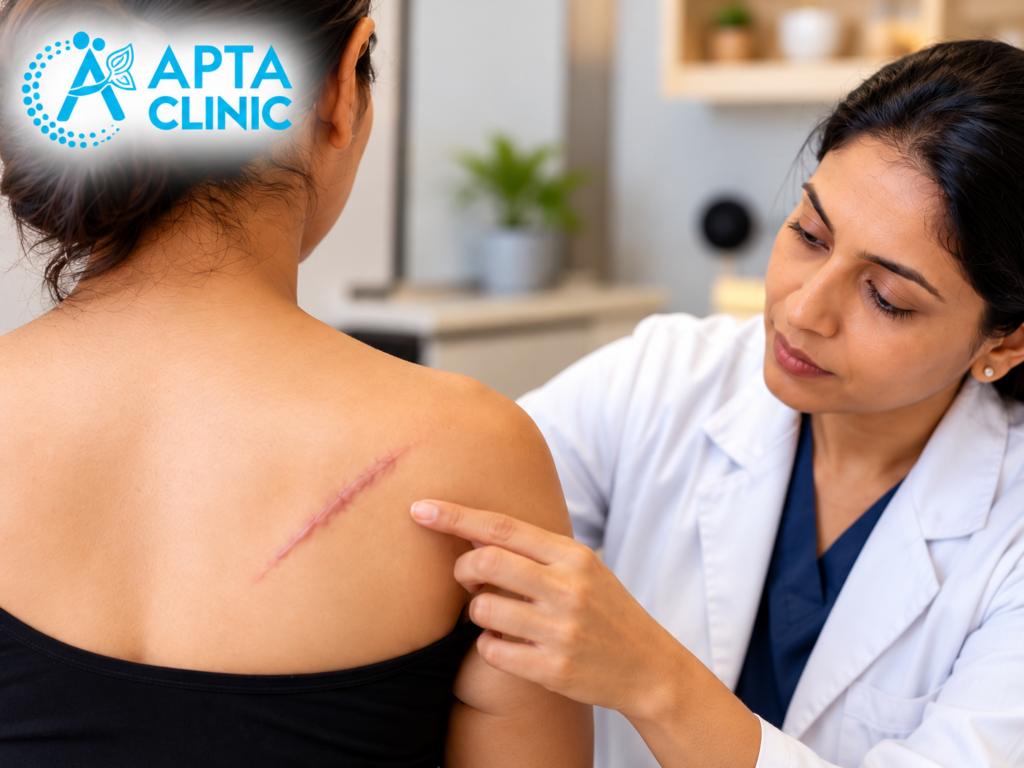
Yes, some old scars can be improved with scar revision surgery or other treatments. However, not every scar needs surgery, and the most suitable approach varies from person to person.
Scar revision is intended to change the appearance or function of a scar. Depending on the scar, treatment may involve improving its shape, reducing raised tissue, changing the direction of a scar or addressing tightness that restricts movement.
A scar’s final appearance depends on several factors, including the original injury, wound depth, healing process, skin characteristics and the tendency to develop raised scars.
An old scar may be suitable for assessment if it:
- Remains raised, thick or uneven.
- Has a noticeable difference in colour or texture from surrounding skin.
- Is indented or creates an uneven surface.
- Feels tight and limits movement.
- Causes persistent itching, discomfort or other symptoms.
- Affects your confidence or daily activities.
These concerns do not automatically mean surgery is necessary. A clinician should examine the scar and discuss the possible benefits, limitations and alternatives.
What Types of Old Scars Can Be Evaluated?
Different scars behave differently. Identifying the type of scar is an important part of choosing an appropriate treatment.
Raised scars and keloids
Hypertrophic scars are raised scars that remain within the boundaries of the original wound. They may become flatter over time, although some remain prominent.
Keloids grow beyond the boundaries of the original wound. They may be firm, itchy, uncomfortable or continue to enlarge. Keloids can return after treatment, so careful assessment is important before considering a procedure.
Scar revision is not automatically the first choice for every raised scar. Depending on the diagnosis, a clinician may discuss non-surgical options or a combination of treatments.
Sunken scars and uneven texture
Some scars appear indented or create an uneven skin surface. They can develop after injuries, surgery or inflammatory skin conditions.
The appropriate treatment depends on the depth and structure of the scar. A clinician can assess whether a procedure, a non-surgical approach or a combination may be appropriate.
Scars that restrict movement
Some scars become tight and pull on the surrounding skin. These are known as contracture scars and may develop after burns or injuries.
When a scar limits movement around a joint or another part of the body, assessment is important because treatment may need to address function as well as appearance.
Discoloured scars
A scar may be darker, lighter, redder or otherwise different in colour from the surrounding skin. Colour changes do not always require surgery.
Depending on the cause and appearance, a clinician may discuss topical care or other treatment approaches. The options should be chosen after the scar and surrounding skin have been assessed.
What Treatment Options May Be Considered?
Scar treatment is not one-size-fits-all. Options range from non-surgical approaches to scar revision surgery.
Approach | What it may address |
Silicone gels or dressings | May help manage certain raised scars when used appropriately |
Selected injections | May be considered for particular raised scars or keloids |
Surface treatments | May improve certain textural or colour irregularities |
Scar revision surgery | May alter the shape, position or appearance of selected scars |
Reconstructive procedures | May be considered when scarring affects movement or function |
Not every option is suitable for every scar. Some treatments require repeated sessions, and certain scars may recur after treatment.
The availability of a specific treatment at a particular clinic should also be confirmed before making an appointment.
Is surgery always the best option?
No. A small scar with mild colour changes may not require surgery, while a scar that restricts movement may need a different type of assessment.
A clinician should explain whether treatment is likely to help, what alternatives exist and whether waiting for further healing would be appropriate. The decision should be based on the scar itself, your medical history and your goals.
How Does a Scar Assessment Work?
A scar assessment helps determine what type of scar you have and which treatment options may be appropriate.
During the consultation, the clinician may ask:
- How and when the scar developed.
- Whether the scar has changed in size, colour or thickness.
- Whether you experience pain, itching or tightness.
- Whether you have previously tried scar treatments.
- Whether you have a history of keloids or raised scars.
- What you would like to improve about the scar.
The clinician may examine the scar’s size, texture, position and relationship to nearby skin. Your medical history and previous treatment responses may also influence the recommendations.
If you are seeking scar reduction in Mysore, bring details of previous procedures or treatments where available. Photographs showing how the scar has changed over time may also be useful, although the clinician will decide what information is needed.
The purpose of the consultation is to understand the scar and discuss realistic options—not to promise a particular result before an assessment.
What Results Can You Realistically Expect?
Scar revision may make a scar less noticeable, improve its contour or help reduce tightness in selected cases. The amount of improvement varies.
A scar may still be visible after treatment. Its colour, texture or shape may not match the surrounding skin completely, and further treatment may sometimes be needed.
The outcome can depend on:
- The type, size and depth of the scar.
- Its location and direction.
- The condition of the surrounding skin.
- Your personal healing response.
- A tendency to develop hypertrophic scars or keloids.
- The treatment selected and aftercare.
Ask the clinician what improvement is realistic for your particular scar. If before-and-after photographs are used during a consultation, ask whether the examples are relevant to your scar type and understand that another person’s result does not predict your own.
Be cautious of claims that promise complete scar removal or guaranteed results.
What Are the Risks of Scar Revision?
Scar revision is a medical procedure and has potential risks. Depending on the treatment, these may include infection, bleeding, delayed healing, changes in skin sensation, changes in pigmentation, an unsatisfactory cosmetic result or the formation of another noticeable scar.
Keloids and some raised scars may return after treatment. A procedure can also leave a new scar, even when the aim is to make the original one less conspicuous.
Your clinician should explain the risks relevant to your situation, the alternatives available and the care required afterward.
Follow the aftercare instructions provided. If a scar becomes increasingly painful, warm, swollen or starts producing pus, seek prompt medical advice because these can be signs of a problem that needs assessment.
How Much Does Scar Treatment Cost in Mysore?
The cost of scar treatment depends on the type of scar, its size and location, the treatment recommended and whether more than one session or procedure is required.
A consultation may be needed before a meaningful estimate can be provided. Ask for a breakdown of the expected charges and whether the estimate includes consultation, the procedure, medicines, dressings and follow-up visits.
APTA Clinic’s published scar-reduction page does not establish a single price that applies to every scar or treatment. Contact the clinic directly for current pricing and to confirm which options are available for your concern.
Health insurance coverage may depend on the reason for treatment, the policy terms and whether the procedure is considered medically necessary or cosmetic. Confirm coverage with your insurer rather than assuming that a particular procedure will be reimbursed.
When Should You Seek Medical Advice?
Consider arranging an assessment if a scar is causing persistent discomfort, itching, restricted movement or significant concern about its appearance.
Do not assume that every change in a scar is simply part of normal healing. A scar that becomes increasingly painful, warm, swollen or starts discharging pus should be assessed promptly.
Seek urgent medical care if you have severe symptoms or signs of a serious infection. For a long-standing scar without urgent symptoms, a routine clinical consultation may be an appropriate starting point.
Does the Age of a Scar Affect Treatment Options?
The age of a scar can influence how a clinician approaches treatment, but an older scar is not automatically untreatable. Some scars continue to change in colour, texture, and firmness for months as the skin heals and remodels.
A scar that has been present for several years may still be considered for treatment if its appearance or effect on movement is a concern. However, the appropriate approach depends on its characteristics rather than age alone.
During an assessment, your clinician may consider:
-
How long the scar has been present: This helps establish its healing history and whether its appearance has stabilised.
-
Changes over time: A scar that is becoming thicker, more uncomfortable, or larger may need further evaluation.
-
The original cause: Scars from surgery, injuries, burns, or skin conditions may require different approaches.
-
The surrounding skin: Skin flexibility, scar location, and the amount of tension around the area can influence treatment planning.
-
Previous treatment: Earlier procedures, injections, silicone products, or other treatments may affect the next steps.
There is no single waiting period that applies to every scar. If you are considering scar revision, ask a qualified clinician whether the scar is ready for treatment and whether a non-surgical approach should be considered first.
What Happens During a Scar Assessment?
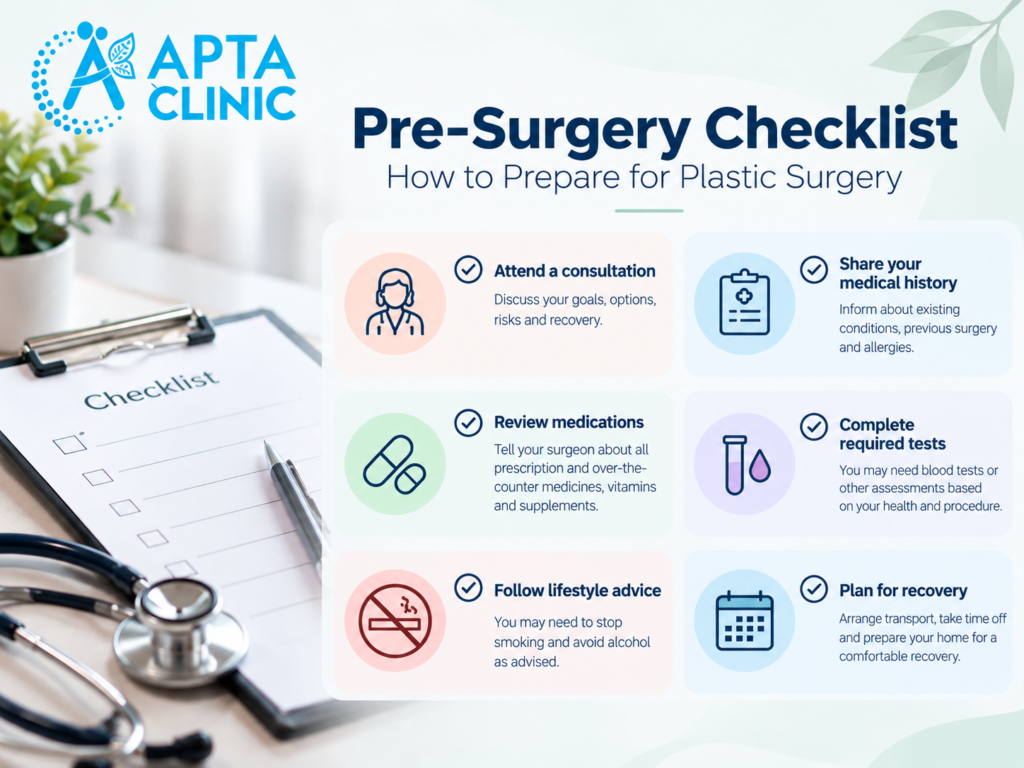
A scar assessment helps the clinician understand the problem you want addressed and determine which options may be appropriate. It is also an opportunity to discuss your expectations and understand the limitations of treatment.
The consultation may include a review of your medical history, previous procedures, healing experiences, allergies, and any treatments you have already tried.
The clinician may examine the scar’s:
-
Length, width, shape, and position.
-
Colour and texture compared with the surrounding skin.
-
Thickness, firmness, or indentation.
-
Flexibility and relationship to nearby joints or natural skin creases.
-
Symptoms, such as itching, tenderness, or tightness.
Photographs may be discussed to document the scar’s appearance, provided you give appropriate consent and the clinic follows suitable privacy practices.
Based on the findings, the clinician can explain whether further evaluation is needed, what treatment options may be worth discussing, and what limitations or risks apply.
An assessment does not mean that surgery is necessary. In some cases, observation or a non-surgical option may be more appropriate. The goal is to make a decision based on the individual scar rather than assuming that every visible scar requires a procedure.
Can a Scar Become More Noticeable Again?
Many scars gradually become softer and less prominent as they mature. However, their appearance can change, and not every change should be assumed to be part of normal healing.
A scar may become more noticeable because of changes in its colour, thickness, surrounding skin, or the tension placed on the area. Raised scars may also remain prominent or extend beyond the original wound, as can happen with keloids.
If an established scar begins growing, becomes increasingly painful or itchy, bleeds, develops an open area, or changes unexpectedly, arrange a medical assessment. A clinician can determine whether the change is related to scarring or whether another skin condition needs to be considered.
Avoid attempting to flatten or remove a changing scar with aggressive home treatments. Products and procedures that are suitable for one type of scar may not be appropriate for another.
What Factors Can Influence Scar Revision Results?
Scar revision is intended to improve the appearance or function of a scar, but the outcome varies from person to person. The result depends on several factors, and no procedure can guarantee that a scar will disappear completely.
Important considerations include:
Scar location: Areas exposed to repeated movement or skin tension may heal differently from areas with less movement.
Scar characteristics: A raised, indented, stretched, or tight scar may require a different treatment approach from a flat scar with a colour difference.
Individual healing patterns: Some people are more prone to developing hypertrophic scars or keloids. This history should be discussed before treatment.
Medical and lifestyle factors: Certain health conditions, nicotine use, and other factors can influence wound healing. Your clinician can explain which considerations are relevant to your circumstances.
Aftercare: Following instructions about wound care, activity restrictions, sun protection, and follow-up appointments can support the healing process.
Realistic expectations: The purpose of treatment is usually to make a scar less noticeable or improve a functional problem, not to recreate completely unscarred skin.
Before proceeding, ask your clinician what improvement may reasonably be expected in your specific case and whether additional treatment might be needed.
What Should You Know Before Choosing Scar Revision Surgery?
Choosing scar revision is a personal decision. It is worth weighing the potential benefit against the possibility of another scar, a change in skin sensation, delayed healing, infection, or an unsatisfactory cosmetic result.
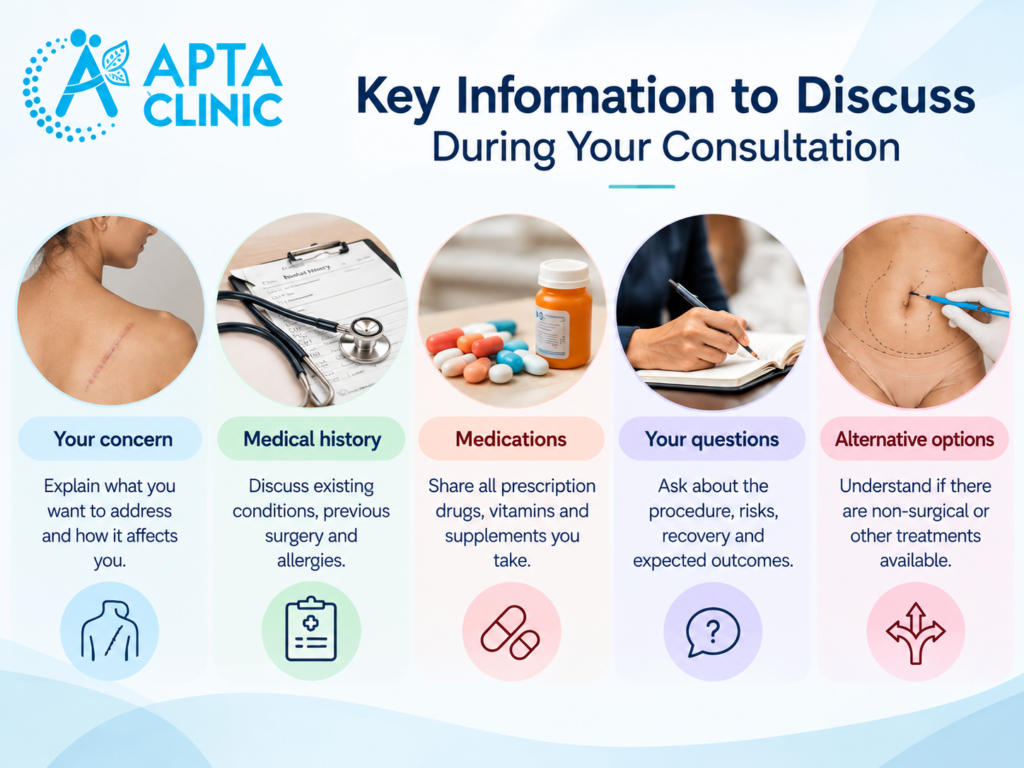
Before agreeing to surgery, make sure you understand:
The reason surgery is being recommended.
Whether non-surgical alternatives are suitable.
Where the new incision may be placed and how it may heal.
The expected recovery period and any activity restrictions.
The possibility that the revised scar may remain visible.
The follow-up care required and the possibility of further treatment.
If the scar is related to a burn, an injury, or a previous operation, tell the clinician about any problems you experienced during healing. A history of thick or expanding scars is particularly important when discussing treatment.
Take time to consider the information provided. You should feel comfortable asking questions and deciding whether the possible benefits are worth the risks and recovery involved.
Scar Reduction Consultation at APTA Clinic, Mysore
APTA Clinic lists scar reduction among its plastic surgery services. Its website describes assessment and treatment recommendations based on factors such as scar type, depth and skin characteristics.
If an old scar concerns you, contact the clinic to ask about consultation availability and which treatment options may be relevant to your situation. The appropriate approach can only be determined after an individual assessment.
APTA Clinic
- Phone: +91 7411 707 555
- Website: https://aptaclinic.com/contact-us/
- Location: Krishnamurthy Puram, Mysuru, Karnataka
- Additional listed location: Vijayanagar, Mysuru
Confirm the current address, appointment availability and treatment options directly with the clinic before visiting.
Frequently Asked Questions (FAQs)
No procedure can guarantee that an old scar will disappear completely. Scar revision may make a scar less noticeable or improve its shape, texture or function, depending on the scar and the treatment selected.
No. Suitability depends on the type of scar, its location, healing history and your health. Some scars may be better managed with non-surgical treatments, while others may benefit from a surgical assessment.
Keloids can recur after treatment. A clinician should assess the scar and discuss the possibility of recurrence, treatment alternatives and any additional care that may be needed.
The appropriate timing depends on the cause and characteristics of the scar. Some scars continue to change as they mature, while others may require earlier assessment because of symptoms or restricted movement. Ask a clinician whether treatment should be considered now or later.
The experience depends on the procedure and the anaesthesia or pain-control approach used. Ask the clinician what to expect during treatment and how discomfort will be managed afterward.
The cost depends on the scar and the treatment recommended. Contact APTA Clinic for current pricing and ask which consultation, treatment and follow-up charges are included.
Some surgical scars can be improved with appropriate treatment. The options depend on the scar’s appearance, location, healing history and whether it causes functional problems.
A hypertrophic scar remains within the boundary of the original wound, while a keloid grows beyond it. The distinction matters because treatment choices and the likelihood of recurrence can differ.