
What Happens During a Plastic Surgery Consultation in Mysore? A Step-by-Step Guide
- Home
- Blog
- About Us
A first plastic surgery consultation is a chance to explain what is bothering you, understand what may be causing the concern, and discuss whether treatment is appropriate.
During the appointment, the surgeon may ask about your medical history, previous surgeries or treatments, medications and allergies. The area being considered for treatment may also be examined.
Depending on your situation, the discussion can include surgical and non-surgical options, possible risks, preparation, recovery and follow-up. Some patients may need additional evaluation before a treatment plan can be decided.
A consultation does not mean that you have to undergo surgery. The right approach depends on your individual condition, medical history, goals and clinical assessment.
Why Is a Plastic Surgery Consultation Important?
Plastic surgery is different for every patient. Two people can have similar concerns and still require different treatment approaches because their anatomy, health history, previous treatments and expectations may differ.
A consultation allows the surgeon to understand your concern before discussing whether a procedure is suitable.
You may discuss:
- What you would like assessed or changed
- Whether surgery is appropriate
- Available treatment options
- Possible non-surgical alternatives
- Risks and limitations
- Preparation for treatment
- Expected recovery
- Follow-up requirements
- Whether further examination or investigation is needed
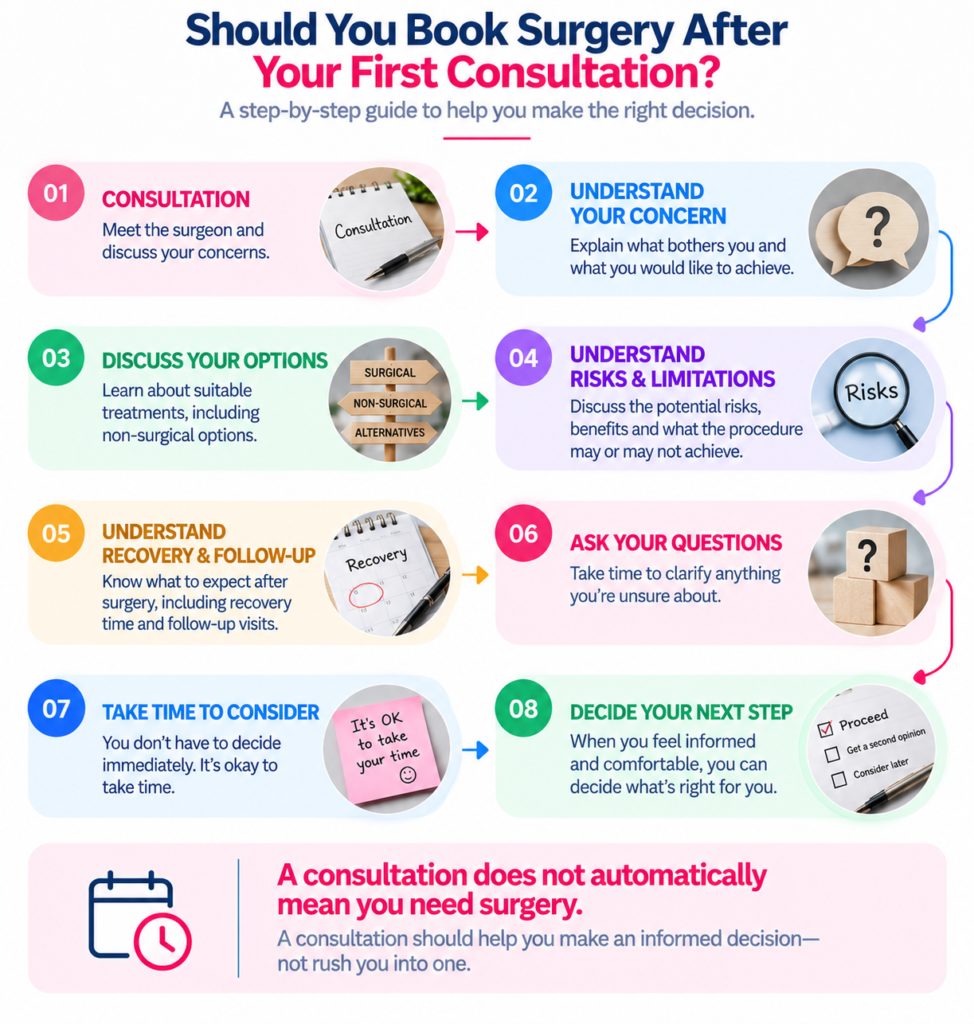
The consultation is therefore part of the decision-making process. You do not have to arrive at the appointment having already chosen a procedure.
What Happens During a Plastic Surgery Consultation?
The consultation process varies according to the reason for the appointment. A discussion about cosmetic surgery may be different from one involving an injury, scar, breast concern, facial problem or reconstructive procedure.
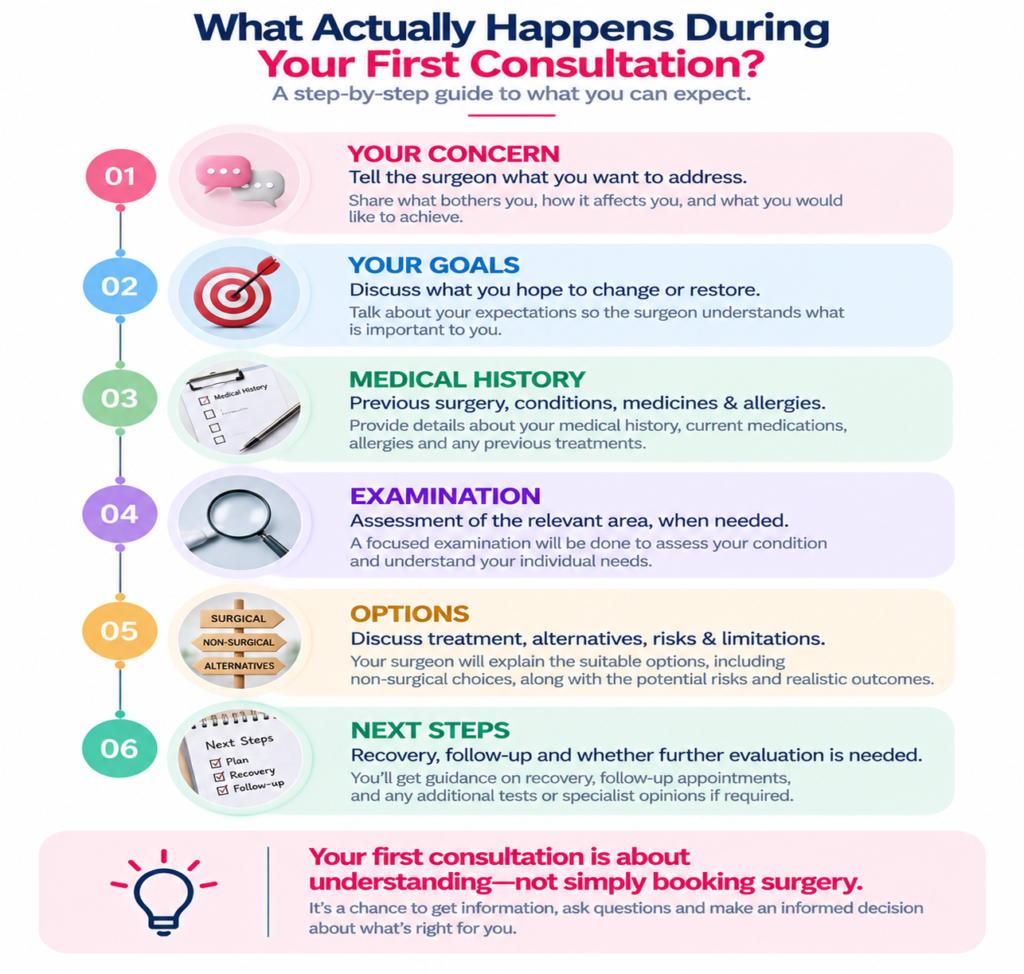
In general, your consultation may include the following steps.
Discussing Your Main Concern
The appointment usually begins with a conversation about why you are seeking treatment.
You may want to change a particular aspect of your appearance, address a change after an injury, discuss a scar or seek help with a structural or functional concern.
Try to explain your concern clearly. Tell the surgeon what you would like assessed and what you hope treatment might change.
This gives the surgeon a better understanding of what needs to be examined.
Explaining Your Treatment Goals
Your goals are an important part of the consultation.
Some patients are mainly concerned about appearance. Others may be dealing with an injury, congenital condition, functional problem or changes following previous treatment.
In some situations, appearance and function are both relevant.
The surgeon can discuss what a procedure may reasonably address and where its limitations lie. Having a clear understanding of the expected outcome can help you decide whether treatment fits your expectations.
Reviewing Your Medical History
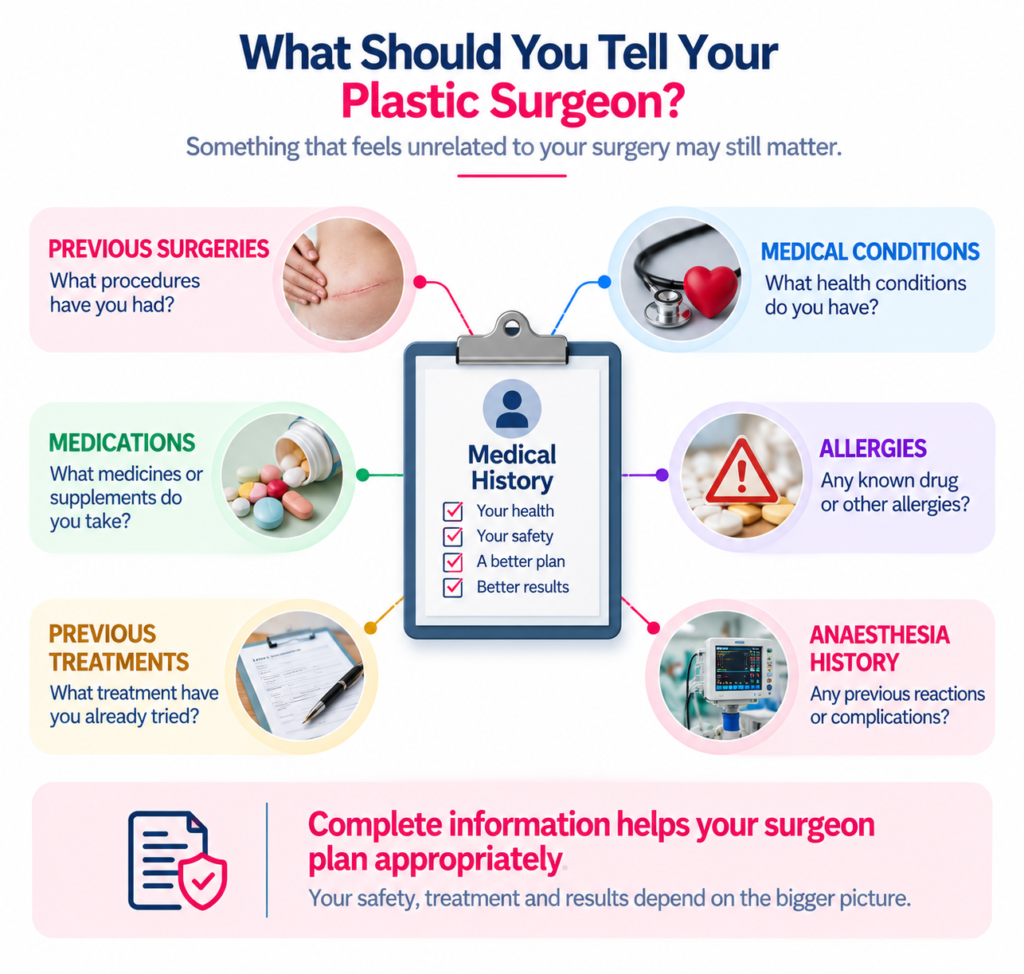
Your medical history can affect treatment planning.
You may be asked about:
- Previous surgeries
- Previous treatments or procedures
- Existing medical conditions
- Current medications
- Known allergies
- Previous reactions to medicines or anaesthesia
- Relevant personal or family medical history
- Previous wound-healing problems, where relevant
It is better to mention information you think may be relevant, even if you are unsure whether it matters. The medical team can determine its significance.
Physical Examination
The surgeon may examine the area related to your concern.
The examination will depend on why you are seeking treatment and what procedure is being considered.
Depending on the situation, the surgeon may assess:
- Skin and soft tissue
- Scarring
- Symmetry
- Tissue quality
- Structural changes
- Changes from previous surgery
- Functional concerns
- Other findings relevant to treatment
This examination helps the surgeon move from a general description of the problem to an assessment of your particular situation.
Reviewing Previous Treatments or Surgeries
If you have previously received treatment for the same concern, tell the surgeon about it.
This could include previous surgery, an injury, a procedure or other treatment.
Previous treatment can change the tissues involved and may affect which options can be considered.
If you have relevant medical records, reports or imaging, ask the clinic whether you should bring them to the appointment.
Reconstructive Surgery Can Involve Function and Appearance
Consider a patient who has suffered facial trauma.
An injury can affect facial bones and soft tissue. Depending on the location and severity of the injury, it may also affect functions such as breathing, chewing or vision.
Treatment may therefore need to address both the damaged structure and its effect on function.
APTA Clinic lists facial trauma among its facial surgery services. Its listed treatment areas for Dr. B. Akshata Kamath also include accident-related reconstruction, nerve injuries, scar management, facial fractures, diabetic foot and wound management, and cleft lip and cleft palate surgery.
These examples show why reconstructive plastic surgery covers considerably more than appearance-related procedures.
Discussing Treatment Options
After reviewing your concerns and clinical findings, the surgeon may discuss possible approaches.
Depending on the situation, this could involve:
- A surgical procedure
- A different surgical approach
- A non-surgical option
- Observation or no immediate treatment
- Further evaluation before making a decision
You should have an opportunity to understand the options before deciding whether to proceed.
Cosmetic or Reconstructive Surgery: Why the Consultation May Differ
The consultation can vary according to the reason for treatment.
Cosmetic Plastic Surgery
When appearance is the main concern, the discussion may focus on your aesthetic goals, anatomy, realistic expectations and the changes a procedure may be able to produce.
Cosmetic procedures can involve different areas of the face or body, and the appropriate approach depends on the individual patient.
APTA Clinic lists cosmetic plastic surgery among its services.
Reconstructive Plastic Surgery
A reconstructive consultation may require more discussion about the underlying condition or injury.
For example, patients may seek reconstructive treatment following an accident or because of a scar, nerve injury, wound, facial fracture or congenital condition.
The supplied APTA information lists Dr. B. Akshata Kamath as a Plastic & Reconstructive Surgeon and includes reconstruction following accidents, nerve injuries, scar management, facial fractures, diabetic foot and wound management, and cleft lip and cleft palate surgery among the listed treatment areas.
The broader distinction is also consistent with the American Society of Plastic Surgeons, which describes reconstructive surgery as addressing deformities related to birth defects, trauma or medical conditions, while cosmetic surgery generally focuses on changing the appearance of otherwise normal anatomy. ASPS also notes that the two can overlap in some situations.
What Questions Should You Ask During the Consultation?
It can be difficult to remember every question during a medical appointment. Writing them down before you visit can help.
You could ask:
- What is the main issue you are assessing?
- Am I a suitable candidate for the procedure I am considering?
- Are there alternatives to surgery?
- What treatment options are available for my concern?
- What risks are relevant to this procedure?
- Are there any factors in my medical history that affect those risks?
- What preparation would I need?
- What should I expect during recovery?
- How much follow-up will I need?
- Will I need any further examination or investigation?
- When might I be able to return to normal activities?
- Who should I contact if I develop a problem after treatment?
If you do not understand a medical term or part of the explanation, ask the surgeon to explain it in simpler language.
What Should You Bring to a Plastic Surgery Consultation?
A little preparation can make the appointment easier.
Depending on your situation, consider bringing:
- A list of your current medications
- Information about known allergies
- Previous medical reports
- Relevant scan or imaging reports
- Details of previous surgeries
- Information about previous treatments
- Questions you want to discuss
- A short description of your main concern and treatment goal
If the clinic has asked you to bring particular documents, follow those instructions.
Will I Need Tests or Further Evaluation?
Not every patient needs the same investigations.
Whether additional evaluation is required depends on factors such as your medical history, the condition being assessed and the procedure under consideration.
After the initial consultation, the surgeon may decide that further assessment is needed before recommending treatment.
You should not assume that a particular test is necessary simply because you have read about it online. The appropriate evaluation depends on your clinical situation.
Will the Surgeon Recommend Surgery During the First Consultation?
There is no requirement for every patient to receive a treatment recommendation during the first appointment.
In some cases, the surgeon may be able to discuss options after the initial assessment. In other situations, additional records, investigations or evaluation may be needed.
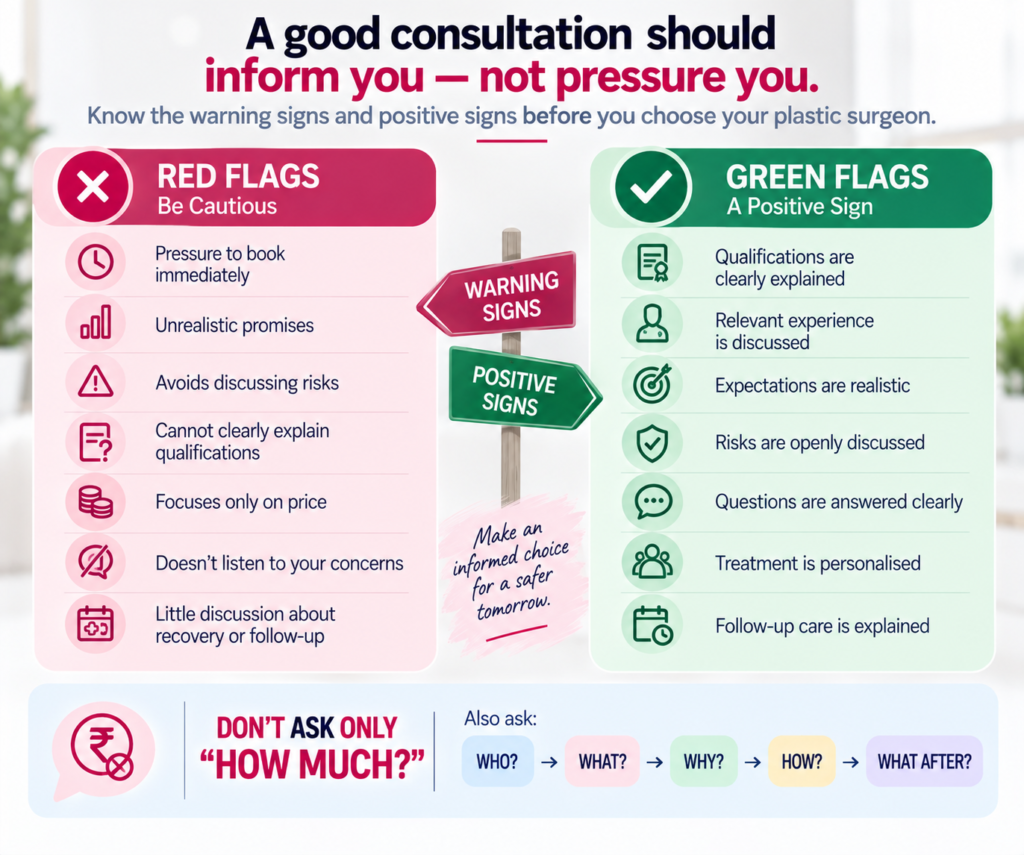
A consultation is not an obligation to proceed with surgery. You should have an opportunity to understand the proposed treatment, alternatives, risks and recovery before making a decision.
What About Risks and Possible Complications?
Every surgical procedure has potential risks. The risks vary according to the procedure and the individual patient.
During your consultation, ask about the risks that apply specifically to the treatment being considered.
You can ask:
- Which complications are particularly relevant to me?
- Does my medical history affect my risk?
- What warning signs should I watch for after surgery?
- Who should I contact if I have concerns during recovery?
- What follow-up will be provided?
Understanding the risks is part of making an informed decision.
What Will You Learn About Recovery?
Recovery should be part of the discussion before you decide whether to have a procedure.
Depending on the treatment, your surgeon may explain:
- Expected recovery
- Activity restrictions
- Wound care, where applicable
- Follow-up appointments
- When normal activities may be resumed
- Temporary changes during healing
- When medical attention may be required
Recovery differs between procedures and patients. Someone else’s recovery timeline should not be treated as a prediction of your own.
Is a Plastic Surgery Consultation in Mysore Right for You?
A consultation may be appropriate if you have a cosmetic or reconstructive concern and want a professional assessment before deciding what to do.
Patients may seek consultation for concerns involving:
- Cosmetic plastic surgery
- Reconstructive surgery
- Facial procedures
- Body contouring
- Scar treatment
- Breast-related procedures
- Treatment following an injury
- Other plastic or reconstructive concerns
You do not necessarily need to know the exact procedure before booking. One purpose of the consultation is to assess your concern and discuss whether a particular treatment is appropriate.
Plastic Surgery Consultation at APTA Clinic, Mysore
APTA Clinic is a multi-specialty clinic in Mysuru. Its listed services include plastic surgery, facial surgery, dermatology, dental care, trichology and diabetic foot care.
The clinic lists Dr. B. Akshata Kamath as a Plastic & Reconstructive Surgeon. Its plastic surgery services include cosmetic and reconstructive care, along with listed areas such as facial rejuvenation, body contouring, scar treatment and mommy makeover procedures.
If you are unsure which procedure may be suitable for your concern, a consultation allows you to discuss the issue before selecting a treatment.
How to Prepare for Your First Consultation
Before your appointment, write down a few points you want to discuss.
Your main concern
What would you like the surgeon to assess?
Your treatment goal
What are you hoping treatment will change or improve?
Your medical information
Prepare details about relevant medical conditions, medications, allergies and previous procedures.
Your questions
Write down anything you want explained during the appointment.
Your expectations
Be ready to discuss what you hope treatment will achieve and what you understand about its possible limitations.
Going into the appointment prepared can make the conversation more focused.
Final Takeaway
A plastic surgery consultation gives you time to explain your concern, review your medical history, undergo an appropriate examination and discuss possible treatment options.
You can also ask about risks, preparation, recovery, follow-up and alternatives before deciding whether to proceed.
The appropriate procedure cannot be selected from a photograph or an online description alone. An individual clinical assessment is needed.
If you are considering a plastic surgery consultation in Mysore, you can discuss your concern with the Plastic & Reconstructive Surgery team at APTA Clinic and find out what evaluation or treatment options may be appropriate for your situation.
Frequently Asked Questions (FAQs)
A consultation usually includes a discussion about your main concern and treatment goals, review of your medical history and previous treatments, and discussion of medications and allergies. The surgeon may examine the area being considered for treatment and discuss possible options, risks, preparation, recovery and follow-up.
Bring relevant medical reports, details of previous surgeries or treatments, a list of current medications and allergies, and any questions you want to discuss. If the clinic has requested specific documents, bring those as well.
Yes. Ask about the risks and possible complications associated with the procedure being considered. You can also ask what warning signs to watch for during recovery and whom to contact if you have concerns.
Yes. Recovery is an important part of treatment planning. Ask about expected recovery, activity restrictions, follow-up appointments and when you may be able to resume normal activities.
Yes. If you are uncertain about a treatment recommendation, you may seek another professional opinion. Taking relevant medical records and previous reports can help the second specialist understand your situation.
The supplied APTA information does not provide a universal consultation fee. Contact the clinic directly for the current consultation charge and appointment details.
There is no single price for plastic surgery. Different procedures have different requirements, and the cost depends on the treatment and individual circumstances. Procedure-specific pricing should be discussed during consultation.
A consultation can help determine which treatment approach may be appropriate. The distinction depends on the reason for treatment, the condition being assessed, medical history, clinical findings and treatment goals.
APTA Clinic provides plastic and reconstructive surgery services in Mysuru and lists Dr. B. Akshata Kamath as a Plastic & Reconstructive Surgeon. Patients can contact the clinic for appointment availability and consultation arrangements.
No. A consultation does not commit you to surgery. It gives you an opportunity to understand your condition, treatment options, risks and expected recovery before deciding.
A routine consultation is not a substitute for emergency care. If you have a serious recent injury, uncontrolled bleeding, severe breathing difficulty, loss of consciousness or another potentially life-threatening problem, seek appropriate emergency medical care immediately.