
Who Is a Good Candidate for Plastic Surgery? A Guide for Patients in Mysore
- Home
- Blog
- About Us
Being interested in plastic surgery does not automatically mean that surgery is suitable for you.
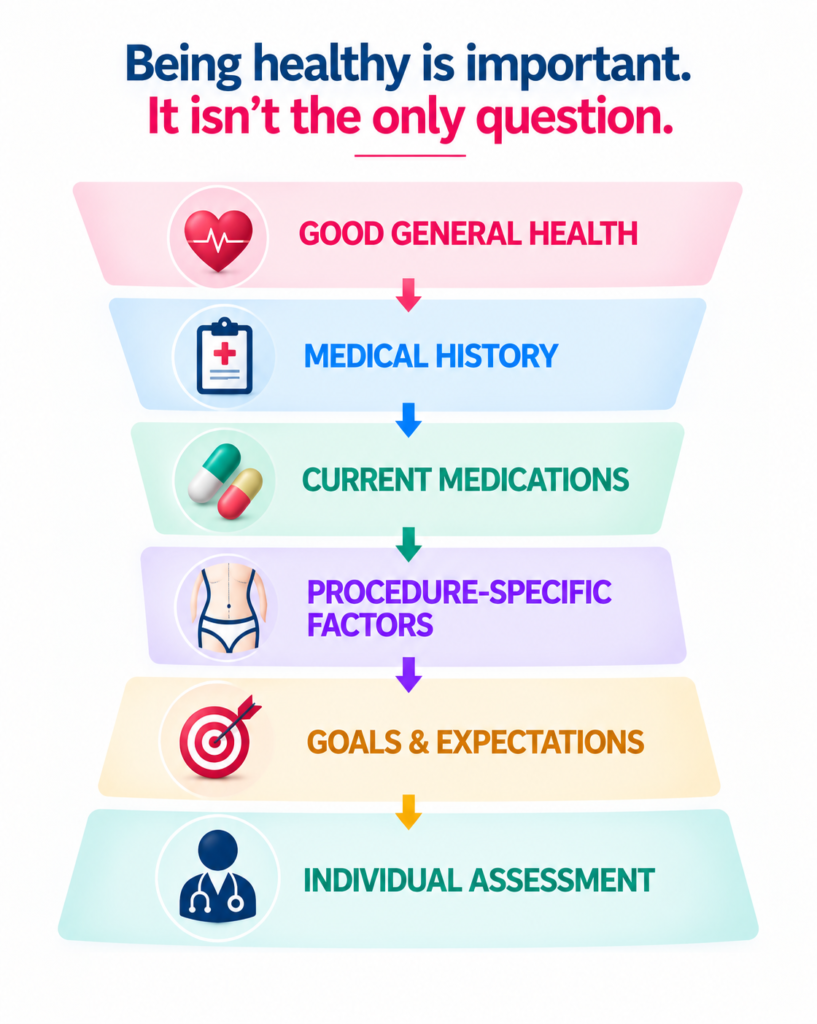
Whether someone is a suitable candidate depends on the procedure being considered, the reason for treatment, overall health, medical history, medications, expectations and the ability to follow preparation and recovery instructions.
A surgeon also needs to assess the area being treated and consider whether the proposed procedure is appropriate for the patient’s goals.
If you are considering plastic surgery in Mysore, an individual consultation with a qualified plastic surgeon is the appropriate way to discuss your suitability.
What Does “Good Candidate for Plastic Surgery” Mean?
There is no single checklist that can determine whether someone is a good candidate for every type of plastic surgery.
The assessment is specific to the procedure and the individual patient.
During a consultation, the surgeon may consider:
- Why you want the procedure
- Your overall health
- Existing medical conditions
- Previous surgeries or treatments
- Current medications and allergies
- The condition of the area being treated
- Your expectations
- Your understanding of potential risks
- Your ability to follow preparation and recovery instructions
- Whether the proposed procedure is appropriate for your goals
ASPS patient guidance also recommends discussing candidacy, expectations, risks, recovery and the procedure itself during consultation.
This is why age, appearance, photographs or an online questionnaire cannot determine your surgical suitability on their own.
You Have a Clear Reason for Considering Surgery
Start by asking yourself why you are considering the procedure.
Your reason may be cosmetic, reconstructive, functional or a combination of these.
For example, one person may be concerned about a particular physical feature, while another may be seeking reconstruction after an injury or because of a congenital condition.
Understanding the reason for treatment helps the surgeon determine whether the proposed procedure addresses the concern you actually want to address.
For cosmetic procedures, it is also worth considering whether you are choosing surgery for yourself and whether your expectations are realistic. The NHS recommends thinking carefully about why you want cosmetic treatment and discussing your expectations with the practitioner.
Your General Health Is Suitable for the Proposed Procedure
Your overall health is part of the surgical assessment.
There is no universal definition of being “healthy enough” for every plastic surgery procedure. Different procedures place different demands on the body and involve different considerations.
The surgeon may review:
- Existing medical conditions
- Previous illnesses
- Previous operations
- Current medications
- Allergies
- Previous problems with healing
- Other factors that could affect surgical risk or recovery
You may be suitable for one procedure but require further evaluation before another. In some circumstances, treatment may need to be postponed while a health issue is assessed or managed.
That is one reason a consultation should take place before making a decision.
You Are Willing to Share Your Complete Medical History
Your surgeon needs accurate information about your health to assess the proposed treatment.
Tell the medical team about relevant:
- Medical conditions
- Previous surgeries
- Current medications
- Allergies
- Previous treatments
- Health problems
- Previous complications
Do not leave out information because you think it is too minor to mention.
ASPS guidance recommends discussing medical conditions, allergies, medications and previous surgeries during consultation.
Providing complete information also gives the surgeon an opportunity to identify whether additional evaluation may be needed.
You Understand That Every Procedure Has Its Own Requirements
Plastic surgery is a broad field. The requirements for one procedure may be very different from those for another.
A surgeon assessing someone for facial rejuvenation may consider different factors from a patient seeking body contouring or scar treatment.
APTA Clinic lists services including facial rejuvenation, body contouring, scar reduction and mommy makeover procedures. Suitability for these procedures still needs to be assessed according to the individual concern and proposed treatment.
Someone else’s experience should therefore not be used as proof that the same procedure is appropriate for you.
Your Expectations Are Realistic
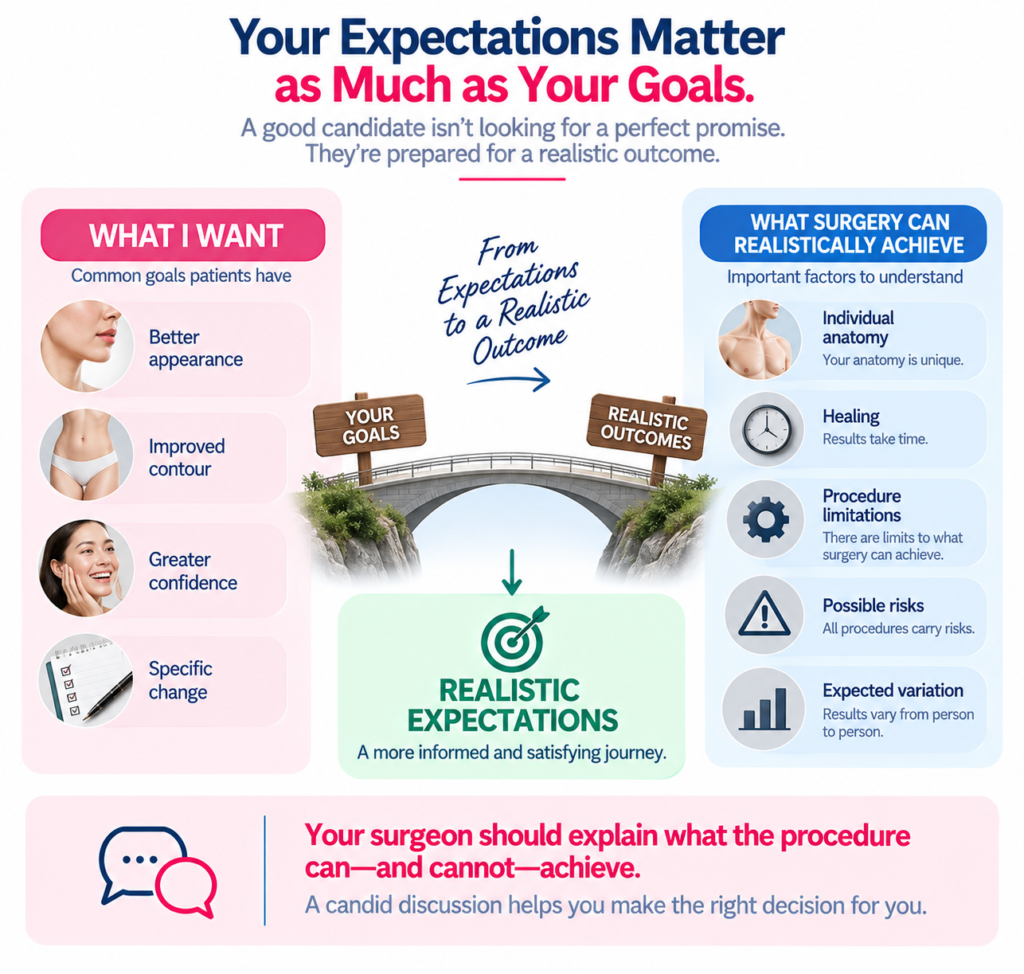
Realistic expectations are an important part of deciding whether plastic surgery is appropriate.
A procedure can change particular physical features, but it cannot guarantee that you will look exactly like another person or produce every change you imagine.
During consultation, discuss:
- What you want to change
- What you hope the procedure will achieve
- What changes may realistically be possible
- What the procedure cannot change
- What recovery may involve
- What risks and limitations apply
ASPS guidance recommends discussing expectations and what the procedure can and cannot accomplish.
If your expectations do not match what the procedure can reasonably achieve, the surgeon may discuss alternatives or recommend that you reconsider the procedure.
You Understand the Risks and Limitations
Every surgical procedure has potential risks.
The risks vary according to the procedure and the individual patient.
Before deciding to proceed, ask about:
- Common risks associated with the procedure
- Important possible complications
- Factors that may increase your individual risk
- Recovery requirements
- Follow-up
- What happens if a complication occurs
ASPS recommends asking about procedure-specific risks, complications, recovery and how complications are handled.
Understanding these issues gives you more information when deciding whether the treatment is appropriate for you.
You Are Prepared for the Recovery Process
Recovery is part of the treatment plan.
Depending on the procedure, you may need to plan for:
- Time away from work
- Activity restrictions
- Follow-up appointments
- Wound care
- Temporary swelling or discomfort
- Help at home
- Other post-operative instructions
Recovery varies between procedures and patients. Another person’s recovery timeline should not be treated as a prediction of what your own recovery will be.
Ask the surgeon what recovery is expected to involve before you decide whether the procedure fits your circumstances.
You Are Willing to Follow Pre- and Post-Operative Instructions
Preparation and recovery instructions form part of surgical care.
Depending on the procedure, your surgeon may give instructions concerning medication, food and drink, activity, wound care, follow-up or other aspects of treatment.
The exact instructions depend on the procedure and your individual circumstances.
If you think you may have difficulty following particular instructions, discuss this during your consultation. It may affect when or whether surgery should be considered.
You Have Had Enough Time to Make the Decision
Plastic surgery should not be a rushed decision.
Before proceeding, make sure you understand:
- Why the procedure is being considered
- What alternatives exist
- What the risks are
- What recovery involves
- The likely costs
- What follow-up may be required
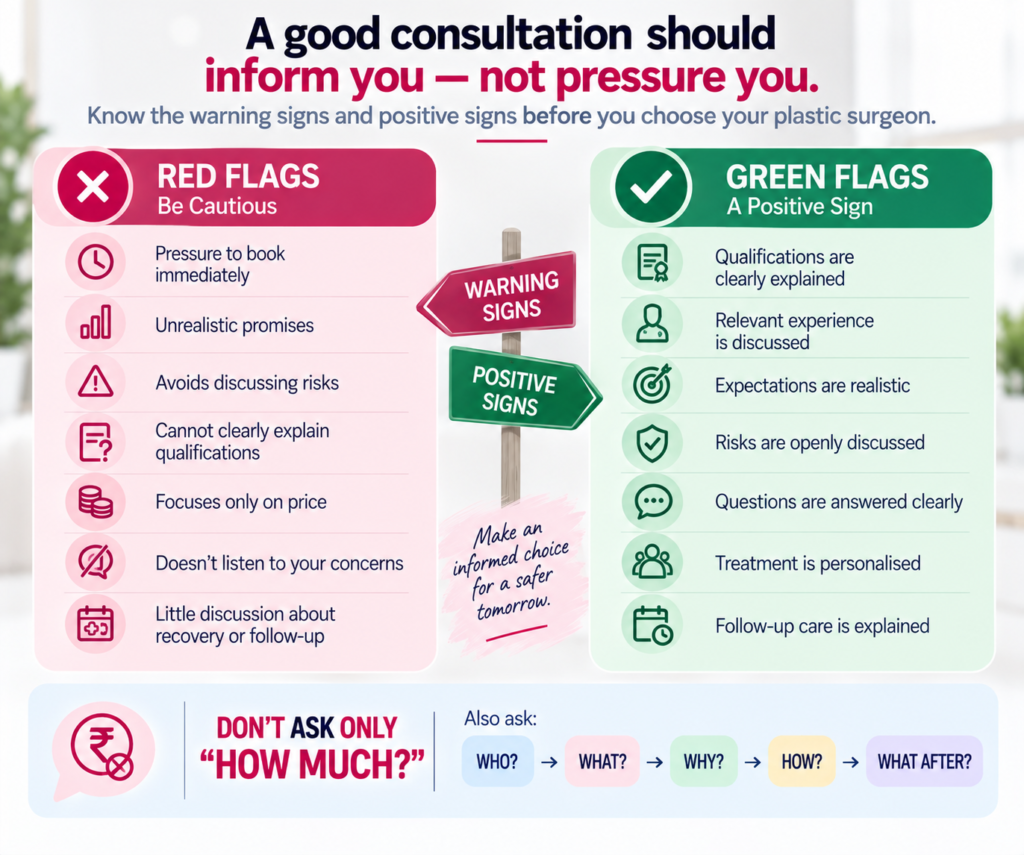
The NHS advises people considering cosmetic procedures to take time after consultation rather than feeling pressured to decide immediately. It also recommends being cautious about time-limited offers and pressure to add treatments that were not originally considered.
You should be able to ask questions, consider the information and decide whether you want to proceed.
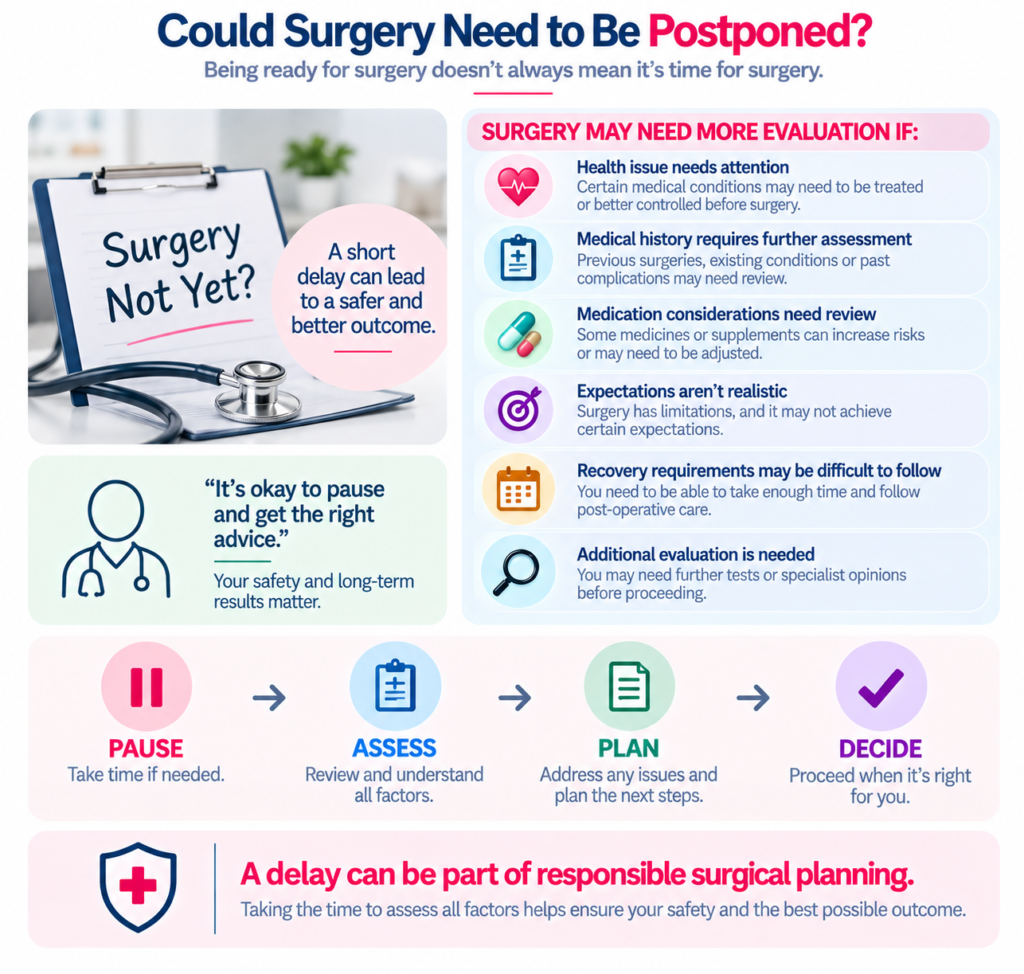
When Might Plastic Surgery Need to Be Postponed?
Sometimes surgery may need to be delayed rather than ruled out completely.
Possible reasons can include:
- A medical condition requiring further assessment
- Additional investigations being necessary
- A health issue that could increase surgical risk
- Incomplete information about previous treatment
- Difficulty following the required recovery plan
- Expectations that require further discussion
The reason varies from patient to patient.
Only an appropriate clinical assessment can determine whether surgery should proceed, be postponed or not be recommended.
When Might Surgery Not Be the Right Choice?
Surgery may not be appropriate when the proposed procedure does not address the actual concern, the potential risks are not acceptable for the individual circumstances, or expectations are unrealistic.
A non-surgical approach may also be considered in some situations.
For example, the supplied APTA information describes its facial rejuvenation service as including both surgical and non-surgical approaches, with treatment selection based on individual characteristics and goals.
The purpose of a consultation is to assess which approach, if any, is appropriate.
What Should You Discuss During Your Consultation?
If you are considering plastic surgery in Mysore, prepare your questions before the appointment.
You could ask:
- Am I a suitable candidate for this procedure?
- Why is this procedure being considered for my concern?
- Are there alternatives?
- What risks are particularly relevant to me?
- Does my medical history affect my suitability?
- What preparation will I need?
- What will recovery involve?
- How much time should I plan away from work or normal activities?
- What follow-up will I need?
- Will I need further investigations?
- What limitations should I understand before deciding?
- What happens if I decide not to proceed?
ASPS also recommends asking about the surgeon’s qualifications and procedure-specific experience, where and how the procedure will be performed, recovery, risks and reasonable results.
What Should You Bring to the Consultation?
Bring information that may help the surgeon understand your medical history and previous treatment.
This may include:
- Current medication list
- Allergy information
- Previous medical reports
- Relevant scan or imaging reports
- Previous surgery details
- Previous treatment information
- Your list of questions
- Information about your main concern and treatment goals
If you are unsure whether a particular document is relevant, you can ask the clinic before your appointment.
How Is Suitability Assessed During a Plastic Surgery Consultation?
There is no single test that determines whether someone is a good candidate.
The surgeon considers the available information about you and the proposed procedure.
The assessment may involve:
Your concern → medical history → examination → treatment goals → risks → alternatives → recovery → suitability
Further evaluation may be required before a recommendation is made.
This is why an online article cannot determine whether you personally should undergo plastic surgery.
Plastic Surgery in Mysore: What Patients Should Consider Before Choosing a Procedure
If you are researching plastic surgery in Mysore, consider the procedure itself as well as your own circumstances.
Before making a decision, make sure you have:
- A clear reason for treatment
- Realistic expectations
- An understanding of potential risks
- An understanding of recovery
- A willingness to follow medical instructions
- Relevant medical records available
- Questions prepared for your consultation
- Information about possible alternatives
Most importantly, discuss your individual situation with an appropriately qualified specialist.
Plastic Surgery at APTA Clinic, Mysore
APTA Clinic is a multi-specialty clinic in Mysuru offering services including plastic surgery, facial surgery, dermatology, dental care, trichology and diabetic foot care.
The clinic lists Dr. B. Akshata Kamath as a Plastic & Reconstructive Surgeon. Its listed plastic surgery services cover cosmetic and reconstructive procedures, including areas such as facial rejuvenation, body contouring, scar reduction and mommy makeover procedures.
Because suitability differs between patients and procedures, an individual consultation is the appropriate starting point if you are unsure whether a particular treatment is right for you.
What Is the Next Step If You Are Considering Plastic Surgery?
You do not need to decide on the exact procedure before speaking with a surgeon.
During the consultation, explain:
- What concerns you
- Why you are considering treatment
- Your medical history
- Previous procedures or treatments
- Your expectations
- Your questions about risks and recovery
The surgeon can then assess whether further evaluation, a particular treatment, an alternative approach or no surgery is appropriate.
Final Takeaway
A suitable candidate for plastic surgery cannot be identified by age or appearance alone.
Suitability depends on the specific procedure, overall health, medical history, reason for treatment, expectations, understanding of risks, recovery requirements and clinical assessment.
If you are considering plastic surgery in Mysore, take time to understand the available options and discuss your individual circumstances with a qualified plastic and reconstructive surgeon.
At APTA Clinic, patients can consult the Plastic & Reconstructive Surgery team to discuss their concerns and understand which treatment options may be appropriate for their situation.
Frequently Asked Questions (FAQs)
A good candidate cannot be identified by age or appearance alone. Suitability depends on the specific procedure, overall health, medical history, treatment goals, expectations, potential risks and ability to follow preparation and recovery instructions. A qualified surgeon should assess each patient individually.
It depends on the condition and the procedure. Some medical conditions may require additional evaluation or management before surgery, while others may affect whether a particular procedure is appropriate. Discuss your complete medical history with the surgeon.
Yes. Understanding what a procedure can and cannot achieve is an important part of deciding whether surgery is appropriate. Discuss your expectations openly during consultation.
Depending on the individual situation, surgery may need to be postponed because of a health issue, need for further evaluation, medication considerations, unrealistic expectations or difficulty following the required recovery plan.
Do not stop prescribed medication on your own. Tell your surgeon about all medications, vitamins and supplements you take. If any medication needs to be changed before surgery, your medical team should provide the appropriate instructions.
The supplied APTA information does not provide a universal consultation fee. Contact the clinic directly for the current consultation charge and appointment details.
It depends on the reason for treatment. Cosmetic surgery generally focuses on changing or enhancing appearance, while reconstructive surgery generally addresses structures affected by injury, congenital conditions, disease or other medical circumstances. Some cases can involve both goals.
The supplied APTA information lists facial rejuvenation, body contouring, scar reduction and mommy makeover, along with cosmetic and reconstructive plastic surgery care. Suitability depends on individual clinical assessment.
There is no single cost for plastic surgery. Pricing varies according to the specific procedure and individual treatment requirements. The supplied APTA information does not establish a universal price, so patients should ask the clinic for current procedure-specific costs.
An individual consultation is important because suitability cannot be determined reliably from age, appearance or online information alone. The surgeon can assess your concern, medical history, expectations, risks and possible treatment options.
Yes. A consultation gives you information about your options; it does not mean you are required to proceed with surgery. Take time to understand the recommendation, risks, alternatives and recovery before making your decision.