
Hair Transplant Cost in Mysore: What Affects the Price?
- Home
- Blog
- About Us
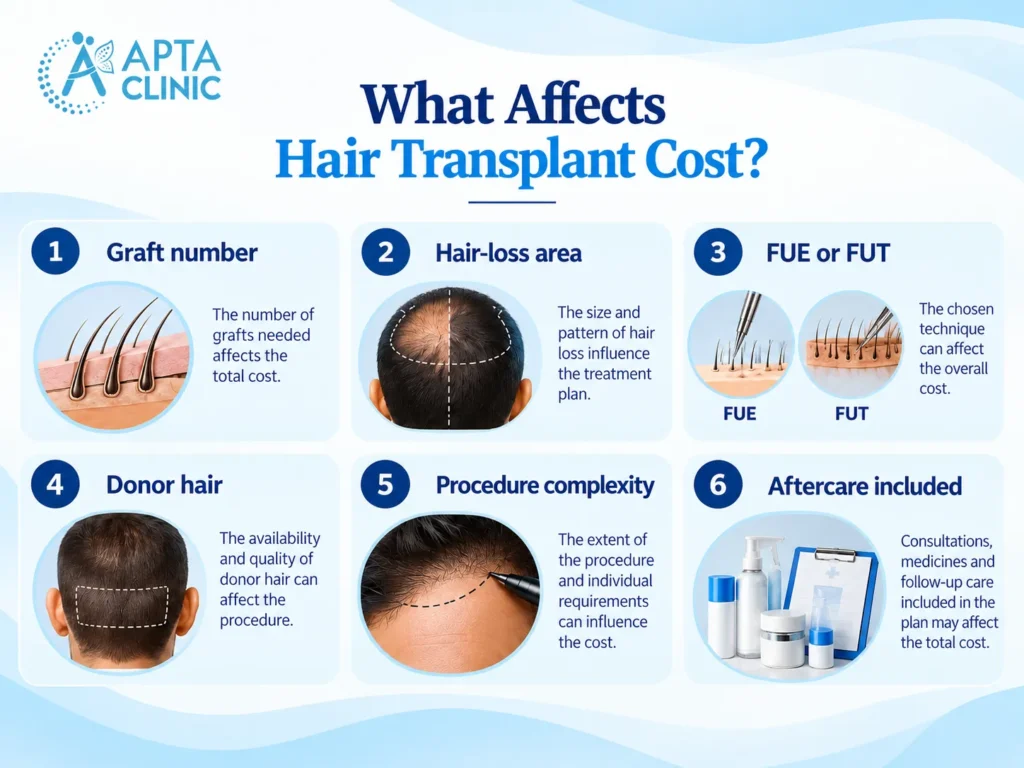
If you are researching hair transplant cost in Mysore, one of the first things to understand is that the price depends on your individual treatment plan. The area affected by hair loss, the number of grafts required, the transplant technique and the availability of suitable donor hair can all affect the total cost.
A quotation should explain more than the procedure fee. You should know which technique is recommended, who will perform the surgical steps, what aftercare is included and whether any additional charges may apply.
APTA Clinic lists hair transplant services for men and women in Mysore and describes Follicular Unit Extraction (FUE) and Follicular Unit Transplantation (FUT) on its published service page. The suitable technique and current treatment cost should be confirmed directly with the clinic after an assessment.
What Is the Cost of a Hair Transplant in Mysore?
Hair transplant pricing varies from one patient to another. Someone with a small area of hairline thinning may need a different procedure from someone with more extensive hair loss across the frontal scalp and crown.
The final estimate may depend on:
- The number of grafts planned.
- The extent and pattern of hair loss.
- Whether FUE or FUT is recommended.
- The availability and quality of donor hair.
- The complexity of the procedure.
- The medical team’s responsibilities and clinical arrangements.
- The consultations, medicines and follow-up care included in the fee.
APTA Clinic’s current hair transplant price list and per-graft rate have not been verified for this article. Contact the clinic for its latest pricing and a personalised estimate rather than relying on an assumed market rate.
Before comparing quotations, ask whether the fee is calculated per graft, per procedure or as a package. Request a written breakdown so you can see what the price covers.
How Does Liposuction Work?
Hair transplant pricing varies from one patient to another. Someone with a small area of hairline thinning may need a different procedure from someone with more extensive hair loss across the frontal scalp and crown.
The final estimate may depend on:
- The number of grafts planned.
- The extent and pattern of hair loss.
- Whether FUE or FUT is recommended.
- The availability and quality of donor hair.
- The complexity of the procedure.
- The medical team’s responsibilities and clinical arrangements.
- The consultations, medicines and follow-up care included in the fee.
APTA Clinic’s current hair transplant price list and per-graft rate have not been verified for this article. Contact the clinic for its latest pricing and a personalised estimate rather than relying on an assumed market rate.
Before comparing quotations, ask whether the fee is calculated per graft, per procedure or as a package. Request a written breakdown so you can see what the price covers.
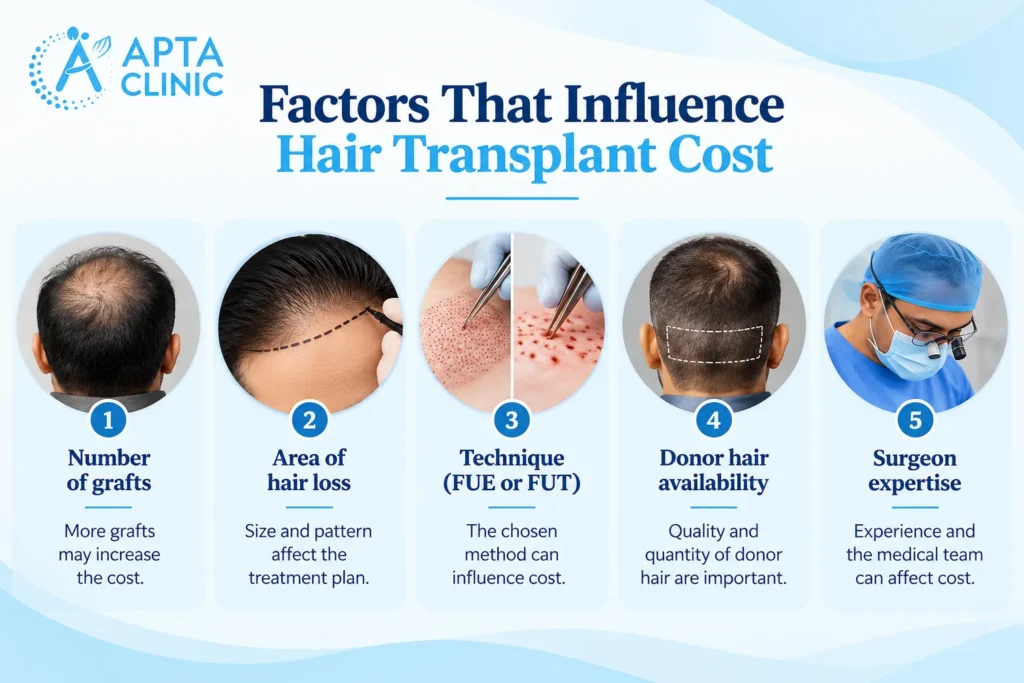
7 Factors That Affect Hair Transplant Cost
- Number of Grafts Required
The number of grafts is one of the main factors that can influence the total cost.
A graft is a small unit of tissue containing one or more hair follicles. It is not the same as a single hair. The graft count needed for treatment depends on the size of the area, the existing hair, the desired coverage and the amount of suitable donor hair available.
For example, restoring a small area around the hairline may require a different plan from treating extensive thinning across the frontal scalp and crown.
Ask the clinician how the graft estimate was calculated. It should be based on an examination of your scalp and donor area, not simply on a number chosen before assessment. The plan should also consider the possibility of future hair loss.
- The Hair Transplant Technique
FUE and FUT are two established hair transplantation methods. They differ in how hair follicles are collected from the donor area.
Follicular Unit Extraction (FUE)
With FUE, individual follicular units are extracted from the donor area, usually at the back or sides of the scalp. The cost may depend on the number of grafts, the complexity of extraction and the time required.
FUE generally leaves multiple small extraction scars rather than the single linear scar associated with FUT. Scarring and healing vary between individuals.
Follicular Unit Transplantation (FUT)
With FUT, a strip of hair-bearing scalp is removed from the donor area and divided into follicular units for transplantation. The procedure leaves a linear scar, and suitability depends on factors such as scalp characteristics, donor hair and treatment goals.
Neither method is automatically the better choice for everyone. A qualified medical professional should explain the likely benefits, limitations, scarring, recovery considerations and costs of the recommended approach.
- The Extent and Pattern of Hair Loss
Hair loss can affect the temples, frontal hairline, mid-scalp or crown. Some people have a small area of thinning, while others experience more extensive loss.
The size of the treatment area affects the number of grafts that may be needed and the complexity of the procedure. The clinician should also consider whether hair loss is likely to continue in untreated areas.
A hair transplant redistributes existing follicles. It does not create an unlimited supply of new hair or stop every cause of future hair loss. Long-term planning is therefore part of deciding how much coverage is realistic.
- Donor Hair Availability and Quality
Donor hair is commonly collected from suitable areas at the back or sides of the scalp. Its density, characteristics and availability help determine how much hair can reasonably be transplanted.
If the donor supply is limited, the clinician may need to prioritise certain areas rather than attempt extensive coverage. Taking too many grafts can affect the appearance of the donor area.
A larger graft count does not automatically mean a better result. Ask how the proposed plan will protect your donor area and what level of coverage is realistic.
- Hairline Design and Graft Placement
Hairline design depends on factors such as age, facial proportions, existing hair, hair characteristics and the likely progression of hair loss.
A natural-looking result requires careful planning of the direction, angle and distribution of transplanted follicles. The complexity of this planning and the procedure itself may affect the time and resources required.
During your consultation, ask how the proposed hairline will suit your appearance now and how the plan accounts for possible future thinning.
- Surgeon Qualifications and Clinical Standards
Hair transplantation is a surgical procedure. The qualifications of the medical professional responsible for your care and the responsibilities of each team member should be clear before you agree to treatment.
Ask who will assess your hair loss, plan the procedure, design the hairline, perform the surgical steps and manage complications or postoperative concerns. Confirm the relevant qualifications and experience directly.
The quotation should be considered alongside medical assessment, informed consent, appropriate hygiene and follow-up arrangements. A low price alone does not tell you whether a treatment plan is suitable.
- What Is Included in the Quotation?
Two clinics may provide different prices for procedures that appear similar. One quotation may include consultation and follow-up visits, while another may charge for some services separately.
Before booking, ask whether the estimate covers:
- Preoperative assessment and treatment planning.
- The agreed technique and planned graft number.
- The roles of the surgeon and clinical team.
- Prescribed medicines or dressings, where applicable.
- Postoperative instructions and scheduled follow-up.
- Advice and care if a postoperative concern develops.
- Any additional fees that could apply if the treatment plan changes.
Request a written breakdown and make sure you understand the expected total cost before making a decision.
FUE vs FUT: Does the Technique Affect the Cost?
The technique can affect procedure time, clinical resources, scarring and recovery considerations. However, the final cost also depends on the individual treatment plan and the clinic’s pricing structure.
Factor | FUE | FUT |
How donor hair is collected | Individual follicular units are extracted | A strip of hair-bearing scalp is removed and divided into follicular units |
Donor-area scarring | Multiple small extraction scars | Usually a linear scar |
Suitability | Depends on donor supply, hair characteristics and goals | Depends on donor supply, scalp characteristics and goals |
Pricing | Depends on the procedure and clinic’s fee structure | Depends on the procedure and clinic’s fee structure |
This comparison describes general differences. It does not mean that one method will always cost more or less than the other.
Ask the clinician why a particular technique is recommended for your circumstances and request a quotation for that specific treatment plan.
Are Hair Transplants Priced Per Graft?
Some clinics use a per-graft pricing model. Others quote a package price or a fee for the procedure.
Ask how the clinic calculates its fee and what is included. A graft may contain more than one hair follicle, so graft count and hair count should not be treated as interchangeable.
You should also ask how the planned graft number is determined, whether there are minimum charges and how the final fee is handled if the procedure differs from the original estimate.
A clear quotation should explain both the planned treatment and the services included in the price.

Is a Cheaper Hair Transplant Always Better Value?
Not necessarily. Cost is one consideration, but the proposed treatment, medical responsibility, donor-area planning and follow-up arrangements also need to be assessed.
Before choosing a clinic, ask:
- Who will assess my hair loss and decide whether surgery is appropriate?
- What qualifications and experience does the responsible medical professional have?
- Who will perform each surgical step?
- Why is FUE or FUT recommended for my case?
- How was the graft estimate calculated?
- What results are realistic, and what are the limitations?
- What risks and complications should I understand?
- Which consultations, medicines and follow-up services are included?
- Who should I contact if I have a concern after the procedure?
Be cautious about guaranteed results, promises of unlimited grafts or a headline price without a clear treatment plan. Take time to understand the risks and alternatives before agreeing to surgery.
Who May Be Suitable for a Hair Transplant?
A hair transplant may be appropriate for some people with hair loss, but suitability depends on more than the appearance of thinning hair.
The clinician needs to consider the cause and pattern of hair loss, donor-hair availability, general health, previous procedures and the patient’s expectations. Some people may benefit from investigating or treating the cause of hair loss before surgery is considered.
Seek medical assessment if hair loss is sudden, patchy, associated with scalp pain or inflammation, or accompanied by other concerning symptoms. These patterns may need investigation before a cosmetic procedure is discussed.
A consultation can help determine whether transplantation is suitable or whether another approach should be considered.
What Happens During a Hair Transplant Consultation?
A consultation helps establish the cause and pattern of hair loss, assess the donor area and discuss realistic treatment goals.
Depending on your circumstances, the discussion may include:
- Hair-loss history: When the thinning started, how it has changed and which treatments you have tried.
- Scalp and donor-area assessment: Examination of the affected areas and the availability of suitable donor hair.
- Treatment options: Explanation of the proposed technique, likely coverage, limitations and alternatives.
- Graft planning: An estimate of the number of grafts required and the reasoning behind it.
- Cost and consent: A breakdown of fees, expected recovery, potential risks and follow-up arrangements.
Bring details of your medical history, current medicines and previous hair-loss treatments. Do not stop prescribed medication unless your treating clinician advises you to do so.
You should have enough information to understand the proposed procedure and its cost before deciding whether to proceed.
What Other Costs Should You Ask About?
The surgical fee may not be the only expense associated with a hair transplant. Depending on the clinic’s policy and your treatment plan, separate charges may apply for consultation, prescribed medicines, tests when clinically indicated or additional follow-up.
Ask which services are included and which may cost extra. Do not assume that every package covers all postoperative care, and do not assume that additional treatment will be necessary.
It is also worth asking what follow-up is available, how postoperative concerns are handled and whether future treatment for continuing hair loss would be charged separately.
How to Compare Hair Transplant Quotes in Mysore
Use the same questions when comparing clinics. This makes it easier to understand whether the quotations cover comparable procedures and care.
What to compare | Questions to ask |
Medical assessment | Who evaluates the cause and pattern of hair loss? |
Procedure | Is FUE or FUT proposed, and why? |
Graft estimate | How many grafts are planned, and how was the estimate calculated? |
Surgical responsibility | Who performs the surgical steps and manages complications? |
Price breakdown | What is included, and what may be charged separately? |
Recovery support | What instructions and follow-up arrangements are provided? |
Expected outcome | What are the realistic benefits, limitations and risks? |
If a quotation is unclear, ask for an explanation in writing. Choose a treatment plan you understand and have had time to consider rather than making a decision based on price alone.
Hair Transplant Consultation at APTA Clinic, Mysore
APTA Clinic lists hair transplant services for men and women in Mysore and describes FUE and FUT among its methods. The appropriate technique, clinical suitability and current treatment cost should be confirmed directly with the clinic.
To enquire about a consultation, call +91 7411 707 555. Ask about the assessment process, current pricing, the proposed graft number, the medical professional responsible for treatment and the services included in the quotation.
Clinic locations listed by APTA Clinic:
- Krishnamurthy Puram, Mysuru, Karnataka 570004.
- Basavaraj Circle, Vijayanagar 3rd Stage, Mysuru, Karnataka 570030.
Confirm the exact branch address and appointment availability before visiting.
Website: https://aptaclinic.com/
Make an Informed Decision About Hair Transplant Cost
The right hair transplant plan depends on your hair-loss pattern, available donor hair, the recommended technique and the care provided before and after surgery.
When comparing hair transplant cost in Mysore, ask for an individual assessment and a written quotation that explains the procedure, planned graft number and included services. This gives you a clearer basis for comparing treatment options and deciding whether transplantation is appropriate for your needs.
To enquire about a hair transplant consultation at APTA Clinic, call +91 7411 707 555.
Medical information note: This article provides general educational information and is not a substitute for an individual medical assessment. Treatment suitability, risks, costs and expected outcomes vary from person to person.
Frequently Asked Questions (FAQs)
The cost depends on the number of grafts required, the technique selected, the extent of hair loss, donor-hair availability and the services included in the quotation. APTA Clinic’s current prices have not been verified for this article. Contact the clinic for its latest pricing and an individual estimate.
The main factors include graft count, the area being treated, FUE or FUT technique, donor-hair characteristics, procedure complexity, the medical team’s responsibilities and postoperative care. The final estimate should be based on an individual assessment.
The cost can differ between FUE and FUT, but neither method is always cheaper. Pricing depends on the treatment plan, procedure requirements and the clinic’s fee structure. Ask a qualified medical professional which approach is suitable for you and request a written quotation.
Some providers charge per graft, while others use a package or procedure-based price. Ask how the fee is calculated, how many grafts are planned and which services are included. A graft may contain more than one hair follicle, so graft count and hair count are not interchangeable.
Suitability depends on the cause and pattern of hair loss, donor-hair availability, general health, previous treatments and expectations. A medical assessment is needed before deciding whether transplantation is appropriate.
Ask who will assess your hair loss, who will perform each surgical step, which technique is recommended, how the graft estimate was calculated, what the quotation includes, what risks may apply and what follow-up care is available. Confirm the responsible medical professional’s qualifications and responsibilities before agreeing to treatment.
Not necessarily. Inclusions vary between providers and treatment plans. Ask whether the fee covers consultation, any clinically indicated tests, prescribed medicines, aftercare and follow-up appointments. Clarify any additional charges before booking.
Call APTA Clinic on +91 7411 707 555 to ask about consultation availability and current pricing. The clinic lists hair transplant services for men and women on its website. Confirm the recommended procedure, exact quotation and included services directly with the clinic.