Beard Transplant in Mysore: Who Is a Suitable Candidate and What Does Recovery Involve?
- Home
- Blog
- About Us
A patchy beard or areas with little facial hair can have several causes. Some people naturally grow less beard hair, while others notice gaps after an injury or scarring. A beard transplant may help selected patients improve coverage by moving hair follicles from a donor area, commonly the scalp, to parts of the face.
The procedure requires careful planning. Beard hair grows at different angles across the cheeks, jawline, chin and moustache, so the placement of each follicular unit affects the appearance of the result. The available donor hair, skin condition and cause of hair loss also influence whether surgery is appropriate.
If you are considering a beard transplant in Mysore, understanding the procedure, recovery period, risks and likely costs can help you prepare for a consultation.
APTA Clinic lists beard and moustache transplantation as a service in Mysore and describes Follicular Unit Extraction (FUE) on its published service page. Contact the clinic to confirm treatment availability, suitability assessment and current pricing.
What Is a Beard Transplant?
A beard transplant is a hair restoration procedure in which follicular units are moved from a donor area to selected areas of the beard or moustache.
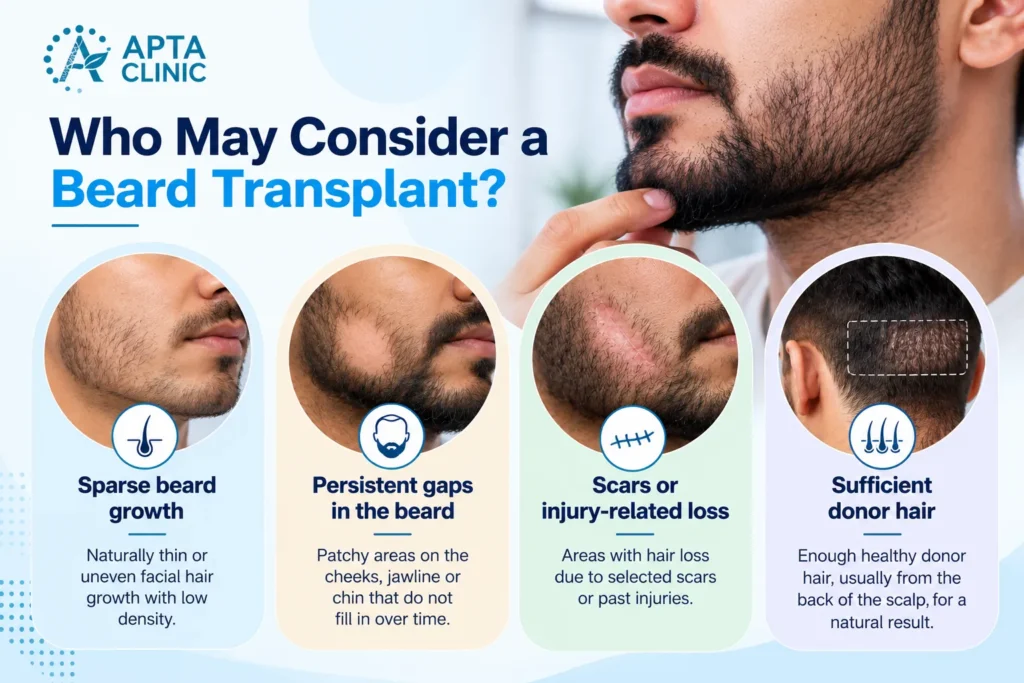
It may be considered by people who have:
- Naturally sparse facial hair.
- Persistent gaps across the cheeks, chin or jawline.
- Areas where beard hair has been lost because of selected scars.
- A specific area of low hair density that they want to address.
The goal is to place the transplanted follicles so they blend with the surrounding facial hair. The direction and angle of growth matter because beard hair does not grow uniformly across the face.
A transplant redistributes existing follicles. It cannot create an unlimited supply of hair, and the final density depends partly on donor hair availability and the treatment plan.
Who May Be a Suitable Candidate for a Beard Transplant?
A person may be considered for a beard transplant when there is a clearly identified area of insufficient facial hair, enough suitable donor hair and a realistic understanding of what surgery can achieve.
Potential candidates may include people with naturally sparse beard or moustache growth, persistent gaps in selected facial areas, or certain scars where hair restoration may be appropriate.
However, these factors do not automatically make someone eligible. A qualified medical professional needs to assess the facial skin, donor area, medical history and cause of hair loss before recommending treatment.
When should you investigate patchy beard growth first?
Not all patchy beard growth is caused by a lack of hair follicles. Some cases are associated with genetics or natural variation. Others may be linked to skin conditions, inflammation, infection, scarring or other medical factors.
Seek medical assessment before considering cosmetic surgery if facial hair loss:
- Starts suddenly.
- Forms new, clearly defined patches.
- Occurs with itching, redness, scaling or pain.
- Is accompanied by changes in the skin.
Treating an underlying condition may be more appropriate than proceeding directly to transplantation. A beard gap does not automatically mean you need surgery.
How Does a Beard Transplant Work?
APTA Clinic describes FUE on its published beard and moustache transplant page. In general, the procedure involves planning the recipient area, extracting suitable follicular units and placing them into selected areas of the face.
- Consultation and beard design
The clinician reviews the areas you want to improve, your existing facial hair, the donor area and your treatment goals. The proposed beard line and areas requiring additional coverage are discussed before the treatment plan is finalised.
A natural-looking design takes account of facial proportions and the direction of existing hair. The aim is to avoid a transplanted beard line that looks disconnected from the surrounding hair.
- Donor-area assessment
The donor area is commonly located on the scalp when suitable. Its density, hair characteristics, availability and potential scarring need to be evaluated.
The number of grafts that can reasonably be used depends on the donor supply and the size of the treatment area. Removing too much hair from the donor area can cause visible thinning or scarring, so careful planning is important.
- Follicle extraction using FUE
Follicular Unit Extraction, or FUE, involves removing individual follicular units from the donor area with specialised instruments.
FUE does not involve removing a single long strip of scalp, but it can still leave small scars. Their visibility varies depending on the extraction pattern, healing and individual skin characteristics.
- Implantation into the facial area
The extracted follicles are placed into carefully planned sites in the beard or moustache area. The direction and angle of placement are particularly important because facial hair grows in different patterns across the face.
Before consenting to surgery, ask the treating team to explain the proposed graft number, procedure, anaesthesia, expected recovery and possible risks.
What Does Beard Transplant Recovery Involve?
Recovery differs from person to person. It depends on the extent of the procedure, the donor and recipient areas, individual healing and the instructions provided by the treating clinician.
Redness, mild swelling, tenderness and small scabs around the transplanted follicles can occur during the early healing period. Your clinician should explain which changes are expected and which symptoms require medical attention.
The first few days
Protect the transplanted area while the skin begins to heal. Avoid rubbing, scratching, picking at scabs or putting pressure on the recipient area.
Follow the clinic’s instructions for washing your face, sleeping, taking prescribed medicines and caring for the donor area. Do not apply unapproved skincare products or try to remove crusts yourself.
Ask your clinician when you can resume exercise, shaving, swimming and your usual skincare routine. The timing depends on the procedure and your healing.
The following weeks
The appearance of the transplanted area changes as the initial healing progresses. Some transplanted hairs may shed after the procedure. This can be part of the normal hair-growth cycle and does not necessarily mean that the transplant has failed.
Avoid judging the final outcome from the first few weeks. Attend the recommended follow-up appointments and contact your clinician if you are concerned about your healing.
When does new beard growth become visible?
New growth develops gradually rather than immediately. It may take several months for transplanted hairs to become more noticeable. The final appearance can take around a year or longer to assess, depending on the individual and treatment.
Growth speed, density and blending with existing facial hair vary. Ask your clinician to explain the expected timeline for your particular treatment plan.
What Are the Possible Risks and Limitations?
Beard transplantation is a surgical procedure, so it has potential risks. These may include:
- Infection or inflammation.
- Bleeding, swelling, tenderness or discomfort.
- Temporary or persistent changes in skin colour.
- Small scars in the donor area.
- Uneven or limited growth of transplanted follicles.
- Hairs growing at an unnatural angle or direction.
- A beard line or density that differs from your expectations.
- The possible need for additional treatment or corrective procedures.
The risks depend on the procedure, the clinician’s assessment, the technique and individual healing. A transplant cannot guarantee a particular beard shape, density or level of symmetry.
Before consenting, ask about the risks relevant to your case, how complications would be managed and whom to contact if you develop a concern after surgery.
Contact your treating clinician promptly if you experience worsening pain, spreading redness, increasing swelling, pus, fever or other symptoms identified as concerning in your aftercare instructions.
How Should You Prepare for a Beard Transplant Consultation?
A consultation is the time to discuss your health, facial hair history and treatment goals. Consider bringing:
- A list of current medicines and supplements.
- Details of allergies and existing medical conditions.
- Information about previous facial procedures or hair restoration treatments.
- Details of skin conditions affecting the beard area.
- Questions about donor hair, graft estimates, recovery and costs.
- Reference photographs showing the beard style you want to discuss.
Tell the clinician if you have a history of abnormal scarring, bleeding problems, poor wound healing or reactions to anaesthesia. Do not stop prescribed medicines or start new products without medical advice.
Before booking surgery, make sure you understand the proposed design, limitations, aftercare requirements, fees and follow-up arrangements.
How Much Does a Beard Transplant Cost in Mysore?
The cost depends on the number of grafts planned, the size and location of the treatment area, donor hair availability, procedure requirements and the services included in the quotation.
A small area of patchy growth may require a different plan from restoration involving the cheeks, jawline, chin and moustache. There is no single price that applies to every patient.
APTA Clinic’s current beard transplant price has not been verified for this article. Contact the clinic for its latest pricing and a personalised estimate.
Before deciding, ask whether the quotation includes consultation, the planned procedure, medicines or dressings where applicable, follow-up visits and management of postoperative concerns. Request a written breakdown and clarify any potential additional charges.
Do not choose a provider solely because of a low advertised price. The responsible medical professional’s qualifications, donor-area planning, surgical responsibilities, beard design and aftercare also matter.
Choosing a Beard Transplant Clinic in Mysore
When comparing providers, ask clear questions about the procedure and the care you will receive.
Questions to ask include:
- Who will assess my facial hair and donor area?
- Who will perform each surgical step?
- What qualifications and experience does the responsible medical professional have?
- Why is the proposed technique appropriate for me?
- How many grafts are being considered, and how was the estimate determined?
- What risks and limitations apply to my case?
- What care and follow-up are included in the quotation?
- Whom should I contact if I experience an unexpected symptom after surgery?
Before-and-after photographs may help you understand a provider’s work, but they do not guarantee that your result will be the same. Ask whether the photographs show genuine cases and whether those patients had a similar starting point and treatment goal.
Beard and Moustache Transplant Consultation at APTA Clinic
APTA Clinic lists beard and moustache transplantation in Mysore and describes FUE on its published service page. An individual assessment is needed to determine whether you are suitable for treatment, how much donor hair may be available and what outcome is realistic.
To ask about consultation availability, current pricing and the treatment process, contact APTA Clinic on +91 7411 707 555.
The clinic lists locations in Krishnamurthy Puram and Vijayanagar, Mysuru. Confirm the exact address and appointment arrangements directly with the clinic before visiting.
A consultation should give you time to discuss your goals, understand the risks and recovery requirements, and decide whether transplantation is appropriate. You should not feel pressured to proceed before your questions have been answered.
Is a Beard Transplant Right for You?
A beard transplant may help selected people improve patchy facial hair or restore coverage in specific areas. Suitability and results vary according to the cause of hair loss, donor hair availability, skin health and the planned placement of follicles.
Before choosing a beard transplant in Mysore, seek an individual medical assessment, ask for a clear explanation of the procedure and risks, and obtain a written quotation. Understanding the recovery process and limitations will help you decide whether the procedure fits your needs.
To enquire about a consultation at APTA Clinic, call +91 7411 707 555.
Medical information note: This article provides general educational information and is not a substitute for an individual medical consultation. A qualified medical professional should assess your condition, suitability, risks and treatment options.
Frequently Asked Questions (FAQs)
People with naturally sparse facial hair, persistent gaps or selected areas of hair loss may be candidates if they have suitable donor hair and realistic expectations. A medical professional should assess the cause of hair loss, skin health and donor area before recommending surgery.
A beard transplant may improve selected gaps by placing follicles in areas with insufficient hair. The result depends on the size of the area, donor hair availability, skin condition and placement technique. Not every case of patchy beard growth requires transplantation.
Initial healing takes place during the early postoperative period, but recovery varies between individuals. Redness, swelling, tenderness and small scabs may occur. Follow the treating clinician’s instructions and ask when you can resume shaving, exercise and your usual skincare routine.
Transplanted hairs may shed initially before new growth develops. Visible improvement occurs gradually over several months, and the final appearance may take around 10 to 14 months to assess in some cases. Individual timelines and results vary.
Yes. Follicular Unit Extraction is one method used for beard transplantation. Individual follicular units are extracted from a donor area and implanted into the facial region. APTA Clinic describes FUE on its beard and moustache transplant service page.
Scarring can occur in both the donor and recipient areas. FUE generally leaves small extraction scars rather than one long linear donor scar, but scar visibility varies. Temporary skin changes or small marks may also occur during healing.
Transplantation may be considered for selected scarred areas, but suitability depends on the type of scar, skin condition and blood supply. A clinician should assess the area before recommending treatment. Active inflammation or infection may need attention first.
The price depends on the number of grafts, treatment area, donor hair, procedure requirements and what is included in the quotation. APTA Clinic’s current price has not been verified for this article. Contact the clinic for an individual estimate.