
Hair Loss Consultation in Mysore: What to Expect, What to Bring and What to Ask
- Home
- Blog
- About Us
Noticing more hair on your pillow, in the shower or on your comb can be unsettling. You might also see a widening part, a receding hairline or areas where the scalp has become more visible. These changes do not all have the same cause, which is why a hair-loss consultation should begin with an assessment rather than a decision about treatment.
At a hair-loss consultation, a clinician typically asks about your symptoms, medical history, family history and hair-care habits before examining your hair and scalp. Depending on the findings, further tests may be recommended. The purpose is to understand the possible cause of the problem and discuss appropriate next steps.
If you are planning a hair-loss consultation in Mysore, a little preparation can help you explain your concerns clearly and make better use of your appointment.
When Should You Book a Hair-Loss Consultation?
It is reasonable to seek an assessment if you are concerned about persistent or unexplained changes in your hair. You do not need to wait until the thinning becomes pronounced.
Consider arranging an appointment if you notice:
- Hair shedding that seems heavier than usual or continues over time.
- Gradual thinning around the crown, temples or central parting.
- A receding hairline or a reduction in overall hair density.
- One or more patches of missing hair.
- Hair that breaks easily or appears progressively finer.
- Scalp itching, scaling, redness, tenderness or discomfort alongside hair loss.
- Hair loss following an illness, major stress, significant weight change or a medication change.
Some shedding is part of the normal hair-growth cycle. However, a noticeable change in your usual pattern deserves attention, particularly when it persists or occurs with other symptoms.
Seek prompt medical assessment if hair loss develops suddenly, progresses rapidly or is accompanied by significant pain, marked inflammation, sores or shiny areas where follicles appear to be disappearing. Certain inflammatory or scarring conditions can damage follicles, so these symptoms should not be ignored.
What Happens During a Hair-Loss Consultation?
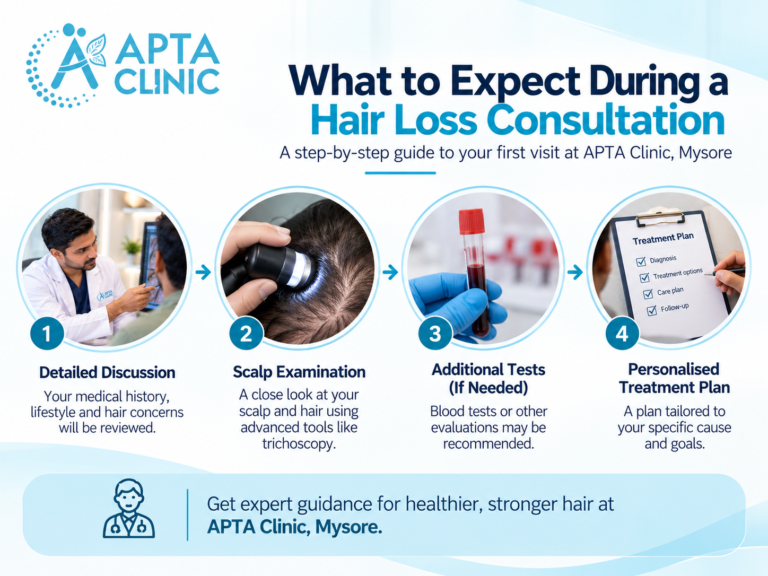
The exact process varies according to your symptoms and the clinician’s findings. A consultation generally involves several parts.
- Discussion of your symptoms
The clinician may ask when the hair loss began, whether it appeared suddenly or gradually, and which areas are affected.
You may also be asked about:
- Recent illness, surgery or major stress.
- Changes in weight or diet.
- Family history of hair thinning or baldness.
- Scalp itching, flaking, redness or discomfort.
- Recent pregnancy or other relevant hormonal changes.
- Hair colouring, chemical treatments, heat styling and tight hairstyles.
- Medicines, supplements and previous hair-loss treatments.
Try to describe the changes you have noticed rather than assuming what caused them. For example, explain whether you see more shedding while washing, gradual thinning at the crown or distinct patches of missing hair.
- Examination of your hair and scalp
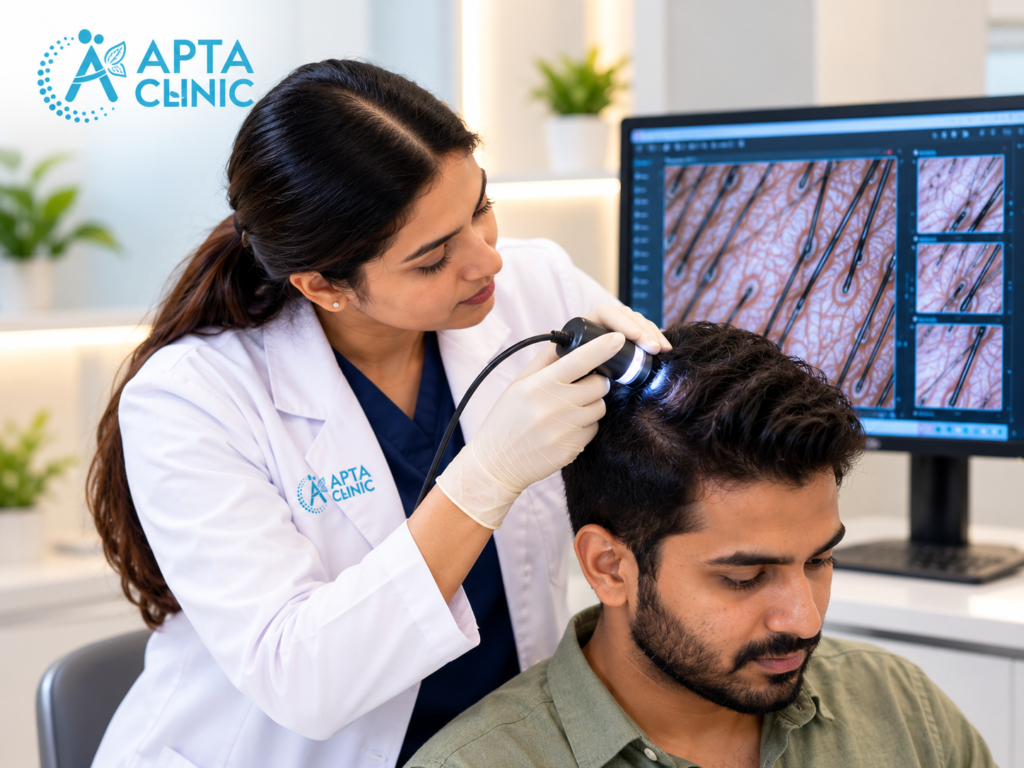
The clinician may inspect the scalp, hairline and affected areas. They may look at hair density, the pattern of thinning, hair-shaft quality, breakage and signs of inflammation.
Depending on the case, additional methods of examination may be considered. These could include magnified scalp examination or other clinical tests, but not every patient needs every method.
- Review of possible contributing factors
Hair loss can have several causes, and more than one factor may be involved. Hereditary hair loss, temporary shedding after illness or stress, certain scalp disorders, medication effects and nutritional or hormonal factors may be considered where relevant.
The clinician uses your history and examination to decide which possibilities need further investigation. A single symptom or photograph is not enough to establish the cause reliably.
- Discussion of next steps
After the initial assessment, the clinician may explain the likely possibilities, whether further tests are appropriate and what management options could be considered.
You should have an opportunity to ask questions about the purpose of any recommended treatment, expected benefits, limitations, potential side effects, costs and follow-up requirements.
A consultation does not mean you must agree to a procedure on the same day. Take time to understand your options if you need it.
What Should You Bring to Your Hair-Loss Appointment?
You do not need a complicated preparation routine. Bringing a few useful details can help the clinician build a clearer picture of your symptoms.
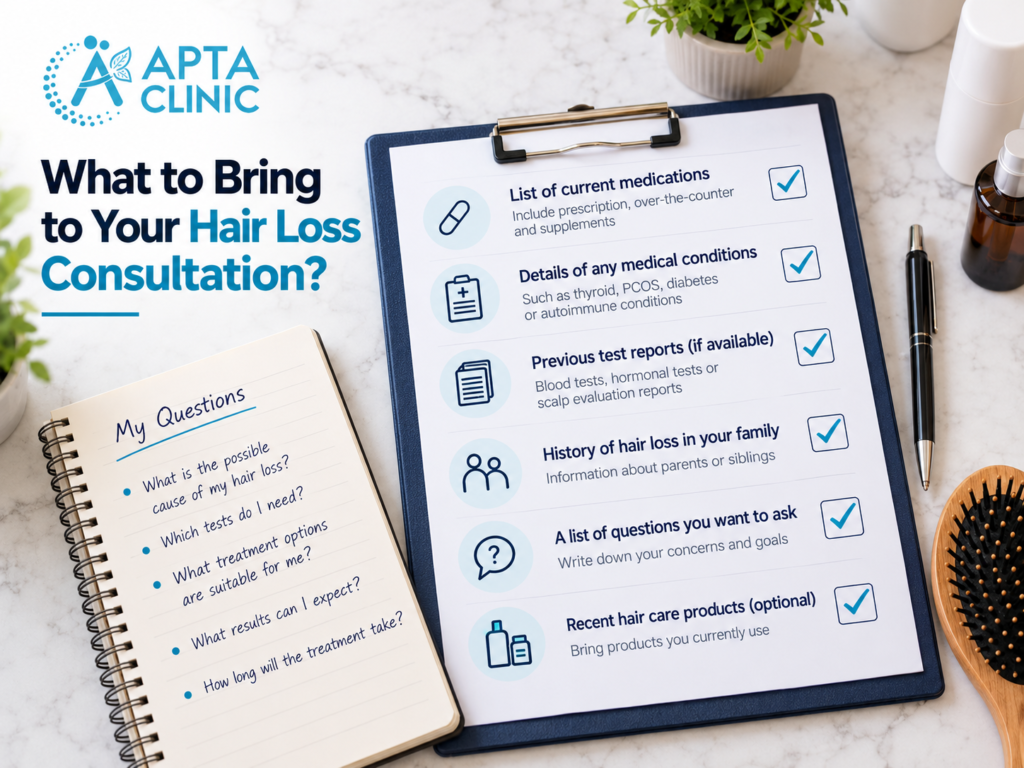
Your medical history
Make a note of relevant medical conditions, recent illnesses, surgery and significant changes in your health. Mention any known thyroid problems, nutritional deficiencies or hormonal conditions if applicable.
A list of medicines and supplements
Include prescription medicines, over-the-counter products, vitamins and supplements. Do not stop a prescribed medicine because you suspect it may be contributing to hair loss; discuss your concern with the prescribing clinician.
Previous test reports
Bring relevant blood-test reports, previous scalp assessments or medical notes if you have them. The clinician can decide whether the information is still useful or whether further investigation is necessary.
Details of previous hair treatments
Write down any medicines, topical products, procedures or home remedies you have tried. Include how long you used them and whether you noticed any changes or side effects.
Photographs showing changes over time
If you have photographs from several months ago, they may help illustrate how the hairline, parting or affected area has changed. Use ordinary photographs taken in similar lighting when possible. They are supporting information, not a substitute for an examination.
A short timeline of your symptoms
Note when the problem started, whether it has improved or worsened, and whether anything happened shortly before it began. This can be more useful than trying to remember every detail during the appointment.
Preparation checklist
- List your main hair and scalp concerns.
- Note when the symptoms began.
- Bring relevant medical reports.
- List medicines and supplements.
- Record previous hair treatments.
- Save useful comparison photographs.
- Write down questions you want answered.
You usually do not need to buy special products or begin a new hair-care routine before the appointment. Follow any specific preparation instructions provided by the clinic.
Questions to Ask During a Hair-Loss Consultation
A useful consultation should help you understand the reasoning behind the recommended next step. You can take this list with you.
Questions about the assessment
- What patterns or changes do you see in my hair and scalp?
- What possible causes should we consider?
- Is further examination or testing needed?
- Are there signs that require prompt follow-up?
Questions about treatment
- What are the available options for my situation?
- What is the purpose of each recommended treatment?
- What benefits can realistically be expected, and what are the limitations?
- What side effects, risks or contraindications should I know about?
- How long might it take to assess whether a treatment is helping?
- Are there alternatives, including observation or changes to hair-care habits?
Questions about cost and follow-up
- What is the consultation fee?
- Are investigations, medicines or procedures charged separately?
- How often would follow-up appointments be needed?
- How will progress be assessed?
- What should I do if the symptoms worsen or treatment causes side effects?
These questions can help you compare options without feeling pressured to choose a procedure before you understand it.
Will You Need Tests During a Hair-Loss Consultation?
Not everyone with hair loss needs laboratory tests or a specialised procedure. The decision depends on the history, examination and suspected cause.
A clinician may recommend blood tests if the symptoms or medical history suggest a possible underlying issue, such as a nutritional deficiency or thyroid disorder. In selected cases, additional scalp examination or a biopsy may be considered.
Tests should have a clear purpose. Ask what a recommended test is intended to investigate and how the result could affect your care.
Avoid starting high-dose vitamins, minerals or hair-loss medicines on your own. Supplements are not automatically helpful when there is no identified deficiency, and some products can cause harm when taken in excess.
What Determines the Cost of a Hair-Loss Consultation?
The cost can vary between clinics and according to what is included in the appointment. Additional investigations, specialised examinations, medicines and procedures may be charged separately.
Before booking, ask the clinic to confirm:
- The current consultation fee.
- Whether a scalp examination is included.
- Whether any tests have separate charges.
- Whether treatment is optional and priced separately.
- The expected cost of follow-up visits, if required.
APTA Clinic’s current consultation fee for a hair-loss assessment has not been independently verified for this article. Contact the clinic directly for the latest pricing and to confirm which assessment services are available.
What Happens After the Consultation?
The next step depends on what the assessment reveals.
You may receive advice about hair care, a recommendation for further investigation, a discussion of medical management or information about procedures that may be appropriate for your situation. In some cases, monitoring the condition before deciding on treatment may also be reasonable.
Ask how progress will be reviewed and what changes should prompt an earlier appointment. Hair growth takes time, so immediate visual changes should not be assumed. Treatment response also varies according to the cause of hair loss and the approach selected.
Be cautious of anyone promising guaranteed regrowth or claiming that one treatment works for every type of hair loss. A suitable plan should reflect your individual findings and realistic expectations.
How Dermatologists Evaluate Different Hair Loss Patterns
Hair loss does not look the same for everyone. Some people notice gradual thinning around the crown or widening of the hair parting, while others experience sudden shedding, receding hairlines or small patches of missing hair. Identifying the pattern is an important part of a hair loss consultation in Mysore because different patterns may point towards different underlying causes.
A dermatologist may examine whether the hair loss is diffuse or localised, whether the scalp shows signs of inflammation, and whether individual hair strands appear thinner or broken. The doctor may also ask when the changes first appeared and whether they are becoming more noticeable over time.
This assessment helps determine whether additional investigations are necessary. Rather than relying on a single symptom, dermatologists consider the overall clinical picture to develop an appropriate evaluation and management plan.
The Role of Nutrition and Lifestyle in Hair Loss Assessment
Nutrition and lifestyle are relevant considerations when investigating persistent hair shedding. Inadequate intake of certain nutrients, restrictive diets, rapid weight loss and some underlying medical conditions may contribute to hair changes in susceptible individuals. Prolonged stress or a recent significant illness may also be relevant to the history.
Your dermatologist may ask about recent changes in body weight, eating patterns, sleep, stress levels and general health. If a nutritional deficiency or another medical contributor is suspected, targeted investigations may be recommended.
It is important not to assume that hair loss automatically indicates a vitamin or mineral deficiency. Taking supplements without identifying a genuine need may be unnecessary and, in some cases, harmful. A personalised assessment helps determine whether dietary changes, testing or referral to another healthcare professional may be appropriate.
Why Your Hair Care Routine Matters During a Hair Loss Consultation
Your everyday hair care habits can provide useful information during a dermatology appointment. Frequent heat styling, chemical straightening, tight hairstyles, vigorous brushing and repeated traction can contribute to hair shaft damage or breakage. These issues may sometimes be confused with hair loss originating from the follicles.
During your consultation, explain how often you wash your hair, which styling products you use and whether you have recently changed your hair care routine. Mention any new shampoos, oils, chemical treatments or salon procedures that coincided with the onset of your symptoms.
Patients seeking a hair loss consultation in Mysore should also mention whether their scalp feels itchy, tender, unusually dry or irritated. These details can help the dermatologist distinguish between possible hair shaft damage, scalp conditions and other causes of thinning.
Medical History Details That Can Help Your Dermatologist
A detailed medical history can make a hair loss consultation more informative. Certain medications, hormonal changes, recent illnesses and family history may provide clues about why your hair density or shedding pattern has changed.
Before your appointment, consider whether you have experienced a recent fever, surgery, major illness, significant weight change or other health-related event. If applicable, mention menstrual changes, pregnancy, childbirth or menopause, as hormonal transitions may influence hair growth patterns.
Bring a list of prescription medicines, over-the-counter products and supplements you currently take. Do not stop prescribed medication simply because you suspect it may be associated with hair loss. Your doctor can assess whether a medication review or further investigation is appropriate.
Providing a clear timeline of symptoms and relevant health events helps the dermatologist build a more complete picture of your concerns.
What Happens If Your Dermatologist Recommends Hair and Scalp Tests?
Not every patient requires laboratory tests or specialised scalp examinations. The need for further investigation depends on the pattern of hair loss, medical history and findings during the initial consultation.
Depending on the suspected cause, your dermatologist may recommend blood tests to investigate possible nutritional deficiencies, thyroid problems or other relevant medical factors. A scalp examination using dermoscopy or trichoscopy may help reveal changes in hair shaft thickness, follicular openings and scalp surface appearance.
In selected cases, additional procedures such as fungal testing or a scalp biopsy may be considered. These investigations are generally recommended when the clinical findings indicate a specific diagnostic need.
If tests are suggested, ask what each test is intended to investigate and how the results could influence your treatment plan. Understanding the purpose of each investigation can help you make informed decisions about your care.
Hair-Loss Consultation at APTA Clinic, Mysore
APTA Clinic has existing services for hair-loss treatment and trichology in Mysore. Its hair-loss service page describes assessment of the scalp and hair-loss pattern, discussion of contributing factors and treatment options based on the individual’s needs.
If you are experiencing persistent shedding, visible thinning or other changes in your hair, you can contact the clinic to ask about an appropriate consultation.
Before booking, confirm the branch, appointment availability, consultation fee and whether any specific examination you are seeking is offered.
Contact APTA Clinic
- Phone: +91 7411 707 555
Frequently Asked Questions (FAQs)
The clinician typically discusses your symptoms and medical history, examines your hair and scalp, and determines whether further tests or treatment discussions are appropriate.
Bring relevant medical reports, a list of medicines and supplements, details of previous treatments, and photographs showing changes over time if available.
The duration depends on the clinic and the complexity of your concerns. Ask the clinic how much time to allow when booking.
Not everyone needs tests. A clinician may recommend them when the history or examination suggests a possible underlying cause.
Fees vary. Contact the clinic to confirm its current consultation fee and whether tests or other services are charged separately.
Follow the clinic’s instructions. Do not change your usual routine unless the clinic asks you to prepare in a particular way.
The clinician may discuss suitable options after assessment. Whether treatment begins immediately depends on the findings and the treatment being considered.
Seek an assessment for persistent or unexplained thinning, sudden shedding, patchy loss or scalp symptoms. Rapid progression, pain or significant inflammation warrants prompt evaluation. |
APTA Clinic lists locations in Krishnamurthy Puram and Vijayanagar, Mysore.