
Blood Tests for Hair Loss: Which Tests May Be Needed?
- Home
- Blog
- About Us
Seeing more hair than usual on your pillow, comb or shower floor can leave you wondering whether something is wrong. You may start changing shampoos, trying supplements or searching for a product that promises thicker hair. But when hair loss persists, it can be more useful to understand what is causing it than to keep changing your routine.
Blood tests may be recommended when a clinician suspects that an underlying medical condition, iron deficiency, nutritional problem or hormonal issue could be contributing to hair loss. They are not necessary for everyone. The decision depends on the pattern of hair loss, your medical history, symptoms and findings during an examination of your scalp.
For some people, the cause becomes clearer from the history and physical examination alone. Others may need laboratory tests to investigate a possible contributing factor. A blood test is one part of the assessment, not a complete diagnosis of every hair-loss condition.
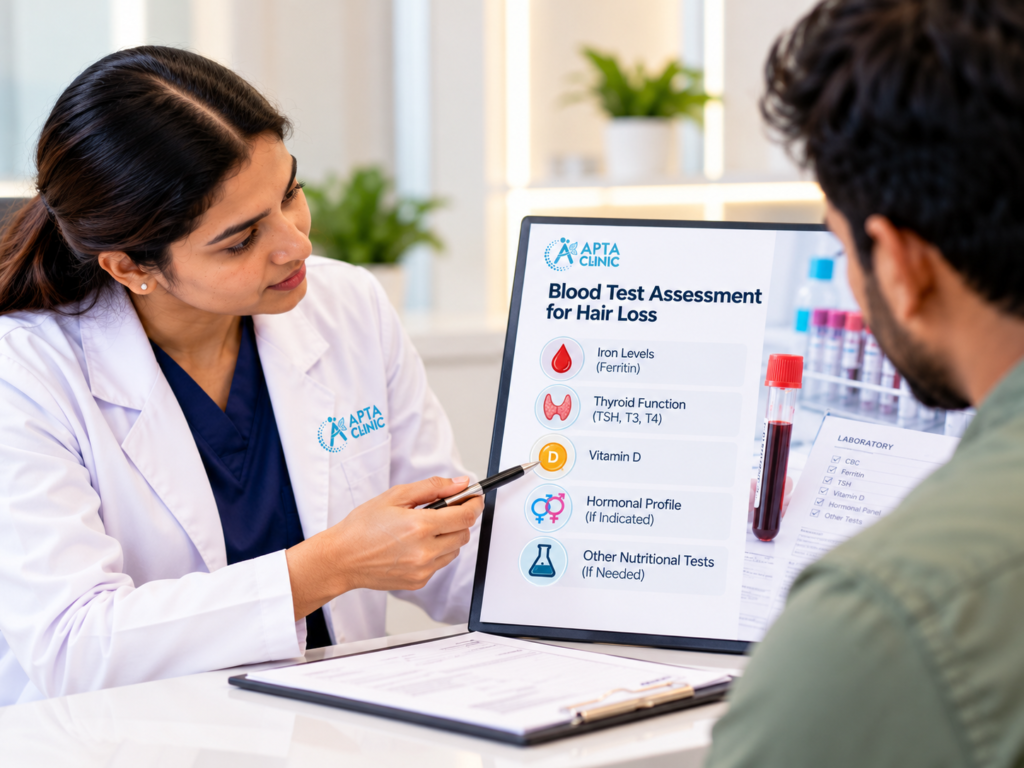
Why Might a Doctor Recommend Blood Tests for Hair Loss?
Hair growth depends on several factors, including genetics, the normal hair-growth cycle, overall health and the condition of the scalp. Certain medical conditions and nutritional deficiencies can disrupt this cycle or contribute to increased shedding.
A clinician may consider blood tests if you have persistent or unexplained hair loss, symptoms that suggest an underlying health issue, a restricted diet or a medical history that makes a particular deficiency or condition more likely.
For example, iron deficiency and thyroid disorders can be associated with hair loss. A clinician may investigate these possibilities when the history and examination support doing so.
Blood tests may help to:
- Identify a possible nutritional deficiency.
- Investigate suspected thyroid dysfunction.
- Assess for anaemia or another blood-related problem.
- Explore a possible hormonal issue when relevant symptoms are present.
- Guide decisions about treatment or further investigation.
Testing should be based on a clinical reason. Ordering every available test does not automatically produce a more accurate diagnosis.
Which Blood Tests May Be Considered for Hair Loss?
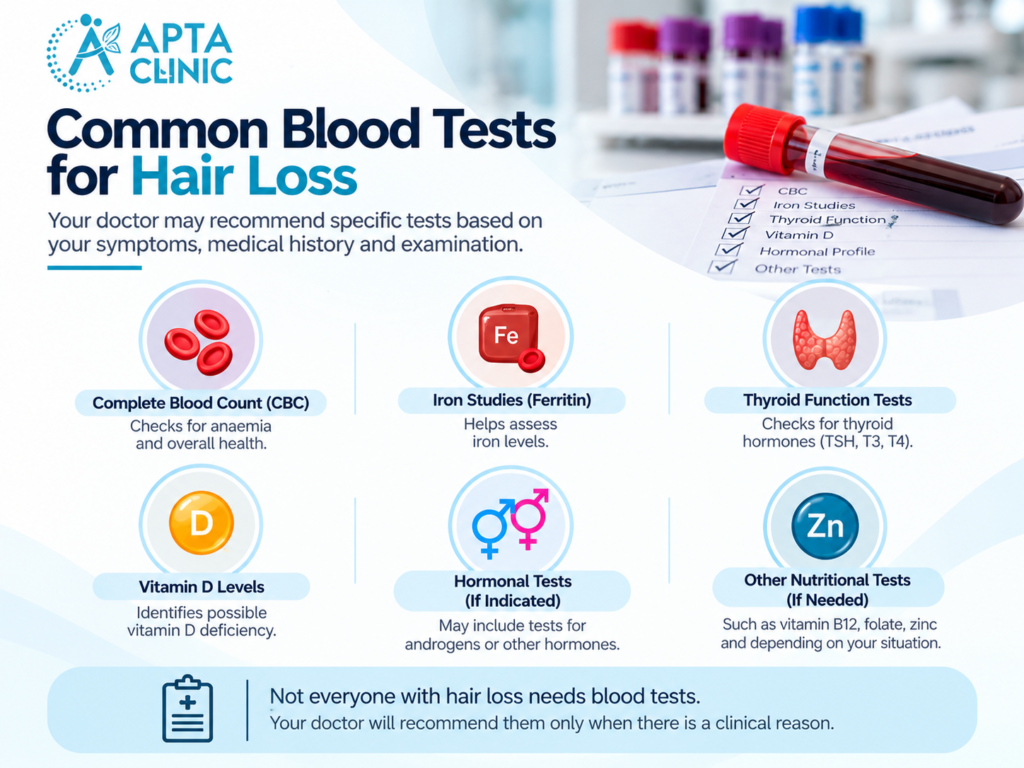
There is no single blood-test panel that is appropriate for everyone experiencing hair loss. The tests selected depend on the suspected cause and the information already available from the consultation.
- Complete Blood Count (CBC)
A complete blood count measures components of your blood, including red blood cells, white blood cells and platelets.
In a hair-loss assessment, a CBC may be considered when a clinician suspects anaemia or another blood-related issue. Iron-deficiency anaemia can occur when the body does not have enough iron to produce healthy red blood cells. Hair loss can be one of several symptoms associated with iron deficiency.
A CBC alone does not establish every cause of hair loss, and a normal result does not rule out all possible contributing factors.
- Iron Studies and Ferritin
Iron is needed for several functions in the body, and iron deficiency can be associated with hair loss in some people.
A clinician may recommend tests such as:
- Serum ferritin: Measures a protein that reflects the body’s iron stores, although ferritin can also be affected by inflammation and other factors.
- Serum iron: Measures the amount of iron circulating in the blood at the time of testing.
- Total iron-binding capacity (TIBC) or related iron-binding measurements: Helps assess how iron is carried in the blood.
These tests are interpreted together when appropriate. A single iron measurement may not provide enough information to determine whether iron stores are low.
A clinician may be more likely to investigate iron status if your history includes heavy menstrual bleeding, a restricted diet, previous iron deficiency or other relevant symptoms. The decision depends on the individual case.
Do not start iron supplements simply because your hair is falling. Too much iron can be harmful. If a deficiency is identified, the clinician should advise you on appropriate management and whether the underlying reason for the deficiency needs investigation. (American Academy of Dermatology)
- Thyroid Function Tests
The thyroid gland produces hormones that help regulate several body functions. Both an underactive thyroid and an overactive thyroid can be associated with hair changes.
A clinician may consider thyroid function testing if hair loss occurs alongside symptoms or a medical history that suggests a thyroid problem.
Depending on the clinical question, testing may include thyroid-stimulating hormone (TSH) and, when indicated, thyroid hormone measurements such as free T4.
Other symptoms that may prompt a clinician to consider thyroid assessment include unexplained changes in weight, unusual sensitivity to heat or cold, fatigue or changes in heart rate. These symptoms are not specific to thyroid disease, and hair loss alone cannot establish a thyroid diagnosis.
If a thyroid disorder is identified, the clinician can discuss appropriate treatment or referral. Hair changes may take time to respond, and improvement is not guaranteed in every case.
Vitamin and Mineral Tests
Nutrients play a role in normal hair growth, but that does not mean every person with hair loss needs a broad vitamin panel.
Depending on the medical history and diet, a clinician may consider tests for selected nutrients, such as vitamin B12, vitamin D or zinc. Other tests may be appropriate in specific circumstances.
Testing may be considered when there is a reason to suspect inadequate intake, poor absorption, a restricted diet or another condition that could affect nutrient levels.
The result needs to be interpreted in context. A low nutrient level may be relevant, but it does not automatically explain all hair loss. Similarly, taking extra vitamins when levels are already adequate may not help and can sometimes cause harm.
The safest approach is to investigate a suspected deficiency and correct it under appropriate medical guidance rather than purchasing several supplements without assessment.
Hormone Tests
Hormonal testing is not routinely required for every person with thinning hair.
A clinician may consider specific hormone tests when the pattern of hair loss and accompanying symptoms suggest a possible hormonal condition. For example, a woman with hair thinning alongside irregular menstrual cycles, increased facial hair or persistent adult acne may need an assessment for a relevant hormonal issue.
The tests depend on the symptoms and clinical findings. They may involve selected androgen measurements or other investigations when indicated.
Hair thinning by itself does not confirm a hormone imbalance. The clinician should explain why a particular test is being considered and how the result could affect the next step.
Other Tests in Selected Cases
Sometimes the initial assessment raises questions that cannot be answered by routine blood tests alone. A clinician may consider further investigation based on the pattern of hair loss and scalp findings.
Depending on the suspected cause, this could involve a magnified scalp examination, a hair-pull test or, in selected cases, a scalp biopsy. These are not blood tests, and they serve different purposes.
Not everyone needs these procedures. The appropriate investigation depends on the clinical findings and whether the result is likely to change management.
When Should You Seek a Hair-Loss Assessment?
Arrange a clinical assessment if you notice persistent shedding, gradual thinning, a widening part, a receding hairline or hair loss that does not have an obvious explanation.
You should also seek assessment if hair loss occurs alongside scalp itching, scaling or discomfort, or if you have other symptoms that concern you.
Seek prompt medical evaluation if hair loss develops rapidly, appears in sudden patches or occurs with significant redness, pain, sores or shiny areas where follicles seem to be disappearing. Some inflammatory or scarring conditions can cause lasting follicle damage.
A clinician can assess whether blood tests are appropriate or whether another form of examination is needed.
What Can Blood Test Results Tell You?
Blood test results provide information about the particular substances or functions being measured. They do not directly reveal every detail about the hair follicles or establish the cause of every type of hair loss.
If a result is outside the reference range
An abnormal result may suggest that further assessment or treatment is needed. Its significance depends on the test, how far the result falls outside the laboratory’s reference range, your symptoms and other medical information.
For example, a low iron result may prompt further investigation into iron deficiency. An abnormal thyroid result may lead to additional testing or a discussion about thyroid management.
Do not interpret a result in isolation or begin treatment based only on an online reference range.
If the results are normal
Normal blood tests do not mean your hair loss is imaginary, nor do they rule out every possible cause.
Hereditary hair loss, some scalp disorders and other forms of alopecia may not produce an abnormal result on routine blood tests. A clinician may need to rely on the scalp examination, symptom pattern and other investigations.
If the tests are normal but the hair loss continues, ask what other explanations should be considered and whether follow-up is needed.
How Doctors Decide Which Blood Tests Are Appropriate for Hair Loss
Blood tests are not necessary for every person experiencing hair loss. A doctor generally decides which investigations may be useful after reviewing the patient’s symptoms, medical history, dietary habits and scalp examination findings. The pattern of hair loss can provide important clues about whether an underlying nutritional, hormonal or systemic factor needs further evaluation.
For example, a person experiencing diffuse hair shedding after a period of rapid weight loss may require a different assessment from someone with gradual thinning around the crown or a receding hairline. Similarly, hair loss accompanied by fatigue, changes in weight or other unexplained symptoms may prompt the doctor to investigate possible underlying medical conditions.
The aim of testing is to answer specific clinical questions rather than order every available blood test. A targeted approach can help avoid unnecessary investigations and make it easier to interpret results in the context of the patient’s symptoms.
What Abnormal Blood Test Results Mean for Your Hair Loss Treatment
An abnormal blood test result does not always mean that the finding is responsible for hair loss. Doctors interpret laboratory values alongside symptoms, examination findings and the patient’s broader medical history.
If a clinically relevant deficiency or medical condition is identified, treatment may focus on correcting that issue. For example, iron deficiency may require investigation of its underlying cause as well as appropriate replacement, while confirmed thyroid dysfunction may require condition-specific management.
In other situations, the blood tests may be normal even when hair loss is clearly present. This does not mean the symptoms are imaginary or that no treatment options exist. Conditions such as androgenetic alopecia and some forms of alopecia areata are often evaluated primarily through clinical examination, sometimes with trichoscopy or other targeted investigations.
The next steps should therefore depend on the overall diagnosis rather than a single laboratory value. Hair recovery, when possible, may take several months, and outcomes vary according to the underlying condition.
What If Blood Tests Are Normal but Hair Loss Continues?
Normal blood test results do not rule out every cause of hair loss. Many common hair conditions can occur without detectable abnormalities in routine laboratory investigations.
If shedding or thinning persists despite normal results, a dermatologist may reassess the distribution of hair loss, examine the scalp for inflammation or scarring, and use trichoscopy to look for changes in hair shaft thickness and follicular appearance. Depending on the findings, further investigations or a scalp biopsy may occasionally be appropriate.
The doctor may also review the timing of the symptoms, family history, medication use, hair care practices and previous treatment attempts. These details can help distinguish between excessive shedding, progressive follicular miniaturisation and hair breakage.
Rather than repeatedly ordering broad blood panels, the next step is usually to revisit the clinical assessment and identify whether a more specific investigation is warranted.
Does the Pattern of Hair Loss Influence Which Blood Tests Are Needed?
The pattern of hair loss can help determine whether blood tests are likely to be useful. People experiencing diffuse shedding across the scalp may require a different evaluation from those noticing gradual thinning around the crown, a receding hairline or distinct bald patches.
Diffuse shedding may prompt a doctor to ask about recent illness, nutritional changes, weight loss, medication use and other possible triggers. Depending on the history, investigations for iron deficiency, thyroid dysfunction or other medical contributors may be considered. In contrast, gradual pattern hair loss is often assessed primarily through the distribution of thinning, family history and scalp examination.
Patchy hair loss may be associated with conditions such as alopecia areata, which is generally evaluated clinically. Blood tests may be appropriate when the medical history suggests an associated condition, but extensive laboratory screening is not automatically required.
Understanding the hair loss pattern helps the doctor select investigations that address specific concerns rather than relying on a standard panel for every patient.
Blood Tests for Hair Loss After Pregnancy
Hair shedding after childbirth is a common concern and may occur as part of postpartum telogen effluvium. Hormonal changes following pregnancy can shift more hairs into the shedding phase, making hair loss noticeable several months after delivery.
In many cases, this shedding gradually improves over time. However, persistent or unusually severe hair loss may warrant medical evaluation, especially when accompanied by fatigue, dizziness, significant weakness or other symptoms that could suggest an underlying health issue.
Depending on the patient’s history and examination, a doctor may consider a complete blood count, ferritin or thyroid function tests. The need for these investigations depends on factors such as blood loss during delivery, previous iron deficiency, dietary intake and symptoms suggestive of thyroid dysfunction.
Postpartum hair shedding should not automatically be attributed to hormonal changes if other concerning features are present. A personalised assessment can help distinguish expected changes from conditions that may require treatment.
Can Medication Use Affect Blood Test Results for Hair Loss?
Medications and supplements can influence both hair growth and the interpretation of certain laboratory results. Some medicines may be associated with hair shedding in susceptible individuals, while others can affect nutrient levels, hormone measurements or thyroid function.
During a consultation, provide your doctor with a complete list of prescription medicines, non-prescription products and dietary supplements. Include recently discontinued medicines if the timing may be relevant to your symptoms.
Biotin, a vitamin commonly included in hair, skin and nail supplements, is particularly important to mention because high doses can interfere with certain laboratory tests, including some thyroid and hormone-related assays. This interference may produce misleading results rather than reflect the person’s actual health status.
Ask your healthcare professional whether any preparation is required before testing. Do not stop prescribed medicines or supplements independently; follow the specific advice given for your investigations.
When Might Blood Tests Be Considered for Hair Loss in Men?
Hair loss in men can occur for several reasons, including androgenetic alopecia, temporary excessive shedding, scalp disorders and certain medical conditions. Gradual recession at the temples or thinning around the crown often follows a recognisable pattern, and blood testing may not be necessary when the clinical presentation is typical.
However, investigations may be considered when hair loss develops suddenly, occurs diffusely or is accompanied by other symptoms. Depending on the clinical findings, a doctor may investigate possible iron deficiency, thyroid dysfunction, nutritional problems or another suspected underlying condition.
Men who experience unexplained fatigue, substantial weight changes, restrictive eating patterns or other health concerns should mention these details during their appointment. They may help guide the choice of tests.
Routine testosterone testing is not necessary for every man with pattern hair loss. Hormone investigations are more useful when the medical history or examination suggests a specific endocrine problem.
Understanding Laboratory Reference Ranges in Hair Loss Investigations
Blood test reports usually include reference ranges that help healthcare professionals interpret laboratory measurements. However, a result within the stated range does not always settle the question of whether a particular medical condition is contributing to hair loss.
For example, ferritin results must be interpreted alongside other iron measurements, possible inflammation and the patient’s clinical history. Thyroid test results are considered in relation to symptoms, medication use and the laboratory’s reference intervals.
It is also important to distinguish between a laboratory abnormality and a confirmed cause of hair loss. A mildly abnormal result may be unrelated to the symptoms, while a relevant clinical problem may require further investigation even when an initial test is inconclusive.
Patients should avoid comparing their results directly with values posted online or starting treatment based on isolated numbers. A qualified healthcare professional can explain what the findings mean, whether additional tests are appropriate and what action, if any, is needed.
Blood Tests for Hair Loss at APTA Clinic, Mysore
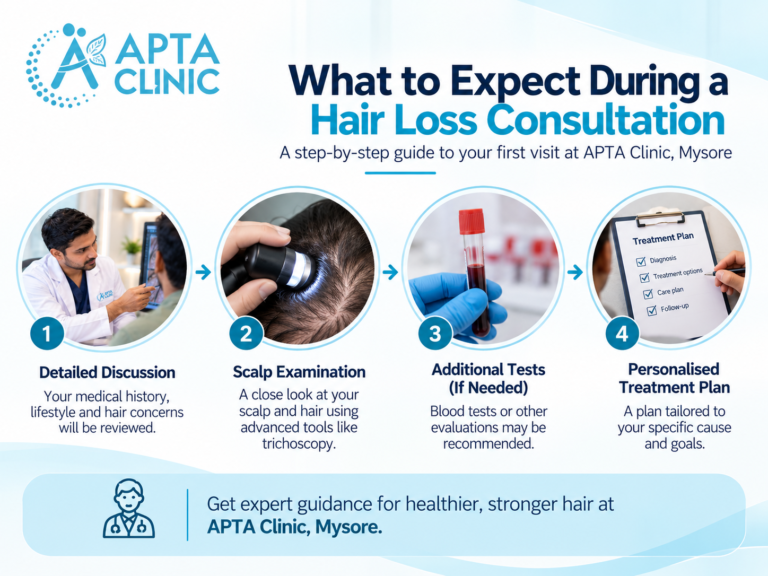
APTA Clinic has existing hair-loss and trichology services in Mysore. Its hair-loss service page describes an assessment that may include medical history, family history, scalp examination, review of medications and consideration of nutritional or hormonal factors.
If you are experiencing ongoing hair shedding or visible thinning, you can contact the clinic to ask about an appropriate hair-loss assessment and whether laboratory investigations may be recommended.
The specific tests required depend on the individual’s symptoms and clinical findings. Do not assume that every person needs blood tests or that all investigations are performed at the clinic.
Contact APTA Clinic
- Phone: +91 7411 707 555
Frequently Asked Questions (FAQs)
Depending on the person’s symptoms and medical history, a clinician may consider a complete blood count, iron studies including ferritin, thyroid function tests or selected vitamin, mineral or hormone tests. There is no single panel suitable for everyone.
Not always. Blood tests can identify certain medical conditions or deficiencies that may contribute to hair loss. Other causes may be identified through the history, scalp examination or additional investigations.
Not for everyone. A clinician may recommend thyroid testing when the history, symptoms or examination suggest a possible thyroid problem.
Iron deficiency can be associated with hair loss in some people. A clinician can determine whether iron testing is appropriate and interpret the results in context. Do not begin iron supplements without medical advice.
If a deficiency is suspected, testing may help guide the decision. However, not every nutrient requires testing in every person. Discuss your diet, symptoms and medical history with a healthcare professional before starting high-dose supplements.
Yes. Some types of hair loss do not cause abnormalities in routine blood tests. Normal results may mean that other causes need to be considered.
The tests depend on the individual, not simply on gender. Medical history, symptoms and examination findings guide the selection. Specific hormonal investigations may be appropriate in some situations.
It depends on the tests ordered. Ask the clinician or laboratory whether fasting or any other preparation is required.
APTA Clinic lists locations in Krishnamurthy Puram and Vijayanagar, Mysore.