
Hair Breakage vs Hair Fall: How to Tell the Difference and What It May Mean
- Home
- Blog
- About Us
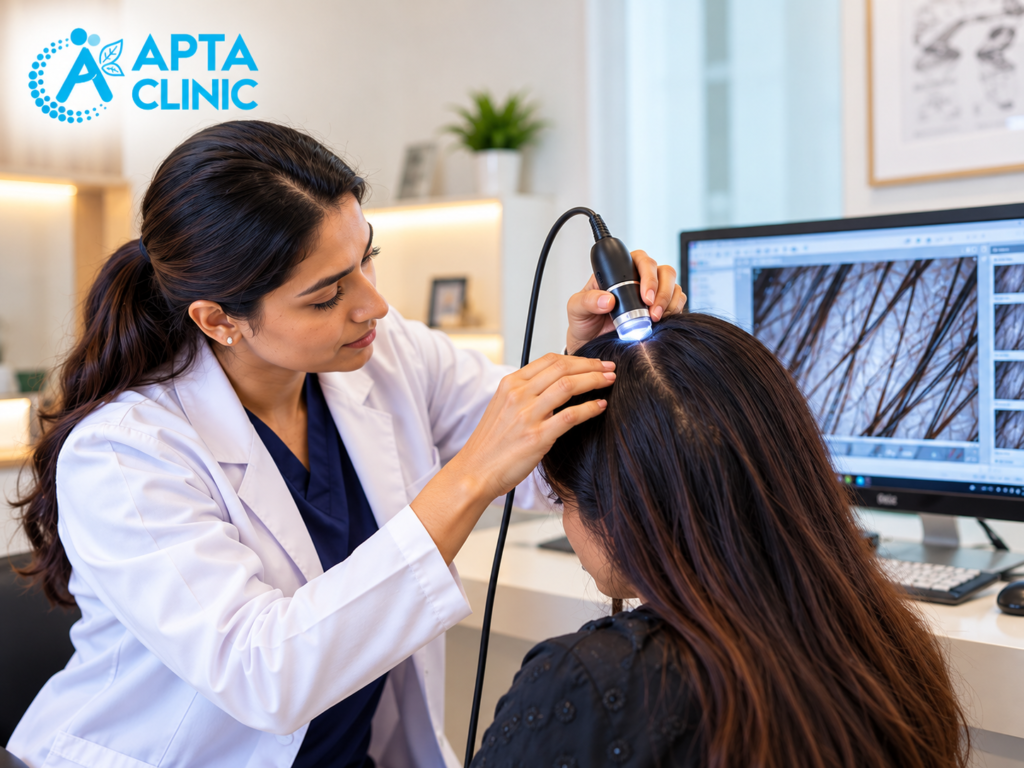
Finding hair on your pillow, comb or bathroom floor can leave you wondering whether your hair is breaking or falling out. The two can look similar, but they happen for different reasons.
Hair breakage occurs when a strand snaps somewhere along its length. Hair shedding happens when a strand completes its growth cycle and releases from the follicle. Both can make your hair look less full, and some people experience them together.
The pattern can offer useful clues. Short, uneven pieces may suggest breakage, while full-length strands may point towards shedding. These signs cannot confirm the cause on their own, especially when thinning or a scalp condition is also present.
Hair Breakage vs Hair Fall: How to Tell the Difference and What It May Mean
Finding hair on your pillow, comb or bathroom floor can leave you wondering whether your hair is breaking or falling out. The two can look similar, but they happen for different reasons.
Hair breakage occurs when a strand snaps somewhere along its length. Hair shedding happens when a strand completes its growth cycle and releases from the follicle. Both can make your hair look less full, and some people experience them together.
The pattern can offer useful clues. Short, uneven pieces may suggest breakage, while full-length strands may point towards shedding. These signs cannot confirm the cause on their own, especially when thinning or a scalp condition is also present.
c
The phrase “hair fall” is commonly used to describe any hair coming out. It may refer to normal shedding, excessive shedding, breakage or a medical cause of hair loss.
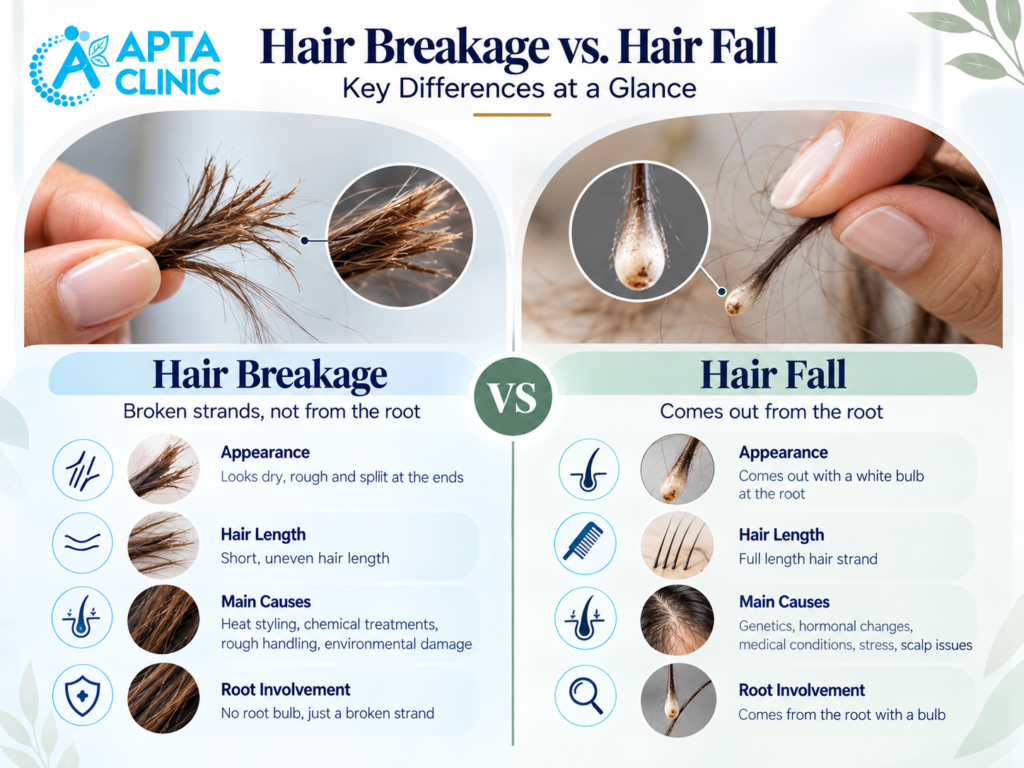
What you notice | Hair breakage | Hair shedding |
What happens | The hair shaft snaps | A strand is released from the follicle |
Appearance | Often shorter pieces of different lengths | Often full-length strands |
Strand ends | May look blunt, frayed or split | May have a small club-shaped end |
Hair length | Uneven lengths may become noticeable | The strand may be close to its usual length |
Possible pattern | Frizz, roughness or damage along the hair | More strands on a pillow, comb or during washing |
Common contributors | Heat, friction, chemical processing or tension | Growth-cycle changes, illness, stress, medicines or other causes |
These are clues, not a home diagnostic test. A strand’s appearance alone cannot reliably identify the cause of hair loss.
The American Academy of Dermatology explains that normal shedding and hair loss are different concerns and that a dermatologist can help distinguish between them. Many people naturally shed around 50 to 100 hairs a day, although the amount varies and is difficult to measure accurately at home.
How to Recognise Hair Breakage
Hair breakage occurs when the hair shaft, the visible part of the hair, becomes weak and snaps. The follicle may remain in the scalp even when part of the strand breaks off.
You may notice:
- Short strands on your clothes, pillow or comb.
- Hair that looks uneven in length.
- Split or frayed ends.
- Increased tangling when you comb or wash your hair.
- Rough-feeling lengths or ends.
- Short flyaway hairs that do not seem to grow as long as the rest.
Breakage may be more noticeable around areas exposed to repeated styling, pulling or friction. However, short hairs can also be new growth, so their presence does not automatically mean the hair is damaged.
Common causes of hair breakage
Heat styling: Frequent use of straighteners, curling irons or high-heat dryers can damage the hair shaft.
Chemical processing: Bleaching, colouring, relaxing and other chemical treatments may weaken hair, particularly when treatments are repeated or performed incorrectly.
Rough brushing and detangling: Pulling through knots, brushing forcefully or handling wet hair roughly can increase mechanical damage.
Tight hairstyles: Repeated tension from tight ponytails, braids, buns or extensions can damage hair. Persistent pulling may also contribute to a type of hair loss called traction alopecia.
Friction: Repeated rubbing against clothing, towels, bedding or accessories can contribute to damage, especially when hair is already fragile.
Hair-care practices: Harsh handling, frequent high-heat styling and unsuitable chemical treatments may worsen breakage.
Breakage can have more than one cause. Think about recent changes in your routine, the areas affected and whether the problem began after a particular styling or chemical treatment.
What Does Hair Shedding Look Like?
Hair shedding is part of the normal hair-growth cycle. A hair strand eventually reaches the end of its cycle and is released from the follicle, allowing the cycle to continue.
You may notice:
- Full-length strands on your pillow or clothing.
- More hair in the shower or on your comb than you usually see.
- Increased shedding during washing or detangling.
- A ponytail that seems less thick than before.
- Gradual changes in hair density or visible scalp.
A small, pale club-shaped end on a shed strand can be normal. It does not mean that the entire follicle has come out. Hair follicles sit within the skin.
An increase in shedding can occur after illness, significant stress, childbirth, major weight loss or other changes in health. Some medicines and medical conditions can also affect hair growth. The timing matters: increased shedding may become noticeable weeks or months after a trigger rather than immediately.
Not every person who notices more hair in the shower has a medical problem. Washing frequency, hair length and the interval between washes can change how much loose hair appears at once.
Why Is Your Hair Breaking or Falling Out?
The appearance of the hair is only one part of the assessment. A clinician may also ask when the problem began, whether it is getting worse, which areas are affected and whether you have noticed changes in your scalp or general health.
Common causes of hair breakage
Breakage is often associated with damage to the hair shaft. Frequent heat styling, chemical processing, tight hairstyles and rough detangling are common contributors.
If the problem is mainly at the ends, you may notice split ends, dryness or tangling. If shorter hairs are breaking near the scalp, consider whether tight hairstyles, chemical treatments or repeated pulling could be contributing.
Do not assume that all short hairs are broken. New growth and certain hair conditions can look similar.
Common causes of increased hair shedding
Shedding can increase for several reasons, including:
- A recent illness or high fever.
- Significant emotional or physical stress.
- Childbirth.
- Major weight loss or changes in nutrition.
- Certain medicines.
- Hormonal or other medical conditions.
- Hereditary patterns of hair thinning.
This list is not a diagnosis. Some causes require medical assessment, and more than one factor may be involved.
If you suspect a prescribed medicine is affecting your hair, speak to the prescribing clinician before changing or stopping it.
Can You Have Hair Breakage and Hair Shedding at the Same Time?
Yes. Hair breakage and shedding can occur together.
For example, a person who regularly uses high heat may develop damaged strands while also experiencing increased shedding after an illness. A person may also have an underlying hair-loss condition alongside damage from styling practices.
This is why it can be misleading to choose a treatment based only on the number of hairs seen on a comb. The pattern of change, scalp condition, medical history and hair-care routine all help determine what may be happening.
What Can You Do at Home?
If you suspect breakage, start by reducing avoidable damage:
- Reduce the frequency of straightening, curling and high-heat drying.
- Use a gentle approach when washing and detangling.
- Avoid pulling a brush forcefully through knots.
- Consider a wide-tooth comb for detangling, especially when hair is wet.
- Avoid hairstyles that create persistent tension.
- Give chemically treated hair a break from repeated processing.
- Use a conditioner suitable for your hair to improve manageability and reduce friction.
These steps may reduce mechanical damage, but they will not treat every cause of hair loss.
If you suspect increased shedding, note when it started and whether anything changed in the preceding months. Record recent illnesses, weight changes, new medicines and other relevant health events. This information may help during a consultation.
Avoid starting supplements or high-dose vitamins without a clear reason. Excessive intake of some nutrients can be harmful, and supplements are not a substitute for identifying the cause of a persistent problem.
When Should You See a Dermatologist for Hair Fall?
Arrange a medical assessment if you notice:
- Hair shedding that is persistent, worsening or worrying you.
- Gradual thinning or a widening part.
- New bald patches or clearly defined areas of hair loss.
- Hair loss accompanied by scalp pain, redness, marked itching, scaling or sores.
- Hair breakage that continues despite changes to your hair-care routine.
- Hair loss that begins after starting a medicine or alongside other health changes.
Seek prompt medical advice for sudden or rapidly progressing hair loss, particularly if the scalp is painful, inflamed or showing other unusual changes. A routine hair-care adjustment may not be enough when an underlying condition is present.
A dermatologist may review your medical history, examine your hair and scalp, and recommend further tests if the findings suggest they are needed. Not everyone requires blood tests or the same investigations.
How Hair Care Habits Can Contribute to Breakage
Everyday hair care habits can influence the strength and condition of the hair shaft. Frequent heat styling, tight hairstyles, rough towel drying and aggressive brushing can place repeated stress on the strands. Chemical treatments, including bleaching and relaxing, may also weaken the hair when used improperly or too frequently. Over time, damaged strands can become rough, split or snap more easily, particularly around the ends. Choosing gentler hair care practices, limiting excessive heat and avoiding hairstyles that pull tightly on the roots may help reduce further breakage. However, persistent thinning or increased shedding should not automatically be attributed to hair care habits alone.
Can Hair Breakage and Hair Fall Occur at the Same Time?
Hair breakage and hair fall can occur together, making it difficult to identify the main reason for changes in hair thickness. For example, frequent heat styling or chemical treatments may weaken the hair shaft, while stress, nutritional deficiencies or certain medical conditions may contribute to increased shedding from the scalp. When both problems are present, hair may appear thinner, shorter or less dense than usual. Identifying whether the main concern involves damaged strands, excessive shedding or a combination of both can help guide the next steps. A dermatologist can examine the scalp and hair, review recent changes in hair care and medical history, and recommend further evaluation when necessary.
Does Hair Breakage Mean Your Hair Is Not Growing?
Hair breakage does not necessarily mean that hair growth has stopped. Hair can continue growing from the scalp while the exposed strands repeatedly break before reaching their expected length. This may make the hair appear stuck at the same length, even when new growth is occurring. Split ends, uneven lengths and shorter strands around the hairline can sometimes indicate damage to the hair shaft. Reducing mechanical and chemical stress can help preserve the length of newly grown hair. If the hair is also becoming noticeably thinner or shedding more than usual, a dermatologist can assess whether a separate scalp or hair-growth problem may be contributing.
Why Is My Hair Thinning Even Though I Do Not See Much Hair Fall?
Hair thinning can develop gradually without obvious increases in the amount of hair shed during washing or brushing. In some people, individual strands become progressively finer, or the hair growth cycle changes in a way that reduces overall density. Other people may notice thinning because breakage prevents the hair from maintaining its length and volume. The pattern of thinning, the condition of the scalp and the presence of other symptoms can help guide the assessment. A dermatologist may examine the scalp and hair shafts to distinguish between reduced hair density, shaft damage and increased shedding. Identifying the underlying cause is important because different conditions require different management approaches.
Can Stress Cause Hair Breakage or Hair Fall?
Stress may contribute to increased hair shedding, particularly when a significant physical or emotional stressor disrupts the normal hair growth cycle. This type of shedding may become noticeable weeks or months after the triggering event rather than immediately. Hair breakage, by contrast, more commonly involves physical or chemical damage to the strands, although stressful periods can also lead to changes in hair care routines. The two problems can therefore occur around the same time without necessarily sharing the same cause. If shedding continues, becomes pronounced or is accompanied by visible thinning, professional assessment can help determine whether stress, another health-related factor or a combination of causes may be involved.
What Role Does Nutrition Play in Hair Health?
Hair growth depends on adequate nutrition, and insufficient intake of certain nutrients can contribute to hair-related problems in some individuals. However, not every case of breakage or shedding is caused by a nutritional deficiency. Restrictive diets, inadequate protein intake and certain documented deficiencies may affect hair health,
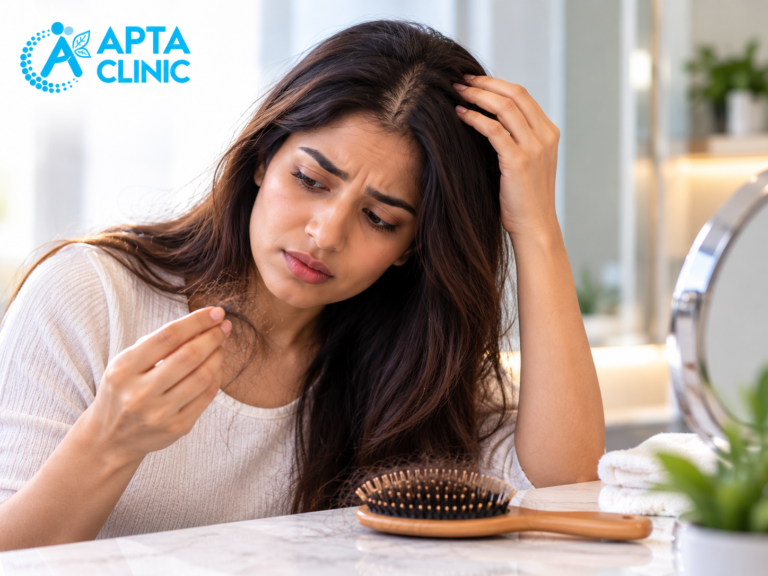
Hair and Scalp Assessment at APTA Clinic, Mysore
Hair and Scalp Assessment at APTA Clinic, Mysore
APTA Clinic lists trichology services for hair and scalp concerns, including hair loss and hair regrowth. If you are unsure whether you are experiencing breakage, shedding or thinning, a professional assessment can help clarify the next step.
During an appointment, be ready to explain:
- When you first noticed the change.
- Whether you see short broken pieces, full-length strands or both.
- Whether the change is general or concentrated in one area.
- Any recent illness, major stress, weight change or new medication.
- Hair colouring, chemical treatments, heat styling and hairstyles you use regularly.
- Any scalp itching, pain, scaling or redness.
The appropriate assessment and any recommended treatment depend on the findings. A consultation does not mean that you automatically need a procedure or hair-regrowth treatment.
To ask about hair and scalp consultations, contact APTA Clinic through its official page. Confirm current appointment availability and branch details directly with the clinic.
Frequently Asked Questions (FAQs)
Short, uneven pieces with frayed ends may suggest breakage. Full-length strands may suggest shedding. These signs are not conclusive, and a person can have both problems at once.
Not necessarily. Breakage affects the hair shaft and can make hair look shorter or less full. However, persistent thinning or visible scalp changes should be assessed rather than assumed to be breakage.
Some daily shedding is normal. The American Academy of Dermatology gives a general range of around 50 to 100 hairs per day, but the amount varies between people and is difficult to count accurately.
Significant physical or emotional stress can be followed by increased shedding in some people. The change may not appear immediately. Persistent or severe shedding deserves an assessment to check for other possible causes.
Some hair-care practices and products may contribute to damage or irritation, depending on the ingredients and how they are used. Rough washing and detangling can also cause mechanical damage. If a product causes scalp irritation or the problem continues, seek professional advice.
A haircut can remove damaged ends and make breakage less noticeable. It does not address shedding from the follicle or treat an underlying medical cause of hair loss.
Consider an appointment if shedding persists, thinning progresses, bald patches appear, or hair changes occur with scalp symptoms. A clinician can assess the pattern and decide whether further investigation is appropriate.
Consider an appointment if shedding persists, thinning progresses, bald patches appear, or hair changes occur with scalp symptoms. A clinician can assess the pattern and decide whether further investigation is appropriate.
APTA Clinic lists locations in Krishnamurthy Puram and Vijayanagar, Mysore.