
Diabetic Foot Screening in Mysore: What Does a Foot Examination Include?
- Home
- Blog
- About Us
A small blister or cut on the foot can be easy to overlook, particularly if you have reduced sensation. For people living with diabetes, that small injury may need more attention because nerve damage can make it difficult to feel an injury, while circulation problems can affect healing.
A diabetic foot screening helps identify changes in the skin, sensation, blood supply and structure of the feet. The examination can reveal warning signs that may not be obvious during everyday activities and help a healthcare professional decide whether further assessment is needed.
If you are looking for diabetic foot screening in Mysore, understanding what happens during the examination can help you prepare for your appointment. The exact checks depend on your medical history, symptoms and previous foot problems.
APTA Clinic lists diabetic foot care and wound management among its services in Mysore. If you already have a wound, swelling, a change in skin colour or reduced sensation, seek medical advice rather than waiting for a routine screening appointment.

What Is Diabetic Foot Screening?
Diabetic foot screening is an examination designed to assess foot health and identify the risk of diabetes-related complications.
A clinician may examine the skin, test protective sensation, check circulation and look for foot deformities or areas exposed to repeated pressure.
The examination generally covers four areas:
- Skin and nails: Cuts, blisters, cracks, calluses, ulcers and unusual colour changes.
- Sensation: Whether the feet can detect touch and other sensations that help protect against injury.
- Circulation: Foot pulses and other signs that may indicate reduced blood supply.
- Foot structure: Deformities or pressure points that could increase the risk of skin damage.
Screening is not the same as a complete investigation of every possible foot condition. If a concern is identified, the clinician may recommend additional tests, treatment or referral.
Why Is Regular Foot Screening Important for People With Diabetes?
Diabetes can affect the feet in several ways. Two important concerns are nerve damage and reduced blood flow.
Nerve Damage Can Hide an Injury
Diabetic peripheral neuropathy can cause tingling, burning, pain or numbness. Some people have very few symptoms even when protective sensation has declined.
When you cannot feel pressure or pain properly, you might not notice a blister, a stone inside your shoe or a cut caused by footwear. Walking on the injured area can worsen the damage.
A foot examination helps identify reduced sensation so that appropriate precautions and follow-up can be discussed.
Reduced Blood Flow Can Affect Healing
Diabetes is associated with an increased risk of vascular disease, including peripheral artery disease. When blood flow is reduced, the tissues may receive less oxygen and fewer nutrients, which can interfere with wound healing.
Nerve damage and circulation problems can occur together. This is why an assessment should consider both sensation and blood supply rather than relying only on whether the feet hurt.
Small Problems May Need Early Attention
A crack in the skin or a small blister may initially appear harmless. However, reduced sensation, poor circulation or infection can make a foot injury more serious.
Regular screening, daily self-checks, suitable footwear and timely medical attention help identify problems before they progress.
What Does a Diabetic Foot Examination Include?
The examination varies according to your symptoms and risk factors. Your clinician may use several of the following steps.
- Review of Medical History and Symptoms
The clinician may ask questions such as:
- How long have you been living with diabetes?
- Have you noticed numbness, tingling, burning or pain in your feet?
- Have your feet changed colour or temperature?
- Have you previously had a foot ulcer, infection or wound?
- Have you undergone a foot-related procedure or amputation?
- Do you have difficulty walking or finding comfortable footwear?
- Do you have other conditions that could affect circulation or healing?
This discussion helps identify risk factors and determine which parts of the examination need closer attention.
Mention any recent changes, even if they do not hurt. Reduced sensation can make an injury less noticeable.
- Examination of the Skin, Nails and Foot Structure
The clinician examines the feet for signs of injury, infection, pressure or an increased risk of ulceration.
The assessment may include checking for:
- Cuts, blisters, cracks or open sores
- Redness, swelling or unusual warmth
- Dry or broken skin
- Calluses and areas of thickened skin
- Changes in nail appearance
- Changes in foot shape or toe alignment
- Areas where footwear rubs against the skin
The soles, heels, toes and spaces between the toes deserve particular attention. If you have difficulty seeing the bottom of your feet, let the clinician know.
Avoid cutting corns or calluses yourself or using strong chemical removal products. These can injure the skin, especially when sensation is reduced.
- Sensation and Nerve Function Testing
A clinician may check whether you can feel touch or other sensations in different parts of your feet.
One commonly used method is the monofilament test. A thin nylon filament is applied to selected areas of the foot to assess protective sensation. You may be asked to close your eyes and indicate when you feel the stimulus.
Depending on the findings, the clinician may use additional methods to assess nerve function.
A monofilament test does not assess every aspect of nerve function. Its results are interpreted alongside your symptoms, medical history and other examination findings.
If you experience numbness, burning, tingling or difficulty sensing heat and cold, mention these symptoms even if your skin looks normal.
- Circulation and Foot Pulse Assessment
The clinician may check pulses in your feet and look for signs that the blood supply could be reduced.
The assessment may include examining skin colour, temperature and signs of impaired healing. A normal-looking foot or the presence of a pulse does not always rule out circulation disease.
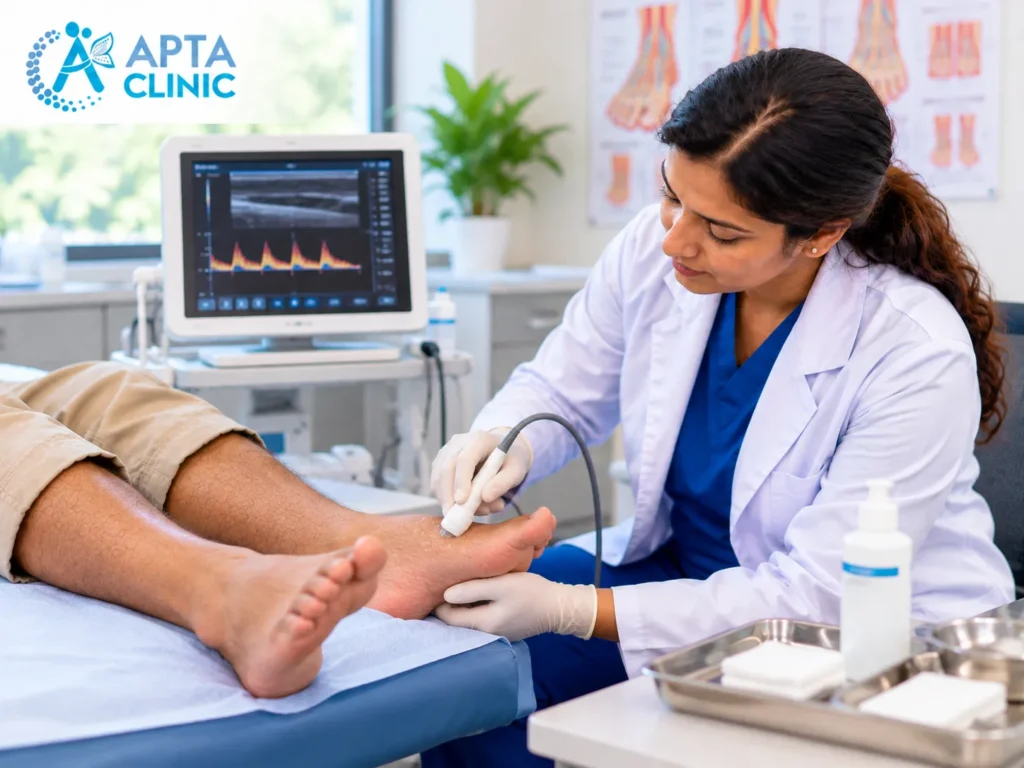
If your symptoms or examination suggest a circulation problem, additional tests may be recommended. These can include ankle or toe pressure measurements and Doppler ultrasound.
Not everyone needs these investigations. The appropriate tests depend on the clinical findings.
- Assessment of Pressure Points, Calluses and Wounds
Repeated pressure and friction can damage the skin, particularly when protective sensation is reduced.
The clinician may examine areas beneath the toes, the ball of the foot, the heel and other pressure-bearing surfaces. Foot deformities, footwear fit and recurring calluses may also be considered.
If you have a wound, it may require a separate assessment to determine its depth, condition, possible infection and factors affecting healing.
A screening appointment does not mean that every patient needs wound treatment or a procedure.
- Additional Tests When Necessary
Not everyone needs additional testing during a routine foot examination. If the clinician identifies a concern, further assessment may be recommended.
Depending on the suspected problem, this may include:
- Ankle or toe pressure measurements
- Doppler ultrasound to assess blood flow
- Further evaluation of suspected nerve damage
- A detailed wound assessment
- Other investigations based on symptoms and examination findings
Nerve tests and circulation tests assess different problems. One does not automatically replace the other. Your clinician can explain why a particular test is being considered.
Who Should Get a Diabetic Foot Screening?
People living with diabetes should discuss regular foot examinations with their healthcare team, even when their feet feel normal.
Screening and follow-up are particularly important if you have:
- Numbness or reduced sensation in your feet
- A previous foot ulcer or infection
- A history of amputation
- Changes in foot shape
- Calluses or repeated pressure injuries
- Cuts or blisters that heal slowly
- Symptoms that may indicate reduced circulation
- Difficulty checking your feet at home
A previous ulcer or another high-risk finding may mean that you need more frequent examinations than someone without these risk factors.
Your healthcare professional can recommend a screening schedule based on your individual circumstances.
Do not wait for a scheduled screening if you develop a new wound, swelling, redness or another concerning change.
How Often Should You Get Your Feet Checked?
A comprehensive foot examination is generally recommended at least once a year for people with diabetes. Feet should also be checked during routine healthcare visits, and people with higher-risk findings may need more frequent assessment.
The appropriate interval depends on factors such as:
- Whether protective sensation is reduced
- Whether circulation problems are present
- Previous ulcers, infections or amputations
- Foot deformities or recurring pressure injuries
- Current wounds or other foot problems
Ask your healthcare professional how often you should return. An annual appointment may not be sufficient if you already have a wound or a high-risk foot condition.
Daily foot inspections remain important between clinical appointments.
How to Prepare for a Diabetic Foot Examination
You usually do not need complicated preparation for a routine foot screening. A few simple steps can make the appointment more useful.
Bring relevant medical information. Carry recent reports and a list of medicines if available.
Explain previous foot problems. Mention ulcers, infections, surgery, amputations or wounds that took a long time to heal.
Describe new symptoms. Note when numbness, tingling, pain, swelling or colour changes began.
Bring your usual footwear if relevant. This can help the clinician understand possible rubbing, fit or pressure concerns.
Allow both feet to be examined. The soles, heels, toes and spaces between the toes may need to be checked.
Ask about your personal risk level. Find out which changes to watch for and when your next examination should take place.
Do not postpone medical attention for a wound or possible infection just because you are not prepared for a routine appointment.
What Happens After the Screening?
The next step depends on the examination findings.
If no immediate problem is identified, you may be advised to continue daily foot checks, wear suitable footwear, manage diabetes with your healthcare team and attend follow-up examinations at the recommended interval.
If the clinician identifies reduced sensation, circulation concerns, deformities, calluses or another risk factor, you may need closer monitoring, additional tests, footwear advice or referral to an appropriate specialist.
If a wound or infection is found, treatment may be needed promptly. The plan depends on the wound’s condition and your overall health.
Screening helps guide decisions, but it does not replace ongoing diabetes care or daily foot protection.
Warning Signs That Need Prompt Medical Attention
Contact a healthcare professional promptly if you notice:
- A cut, blister or sore that is not beginning to heal
- New redness, swelling, warmth or drainage
- A change in foot colour or temperature
- New or worsening numbness or pain
- A wound with dark or blackened tissue
- A sudden change in foot shape or swelling
Seek emergency medical care for a rapidly worsening foot infection, severe illness associated with a foot wound, or a suddenly cold, pale or blue foot accompanied by severe pain, weakness or new numbness.
Do not wait for a routine screening appointment in these situations.
If you have diabetes, pain alone is not a reliable way to judge whether a wound is serious. Some foot injuries cause little discomfort when sensation is reduced.

Diabetic Foot Screening at APTA Clinic in Mysore
APTA Clinic lists diabetic foot care and wound management among its services in Mysore. Its published diabetic foot care information describes assessment of diabetic wounds, circulation, nerve function and pressure-related problems, with further management depending on the patient’s condition.
If you are looking for diabetic foot screening in Mysore, contact the clinic to confirm the availability and scope of the examination appropriate for your needs.
APTA Clinic Contact Details
Address: 1226/3B, Krishnaraja Boulevard Road, Jayanagar, Krishnamurthy Puram, Mysuru, Karnataka 570014
Phone: +91 74117 07555
Website: https://aptaclinic.com/
Related service: Diabetic Foot Care Clinic in Mysore
Take the Next Step for Your Foot Health
A diabetic foot examination can identify changes that may not be obvious at home. Checking the skin, sensation, circulation and foot structure gives your healthcare professional information to guide follow-up and reduce avoidable risks.
If you have diabetes, ask your healthcare team how often you need a foot examination. If you notice a wound, swelling, a colour change or loss of sensation, seek medical advice promptly rather than waiting for your next routine check.
For diabetic foot screening and related foot care in Mysore, contact APTA Clinic to discuss your concern and confirm the appropriate appointment.
Medical disclaimer: This article is for educational purposes only and does not replace individual medical advice, diagnosis or treatment. Seek assessment from a qualified healthcare professional for symptoms or concerns involving your feet.
Frequently Asked Questions (FAQs)
A diabetic foot screening may include a review of symptoms and medical history, examination of the skin and nails, sensation testing, checking foot pulses and circulation indicators, and assessing foot shape and pressure points. Additional tests may be recommended if the findings suggest a problem.
Routine visual checks, pulse assessment and common sensation tests are generally straightforward and usually cause little or no discomfort. If you have a wound, infection or painful area, tell the clinician before the examination begins.
A comprehensive foot examination is generally recommended at least once a year. People with reduced sensation, circulation problems, previous ulcers, amputations or other high-risk findings may need more frequent checks. Your clinician should recommend the interval based on your individual risk.
Screening can identify signs of reduced protective sensation and possible nerve damage. A clinician may use a monofilament and other sensory tests. Further assessment may be necessary to confirm or investigate suspected neuropathy.
Yes. The examination may include checking foot pulses and looking for signs of reduced blood flow. If circulation problems are suspected, the clinician may recommend additional tests, such as ankle or toe pressure measurements or Doppler ultrasound.
The cost depends on the type of examination and whether additional tests are required. APTA Clinic’s current screening fee has not been verified for this page. Contact the clinic directly to confirm the consultation charge and any additional testing costs before booking.
No. Contact a healthcare professional promptly if you have a new wound, blister, swelling, redness, discharge or a cut that is not healing. A rapidly worsening infection or a suddenly cold, pale or blue foot with severe pain or new numbness requires emergency assessment.
APTA Clinic lists diabetic foot care and wound management among its services in Mysore. You can call +91 74117 07555 or visit https://aptaclinic.com/ to enquire about the available assessment and appointment arrangements.