
Diabetic Foot Ulcer Stages: How Doctors Assess Wound Severity and Treatment Needs in mysore
- Home
- Blog
- About Us
A small sore on the foot may not look serious at first. For someone living with diabetes, however, even a minor wound can become a significant problem if nerve damage, poor circulation or infection is involved.
A diabetic foot ulcer is an open wound that develops when the skin breaks down, often because of repeated pressure, an unnoticed injury or problems affecting the nerves and blood vessels. Some ulcers remain relatively superficial, while others extend into deeper tissue and may become infected.
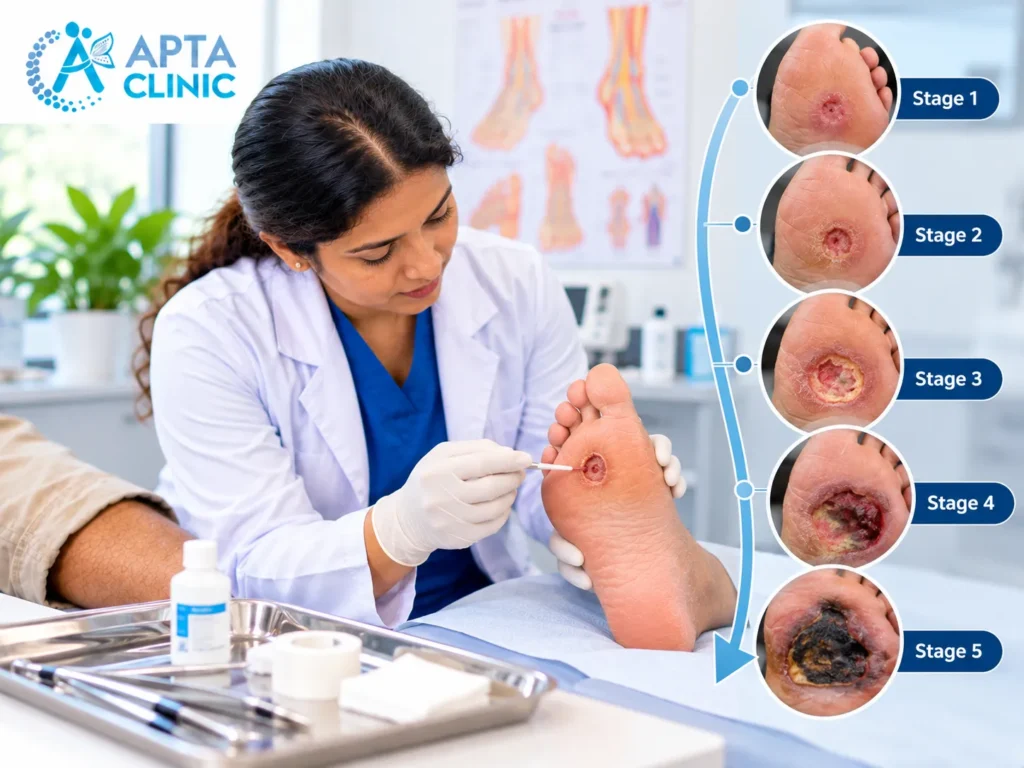
Doctors use grading systems to describe the extent of a diabetic foot ulcer. One commonly used system is the Wagner classification, which ranges from a foot at risk without an open ulcer to extensive gangrene. The grade is only one part of the assessment. Infection, circulation, wound depth and the person’s overall health also influence treatment decisions.
If you have diabetes and notice a new foot ulcer, seek medical assessment promptly. Do not wait for it to become painful. Reduced sensation can make a serious wound difficult to notice.

What Is a Diabetic Foot Ulcer?
A diabetic foot ulcer is a break in the skin that may extend into deeper tissue. It commonly develops on pressure-bearing areas such as the sole, heel or toes, although other parts of the foot can also be affected.
Several factors can contribute to ulcer formation.
- Peripheral neuropathy: Nerve damage can reduce the ability to feel pain, pressure or injury.
- Reduced circulation: Blood vessel disease can limit the supply of oxygen and nutrients needed for healing.
- Repeated pressure or friction: Poorly fitting footwear, foot deformities and repeated loading can damage vulnerable skin.
- Infection: Bacteria can enter through broken skin and cause a more serious wound infection.
- Delayed recognition: A person who cannot feel an injury may continue walking on it, increasing tissue damage.
These problems can occur together. A clinician therefore needs to assess more than the visible size of a wound to understand its severity.
What Are the Stages of Diabetic Foot Ulcers?
The Wagner classification is one system used to describe diabetic foot ulcer severity. It includes Grades 0 through 5, progressing from a foot at risk without an open ulcer to extensive gangrene.
The grades help clinicians communicate the extent of tissue damage. They do not, by themselves, determine every treatment decision or predict exactly how a wound will heal.
Wagner Grade 0: Foot at Risk, Without an Open Ulcer
Grade 0 describes a foot with risk factors or abnormalities but no open ulcer.
These may include reduced sensation, changes in foot structure, deformities or areas exposed to repeated pressure. The skin may still be intact, but the person may have a higher risk of developing an ulcer.
What may be needed: Assessment of sensation, foot structure, skin condition, footwear and circulation where indicated. The clinician can recommend preventive measures and an appropriate follow-up schedule.
Grade 0 does not mean an ulcer is present. It highlights the importance of prevention and monitoring.
Wagner Grade 1: Superficial Foot Ulcer
A Grade 1 ulcer is an open wound that remains relatively superficial. It does not extend into deeper structures such as tendons, joint capsules or bone.
The wound may look small, but its appearance alone does not establish how serious it is. Location, pressure, circulation and signs of infection all matter.
What may be needed: Clinical wound assessment, suitable wound care, protection from further pressure and follow-up. The clinician will also assess whether infection or reduced blood supply is present.
Do not assume a superficial-looking wound can safely be treated at home without an assessment.
Wagner Grade 2: Deeper Foot Ulcer
A Grade 2 ulcer extends beyond the superficial layers and may involve deeper soft tissue, tendons, ligaments or a joint capsule. It does not have the deep infection or abscess features associated with Grade 3.
The depth of the wound may not be obvious from its opening. A small area on the skin can lead to more extensive tissue damage underneath.
What may be needed: A more detailed examination of wound depth, circulation, pressure and possible infection. Additional investigations may be required depending on the findings.
A healthcare professional should determine the extent of the injury rather than relying on its visible appearance.
Wagner Grade 3: Deep Infection or Abscess
Grade 3 describes a deep ulcer associated with serious complications, such as a deep infection, abscess or bone infection.
These infections can threaten the surrounding tissue and may progress quickly. Symptoms are not always obvious, particularly when nerve damage reduces pain sensation.
What may be needed: Urgent medical assessment. Depending on the findings, treatment may involve infection management, imaging, wound procedures or specialist care.
Do not delay assessment because the wound is not painful. A deep infection requires professional evaluation.
Wagner Grade 4: Localised Gangrene
Grade 4 describes gangrene affecting a limited part of the foot, such as one or more toes or part of the forefoot.
Gangrene means that tissue has died. It is often associated with severely reduced blood supply and may also involve infection.
Blackened tissue in a person with diabetes should never be assumed to be harmless or simply a change in dry skin.
What may be needed: Urgent assessment of blood supply, tissue damage and possible infection. Specialist treatment may be necessary to protect the remaining healthy tissue.
Wagner Grade 5: Extensive Gangrene
Grade 5 describes extensive gangrene affecting a large part of the foot.
This is a severe condition that requires emergency medical evaluation. The treating team must assess the extent of tissue damage, circulation, infection and the person’s overall health before deciding on treatment.
What may be needed: Emergency specialist care. Depending on the findings, management may involve coordinated treatment for infection, circulation problems and damaged tissue.
Do not wait for a routine clinic appointment if extensive tissue damage or a serious infection is suspected.
Are Wagner Grades Enough to Determine Ulcer Severity?
No. The Wagner classification is useful, but it does not capture every factor that affects treatment.
Other systems, including SINBAD and the IWGDF/IDSA infection classification, help clinicians describe ulcer characteristics or assess infection in different clinical situations.
Two ulcers assigned the same grade may require different care. One person may have adequate circulation and no infection, while another may have impaired blood flow or a deeper infection that changes the treatment plan.
A complete assessment considers:
- Wound depth and tissue involvement
- Signs of infection
- Blood supply to the foot
- Nerve function and protective sensation
- Pressure and friction affecting the wound
- Other medical conditions and factors affecting healing
The International Working Group on the Diabetic Foot (IWGDF) publishes guidance on diabetic foot assessment and classification. A clinician will choose the appropriate assessment based on the patient’s condition.

How Do Doctors Assess Diabetic Foot Ulcer Severity?
The examination helps identify what is damaging the tissue, whether complications are present and which problems need attention first.
- Wound Depth and Tissue Involvement
The clinician examines the wound’s location, size, depth, surrounding skin and the type of tissue involved. They may also check for exposed or affected deeper structures.
The visible surface area does not always reveal how far the damage extends. Do not probe the wound or attempt to remove tissue at home to assess its depth.
- Signs of Infection
The clinician checks for redness, swelling, warmth, tenderness, discharge and other signs of infection. They also consider whether the infection may extend into deeper tissue.
In people with diabetes, nerve damage can reduce pain sensation. The absence of pain does not rule out infection.
If a serious infection is suspected, urgent investigations and treatment may be necessary. The appropriate approach depends on the clinical findings.
- Blood Circulation
Reduced blood supply can make an ulcer harder to heal.
The clinician may check foot pulses and look for signs of impaired circulation. When indicated, further testing may include ankle or toe pressure measurements or Doppler assessment.
The appropriate test depends on the symptoms and examination findings.
- Nerve Function and Protective Sensation
Nerve damage can make it difficult to recognise pressure, injury or burns. A clinician may assess protective sensation using a monofilament or another appropriate method.
Reduced sensation can also mean that a person continues placing pressure on an ulcer without realising it. This may contribute to further tissue damage.
- Pressure, Foot Shape and Footwear
Foot deformities, calluses and repeated friction can concentrate pressure on particular areas.
The clinician may assess whether footwear or walking-related pressure is contributing to the wound. Depending on the findings, the care plan may include offloading or other measures to reduce pressure on the affected area.
- Overall Health and Healing Factors
The clinician may consider diabetes management, other medical conditions, medications, mobility and previous ulcers or infections.
These factors can influence healing and determine how closely the wound needs to be monitored.
The goal is to identify the problems that are preventing recovery and decide which require immediate attention.
How Does Ulcer Severity Affect Treatment?
Treatment depends on the complete clinical assessment, not simply the Wagner grade. Care may need to address the wound itself as well as infection, circulation, pressure and diabetes management.
Depending on the findings, treatment may include the following.
Wound care: Appropriate wound cleaning, dressings and monitoring.
Pressure reduction: Measures to reduce repeated loading or friction on the affected area.
Debridement: Removal of dead or unhealthy tissue when clinically appropriate and performed by a trained professional.
Infection management: Assessment and treatment of infection when present.
Circulation assessment: Further investigation or specialist referral if reduced blood supply is suspected.
Diabetes management: Coordination with the healthcare team to support overall health and healing.
Specialist treatment: Additional procedures or hospital-based care may be necessary for some deep, infected or severely damaged wounds.
Not every ulcer requires surgery or antibiotics. Similarly, wound dressings alone may not be sufficient if infection, poor circulation or repeated pressure remains unaddressed.
Avoid applying home remedies, cutting away tissue or using leftover antibiotics on a diabetic foot ulcer without medical advice.
What Are the Warning Signs of an Infected Foot Ulcer?
Seek prompt medical attention if you notice any of the following:
- Redness or swelling around a wound
- Increased warmth around the affected area
- Pus or other discharge
- An unpleasant odour from the wound
- A wound that is becoming larger or deeper
- Skin that is becoming dark or black
- A cut or ulcer that is not starting to heal
- New swelling or a sudden change in the foot’s appearance
Seek emergency medical care if you have rapidly spreading redness or swelling, a deep or rapidly worsening wound, blackened tissue, or a foot wound accompanied by fever, confusion, marked weakness or feeling seriously unwell.
A suddenly cold, pale or blue foot with severe pain or new numbness also requires emergency assessment.
Do not wait for your next routine appointment when these warning signs appear.
How Can People With Diabetes Help Prevent Foot Ulcers?
Daily foot care cannot eliminate every risk, but it can help identify injuries before they progress.
Check Both Feet Every Day
Inspect the soles, heels, toes and spaces between the toes. Use a mirror or ask someone to help if you cannot see every area.
Look for Small Injuries
Check for blisters, cuts, cracks, redness, swelling and changes in skin colour. Seek advice promptly if you notice a new wound.
Wear Well-Fitting Footwear
Check your shoes for small objects, rough areas and pressure points before putting them on. Choose footwear that protects your feet without squeezing your toes or rubbing against your skin.
Avoid Walking Barefoot
Reduced sensation can make it easy to injure your feet without noticing. Wear appropriate protective footwear indoors and outdoors.
Do Not Cut Corns or Calluses Yourself
Sharp tools and strong chemical removal products can damage the skin. Ask a healthcare professional about safe management.
Follow Your Diabetes Care Plan
Work with your healthcare team on blood glucose management and other health factors that may affect circulation and healing.
Attend Recommended Foot Examinations
Your clinician can advise how often your feet should be checked according to your individual risk.
Seek Help Early
Do not wait for a wound to become painful before getting it assessed. If you already have an ulcer, follow your treating professional’s instructions and ask how to protect the wound from pressure.
Diabetic Foot Wound Care at APTA Clinic in Mysore
APTA Clinic lists diabetic foot care and wound management among its services in Mysore. Its published service information describes diabetic wound assessment, including evaluation of wound severity, circulation, nerve function and pressure-related factors. It also lists treatment options for selected wounds and ulcers, depending on the patient’s needs.
If you have a diabetic foot ulcer, contact the clinic to confirm the available assessment and whether your symptoms require a different or more urgent care setting.
APTA Clinic Contact Details
Address: 1226/3B, Krishnaraja Boulevard Road, Jayanagar, Krishnamurthy Puram, Mysuru, Karnataka 570014
Phone: +91 74117 07555
Website: https://aptaclinic.com/
Related service: Diabetic Foot Care Clinic in Mysore
If you have signs of a severe infection or a sudden circulation problem, seek emergency medical care rather than waiting for a clinic appointment.
Take Diabetic Foot Ulcers Seriously
Diabetic foot ulcer stages help clinicians describe the extent of tissue damage, but wound severity also depends on infection, circulation, nerve function and other health factors. A wound that appears small can still need prompt medical attention.
If you notice a new sore, discharge, redness, swelling or a change in skin colour, seek professional assessment rather than waiting for it to worsen. Early evaluation helps the care team identify the problems that need attention and plan appropriate follow-up.
For diabetic foot wound care in Mysore, contact APTA Clinic to enquire about available services. If you have signs of a severe infection or a sudden circulation problem, seek emergency medical care rather than waiting for a clinic appointment.
Medical disclaimer: This article is for educational purposes only and does not replace individual medical advice, diagnosis or treatment. A qualified healthcare professional should assess diabetic foot ulcers and recommend appropriate care.
Frequently Asked Questions (FAQs)
The Wagner classification includes Grades 0 to 5. Grade 0 describes a foot at risk without an open ulcer. Grades 1 to 3 describe increasingly deep ulcers and complications such as deep infection. Grades 4 and 5 describe localised and extensive gangrene. Clinicians also assess infection, circulation and other factors before deciding on treatment.
Yes. The visible size of an ulcer does not always show how deep it is or whether infection or poor circulation is present. People with diabetic neuropathy may also have reduced pain sensation. A new foot ulcer should be assessed promptly.
Doctors assess wound depth, location, tissue involvement, signs of infection, circulation, protective sensation and pressure-related factors. Additional tests may be recommended when necessary. A grading system supports clinical communication but does not replace a full assessment.
Black tissue may indicate dead tissue or gangrene, although its cause cannot be determined from colour alone. In a person with diabetes, a new blackened area needs urgent medical assessment. If it occurs with severe illness, spreading infection or sudden circulation changes, seek emergency care.
No. Treatment depends on the wound’s depth, infection status, circulation, pressure and the person’s overall health. Some ulcers can be managed with appropriate wound care and pressure reduction, while others need procedures, specialist treatment or hospital care. A clinician must determine the appropriate treatment.
The cost depends on wound severity, the assessment required, dressings, investigations and whether procedures or specialist care are needed. APTA Clinic’s current fees have not been verified for this article. Contact the clinic directly for a consultation estimate and clarification of any additional charges.
Seek prompt medical attention for a new ulcer, redness, swelling, discharge, a wound that is not healing or a change in skin colour. A rapidly worsening infection, blackened tissue, serious illness or a suddenly cold, pale or blue foot with severe pain or new numbness requires emergency assessment.
APTA Clinic lists diabetic foot care and wound management among its services in Mysore. Call +91 74117 07555 or visit https://aptaclinic.com/ to confirm the available assessment and appointment arrangements.