
Consequences of Missing Teeth: What Happens Next? in mysore
- Home
- Blog
- About Us
Losing a tooth can affect how you chew, speak and feel about your smile. Even when the gap is not visible, a missing tooth may affect how your remaining teeth function. Depending on its location and your oral health, tooth loss can also be associated with changes in the position of nearby teeth and the jawbone around the gap.
The consequences of missing teeth vary from person to person. Not every missing tooth needs immediate replacement, and some situations may not require replacement at all. However, understanding the possible effects can help you decide when to seek dental advice.
If you have lost a tooth because of decay, gum disease, injury or extraction, a dentist can assess the gap and explain whether a dental bridge, implant, denture or another approach is suitable.
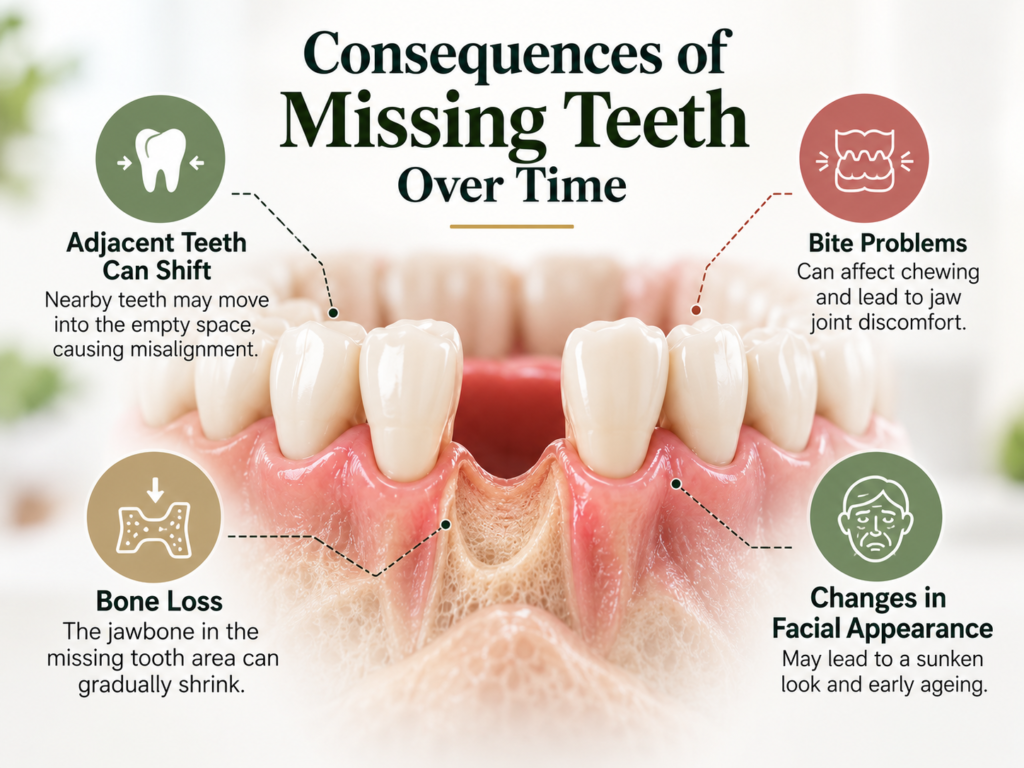
What Happens When You Lose a Tooth?
A missing tooth leaves a space in your dental arch. The effects depend on which tooth is missing, how many teeth have been lost, the condition of the surrounding teeth and your bite.
For example, losing a back tooth may make chewing on that side less comfortable, even if the gap is difficult to see. Missing a front tooth may have a more noticeable effect on appearance and the pronunciation of certain sounds.
Over time, the teeth surrounding a gap may change position. The bone that previously supported the missing tooth can also gradually remodel because it no longer receives stimulation from that tooth root.
These changes do not happen at the same rate in everyone. A dental examination can help determine whether the gap is affecting your oral health and whether treatment is appropriate.
The Main Consequences of Missing Teeth
- Difficulty Chewing Certain Foods
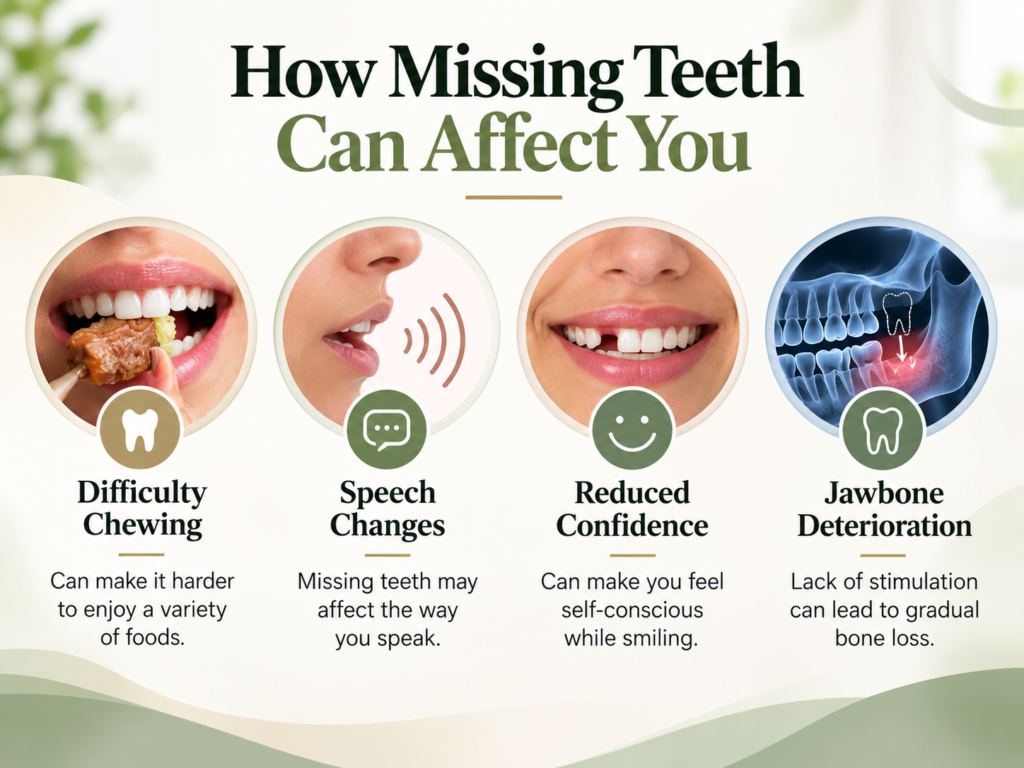
Your teeth work together to break food into smaller pieces. When one or more teeth are missing, chewing may become less efficient or comfortable.
You might notice that you avoid certain foods, chew mainly on one side or feel that your bite has changed. These difficulties are more likely to be noticeable when several teeth or important chewing teeth are missing.
If chewing becomes uncomfortable or your diet is becoming restricted, arrange a dental assessment. A dentist can identify the cause and discuss suitable ways to restore function.
- Shifting of Nearby Teeth
Teeth are supported by surrounding tissues and interact with one another during biting. After a tooth is lost, neighbouring teeth may gradually tilt or drift towards the gap. The opposing tooth may also move into the space in some cases.
Such changes are not inevitable, and the amount of movement varies. However, significant changes in tooth position can affect your bite and make some areas harder to clean.
Replacing a missing tooth may help manage the space in suitable cases, but the decision should be based on your individual dental condition.
- Changes in the Jawbone Around the Missing Tooth
The roots of natural teeth transmit functional forces to the surrounding jawbone. After a tooth is lost, the bone in that area can gradually remodel and lose some of its volume.
The amount of change varies according to the individual, the reason for tooth loss and the location of the gap.
This matters when considering future replacement options. For example, dental implant treatment requires an assessment of the available bone. Some patients may need additional treatment before an implant can be placed.
A conventional dental bridge does not replace the missing tooth root, so it does not provide the same direct stimulation to the bone beneath the gap.
- Changes in Speech
Teeth help the tongue and lips produce certain speech sounds. A gap, particularly near the front of the mouth, may affect pronunciation for some people.
The effect depends on which teeth are missing and how the tongue, lips and remaining teeth interact during speech.
If you notice new or persistent speech difficulties after losing a tooth, discuss them with your dentist. A suitable replacement may help in some cases, although the outcome depends on the cause of the problem.
- Changes in Smile Appearance
A missing front tooth or several visible teeth can change the appearance of your smile. Some people feel self-conscious when speaking, smiling or appearing in photographs.
The impact is personal. A missing back tooth may not be noticeable to others but can still affect chewing or the overall balance of your bite.
A dentist can explain the available options if the gap affects your appearance or confidence.
- Greater Difficulty Cleaning Some Areas
When teeth shift or the bite changes, certain spaces may become more difficult to clean effectively. Food and plaque can collect around crowded or awkwardly positioned teeth.
Poor plaque control can increase the risk of tooth decay and gum disease. However, these problems are not inevitable consequences of every missing tooth.
Maintaining good oral hygiene and attending regular dental check-ups are important whether or not you replace the missing tooth.
- Changes in the Way Your Bite Feels
Your upper and lower teeth work together when you bite and chew. If teeth move after a tooth is lost, the way they meet may change.
Some people notice uneven contact between their teeth or increased pressure in particular areas. Others experience no obvious symptoms.
If your bite feels different, you have difficulty chewing or you develop persistent jaw discomfort, seek a dental assessment rather than assuming the missing tooth is the only cause.
Does Every Missing Tooth Need to Be Replaced?
No. The need for replacement depends on the tooth that is missing, your oral health, your bite and your treatment goals.
For example, a missing wisdom tooth may not need replacement in many situations. A missing front tooth or an important chewing tooth may create different functional or aesthetic concerns.
Your dentist may consider:
- The location of the missing tooth.
- Whether one tooth or several teeth are missing.
- The condition and position of the remaining teeth.
- Your gum health and jawbone condition.
- Whether the gap affects chewing, speech or appearance.
- The likelihood of changes in the surrounding teeth.
- Your general health, preferences and budget.
The decision should be individualised. Replacing a tooth is not automatically necessary in every case, and leaving a gap does not mean that complications will definitely occur.
If you are unsure, an assessment can help you understand the likely consequences of leaving the space untreated and the benefits and limitations of available options.
What Are the Options for Replacing a Missing Tooth?
Several treatments can replace missing teeth. The most suitable option depends on your dental condition and the number and location of the missing teeth.
Dental Bridges
A dental bridge is a fixed restoration that uses neighbouring teeth or dental implants for support, depending on the design. The artificial tooth fills the gap and is shaped to fit with the surrounding teeth.
A conventional bridge may be considered when suitable supporting teeth are available. However, it usually requires preparation of those teeth for crowns.
Learn more about dental bridges in Mysore and the factors that influence suitability.
Dental Implants
A dental implant is a post placed in the jawbone to replace a missing tooth root. It can support a crown for a single missing tooth or contribute to a larger restoration when several teeth are missing.
Implants require surgery and a period of healing. Suitability depends on factors such as bone availability, gum health, medical history and the proposed treatment plan.
Explore the dental implant service at APTA Clinic to learn more about this option.
Dentures
Dentures are removable appliances that replace one or more missing teeth. Depending on the situation, a patient may be considered for a partial denture or a complete denture.
They may be an option when several teeth are missing or when a removable replacement is preferred. The design, fit and maintenance requirements depend on the patient’s oral condition.
Leaving the Gap Under Observation
In selected cases, a dentist may advise monitoring the space rather than replacing the tooth immediately. This decision should follow an examination and a discussion of the possible consequences.
If observation is appropriate, ask how often the area should be reviewed and what changes should prompt an earlier appointment.
How a Dentist Assesses a Missing Tooth
An assessment helps determine whether the gap is affecting your teeth, gums, bite or jawbone and whether treatment would be beneficial.
The appointment may involve:
- Dental history: Discuss when and how the tooth was lost, any previous treatment and your current concerns.
- Oral examination: The dentist checks the gap, neighbouring teeth, gums and bite.
- Diagnostic imaging: X-rays or other imaging may be recommended when needed to assess the supporting structures and plan treatment.
- Treatment discussion: The dentist explains suitable options, their limitations, expected treatment stages and maintenance requirements.
- Cost and follow-up planning: You can ask for an estimate and clarify whether additional treatment or review appointments may be needed.
You do not need to choose a bridge, implant or denture before the appointment. The purpose of the assessment is to help you make an informed decision.
When Should You See a Dentist?
Arrange a dental appointment if you have a missing tooth and are unsure whether it needs replacement, especially if the gap affects chewing, speech or your bite.
Seek prompt dental care if you develop new or worsening pain, swelling, pus, a bad taste associated with the area or a loose neighbouring tooth. These symptoms may indicate a problem that needs assessment.
If a tooth has been knocked out in a recent injury, seek emergency dental care immediately. A permanent tooth may sometimes be saved if treated quickly. Do not wait for a routine appointment.
Facial swelling accompanied by difficulty breathing or swallowing requires emergency medical attention.
Can One Missing Tooth Affect the Rest of Your Teeth?
Losing even a single tooth can change how the surrounding teeth interact with one another. Teeth are positioned in relation to their neighbours and the opposing teeth in the other jaw. When one tooth is missing, the adjacent teeth may gradually move or tilt towards the empty space. The opposing tooth may also move further out of its original position because it no longer meets a tooth during biting. These changes do not occur to the same extent in everyone, but they can affect the arrangement of the remaining teeth and the way your bite functions. A dental examination can help determine whether the gap is causing any noticeable changes and whether replacement should be considered.
How Can Missing Teeth Affect the Health of Your Remaining Teeth?
When a tooth is lost, the surrounding teeth may experience changes in how they share biting forces. Depending on which tooth is missing and the condition of the remaining teeth, some areas may take on more chewing pressure than before. This can make existing dental concerns more noticeable, particularly when other teeth are already weakened by decay, wear or previous restorations. An altered tooth position can also create spaces where food becomes trapped, making effective cleaning more difficult. These concerns do not mean that neighbouring teeth will automatically become damaged, but they highlight why a missing tooth should be assessed as part of your overall oral health rather than as an isolated problem.
Can Missing Teeth Make It Harder to Maintain Oral Hygiene?
A gap left by a missing tooth can change the way food moves through the mouth and becomes trapped between neighbouring teeth. If adjacent teeth begin to tilt or shift, new spaces and difficult-to-clean areas may develop. Plaque can accumulate around these areas when brushing and interdental cleaning become challenging. Over time, inadequate plaque removal can contribute to gum inflammation and tooth decay. The best cleaning method depends on the location of the gap and the condition of the surrounding teeth. Your dentist can demonstrate suitable brushing and interdental cleaning techniques and advise whether any additional oral hygiene tools may help.
Why Does the Location of a Missing Tooth Matter?
The consequences of tooth loss can vary depending on which tooth is missing. Losing a front tooth may be more noticeable when smiling or speaking because these teeth are visible and help form certain speech sounds. A missing premolar or molar may be less obvious but can affect how food is broken down during chewing. The location also influences how much the gap interacts with neighbouring teeth and the opposing bite. For this reason, two people with the same number of missing teeth may have very different functional and aesthetic concerns. A dentist considers the position of each missing tooth before recommending an appropriate replacement approach.
What Should You Consider Before Choosing a Missing Tooth Replacement?
There are several ways dentists may replace missing teeth, including dental bridges, removable dentures and dental implants. However, no single option is suitable for every patient. The decision depends on the number and location of missing teeth, the condition of neighbouring teeth, gum health, available jawbone support, medical history and personal preferences. Some options involve preparing neighbouring teeth, while others require surgical procedures or adaptation to a removable appliance. Treatment duration, maintenance requirements and overall cost may also differ. A consultation should explain the potential advantages, limitations and risks of each suitable option so that you can make an informed decision.
Frequently Asked Questions (FAQs)
Missing teeth can affect chewing, speech and smile appearance. Nearby teeth may shift, and the jawbone around the missing tooth can gradually remodel. These effects vary depending on the location of the gap, the number of missing teeth and the individual’s oral health.
Some people live with a missing tooth without noticeable problems, while others experience chewing difficulties, tooth movement or changes in the jawbone. A dentist can assess your individual situation and explain whether replacement or monitoring is appropriate.
No. The decision depends on the type of tooth, its location, your bite, the health of surrounding teeth and your treatment goals. Some missing wisdom teeth do not require replacement, while other gaps may benefit from treatment.
Yes, neighbouring teeth may drift or tilt towards a gap, and the opposing tooth may move into the space. However, this does not happen to the same extent in everyone. Your dentist can assess whether movement is occurring and whether treatment may help.
The bone that previously supported a tooth can gradually lose volume after tooth loss. The extent varies between individuals. Bone assessment is particularly relevant when considering dental implant treatment.
Options include dental bridges, implants and dentures. The appropriate choice depends on the location and number of missing teeth, supporting teeth, gum and bone health, budget and personal preferences. A dental examination is necessary before choosing a treatment.
The cost depends on the treatment type, number of teeth being replaced, materials and any additional procedures required. Contact APTA Clinic for current pricing and an estimate based on your treatment plan.