
Composite vs Amalgam Fillings in Mysore: Key Differences
- Home
- Blog
- About Us
If you need a dental filling, your dentist may discuss different materials, including composite resin and dental amalgam. Both are used to restore teeth affected by cavities, but they differ in appearance, composition, placement requirements and other practical considerations.
Composite fillings are tooth-coloured and can blend with the surrounding tooth. Amalgam fillings have a metallic appearance and may offer advantages in certain high-stress or moisture-sensitive situations. Neither material is automatically suitable for every cavity. The right option depends on the tooth’s condition, the size and location of the cavity, your oral health and your preferences.
At APTA Clinic in Mysore, patients can seek a dental evaluation to discuss filling treatment and the restorative options appropriate for their teeth.
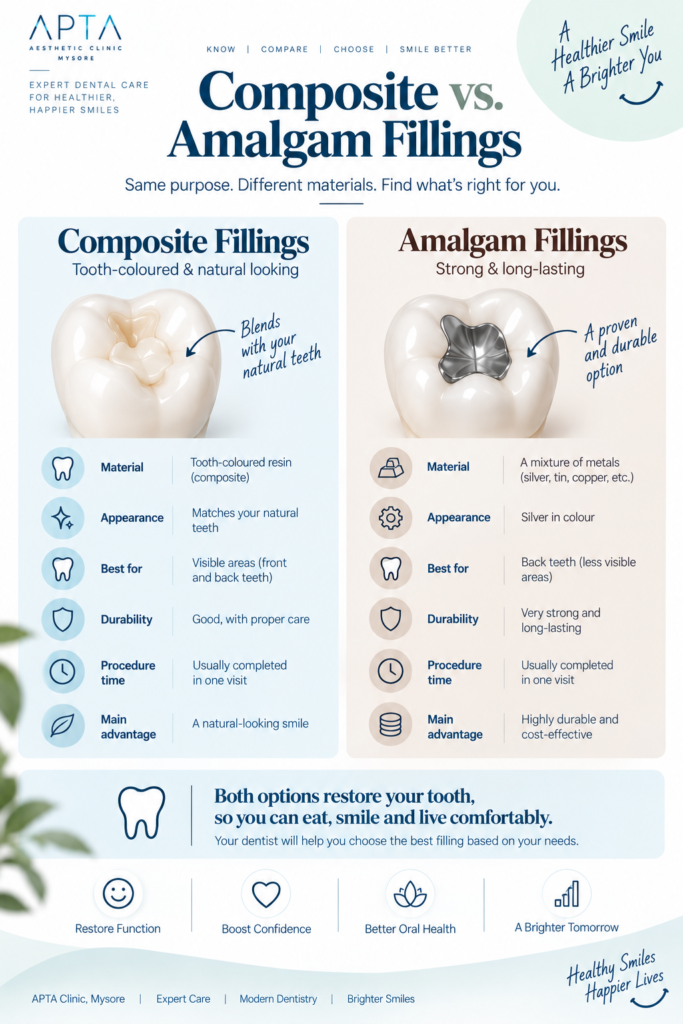
What Are Composite and Amalgam Fillings?
Composite resin fillings
Composite fillings are made from a resin-based material containing fine filler particles. The material can be selected to match the colour of the surrounding tooth, making it a common option when appearance matters.
Composite resin is placed into the prepared area and shaped to restore the tooth. It is generally hardened using a curing light. The dentist must manage moisture carefully during placement because contamination can affect the bond between the filling and the tooth.
Amalgam fillings
Dental amalgam is a metallic restorative material made by combining mercury with a powdered alloy that includes metals such as silver, tin and copper. It is often called a “silver filling” because of its appearance.
Amalgam has been used in restorative dentistry for many years. It can be useful in selected situations, including some cavities in back teeth that experience substantial chewing forces. However, it does not match the natural colour of the tooth and contains mercury, which is an important consideration to discuss with your dentist.
Composite vs. Amalgam Fillings: Key Differences
Feature | Composite resin | Dental amalgam |
Appearance | Tooth-coloured; can blend with surrounding teeth | Metallic or silver-coloured |
Material | Resin-based composite with filler particles | Mercury combined with a powdered metal alloy |
Placement | Requires careful moisture control and bonding | Can be useful in some situations where moisture control is challenging |
Tooth preparation | May allow more conservative preparation in appropriate cases | Preparation may differ depending on the cavity and retention requirements |
Durability | Can perform well, but may be more vulnerable to wear or fracture in some high-stress situations | Often durable, including in selected back-tooth situations |
Cost | May cost more than amalgam, depending on the case and clinic | Often a lower-cost material in settings where it is available |
Main consideration | Appearance, bonding conditions and expected loading | Metallic appearance, material composition and patient-specific safety considerations |
These are general comparisons. A dentist should assess the individual tooth before recommending a material.
What Are the Advantages and Limitations of Composite Fillings?
Potential advantages
- Natural appearance: Composite can be colour-matched to surrounding teeth.
- Conservative preparation: In appropriate cases, composite may require less removal of healthy tooth structure.
- Versatility: It can be useful where appearance is a priority, including visible teeth.
- No mercury: Composite resin does not contain the mercury used in dental amalgam.
Potential limitations
- Moisture sensitivity during placement: The tooth must be kept suitably dry for reliable bonding.
- Placement technique: Composite can require careful layering, shaping and curing.
- Wear and fracture considerations: Its performance depends on the size and location of the restoration, bite forces and other clinical factors.
- Material sensitivity: Some people may have sensitivity or allergic reactions to components of resin-based materials.
Your dentist can explain whether composite is suitable for the specific cavity and what maintenance may be needed.
What Are the Advantages and Limitations of Amalgam Fillings?
Potential advantages
- Durability in selected cases: Amalgam can be useful in some areas exposed to substantial chewing forces.
- Placement considerations: It may be advantageous in certain situations where moisture makes resin placement difficult.
- Cost: Amalgam has often been a less expensive restorative option than composite.
Potential limitations
- Metallic appearance: It does not blend with the natural colour of the tooth.
- Mercury content: Amalgam contains elemental mercury, so patient health history and current professional guidance should be considered.
- Preparation requirements: The cavity preparation may differ from that used for bonded composite restorations.
- Availability and local practice: Whether amalgam is offered depends on the clinic, applicable rules and the dentist’s clinical judgment.
If you already have an amalgam filling that is intact and causing no problems, do not assume it needs to be removed simply because it is metallic. Discuss any concerns with a dental professional before deciding on replacement.
Are Amalgam Fillings Safe?
Dental amalgam contains mercury, and it can release small amounts of mercury vapour. The US Food and Drug Administration (FDA) states that available evidence does not show adverse health effects from amalgam exposure in the general population, but it identifies groups who may be more susceptible to potential risks.
The FDA advises that people in certain higher-risk groups—including pregnant people, those planning pregnancy, nursing mothers, young children, people with certain neurological conditions, people with impaired kidney function and people with known sensitivity to amalgam components—discuss non-amalgam alternatives with their dental provider when appropriate.
This guidance is not a substitute for an individual assessment, and recommendations or regulations may differ by country. Tell your dentist about relevant medical history, pregnancy or breastfeeding status, allergies and any concerns you have about filling materials.
Which Filling Material May Be Suitable for You?
There is no single filling material that is right for every patient. Your dentist may consider:
- Cavity location: Front and back teeth have different functional and aesthetic demands.
- Size and depth: A small cavity may have different restorative needs from a large one.
- Biting forces: Molars and other teeth exposed to heavy chewing forces require careful material selection.
- Moisture control: Some materials require more stringent moisture control during placement.
- Remaining tooth structure: The amount of healthy tooth left affects the restoration plan.
- Appearance: You may prefer a material that blends with your natural teeth.
- Health history: Allergies, sensitivities and other relevant medical considerations should be discussed.
- Cost and availability: Ask which materials are offered and what the total treatment cost includes.
Your dentist may also explain whether a filling is sufficient or whether the extent of damage calls for a different restorative approach.
What Happens During a Dental Filling Appointment?
The process varies depending on the tooth and the material selected. A typical appointment may include the following steps:
- Dental examination: The dentist checks the tooth and assesses the suspected cavity or damage. X-rays may be recommended when clinically appropriate.
- Treatment discussion: The dentist explains the findings and discusses suitable restorative options.
- Preparation: If a filling is appropriate, the affected area is prepared and decayed tissue is removed.
- Placement: The selected material is placed and shaped to restore the tooth.
- Bite and finish checks: The dentist checks the restoration and makes adjustments where needed.
- Aftercare guidance: You receive instructions about caring for the restored tooth and when to seek advice if discomfort or other concerns occur.
The exact steps, appointment length and need for local anaesthesia depend on the clinical situation.
How Much Do Composite and Amalgam Fillings Cost?
The cost of a filling can vary. Factors may include:
- The material selected
- The size, depth and location of the cavity
- Whether the restoration is straightforward or more complex
- The need for examination or diagnostic imaging
- The number of teeth being treated
- The clinic’s fees and the treatment plan
Composite may cost more than amalgam in some settings, but prices vary. APTA Clinic’s current material-specific prices and whether amalgam is available should be confirmed directly with the clinic. Ask for an estimate after the dentist has assessed your tooth.
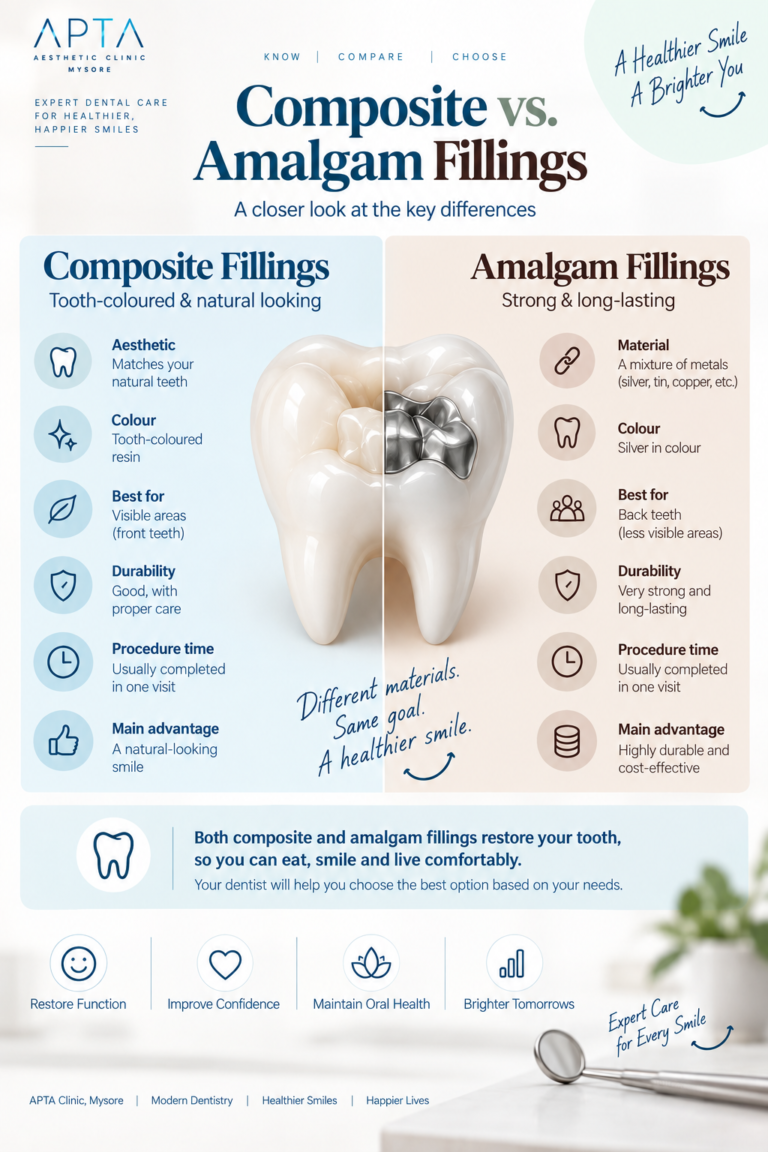
Composite vs. Amalgam Fillings: Understanding Your Options
When a dentist identifies a cavity, choosing a filling material is an important part of planning treatment. Composite and amalgam fillings are two restorative options, but they differ in appearance, composition and placement requirements. Understanding these differences can help you discuss your preferences and concerns with your dentist.
Appearance and Natural Tooth Colour
Composite resin fillings are tooth-coloured and can be selected to blend with the surrounding teeth. This can make them an appealing option when the restoration is visible while speaking or smiling. Amalgam fillings have a metallic, silver-coloured appearance, so they are more noticeable. Appearance may be an important consideration, but the location and condition of the tooth also influence which material may be suitable.
Strength, Placement and Tooth Condition
Amalgam has a long history of use and may be considered for certain cavities, including some in back teeth that experience substantial chewing forces. Composite can also be used in selected back teeth, but its performance depends on factors such as cavity size, bite forces, bonding conditions and the amount of remaining tooth structure. Composite placement requires careful moisture control, while the preparation and placement process for amalgam differs. Your dentist can explain how these factors apply to your tooth.
Safety and Material Considerations
Composite resin does not contain the mercury used in dental amalgam. Amalgam is made from mercury combined with a powdered metal alloy, and people with concerns about its use should discuss them with their dental provider. The US Food and Drug Administration identifies certain groups who may be more susceptible to potential risks and advises discussing non-amalgam alternatives when appropriate. This guidance is US-specific; your dentist can explain the recommendations and regulations relevant to your location.
Cost and Long-Term Care
The cost of a filling may depend on the material, size and location of the cavity, treatment complexity and clinic fees. Amalgam has often been less expensive than composite in some settings, but actual costs vary. Ask for a treatment estimate after the tooth has been examined. Whichever material is used, a filling does not remove the need for good oral hygiene. Brush with fluoride toothpaste, clean between your teeth and attend regular dental check-ups. Contact your dentist if a filling feels loose, becomes damaged or causes persistent discomfort.
Can an Existing Amalgam Filling Be Replaced With Composite?
If you have an older amalgam filling and prefer a tooth-coloured restoration, you can discuss replacement with your dentist. However, an intact filling that is functioning well does not necessarily need to be removed just because of its appearance or material. Replacing a filling may involve removing additional tooth structure, so your dentist should assess whether there is a clinical reason for doing so. If the filling is damaged, has recurrent decay around it or is causing a problem, the dentist can explain whether repair or replacement is appropriate and which materials may be considered.
What Signs Could Mean Your Filling Needs Attention?
A filling may need professional assessment if you notice a new or worsening toothache, sensitivity that persists, pain when biting, a rough or broken edge, or food repeatedly getting trapped around the restored tooth. These symptoms do not automatically mean the filling has failed, but they are reasons to arrange a dental check-up. Your dentist can examine the restoration and surrounding tooth, and may recommend imaging if needed. Avoid trying to repair or remove a filling yourself. Early assessment can help identify the cause of the problem and clarify what treatment, if any, is needed.
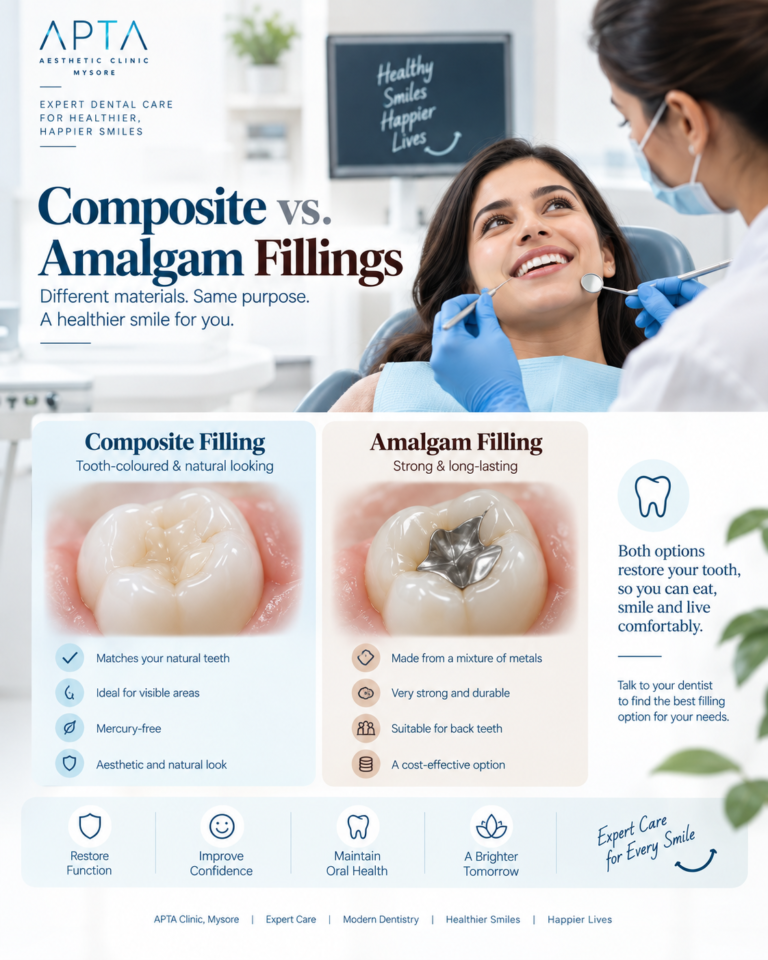
Dental Fillings at APTA Clinic in Mysore
APTA Clinic lists dental fillings among its dental services. Its dental fillings information describes fillings as restorative treatment for cavities, minor fractures and decay, and identifies composite resin, ceramic and glass ionomer among the materials it uses. Contact the clinic to confirm which materials are currently available and whether they are suitable for your case.
If you have tooth sensitivity, a visible cavity, discomfort when chewing or have been advised that you need a filling, arrange a dental assessment rather than trying to choose a material based on appearance alone.
Book a dental consultation with APTA Clinic to discuss the condition of your tooth, the available restorative options and the expected cost of treatment.
Frequently Asked Questions (FAQs)
Composite fillings are tooth-coloured resin-based restorations, while amalgam fillings are metallic restorations made using mercury and a powdered metal alloy. They also differ in placement requirements, appearance and suitability for particular cavities.
Neither material is best for every situation. Composite may be preferred when a natural appearance is important, while amalgam may have advantages in selected high-stress or moisture-sensitive situations. Your dentist can help compare the options for your tooth.
Complete dentures are designed to replace all teeth in an upper or lower arch. Whether they are suitable for you depends on your oral tissues, treatment needs and assessment by a dentist.
Composite can be used for some back-tooth restorations, but suitability depends on the cavity’s size and location, bite forces, remaining tooth structure and placement conditions. Ask your dentist whether it is appropriate for your specific tooth.
Yes. Dental amalgam contains elemental mercury combined with a powdered metal alloy. If you have concerns about mercury exposure or belong to a group identified as potentially more susceptible, discuss alternatives with your dentist.
Not automatically. If an existing filling is in good condition, replacement may remove additional healthy tooth structure and should not be undertaken without a clinical reason. Ask your dentist to examine it and explain whether repair or replacement is indicated.
Amalgam has often been less expensive than composite, but actual prices vary by location, clinic and treatment complexity. Ask the clinic for a current estimate after your tooth has been examined
APTA Clinic provides an appointment form and lists +91 7411 707 555 as its contact number. Its website lists dental services and locations in Mysore.
APTA Clinic lists locations in Krishnamurthy Puram and Vijayanagar, Mysore.