
Gynecomastia Surgery in Mysore: Procedure, Recovery and Treatment Considerations
- Home
- Blog
- About Us
Male breast enlargement can be uncomfortable to discuss. Some men notice fullness around the chest, while others experience tenderness or a firm area beneath the nipple. The cause may be gynecomastia, an increase in glandular breast tissue, or pseudogynecomastia, which is caused mainly by fat accumulation.
Gynecomastia surgery may be considered when breast enlargement persists and causes physical or personal discomfort. However, surgery is not the first step for everyone. A medical assessment helps identify the cause and determine whether observation, treatment of an underlying issue or surgery is appropriate.
If you are considering gynecomastia surgery in Mysore, understanding the diagnosis, available techniques, recovery and possible risks can help you prepare for a consultation with a plastic surgeon.
Considering treatment? Contact APTA Clinic on +91 7411 707 555 to ask about consultation availability and whether gynecomastia assessment and surgery are currently offered.
What is gynecomastia?
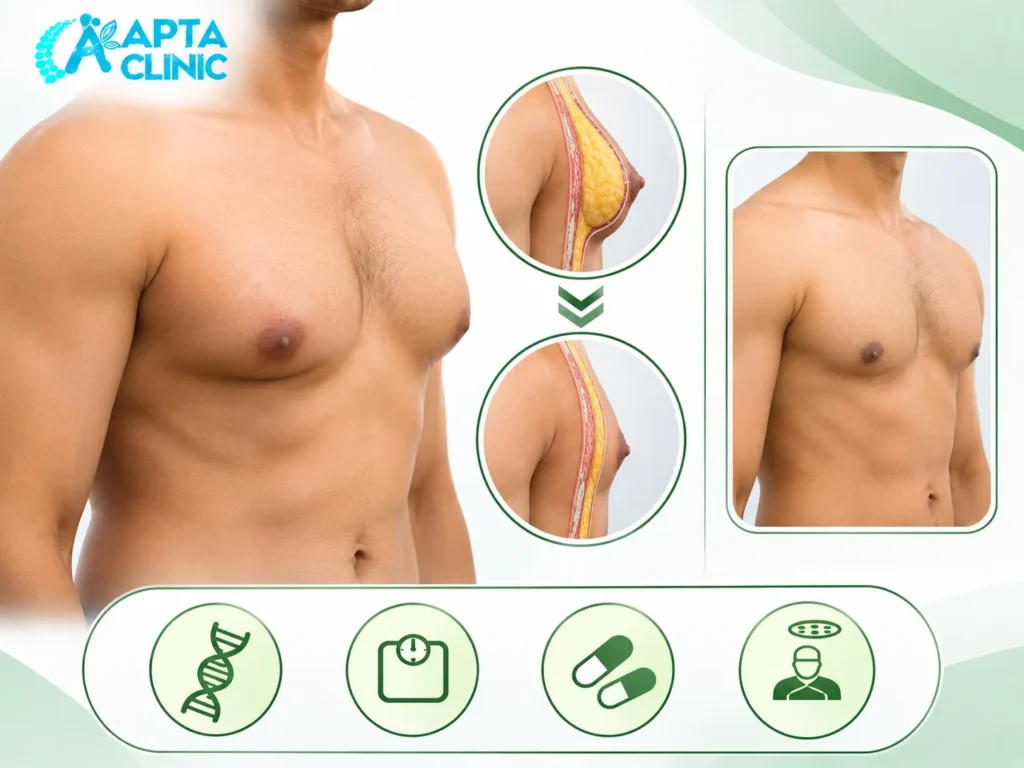
Gynecomastia is an increase in glandular breast tissue in males. It can affect one or both sides of the chest. Some people notice a firm or rubbery area beneath the nipple, while others experience swelling or tenderness.
It can occur at different ages. Hormonal changes during puberty and later adulthood are common contributing factors. In some cases, the enlargement settles without treatment. In others, it persists and may need further assessment.
Gynecomastia is different from simply having excess fat around the chest. Identifying the type of tissue involved is an important part of choosing the right treatment.
What causes male breast enlargement?
Breast tissue in males can respond to changes in the balance between hormones, particularly oestrogen and testosterone. Several factors may contribute to gynecomastia.
Hormonal changes
Gynecomastia can develop during puberty, when hormone levels are changing. It can also occur with age-related hormonal changes. Puberty-related enlargement often improves over time.
Medicines and substances
Certain prescription medicines and substances can contribute to breast tissue enlargement. These may include some medicines used for other health conditions and anabolic steroids.
Do not stop a prescribed medicine on your own. Discuss possible side effects and alternatives with the doctor who prescribed it.
Health conditions
Some health conditions can affect hormone levels or how the body processes hormones. These may include thyroid, liver or kidney disorders and certain other medical conditions.
Weight changes
Weight gain can increase fat around the chest. This may cause or contribute to a fuller chest appearance. Fat accumulation is not the same as glandular gynecomastia, although both can occur together.
The cause cannot be established from appearance alone. A clinician may need to review your medical history, medicines and symptoms before recommending treatment.
Gynecomastia vs chest fat: what is the difference?
Gynecomastia and pseudogynecomastia can look similar, but they involve different types of tissue.
|
Feature |
Gynecomastia |
Pseudogynecomastia |
|
Main tissue involved |
Glandular breast tissue |
Fat tissue |
|
Common presentation |
Firm or rubbery tissue, often beneath the nipple |
Softer, more general chest fullness |
|
Possible contributing factors |
Hormonal changes, medicines or health conditions |
Increased body fat |
|
Assessment |
Clinical examination and tests when indicated |
Clinical assessment, with further tests if needed |
This comparison is general information, not a way to diagnose yourself. Some people have both glandular tissue and excess fat. A medical examination helps distinguish between them.
When should you consult a doctor?
Consider arranging a medical assessment if you notice persistent breast enlargement, discomfort, tenderness or a change in the appearance of your chest.
Seek prompt medical attention if you notice:
- A firm or hard lump, particularly if it is on one side
- Nipple discharge or bleeding
- Skin dimpling, redness, puckering or other unusual skin changes
- Persistent nipple or breast pain
- A new lump or swelling that is changing
These symptoms do not automatically mean cancer. However, they should be examined rather than assumed to be gynecomastia.
How is gynecomastia evaluated?
The first step is a consultation. The doctor will ask when the enlargement began, whether it has changed, whether there is pain or tenderness, and whether you take any medicines or supplements.
The assessment may include:
- Reviewing your medical history and current medicines
- Examining the chest and breast tissue
- Checking for signs that suggest an underlying medical cause
- Recommending blood tests or imaging if clinically appropriate
Not every patient needs every test. The choice depends on the findings during the consultation.
The aim is to confirm what is causing the enlargement and rule out other conditions that may need separate treatment.
What are the treatment options for gynecomastia?
Treatment depends on the cause, how long the enlargement has been present, the symptoms and the amount of glandular tissue or fat involved.
Observation and follow-up
Some cases, particularly those associated with puberty, improve over time. A doctor may recommend monitoring rather than immediate treatment when it is clinically appropriate.
Addressing an underlying cause
If a medicine or health condition is contributing to the enlargement, the treating doctor may review the medicine or recommend management of the underlying condition. Do not change medication without medical advice.
Weight management
If chest fullness is mainly due to excess body fat, weight management may help reduce the fat component. However, weight loss does not reliably remove persistent glandular breast tissue.
Surgery
Surgery may be considered when enlargement persists, causes discomfort or remains a concern after appropriate evaluation. The decision depends on the individual’s clinical findings and expectations.

How is gynecomastia surgery performed?
Gynecomastia surgery aims to reduce excess breast tissue and improve the contour of the chest. The technique depends on whether the enlargement is mainly caused by glandular tissue, fat or a combination of both.
Two commonly described surgical approaches are:
Liposuction
Liposuction removes excess fat through small incisions. It may be considered when fatty tissue contributes significantly to chest enlargement.
Liposuction removes fat; it does not directly remove firm glandular tissue.
Glandular tissue removal
When enlarged glandular tissue is present, surgical removal may be considered. The surgeon plans the incision and extent of tissue removal according to the examination findings.
Combined approach
Some patients have both excess fat and glandular tissue. In selected cases, a surgeon may consider combining liposuction with glandular tissue removal.
The appropriate method cannot be selected from photographs or symptoms alone. A plastic surgeon must assess the chest and discuss the expected changes, scars and risks.
Who may be suitable for gynecomastia surgery?
Surgery may be an option for some adults with persistent gynecomastia. Suitability depends on the cause of the enlargement, general health, symptoms and expectations.
A consultation may consider:
- Whether the enlargement is glandular, fatty or mixed
- How long the condition has been present
- Whether an underlying cause has been identified
- Whether the chest size or shape causes ongoing discomfort
- Medical conditions, medicines and previous procedures
- Whether the patient’s expectations are realistic
Surgery is not automatically recommended for every person with enlarged breasts. A clinician may suggest observation or treatment of an underlying cause instead.
What happens during recovery?
Recovery depends on the surgical technique, the amount of tissue treated and the individual’s healing response.
After surgery, patients may experience swelling, bruising, tightness, tenderness or temporary changes in sensation. The surgeon will provide instructions based on the procedure performed.
Recovery guidance may cover:
- How to care for the incision sites
- Whether a compression garment is recommended
- Which medicines to take
- When to return for follow-up
- How long to avoid strenuous exercise or heavy lifting
- When normal daily activities can be resumed
Do not use a general online recovery timeline as a substitute for your surgeon’s instructions. Contact the treating team if you develop increasing pain, fever, spreading redness, unusual discharge, sudden swelling or another concerning change.
What are the possible risks of gynecomastia surgery?
As with other operations, gynecomastia surgery has potential risks. These vary according to the procedure and the patient’s health.
Possible complications include:
- Bleeding or collection of blood beneath the skin
- Infection
- Fluid accumulation
- Scarring
- Changes in nipple or chest sensation
- Uneven chest contour or asymmetry
- Skin or wound-healing problems
- Need for further treatment or revision surgery
- Anaesthesia-related complications
Ask the surgeon to explain which risks are most relevant to your circumstances and how complications would be managed.
What should you ask your plastic surgeon?
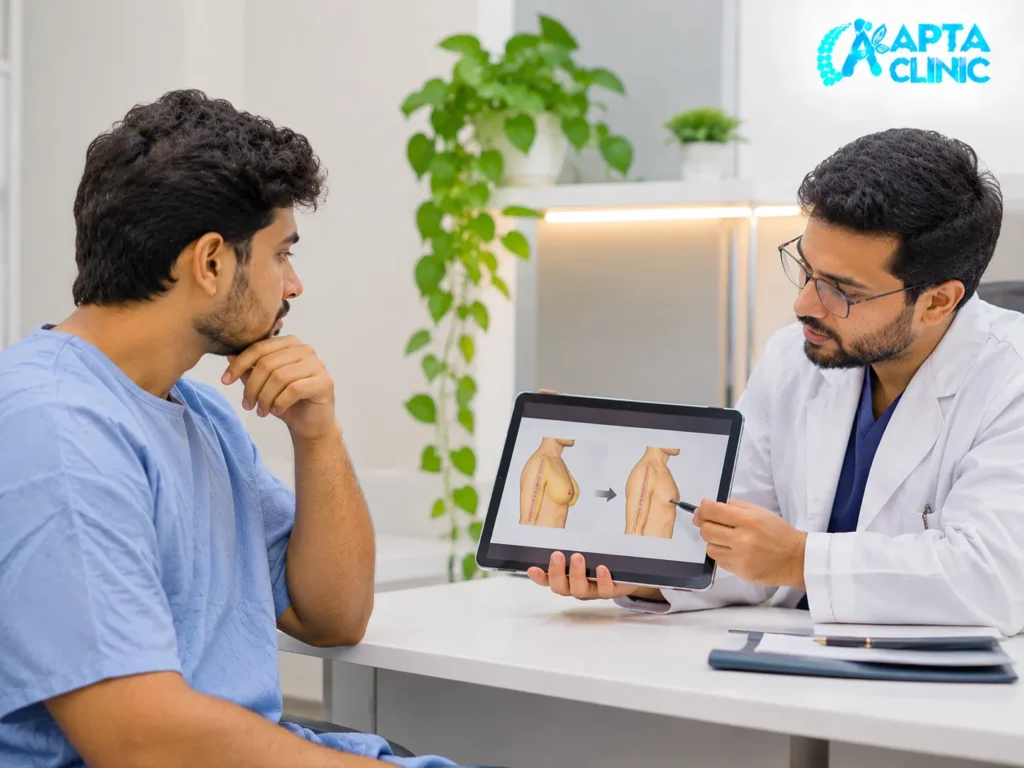
Before deciding on surgery, make sure you understand the diagnosis and the reason a particular procedure is being recommended.
Useful questions include:
- Is my chest enlargement caused by glandular tissue, fat or both?
- Do I need any tests before deciding on treatment?
- Could the enlargement improve without surgery?
- Which procedure is suitable for my examination findings?
- Will the procedure involve liposuction, gland removal or both?
- Where will the incisions and scars be?
- What risks are relevant to my medical history?
- What restrictions should I expect during recovery?
- What follow-up appointments will be needed?
- What is included in the treatment estimate?
A clear discussion before surgery helps you understand the proposed plan and consider alternatives.
Consulting a plastic surgeon in Mysore
If you are concerned about male breast enlargement, begin with a medical assessment rather than choosing a procedure based on appearance alone. The consultation should establish whether the change is caused by glandular tissue, fat or another condition.
APTA Clinic is a multi-specialty aesthetic and cosmetic clinic in Mysore. Its website lists plastic surgery and breast surgery among its service areas and identifies Dr. Akshata Kamath as a Plastic & Reconstructive Surgeon.
Patients considering gynecomastia treatment should contact the clinic to confirm whether the specific assessment and procedure are currently available, which surgeon would be responsible for care, and where surgery and follow-up would take place.
APTA Clinic contact details
- Phone: +91 7411 707 555
- Krishnamurthy Puram, Mysore – 570004
- Vijayanagar, Mysore – 570030
- Published working hours: Monday to Sunday, 10:30 AM to 7:30 PM
Call the clinic to ask about consultation availability and the next steps for assessment.
Frequently Asked Questions (FAQs)
Gynecomastia involves an increase in glandular breast tissue. Chest fat, also called pseudogynecomastia, is caused mainly by fat accumulation. Both can occur together, so a clinical examination is needed to distinguish them.
Some cases, especially those associated with puberty, improve over time. If an underlying medicine or health condition is contributing, addressing that cause may help. Persistent enlargement should be assessed before deciding on surgery.
No. Liposuction removes fat, while glandular tissue removal addresses enlarged breast glands. Some patients may need a combination of techniques, depending on the examination.
No. Suitability depends on the cause, duration, symptoms, general health and treatment expectations. A doctor may recommend observation or management of an underlying cause instead of surgery.
Recovery varies according to the procedure and the individual. Swelling and tenderness may occur during healing. The surgeon should provide specific guidance on work, exercise, compression garments and follow-up.
Surgery involves incisions, so scars are possible. Their location and appearance depend on the technique, healing and individual skin characteristics. Ask the surgeon where scars are likely to be placed.
Possible risks include bleeding, infection, fluid accumulation, scarring, altered sensation, contour irregularities and anaesthesia-related complications. The surgeon should explain the risks relevant to your health and proposed procedure.
Possible causes include hormonal changes, certain medicines, anabolic steroid use and some health conditions. A medical review is needed to investigate the likely cause.