
Dark Spots on the Face: Common Causes and When to See a Dermatologist in mysore
- Home
- Blog
- About Us
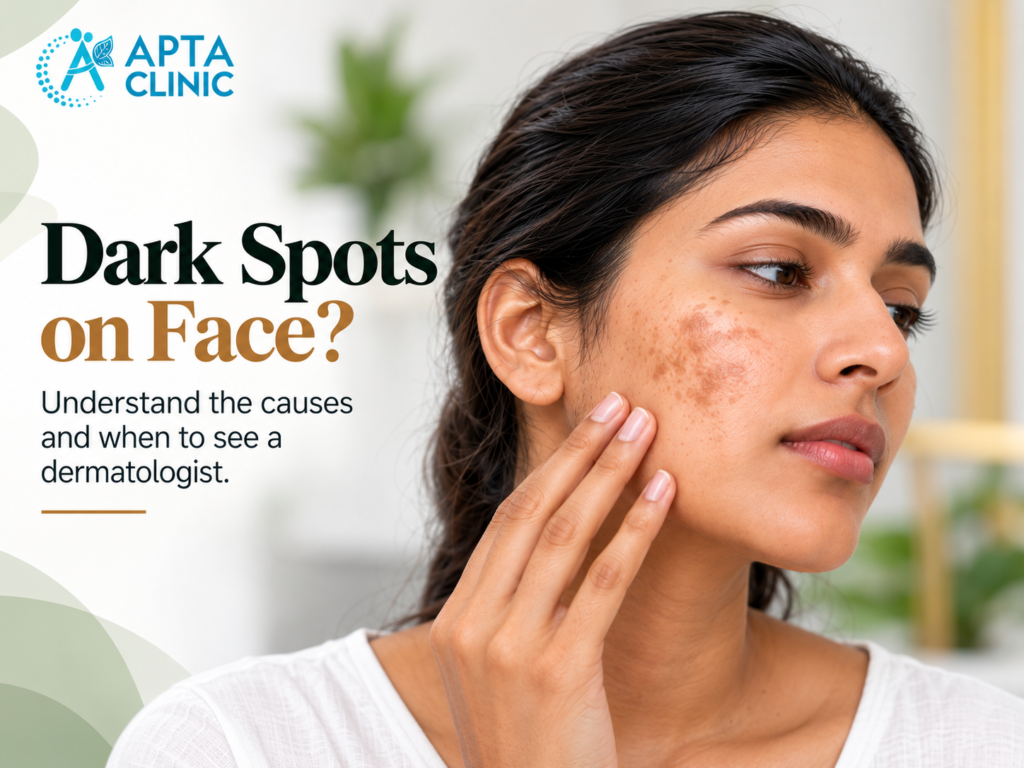
Dark spots on the face can appear after acne, sun exposure, skin irritation or hormonal changes. Some gradually fade, while others, such as melasma, may persist or return. Although many dark spots are harmless, their appearance alone does not always reveal the cause.
The right approach depends on what has changed the skin’s colour. Understanding the possible causes can help you avoid irritating products and decide when a dermatology assessment is appropriate.
What Causes Dark Spots on the Face?
Melanin is the pigment responsible for skin colour. When more melanin develops or accumulates in a particular area, that area may look darker than the surrounding skin. This is commonly described as hyperpigmentation.
Several factors can contribute to dark spots on the face.
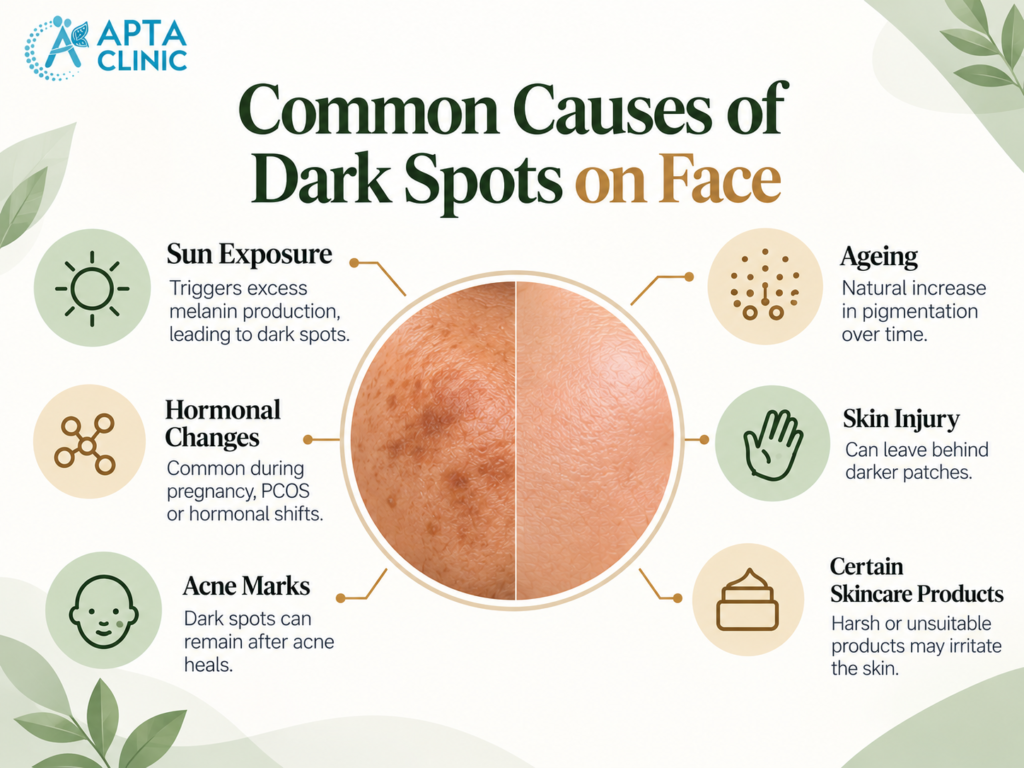
- Sun exposure
Sunlight can stimulate melanin production, making existing dark spots more noticeable and contributing to new pigmentation. Areas frequently exposed to sunlight, including the cheeks, forehead and upper lip, may develop uneven colour.
Sun exposure can also worsen melasma. Daily sun protection is therefore an important part of managing many types of facial pigmentation.
- Dark marks left after acne
A pimple may disappear while leaving a brown or dark mark behind. This is often called post-inflammatory hyperpigmentation (PIH).
It develops when inflammation triggers additional pigment production in the affected area. Picking pimples or repeatedly irritating the skin can increase the risk of further marks.
These marks are different from indented or raised acne scars. Pigmentation affects skin colour, while a scar changes the skin’s texture.
- Melasma and hormonal changes
Melasma causes brown, grey-brown or darker patches, commonly on the cheeks, forehead, nose, chin or above the upper lip. It may appear on both sides of the face and is often influenced by sunlight and hormonal factors.
Pregnancy and some hormonal medications may be relevant in certain cases. Melasma can persist for a long time and may return after improvement, so ongoing management may be needed.
- Skin irritation or inflammation
Harsh skincare products, excessive exfoliation, allergic reactions and inflammatory skin conditions can leave darker marks as the skin heals. Scratching, burns, cuts and insect bites may also cause pigmentation.
If a product repeatedly causes burning, stinging or redness, continuing to use it may worsen irritation. Consider stopping the irritating product and seek medical advice if the reaction persists.
- Certain medicines and other skin conditions
Some medicines can contribute to changes in skin pigmentation. Other skin conditions may also produce darker areas that resemble ordinary dark spots.
If you suspect a prescribed medicine is affecting your skin, speak to the prescribing clinician. Do not stop a prescribed medicine on your own.
A new, unexplained or changing pigmented spot should not automatically be treated as a cosmetic concern.
What Are the Common Types of Facial Pigmentation?
Recognising the pattern may help explain why a dark spot appeared, although appearance alone cannot confirm a diagnosis.
Post-inflammatory hyperpigmentation: Flat brown or dark marks that remain after acne, irritation or another inflammatory skin problem has settled.
Melasma: Larger or uneven patches, commonly on the cheeks, forehead or upper lip. Sunlight and hormonal factors may contribute.
Sun-related pigmentation: Spots or areas of uneven colour associated with repeated sun exposure.
Freckles: Small pigmented spots influenced by genetics and sunlight. They are different from melasma and post-inflammatory pigmentation.
A single dark spot may have a different explanation from widespread patches. Its colour, shape, borders, location and history all matter when deciding whether it needs examination.
Can Dark Spots Fade on Their Own?
Some dark marks gradually become lighter once the cause has settled. Post-inflammatory pigmentation, for example, may fade after acne or irritation is controlled, although this can take months or longer.
Melasma behaves differently. It can persist for years and may return even after it improves.
The time required for pigmentation to fade depends on its cause, depth, skin characteristics, ongoing inflammation and sun exposure. New spots may continue to appear if the original trigger remains.
If pigmentation is worsening, repeatedly returning or not improving, a dermatologist can help assess the cause and discuss suitable options.
How Can You Care for Pigmented Skin at Home?
A gentle, consistent routine can reduce avoidable irritation and help prevent some types of pigmentation from becoming darker.
Use sunscreen regularly
Choose a broad-spectrum sunscreen with SPF 30 or higher. If you have melasma or persistent dark spots, a tinted sunscreen containing iron oxides may offer additional protection against visible light.
Apply sunscreen according to its directions and reapply as recommended, particularly when outdoors, sweating or swimming. Shade and sun-protective clothing can provide additional protection.
Avoid harsh products
Strong exfoliants, abrasive scrubs and products that irritate your skin may contribute to further pigmentation. Introduce new skincare products carefully rather than combining several active ingredients at once.
If a product burns or stings, stop using it and reassess your routine.
Avoid picking acne or skin lesions
Squeezing pimples and picking at healing skin can prolong inflammation and increase the risk of dark marks. If acne keeps returning, treating the acne itself may help reduce the formation of new marks.
Be cautious with skin-lightening products
Do not use household bleach, unlabelled creams or products containing unknown ingredients to remove dark spots. Some skin-lightening products can contain harmful substances or cause irritation.
Prescription-strength treatments should be used under appropriate medical guidance. The most suitable option depends on the cause of the pigmentation and your skin.
When Should You See a Dermatologist for Dark Spots?
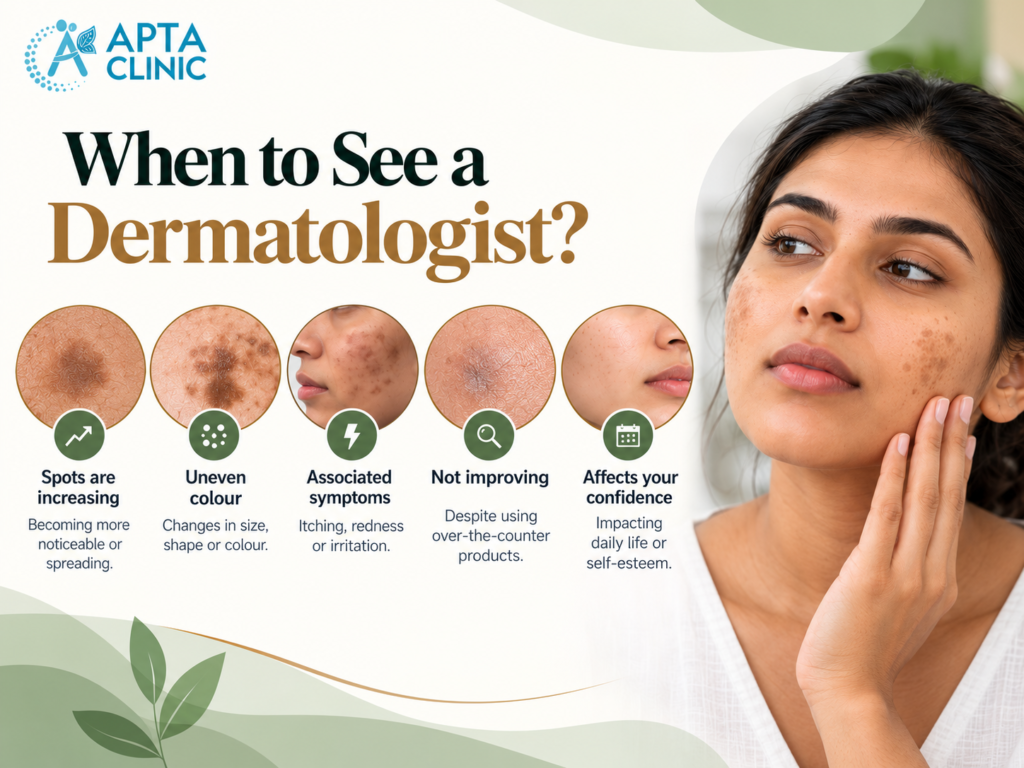
Consider a dermatology appointment if:
- Dark spots persist or continue to increase.
- Pigmentation repeatedly returns despite skincare changes.
- New patches appear without an obvious explanation.
- You are unsure whether the area is pigmentation, a mole or another skin condition.
- Pigmentation occurs alongside itching, scaling or inflammation.
- You are considering a chemical peel, laser treatment or another procedure.
Arrange a prompt medical assessment for a spot that is changing in size, shape or colour, or that bleeds, develops a persistent crust or does not heal. These changes do not necessarily mean cancer, but they should not be assumed to be harmless pigmentation.
A changing spot should be assessed before any cosmetic procedure is considered.
How Is Facial Pigmentation Assessed?
A dermatologist may ask when the spots first appeared, whether they have changed, whether you previously had acne or irritation, and which skincare products and medicines you use.
The examination may consider the colour, pattern, borders and location of the pigmentation. Your history of sun exposure and any relevant hormonal factors may also help guide the assessment.
In some cases, a closer examination with a suitable skin-assessment device or additional testing may be considered. Not everyone needs a test or procedure.
The aim is to understand what is causing the colour change before recommending treatment. Similar-looking spots can have different causes, and using the wrong treatment may irritate the skin or delay appropriate care.
What Are the Treatment Options for Dark Spots?
There is no single treatment suitable for every type of pigmentation. The choice depends on the diagnosis, skin characteristics, depth of pigmentation and whether the underlying trigger is still active.
Sun protection and skincare
Sun protection is a key part of managing many pigmentation concerns. A dermatologist may also recommend a skincare routine that reduces irritation and addresses contributing problems such as acne.
Topical treatments
Depending on the diagnosis, a clinician may recommend ingredients such as azelaic acid, retinoids, hydroquinone or other pigment-modulating treatments. The appropriate product, concentration and duration depend on the individual.
Do not assume that a stronger product will work better. Irritation from unsuitable products can contribute to additional pigmentation.
Chemical peels
Chemical peels use selected chemical solutions to exfoliate the skin. They may be considered for certain pigmentation concerns, but the type of peel and its suitability depend on the skin assessment.
Incorrectly selected or performed peels can cause irritation and further pigmentation, particularly in skin that is prone to post-inflammatory dark marks.
Laser or light-based procedures
Certain laser or light-based procedures may be considered for selected pigmentary conditions. They are not appropriate for every type of dark spot, and results can vary.
A dermatologist should assess the pigmentation before deciding whether a procedure is suitable. No treatment can guarantee that pigmentation will disappear permanently or never return.
What Is the Difference Between Melasma, Sunspots and Post-Inflammatory Hyperpigmentation?
Not all dark spots on the face develop for the same reason. Melasma usually appears as brown or greyish-brown patches, commonly affecting the cheeks, forehead, chin and upper lip. Sunspots, also called solar lentigines, are generally flat, darker areas associated with cumulative sun exposure. Post-inflammatory hyperpigmentation develops after inflammation or injury to the skin, such as acne, eczema, insect bites or cuts. Although these conditions may look similar, their underlying causes and treatment approaches can differ. Melasma may require long-term management, while some marks left after acne or skin irritation gradually fade once the original inflammation has settled. Sunspots also need proper assessment before cosmetic treatment because some other skin conditions can resemble them. Identifying the type of pigmentation is therefore an important first step before choosing any skin-brightening product or procedure.
Why Are Dark Spots Sometimes More Noticeable on Medium and Deeper Skin Tones?
People with medium and deeper skin tones may experience noticeable dark marks after relatively minor skin inflammation or injury. This occurs because melanocytes, the cells responsible for producing melanin, can increase pigment production in response to inflammation. A healed pimple, insect bite, scratch or irritated patch may therefore leave behind a brown or darker mark even after the original problem has disappeared. This is known as post-inflammatory hyperpigmentation. The mark may remain visible for weeks or months, depending on its depth, the original inflammation and individual skin characteristics. Repeated irritation can also contribute to new pigmentation or make existing marks more noticeable. A suitable skincare routine should therefore focus not only on improving skin tone but also on preventing repeated irritation and addressing the condition responsible for the pigmentation.
Can Sunlight and Visible Light Make Facial Dark Spots Worse?
Sun exposure is an important factor in the development and persistence of several types of facial pigmentation. Ultraviolet radiation can stimulate pigment production, making existing dark spots more noticeable and contributing to the appearance of new ones. Visible light may also worsen certain pigmentation conditions, particularly melasma and hyperpigmentation in people with darker skin tones. This is one reason why protecting your face only when you spend long periods outdoors may not be enough. A broad-spectrum, water-resistant sunscreen with SPF 30 or higher can help reduce further sun-related pigmentation. Some people with persistent melasma may benefit from a tinted sunscreen containing iron oxides because these ingredients provide additional protection against visible light. Wearing a wide-brimmed hat and seeking shade can provide further protection. Consistent sun protection is an important part of managing pigmentation, even when you are already using treatment products.
Why Should You Treat Acne and Skin Inflammation Before Treating Dark Marks?
A dark mark left behind by acne or another inflammatory skin condition may remain even after the original problem has improved. However, if new pimples, eczema patches or other inflammatory episodes continue to develop, additional pigmentation may appear. This can make it difficult to improve overall skin tone because existing marks are fading while new ones are forming. Treating pigmentation without controlling the underlying skin condition may therefore produce disappointing results. For example, someone experiencing frequent acne breakouts may need an acne management plan alongside treatment for post-inflammatory marks. Similarly, persistent eczema requires attention to the inflammation and irritation contributing to skin changes. A dermatologist can help establish which concern needs to be addressed first and select an approach that reduces the risk of further pigmentation.
Pigmentation Treatment in Mysore at APTA Clinic
If you are looking for a dermatology clinic in Mysore for persistent dark spots, a consultation can help you understand what may be causing the pigmentation and which options are appropriate to discuss.
APTA Clinic lists dermatology among its services and identifies Dr. Swathi Anand as a Dermatologist & Aesthetician on its website. The clinic also lists chemical peels and other dermatology services. The suitability of any treatment for your particular pigmentation should be confirmed during consultation.
You can contact APTA Clinic to ask about an appointment for facial pigmentation.
APTA Clinic contact details
- Phone: +91 7411 707 555
- Website: https://aptaclinic.com/
- Listed locations: Krishnamurthy Puram and Vijayanagar, Mysuru
- Published working hours: Monday to Sunday, 10:30 AM–7:30 PM
Confirm the branch, appointment availability, consultation fee and treatment availability directly with the clinic before visiting.
Frequently Asked Questions (FAQs)
Dark spots can develop after acne or skin irritation, due to sun exposure, or because of conditions such as melasma. The cause varies from person to person, so the appearance of a spot alone is not enough to identify it.
Some dark marks fade gradually after the original inflammation or injury has settled. Others, including melasma, may persist or return. The time needed depends on the cause and other individual factors.
Yes. Sun protection can help prevent some dark spots from becoming darker and is an important part of managing melasma. Choose a broad-spectrum sunscreen with SPF 30 or higher. A tinted sunscreen containing iron oxides may offer additional visible-light protection.
No. Post-inflammatory hyperpigmentation changes the colour of the skin, while an acne scar changes its texture, such as by creating an indentation or raised area. Both can occur after acne, but they may require different approaches.
Home remedies are not reliably effective for every cause of pigmentation, and irritating ingredients may worsen the problem. Avoid applying bleach or unlabelled skin-lightening products. If pigmentation persists, seek professional advice before trying stronger treatments.
There is no single best treatment for everyone. Depending on the diagnosis, management may involve sun protection, topical treatments, chemical peels or selected laser-based procedures. A dermatologist can help determine which options are appropriate.
Yes. Some conditions, particularly melasma, may recur. Continued sun exposure, hormonal factors and ongoing inflammation can contribute to recurrence, so long-term care may be necessary.