
Wisdom Tooth Removal in Mysore: When Is Extraction Necessary?
- Home
- Blog
- About Us
Pain at the back of your mouth, swollen gums near your last molar or difficulty opening your jaw can sometimes be related to a wisdom tooth. These teeth may emerge normally, but others become trapped beneath the gums or grow at an angle that makes cleaning difficult.
Wisdom tooth removal may be recommended when a tooth causes repeated inflammation, infection, significant decay or damage to a neighbouring tooth. However, not every wisdom tooth needs to be removed. The decision depends on its position, your symptoms and the findings of a dental examination.
If you are considering wisdom tooth removal in Mysore, understanding the reasons for extraction, available treatment options and recovery requirements can help you prepare for a consultation.
What Is a Wisdom Tooth?
A wisdom tooth is a third molar at the back of the mouth. Most people develop up to four wisdom teeth, although some have fewer or none. These teeth commonly emerge during the late teenage years or early adulthood.
Some wisdom teeth erupt fully and can be cleaned without difficulty. Others emerge only partly or remain beneath the gums because there is insufficient room in the jaw.
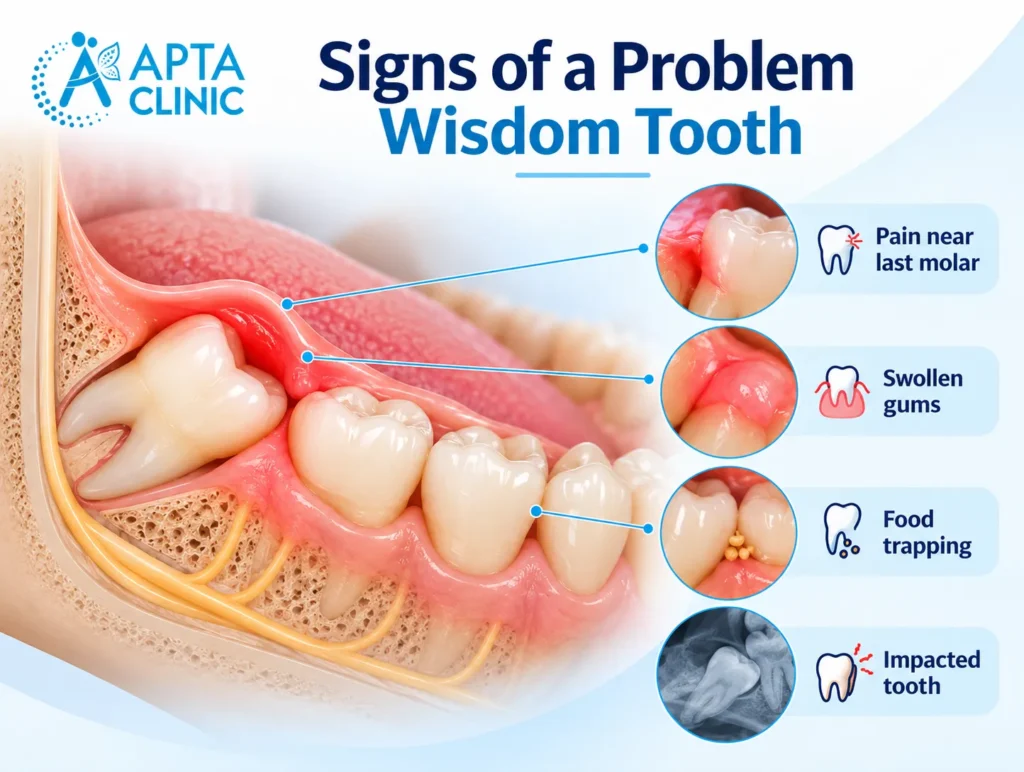
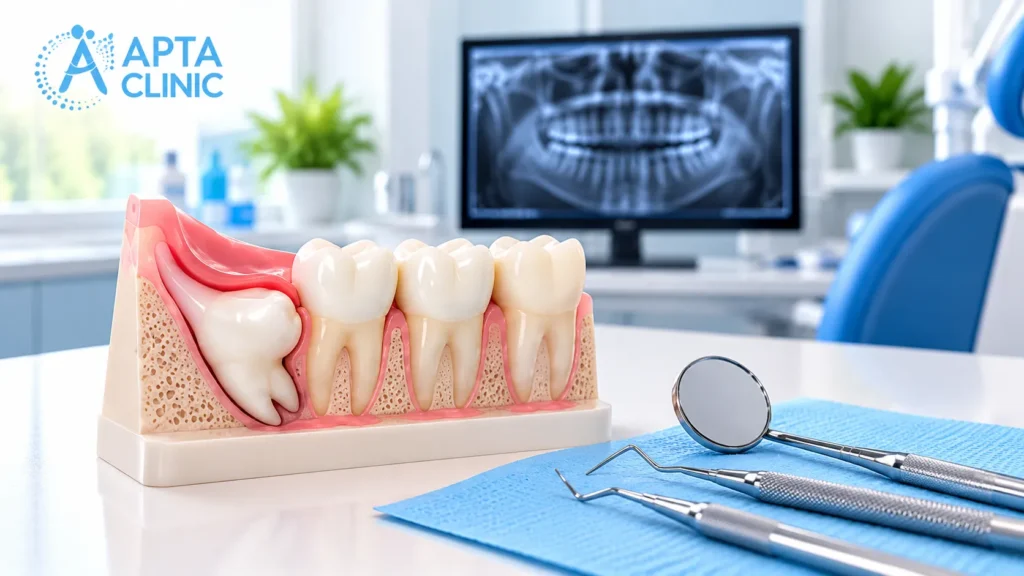
A wisdom tooth that cannot erupt normally because it is blocked by gum tissue, bone or another tooth is called an impacted wisdom tooth. Depending on its position, it may contribute to gum inflammation, tooth decay or problems affecting the neighbouring molar.
An impacted wisdom tooth does not automatically require surgery. A dentist assesses its position, the surrounding tissues and any evidence of disease before recommending extraction or monitoring.
When Is Wisdom Tooth Removal Necessary?
A dentist may recommend wisdom tooth extraction when the tooth is causing a dental problem or presents a clinically significant risk. The decision should be based on examination findings rather than age alone.
- Repeated pain or gum inflammation
A partially erupted wisdom tooth may have a flap of gum covering part of its surface. Food particles and bacteria can collect beneath this tissue, causing inflammation or infection known as pericoronitis.
Symptoms may include tenderness behind the last molar, swollen gums, an unpleasant taste and discomfort while chewing or opening the mouth.
If inflammation keeps returning or becomes severe, your dentist may discuss removing the tooth. The appropriate treatment depends on the severity of the problem and the position of the tooth.
- Tooth decay
Wisdom teeth are located at the back of the mouth, where brushing and cleaning can be difficult. Plaque may accumulate around the tooth, increasing the risk of decay.
The dentist will assess the extent of the damage and whether the tooth can be restored successfully. Extraction may be considered when decay is extensive or the tooth cannot be treated predictably.
- Damage to the neighbouring molar
An impacted wisdom tooth can press against the second molar in front of it. Depending on its angle and position, this may contribute to decay, damage to the neighbouring tooth or problems affecting the surrounding tissues.
A dental examination and appropriate imaging help determine whether the wisdom tooth is affecting the adjacent molar and whether treatment is needed.
- Infection, abscess or other abnormalities
A wisdom tooth associated with an abscess, significant infection or certain cystic changes may require treatment. The approach depends on the diagnosis, the severity of the problem and the tooth’s location.
Facial swelling, fever, worsening pain or difficulty opening the mouth should be assessed promptly. Seek emergency care if you develop difficulty breathing or swallowing, or rapidly spreading swelling.
- Difficulty keeping the area clean
A wisdom tooth that has partly emerged at an awkward angle may be difficult to clean properly. Food and plaque can collect around the tooth, making the area more vulnerable to dental problems.
Difficulty cleaning the area is a reason to seek an assessment, but it does not mean that every such tooth must be removed. Your dentist will consider its current condition and the likelihood of future problems.
What Are the Symptoms of an Impacted Wisdom Tooth?
Some impacted wisdom teeth cause no noticeable symptoms. Others produce discomfort or changes around the back of the mouth.
Possible symptoms include:
- Pain or tenderness behind the last molar.
- Red, swollen or bleeding gum tissue near the wisdom tooth.
- Swelling around the jaw or cheek.
- Food repeatedly becoming trapped behind the last molar.
- An unpleasant taste or persistent bad breath.
- Discomfort when chewing.
- Difficulty opening the mouth fully.
- Pain or swelling that improves temporarily and then returns.
These symptoms are not exclusive to wisdom teeth. Gum disease, decay and other dental conditions can cause similar problems, so an examination is needed to identify the cause.
Do not wait for severe pain before seeking advice. A dentist may identify a problem during a routine check-up even when the tooth has not caused obvious discomfort.
Seek urgent dental care for increasing pain, fever, pus or facial swelling. Difficulty breathing or swallowing requires emergency medical attention.
Does Every Wisdom Tooth Need to Be Removed?
No. A healthy wisdom tooth that has erupted fully, sits in a suitable position and can be cleaned properly may be left in place. The dentist can monitor it during regular dental check-ups.
The decision is more individual when an impacted wisdom tooth has no symptoms. Your dentist considers its position, whether there is evidence of disease or damage, and whether monitoring is appropriate.
Removing a healthy tooth without a clear clinical reason exposes the patient to surgical risks without necessarily providing a benefit. However, leaving a tooth that is causing disease or damaging a neighbouring molar may also carry risks.
Before agreeing to treatment, ask your dentist:
- What does the examination or X-ray show?
- Is there existing decay, infection or damage?
- What could happen if the tooth remains?
- Is monitoring a reasonable alternative?
- Why is extraction being recommended?
- What risks and recovery requirements apply to my case?
These questions can help you understand the reasoning behind the treatment plan.
What Are the Treatment Options for a Wisdom Tooth?
The appropriate approach depends on the tooth’s position, symptoms and examination findings. Treatment may involve monitoring, a simple extraction, surgical removal or referral for specialist assessment.
Monitoring
If the wisdom tooth is healthy and is not causing a problem, your dentist may recommend monitoring instead of immediate removal.
Monitoring involves checking the tooth and surrounding tissues during routine dental appointments. X-rays or other imaging may be recommended when clinically indicated.
It does not mean ignoring the tooth. Report new pain, swelling, gum inflammation or changes around the area so the dentist can reassess it.
Simple wisdom tooth extraction
A simple extraction may be possible when the tooth has erupted sufficiently and can be accessed without a more involved surgical procedure.
The dentist uses appropriate local anaesthesia to numb the area before removing the tooth. The technique depends on the tooth’s position, root structure and clinical findings.
Surgical wisdom tooth extraction
Surgical extraction may be needed when a wisdom tooth is impacted, partly covered by gum tissue or difficult to access.
Depending on the case, the procedure may involve opening the gum, removing a small amount of bone or dividing the tooth into sections before removal. Stitches may be needed.
Your dentist or oral surgeon should explain the planned procedure, expected recovery and risks before treatment begins.
Referral for specialist assessment
Some wisdom teeth are close to important nerves or other anatomical structures. Others are difficult to remove because of their position or root shape.
After examining the tooth and reviewing the imaging, your dentist may recommend assessment by an appropriately qualified oral surgeon or another specialist.
The need for referral depends on the complexity of the case and the services available.
What Happens During Wisdom Tooth Extraction?
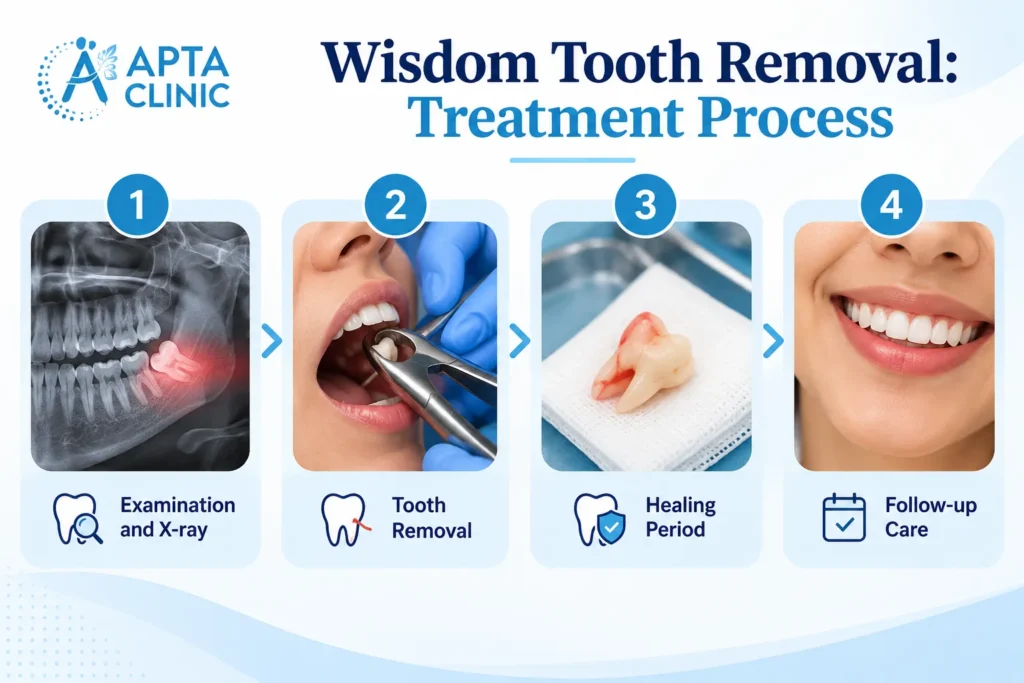
The procedure varies depending on whether the tooth has erupted fully or remains impacted. A typical treatment plan involves the following stages.
- Examination and imaging
The dentist reviews your symptoms and medical history, examines the tooth and surrounding gums, and considers whether dental X-rays or other imaging are needed.
Imaging can help show the position of the tooth, its roots and its relationship to nearby teeth and anatomical structures.
- Treatment planning
The dentist explains whether monitoring or extraction is appropriate and whether a simple or surgical approach may be required.
Tell the dentist about your medical conditions, allergies and all medicines or supplements you take, including blood thinners. Do not stop a prescribed medicine unless the clinician responsible for your care tells you to do so.
You should also have an opportunity to discuss anaesthesia, potential complications, aftercare and the expected cost.
- Anaesthesia and removal
Local anaesthesia is commonly used to numb the area during extraction. Sedation or general anaesthesia may be considered in selected cases, depending on the complexity of the procedure, medical factors, anxiety and the clinical setting.
The dentist removes the tooth using the planned technique. If the gum has been opened, stitches may be placed where necessary.
Before leaving, make sure you understand how to care for the extraction site and manage discomfort during recovery.
- Aftercare and follow-up
Your dental team will provide instructions on wound care, oral hygiene, medication and warning signs that require attention.
Ask when you should return for review and whom to contact if you experience unusual pain, persistent bleeding or increasing swelling.
Recovery After Wisdom Tooth Removal
Recovery depends on the difficulty of the extraction, the number of teeth removed and your individual healing process.
Some soreness, swelling, bruising and jaw stiffness can occur after the procedure. These symptoms should generally begin to improve after the first few days, although complete recovery may take longer, particularly after surgical extraction.
Follow the instructions provided by your dentist. The following general measures may help support recovery.
What should you eat after extraction?
Soft foods are often easier to manage during the early recovery period. Depending on your dentist’s advice, suitable options may include soft rice, mashed vegetables, yoghurt and other foods that require little chewing.
Avoid hard, crunchy or very hot foods while the extraction site is healing. Follow your dentist’s instructions about when to resume your usual diet.
How can you protect the extraction site?
A blood clot forms in the extraction socket and helps the wound heal. Disturbing this clot can increase the risk of a painful condition called dry socket.
During the initial period specified by your dentist:
- Avoid forceful spitting and vigorous rinsing.
- Follow instructions about when to begin gentle rinsing.
- Clean your other teeth carefully without disturbing the wound.
- Avoid smoking, which can delay healing and increase the risk of complications.
- Follow your dental team’s advice about drinking through a straw and other activities that may disturb the clot.
How should you manage discomfort?
Rest after the procedure and avoid strenuous activity for the period recommended by your dentist.
Take prescribed or recommended pain relief only as directed. If you are unsure whether a medicine is suitable for you, check with your clinician or pharmacist.
If you have received sedation or general anaesthesia, follow the instructions about driving, supervision and returning to normal activities.
When should you contact your dentist?
Contact your dentist if your symptoms worsen instead of improving, bleeding continues, or you develop fever, pus, severe pain or concerning swelling.
These symptoms may indicate a complication that requires assessment. Do not attempt to diagnose or treat a post-extraction problem at home without professional advice.
What Are the Risks of Wisdom Tooth Extraction?
Wisdom tooth extraction is a common dental procedure, but it carries potential risks. These may include:
- Bleeding.
- Infection.
- Dry socket.
- Delayed healing.
- Temporary pain, swelling or difficulty opening the mouth.
- Injury to nearby structures.
- Nerve-related symptoms in certain cases, depending on the tooth’s position.
The specific risks vary from one patient to another. For example, a tooth positioned close to a nerve may require additional planning before removal.
Your dentist should explain the relevant risks based on your medical history, examination and imaging. Ask about the expected benefits of extraction, the risks of leaving the tooth in place and the alternatives available.
Seek emergency medical care if you develop difficulty breathing or swallowing, or rapidly spreading swelling around your mouth, jaw or neck.
Contact your dentist promptly if you experience severe or worsening pain, persistent bleeding, fever, pus or swelling that increases rather than improves.
What Affects the Cost of Wisdom Tooth Removal in Mysore?
The cost of wisdom tooth removal in Mysore varies according to the complexity of the procedure and the treatment required. There is no single fee that applies to every patient.
Factors that may affect the estimate include:
- Whether the tooth is fully erupted, partly erupted or impacted.
- Whether a simple or surgical extraction is required.
- The position of the roots and their relationship to nearby structures.
- Whether dental X-rays or additional imaging are needed.
- The type of anaesthesia or sedation used, where applicable.
- The clinician or facility involved.
- Medicines, follow-up appointments and any additional treatment required.
Ask for a treatment estimate after the dental examination. Clarify whether the quoted fee includes imaging, anaesthesia, medicines and follow-up appointments.
If you have dental insurance or another benefit plan, confirm the applicable coverage directly with the provider rather than assuming that extraction or imaging will be covered.
Enquiring About Wisdom Tooth Removal at APTA Clinic in Mysore
If you have recurring pain near your last molar, swelling around a wisdom tooth or have been told that a tooth is impacted, you can contact APTA Clinic to ask about an assessment and the treatment options currently available.
The clinic has a dedicated Wisdom Tooth Removal in Mysore service page describing dental examination, appropriate imaging and individual treatment planning.
APTA Clinic contact details
- Phone: +91 7411 707 555
- Website: https://aptaclinic.com/
- Locations listed for the clinic: Krishnamurthy Puram, Mysore, and Vijayanagar, Mysore.
Confirm the current address, appointment availability and service details directly with the clinic before visiting.
A dental examination can help determine whether your wisdom tooth needs extraction or can be monitored. The decision should account for your clinical findings, the risks of leaving the tooth in place and the potential risks of treatment.
Frequently Asked Questions (FAQs)
Removal may be recommended when a wisdom tooth causes repeated inflammation, infection, significant decay, damage to a neighbouring tooth or another dental problem. The decision should follow a dental examination and appropriate imaging when indicated.
No. An impacted tooth does not automatically require removal. The dentist assesses its position, symptoms, evidence of disease and risk of damage before recommending extraction or monitoring.
Possible signs include pain behind the last molar, swollen or tender gums, food trapping, an unpleasant taste, jaw discomfort and difficulty opening the mouth. Some impacted wisdom teeth cause no symptoms.
Local anaesthesia is commonly used to numb the area during extraction. Soreness, swelling and discomfort can occur afterward. Your dentist will explain how to manage these symptoms safely.
Potential complications include bleeding, infection, dry socket, delayed healing and, in some cases, nerve-related symptoms. Your dentist should explain the risks based on the tooth’s position and your medical history.
The cost depends on the tooth’s position, extraction complexity, imaging, anaesthesia and follow-up needs. Contact the clinic for a personalised estimate after assessment.
Visit https://aptaclinic.com/ or call +91 7411 707 555 to ask about an appointment, current service availability and the appropriate clinic location.
Soft foods that require little chewing are usually easier during early recovery. Avoid hard or crunchy foods and follow your dentist’s advice about when to resume your normal diet.