
Reconstructive vs Cosmetic Facial Surgery: Which Approach Addresses Your Concern?
- Home
- Blog
- About Us
A road accident, fall, sports injury or blow to the face can damage the skin, teeth, jaw or facial bones. Some injuries cause visible cuts and swelling. Others affect chewing, breathing, vision or the way the teeth meet. A facial fracture may not always be obvious from appearance alone.
Facial trauma treatment begins with identifying the injury and checking whether it affects essential functions. Depending on the findings, care may involve wound treatment, monitoring, dental care, fracture repair or reconstructive surgery. Not every facial fracture needs an operation.
APTA Clinic in Mysore lists facial trauma among its facial surgery services. The appropriate treatment depends on the injury, the patient’s condition and the findings of a clinical assessment.
If a facial injury has just occurred and there is difficulty breathing, uncontrolled bleeding, a change in vision, loss of consciousness or a suspected head or neck injury, seek emergency medical care rather than waiting for a routine clinic appointment.
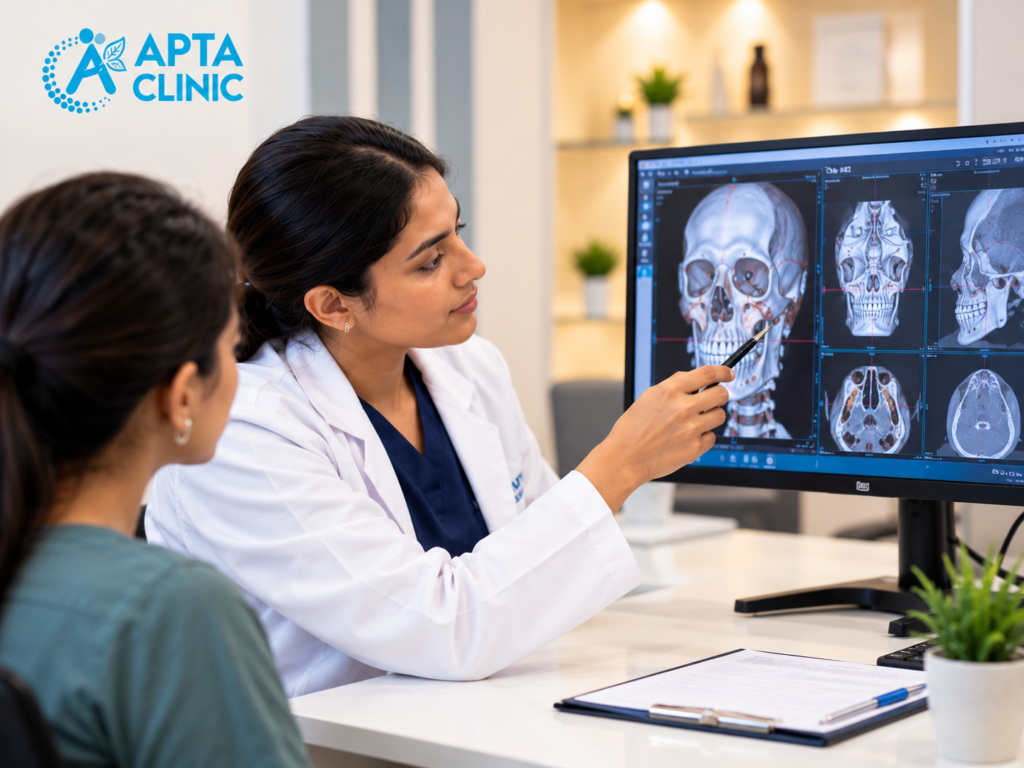
What Is Facial Trauma?
Facial trauma refers to an injury affecting the face. It may involve the skin and other soft tissues, the bones of the face, the teeth or structures around the eyes and nose.
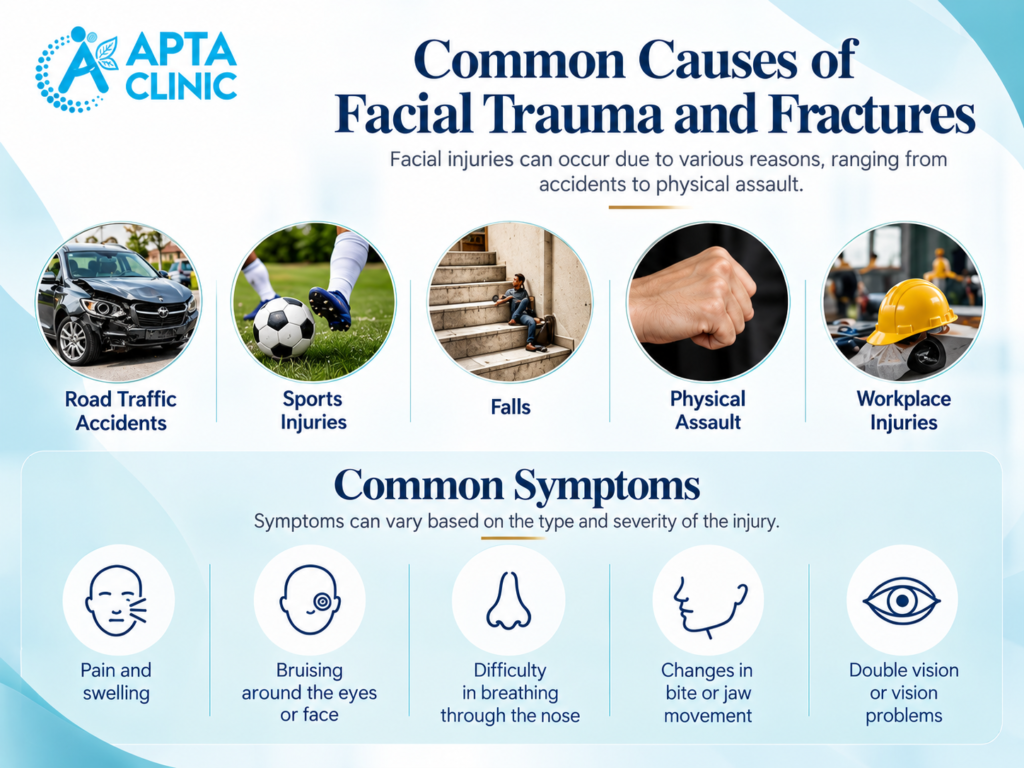
Common causes include road traffic accidents, falls, sports injuries and physical assaults. The severity ranges from a superficial wound to a fracture that changes the position of a facial bone or affects normal function.
A facial injury may involve one area or several structures at the same time. For example, a blow to the lower face can injure the jaw and teeth, while an impact around the cheek may affect the cheekbone or the bones surrounding the eye.
The first step is to determine the extent of the injury. Swelling and bruising can make an examination difficult, and a fracture cannot always be ruled out by looking at the face.
Common Symptoms of Facial Fractures
Symptoms vary according to the bone or tissue involved. Signs that need medical assessment can include:
- Pain or tenderness after an impact to the face
- Swelling or bruising around the cheek, nose, jaw or eyes
- A change in the way the upper and lower teeth meet
- Difficulty opening the mouth, chewing or speaking
- Numbness in the cheek, upper lip, chin or nearby skin
- A visible change in facial shape or symmetry
- Loose, damaged or displaced teeth
- Bleeding from the nose or mouth following an injury
- Double vision, blurred vision or difficulty moving an eye
These symptoms do not confirm a fracture on their own. A clinician must assess the injury and decide whether imaging or specialist treatment is needed.
Do not assume that an injury is minor simply because the pain is manageable or the swelling appears limited. Some fractures need prompt assessment even when the external signs are subtle.
Types of Facial Injuries
Jaw fractures
A fracture of the lower jaw, also called the mandible, may cause pain, swelling, difficulty opening the mouth or a change in the bite. The teeth may no longer meet as they did before the injury.
Jaw injuries can affect eating and speaking. Assessment helps determine the fracture’s location, whether the bone is displaced and whether the teeth or other structures are involved.
Cheekbone fractures
The cheekbone contributes to the shape of the middle face and forms part of the eye socket. A fracture may cause swelling, tenderness, flattening of the cheek or altered sensation around the cheek and upper lip.
Some cheekbone fractures can be managed without surgery. Others may need repair if the bone has moved or the injury affects function.
Nose fractures
An injury to the nose can cause swelling, bleeding, tenderness or a change in its shape. A clinician may need to check for associated injuries and determine whether the nasal structure has been displaced.
Seek urgent medical attention if nasal bleeding is severe, breathing is difficult or there are signs of a more serious facial or head injury.
Fractures around the eye socket
The bones surrounding the eye can fracture after an impact. Symptoms may include swelling around the eye, double vision, pain with eye movement or changes in the position of the eye.
Vision changes after facial trauma require urgent medical assessment. Do not press on the injured eye or try to correct the position of an injured facial structure yourself.
Soft-tissue injuries
Cuts, bruises and injuries to the lips or other facial tissues may occur with or without a fracture. The wound’s depth, location, contamination and effect on facial movement help determine the treatment required.
A wound may need cleaning, closure or further assessment. Injuries involving the eyelids, lips, nerves or other important structures require careful evaluation.
When Should You Seek Emergency Medical Care?
Some facial injuries should not wait for a routine appointment. Go to an emergency department or call local emergency services if the person has:
- Difficulty breathing or swallowing
- Bleeding that does not stop with appropriate gentle pressure, where pressure is safe
- Loss of consciousness, confusion, unusual drowsiness or a seizure
- Severe or worsening headache, repeated vomiting or other concerning signs of head injury
- New vision loss, double vision or severe eye pain
- A suspected neck injury
- A major facial deformity or a serious open wound
- Rapidly increasing swelling or severe pain
If a head or neck injury is possible, avoid unnecessary movement and follow emergency responders’ instructions. Do not attempt to push a bone back into place, manipulate the jaw or press directly on an injured eye.
Even without these emergency signs, a person with persistent pain, numbness, a changed bite, difficulty opening the mouth or swelling after a significant impact should be assessed promptly
How Is Facial Trauma Assessed?
The assessment depends on the injury and the patient’s overall condition. The clinician may ask how the accident happened, when it occurred, what symptoms followed and whether the patient has other injuries or medical conditions.
The examination may include:
- Checking the wound, swelling, tenderness and facial symmetry
- Assessing mouth opening, the bite and tooth damage
- Checking sensation in affected areas
- Evaluating eye-related symptoms and other signs that require urgent referral
- Reviewing medication use, allergies and relevant medical history
Imaging may be needed to understand the location and extent of a suspected fracture. Depending on the injury, the medical team may request X-rays or a CT scan. The decision is based on the clinical findings, not on a standard test for every patient.
A facial injury may also require assessment by an emergency physician, an oral and maxillofacial surgeon, an ENT specialist, an ophthalmologist or another clinician. The right team depends on the structures involved and whether other injuries are present.
Treatment Options for Facial Fractures
There is no single treatment for every facial fracture. The choice depends on which bone is affected, whether the bone has shifted, whether the bite or vision is affected, the condition of the surrounding tissues and any other injuries.
Observation and non-surgical care
Some fractures remain in a suitable position and can heal without an operation. A clinician may recommend monitoring, pain management, dietary adjustments or other precautions appropriate to the injury.
Follow the instructions given by the treating team. Do not decide that a fracture can be left untreated based on symptoms alone.
Fracture repair
Surgery may be considered when a fracture is displaced, affects normal function or causes a structural problem that needs correction. Depending on the injury, the surgeon may reposition the bone and use small plates, screws or other fixation methods to keep it stable while it heals.
Not every patient needs fixation. The decision should follow an examination and appropriate imaging, with the expected benefits and risks explained before treatment.
Treatment of associated soft-tissue injuries
Cuts and damage to facial tissues may need cleaning, closure or repair. The approach depends on the wound and the structures involved. Dental injuries may also need separate treatment.
Reconstructive treatment
Some injuries leave persistent changes in facial contour, symmetry or function after the initial injury has healed. In selected cases, reconstructive treatment may be considered. The timing depends on the original injury, healing, remaining symptoms and clinical findings.
Reconstruction should not be assumed to be necessary for every patient. A specialist can explain whether treatment is appropriate and what it may realistically address.
What Does Recovery After a Facial Fracture Involve?
Recovery varies with the location and severity of the injury, the treatment provided and the patient’s general health. Swelling and bruising may improve before the underlying bone has fully healed.
Your treating clinician may provide instructions about:
- Food texture and chewing, particularly after a jaw injury
- Oral hygiene and care of wounds or surgical sites
- Prescribed medication and how to take it
- Activity restrictions and avoiding further impact to the face
- Follow-up visits and any additional imaging
- When to return to normal work, exercise or sports
Do not use a general recovery timeline as permission to resume contact sports or activities that could cause another impact. Ask the treating team when it is safe to do so.
Contact a healthcare professional if pain or swelling worsens, a wound becomes increasingly red, you develop a fever, your bite changes, or you notice new vision problems or difficulty breathing or swallowing. Severe or sudden symptoms require emergency assessment.
Possible Complications
The possible effects of facial trauma depend on the structures injured and how the injury heals. Complications can include persistent numbness, changes in the bite, difficulty opening the mouth, visible changes in facial contour, scarring or ongoing discomfort. Certain injuries may affect vision or the movement of the eye.
These outcomes do not occur in every case. Prompt assessment, appropriate treatment and follow-up can help the treating team identify problems and decide whether further care is needed.
If something feels different after an injury—even after the initial swelling has gone down—tell your clinician what has changed and when you first noticed it.
How Are Facial Fractures Diagnosed?
Diagnosing a facial fracture involves understanding how the injury occurred, examining the affected structures and determining whether imaging is needed. The assessment also helps identify associated injuries that may require urgent treatment.
Medical History and Physical Examination
The clinician may ask when and how the injury occurred, whether there was loss of consciousness, and which symptoms appeared after the impact. Information about pain, bleeding, vision changes, jaw movement and dental problems can help guide the examination.
The injured area may be assessed for swelling, bruising, tenderness, changes in facial contour and signs of bone displacement. Depending on the injury, the clinician may also examine the mouth, teeth, jaw alignment, facial sensation and eye movement.
Imaging Tests
A CT scan is commonly used when detailed assessment of facial fractures is required. It can help show the location of broken bones, the degree of displacement and whether nearby structures are involved.
Other investigations may be considered depending on the type of injury and the clinical findings. Not every facial injury requires a scan, and the decision should be based on an appropriate medical assessment.
Facial Trauma Treatment in Mysore: What Patients Should Know
People searching for facial trauma treatment in Mysore may be looking for help after an accident, a suspected facial fracture or an injury that has affected the jaw, nose or cheekbones. The first priority is to receive appropriate medical assessment and ensure that any urgent injuries are treated.
Treatment may involve emergency care, imaging, dental evaluation, fracture management or referral to a specialist, depending on the findings. Patients should ask which structures have been injured, whether surgery is necessary, what the treatment is expected to achieve and how long recovery may take.
APTA Clinic in Mysore lists facial trauma care among its facial surgery services. Patients should contact the clinic to confirm the availability of the specific service, the appropriate specialist and whether an appointment or referral is suitable for their situation. Emergency injuries should be taken to an appropriate emergency department rather than waiting for a routine clinic appointment.
Assessment for Associated Injuries
Facial trauma can occur alongside injuries to the head, eyes, neck or teeth. Clinicians may therefore recommend additional examinations or referrals when symptoms suggest that other structures have been affected.
Identifying these problems is an important part of treatment planning. Addressing a visible facial injury alone may not be sufficient if there are associated injuries that require separate care.
Tips for Recovery After Facial Trauma
Recovery involves more than waiting for swelling to settle. Following the treatment plan and monitoring changes in symptoms can help patients manage the healing process and recognise problems that need attention.
After assessment and treatment, follow the clinician’s instructions for wound care, medication, oral hygiene and activity restrictions. If a modified diet has been recommended, choose suitable foods that do not place unnecessary stress on an injured jaw. Avoid contact sports and activities that could cause another impact until the treating clinician confirms that it is appropriate to resume them.
What Should You Do Immediately After a Facial Injury?
The steps taken immediately after a facial injury depend on the severity of the impact and the symptoms present. If the injury follows a serious accident, the priority is to seek emergency medical assistance and avoid unnecessary movement of the head and neck when a spinal injury is suspected. Do not attempt to push a visibly displaced bone back into position or apply pressure directly to an injured eye. If there is bleeding from a superficial wound, gentle pressure with clean gauze may help control it, provided this does not worsen the injury. Avoid eating or drinking if emergency surgery may be needed, unless emergency personnel advise otherwise. Even when the injury initially appears minor, persistent pain, altered tooth alignment or difficulty opening the mouth warrants medical evaluation.
Facial Fractures in Children and Older Adults
Facial injuries can require different considerations depending on the patient’s age. In children, the facial bones are still developing, and an injury may affect teeth, jaw growth or other developing structures. Certain injuries, particularly those involving the jaw or eye socket, may present with symptoms that are not immediately obvious. Prompt assessment by an appropriately qualified clinician helps determine whether further investigation or specialist follow-up is necessary.
Older adults may have additional considerations, including existing medical conditions, medicines that increase bleeding risk and a greater likelihood of injury following a fall. Facial trauma in this age group should be assessed alongside possible head injuries, particularly when the person takes anticoagulant medication. Treatment decisions should account for overall health, the nature of the fracture and the patient’s functional needs.
How Facial Fractures Can Affect Dental Health
Facial trauma can affect the teeth, gums, supporting tissues and the alignment of the upper and lower jaws. A direct impact may cause a tooth to chip, loosen or become displaced, while a fracture involving the jaw may change how the teeth fit together when the mouth closes. Some dental injuries are not immediately painful, so the absence of severe discomfort does not always rule out damage.
A dental examination may be recommended alongside assessment of the facial bones. Depending on the findings, treatment may involve dental repair, stabilisation of an injured tooth or coordination with a specialist managing the fracture. Patients should report changes in their bite, tooth sensitivity, loose teeth or pain while chewing after an accident. Addressing dental injuries as part of the overall treatment plan can help protect oral function during recovery.
Facial Trauma and Emotional Well-Being
An injury that changes the appearance of the face can affect confidence, social interactions and emotional well-being. Some people feel uncomfortable about visible scars, swelling or changes in facial symmetry, particularly when recovery takes longer than expected. These concerns are understandable, and they may continue even after the initial injury has healed.
Recovery should not be judged solely by how quickly bruising disappears or wounds close. Functional improvement, comfort and adjustment to changes in appearance can also be important. Patients who experience persistent distress may benefit from discussing their concerns with their healthcare provider and seeking appropriate emotional support. Realistic expectations and clear communication about the healing process can help patients understand what to expect at different stages of recovery.
Why Follow-Up Matters After Facial Trauma
Follow-up appointments allow the treating team to assess whether the injury is healing as expected and whether facial function is improving. Depending on the original trauma, the review may focus on jaw movement, bite alignment, facial sensation, eye-related symptoms, wound healing or changes in facial contour. Some concerns become easier to assess after the initial swelling has reduced.
Follow-up may also help identify problems that require additional dental care, rehabilitation or specialist review. Patients should report new or worsening symptoms rather than waiting until the next scheduled appointment. The frequency and duration of follow-up depend on the injury and treatment provided, so the treating clinician should give individual guidance.
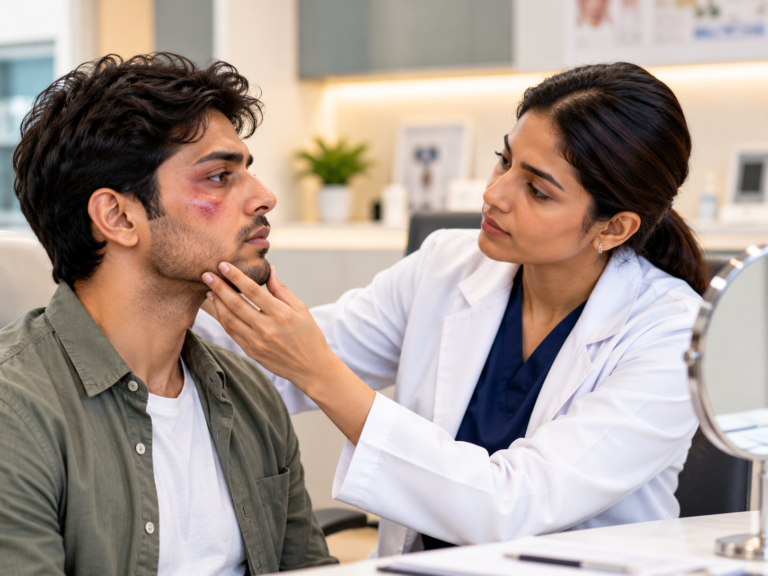
Facial Trauma Care at APTA Clinic, Mysore
APTA Clinic lists facial trauma as part of its facial surgery services. Its published service information describes assessment and treatment that may include fracture repair, soft-tissue reconstruction, bone fixation and dental restoration, depending on the injury.
The clinic’s existing facial surgery page also describes care for conditions involving the jaw, facial structure and other reconstructive concerns. Treatment suitability must be established through an individual clinical assessment.
For a recent serious injury, use an emergency department first. For a non-emergency concern or a follow-up discussion about a facial injury, contact APTA Clinic to confirm whether the clinic can assess your specific condition and which clinician is appropriate.
Book a Facial Trauma Consultation in Mysore
If you have ongoing symptoms after a facial injury or need advice about a previously assessed facial fracture, contact APTA Clinic to ask about an appointment.
APTA Clinic
- Location: Krishnamurthy Puram, Mysore, Karnataka
- Phone: +91 7411 707 555
- Published opening hours: Monday to Sunday, 10:30 AM–7:30 PM
Frequently Asked Questions (FAQs)
Symptoms may include pain, swelling, bruising, facial numbness, a change in the bite, difficulty opening the mouth or changes in facial shape. Double vision or other vision changes need urgent medical assessment. Symptoms alone cannot confirm or rule out a fracture.
Yes. Some fractures can heal without an operation when the bones remain in a suitable position and normal function is not compromised. Other fractures may need surgery to reposition and stabilise the bone. A clinician determines the appropriate treatment after assessment.
A clinician examines the injury, asks about the accident and symptoms, and checks relevant functions such as jaw movement and sensation. X-rays or a CT scan may be needed, depending on the suspected injury.
Seek emergency care for breathing or swallowing difficulty, uncontrolled bleeding, loss of consciousness, confusion, severe or worsening symptoms, significant eye symptoms or a suspected head or neck injury. Do not wait for a routine clinic appointment if these warning signs are present.
Healing time varies with the bone involved, the severity of the fracture and the treatment provided. Swelling may improve before the bone has fully healed. Your treating clinician should advise when normal activities can safely resume.
Some fractures can alter facial contour or symmetry, particularly if a bone has moved from its normal position. Others heal without a lasting visible change. The likely outcome depends on the injury and the treatment needed.
No. Treatment depends on the location and alignment of the fracture, the bite, other injuries and the patient’s condition. A specialist can explain whether observation or surgical repair is appropriate
If available, bring reports from the emergency department, scan or X-ray reports, a list of medicines and details of any treatment already received. Do not delay emergency care while collecting documents.
APTA Clinic lists locations in Krishnamurthy Puram and Vijayanagar, Mysore.