
Cosmetic vs Reconstructive Plastic Surgery: What Is the Difference?
- Home
- Blog
- About Us
Plastic surgery is often associated with procedures that change appearance. The specialty also includes reconstructive surgery, which can help repair or restore structures affected by injury, congenital conditions, disease or other medical problems.
This is why cosmetic surgery and reconstructive surgery are related terms, but they do not always describe the same treatment goal.
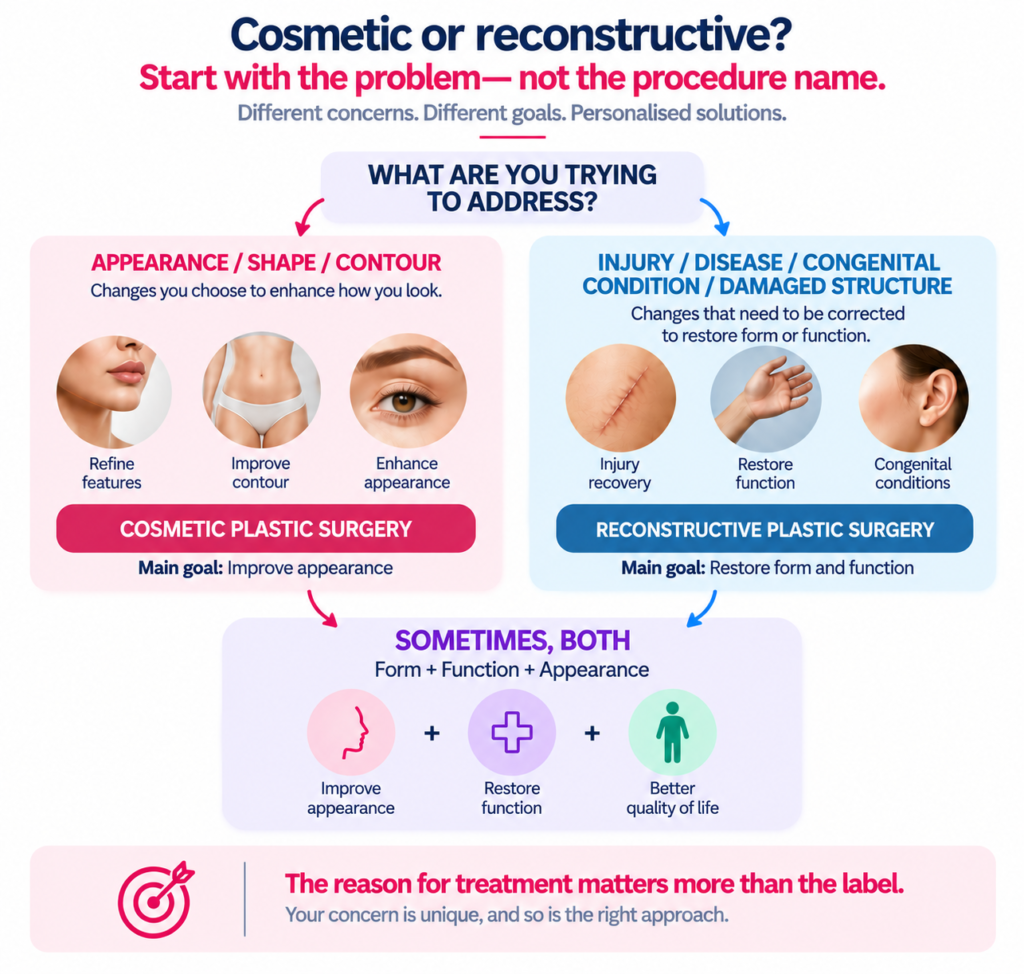
Cosmetic surgery generally focuses on changing or enhancing appearance. Reconstructive surgery generally deals with structures affected by injury, congenital conditions, disease or other medical circumstances, with restoration of form or function often being part of the treatment goal. The American Society of Plastic Surgeons describes the two as areas within plastic surgery and notes that there can be considerable overlap between them. (plasticsurgery.org)
For patients considering plastic surgery in Mysore, understanding the difference can make a consultation easier to navigate. The distinction is not always absolute, though. A procedure can have both functional and aesthetic goals depending on the patient’s condition.

Cosmetic vs Reconstructive Plastic Surgery: What Is the Difference?
The easiest place to start is with the reason treatment is being considered.
Cosmetic plastic surgery
Cosmetic surgery generally focuses on changing the appearance of an otherwise normal structure.
A patient may be concerned about:
- Shape
- Proportion
- Contour
- Size
- Signs of facial ageing
- Other visible features
The intended outcome is usually an aesthetic change.
Reconstructive plastic surgery
Reconstructive surgery generally deals with structures affected by a medical condition, injury, congenital difference or tissue loss.
Treatment may be intended to:
- Repair damaged structures
- Restore function
- Rebuild lost tissue
- Improve appearance following injury or disease
- Address a structural problem
Examples can include reconstruction following trauma, treatment of certain congenital conditions, scar-related surgery and cleft lip or cleft palate surgery.
What Is Cosmetic Plastic Surgery?
Cosmetic plastic surgery is generally performed when the main reason for treatment is to change or enhance appearance.
Someone may seek treatment because they are concerned about the shape, proportion or contour of a particular area.
Depending on the patient, cosmetic consultations can involve concerns related to:
- Facial appearance
- Body contour
- Breast shape or size
- Skin and soft-tissue appearance
- Facial ageing
- Visible scars or other changes
The appropriate treatment depends on the individual.
A concern about appearance does not automatically mean surgery is necessary. Depending on the situation, a non-surgical treatment, observation or another approach may be considered.
APTA Clinic’s listed facial rejuvenation services include both surgical and non-surgical approaches, with treatment selection depending on the patient’s concerns and characteristics.
Where the two overlap
The distinction becomes less straightforward in some patients.
A reconstructive procedure can improve appearance as well as function. A procedure that changes appearance can also have a functional component in a particular patient.
For example, facial reconstruction following trauma may involve restoring facial structure while also addressing symmetry. Scar treatment may focus on appearance in one patient but involve restricted movement in another.
The reason for treatment and the problem being addressed are therefore more useful than the procedure name alone.
What is the main goal of cosmetic surgery?
The main goal is usually an improvement in appearance.
That does not mean every patient wants the same result. A treatment plan should take into account the person’s anatomy, health, expectations and reasons for seeking treatment.
During a consultation, the surgeon should explain what the proposed procedure can reasonably change and what it cannot.
Can Cosmetic and Reconstructive Surgery Overlap?
Yes.
A patient does not always fit neatly into one category.
For example, reconstruction after facial trauma may restore damaged structures while also improving facial symmetry. Scar surgery may address a visible scar and restricted movement at the same time.
The intended purpose of treatment, the condition being treated and the outcome being sought are all relevant.
This is one reason a consultation is useful. A surgeon needs to understand your medical history, the problem you want addressed and what you hope treatment will achieve before recommending an approach.
What Is Reconstructive Plastic Surgery?
Reconstructive plastic surgery generally focuses on repairing, rebuilding or restoring structures affected by circumstances such as:
- Accidents or other injuries
- Congenital conditions
- Disease
- Tissue loss
- Certain wounds
- Scarring or contractures
- Other structural abnormalities
The treatment may aim to restore function, improve appearance or address both.
The American Society of Plastic Surgeons describes reconstructive surgery as treatment for abnormal structures affected by congenital defects, trauma, disease and other conditions, often with restoration of function as an objective.
Reconstructive Surgery Can Involve Function and Appearance
Consider a patient who has suffered facial trauma.
An injury can affect facial bones and soft tissue. Depending on the location and severity of the injury, it may also affect functions such as breathing, chewing or vision.
Treatment may therefore need to address both the damaged structure and its effect on function.
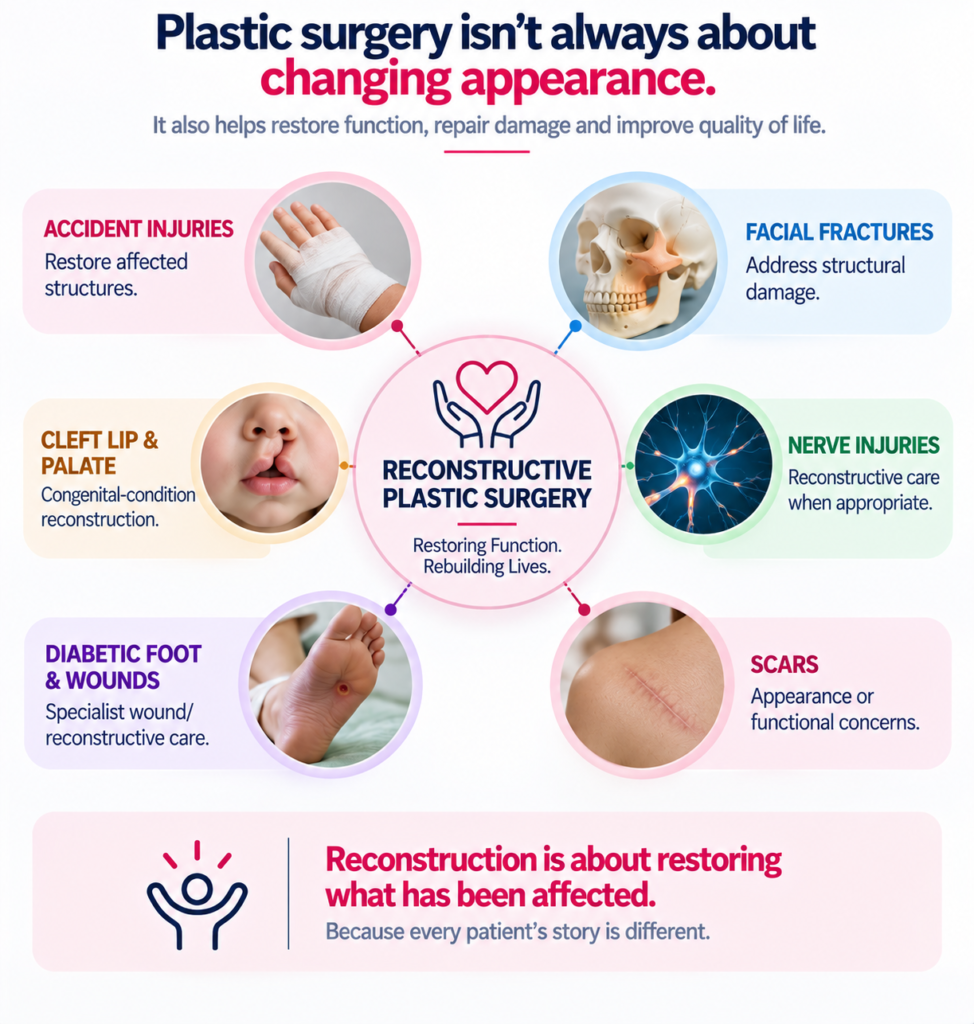
APTA Clinic lists facial trauma among its facial surgery services. Its listed treatment areas for Dr. B. Akshata Kamath also include accident-related reconstruction, nerve injuries, scar management, facial fractures, diabetic foot and wound management, and cleft lip and cleft palate surgery.
These examples show why reconstructive plastic surgery covers considerably more than appearance-related procedures.
How Does a Plastic Surgeon Decide Which Approach Is Appropriate?
There is no single procedure that is right for everyone.
During an assessment, the surgeon may consider:
- Your main concern
- Why you are seeking treatment
- Medical history
- Previous surgeries or treatments
- Current medicines and relevant health conditions
- Physical examination findings
- Anatomy and tissue condition
- Functional problems
- Aesthetic goals
- Expectations
- Potential risks and limitations
- Recovery requirements
The purpose of this assessment is to determine whether treatment is appropriate and, if so, which approach may address the problem.
For some patients, surgery may be appropriate. For others, a non-surgical treatment, further evaluation or no procedure may be recommended.
Common Reasons People Consider Cosmetic Plastic Surgery
Reconstructive surgery may be considered when an area has been affected by injury, congenital conditions, disease or significant tissue changes.
The treatment areas listed in Dr. B. Akshata Kamath’s APTA profile include:
- Accident-related reconstruction
- Facial fracture treatment
- Nerve injuries
- Diabetic foot and wound management
- Scar management
- Cleft lip and cleft palate surgery
Reconstruction after facial trauma
Facial trauma can affect the bones and soft tissues of the face.
Depending on the injury, treatment may need to address structural damage as well as functional concerns.
APTA Clinic’s facial trauma information describes assessment of facial injuries and reconstruction where appropriate.
Cleft lip and cleft palate
Cleft lip and cleft palate are congenital conditions for which reconstructive surgery can form part of treatment.
The timing and treatment plan depend on the individual patient’s condition and clinical assessment.
Scar-related concerns
A scar does not automatically require surgery.
Some scars can be managed without an operation. Surgical revision may be considered when there are suitable indications, including certain structural or functional concerns.
Know What Happens If a Complication Occurs
Ask what happens if you develop a problem after surgery.
You should know:
- Who to contact
- How to contact the clinic
- Which symptoms require urgent attention
- How postoperative problems are assessed
- What follow-up arrangements are available
ASPS specifically recommends asking how complications are handled.
Knowing this information before surgery can make it easier to respond if something unexpected happens during recovery.
Understand the Total Cost
Cost is an important practical consideration, but the price of surgery does not by itself establish the quality or safety of care.
Ask what the quoted amount includes.
Depending on the procedure, costs may involve:
- Surgeon fees
- Facility charges
- Anaesthesia
- Medical investigations
- Medicines
- Dressings or other supplies
- Follow-up appointments
- Additional treatment, if required
APTA Clinic’s website provides appointment and contact information, but specific procedure prices should be confirmed with the clinic because treatment costs can vary according to the procedure and individual treatment plan.
What Happens During a Plastic Surgery Consultation?
A consultation gives you an opportunity to understand your options before making a decision.
The discussion may cover several areas.
Your Main Concern
Explain what you would like to change or what problem you want treated.
For reconstructive surgery, describe the injury, condition or functional concern as clearly as possible.
Your Medical History
Tell the surgeon about relevant conditions, medicines, allergies, previous operations and previous reactions to anaesthesia.
Physical Assessment
The surgeon may examine the relevant area and consider your anatomy, skin or tissue characteristics and other factors related to treatment.
Risks and Recovery
Ask which complications are possible and what recovery is likely to involve.
Your Questions
Write down your questions before the appointment.
ASPS recommends preparing questions in advance so important concerns are not forgotten during the consultation.
Treatment Options
Depending on your concern, the discussion may include:
- Surgical treatment
- Non-surgical treatment
- Observation
- Another treatment approach
- Another specialist opinion, where appropriate
How Should You Prepare for Plastic Surgery?
Preparation depends on the procedure and your health.
Your treating team may give you instructions about:
- Medicines
- Fasting
- Smoking or tobacco
- Alcohol
- Eating and drinking
- Personal hygiene
- Transportation
- Support at home
- Wound care
- Activity restrictions
Follow the instructions provided by your medical team.
Do not make changes to prescribed medicines without medical advice.
If you develop an illness, infection or another significant health problem before planned surgery, tell your treating team.
What Should You Know About Recovery?
Recovery is part of the treatment process.
Depending on the procedure, you may experience:
- Swelling
- Bruising
- Temporary discomfort
- Wound-care requirements
- Activity restrictions
- Follow-up visits
- Temporary changes in sensation
The duration and severity vary between patients and procedures.
Your surgeon should give you instructions specific to your treatment. Avoid using someone else’s social-media recovery as a benchmark for your own.
Does Plastic Surgery Cost Affect Safety?
Cost should be discussed before treatment, but it should not replace consideration of the medical aspects of care.
When comparing quotations, ask what is included.
Instead of asking only:
“How much does the surgery cost?”
also ask:
“What does the quoted cost include?”
Depending on the treatment, this may include the surgeon, facility, anaesthesia, investigations, medicines and follow-up.
A clear financial discussion can reduce misunderstandings about what you will pay before and after the procedure.
When Should You Contact Your Doctor After Surgery?
Your treating team should explain which symptoms are expected and which ones require medical attention.
Contact your medical team promptly if you develop symptoms that concern you or that your postoperative instructions identify as warning signs.
Depending on the procedure, these may include:
- Severe or increasing pain
- Significant bleeding
- Increasing redness or swelling
- Fever
- Difficulty breathing
- Chest pain
- Sudden weakness
- Wound separation
- Other unexpected or rapidly worsening symptoms
Some symptoms may require urgent or emergency assessment.
If you experience a medical emergency, seek appropriate emergency medical care instead of waiting for a routine clinic appointment.
Considering Plastic Surgery in Mysore?
Before undergoing plastic surgery, take time to understand the procedure being considered.
Ask about the surgeon’s relevant qualifications, your suitability for treatment, possible risks, the facility and anaesthesia arrangements, expected recovery and follow-up care.
You should also have an opportunity to ask questions before deciding.
If you are considering plastic surgery in Mysore, APTA Clinic provides consultations for plastic and reconstructive surgery. You can discuss your concern and find out whether a particular procedure may be appropriate for your situation.
A consultation does not require you to undergo surgery. It allows you to discuss treatment options, risks, expected recovery and possible next steps before making a decision.
Plastic Surgery at APTA Clinic, Mysore
APTA Clinic is a multi-specialty aesthetic and cosmetic clinic in Mysuru with services across plastic surgery, dermatology, facial surgery, dental care and trichology.
Its plastic surgery department covers cosmetic and reconstructive procedures. Listed treatment areas include breast surgery, liposuction, body contouring, mommy makeover, facial rejuvenation and scar reduction.
APTA Clinic’s current doctor profile identifies Dr. B. Akshata Kamath, MBBS, MS, MCh, Plastic & Reconstructive Surgeon. Her listed treatment areas include reconstructive surgery, diabetic foot and wound management, accident-related reconstruction, nerve injuries, scar management, facial fractures and cleft lip and cleft palate surgery.
APTA Clinic lists locations in Krishnamurthy Puram and Vijayanagar, Mysuru, and the source provided for this page lists +91 7411 707 555 as its contact number. It also lists working hours as Monday to Sunday, 10:30 AM to 7:30 PM.
Questions to Ask Before Choosing Plastic Surgery in Mysore
Take this list with you to your consultation:
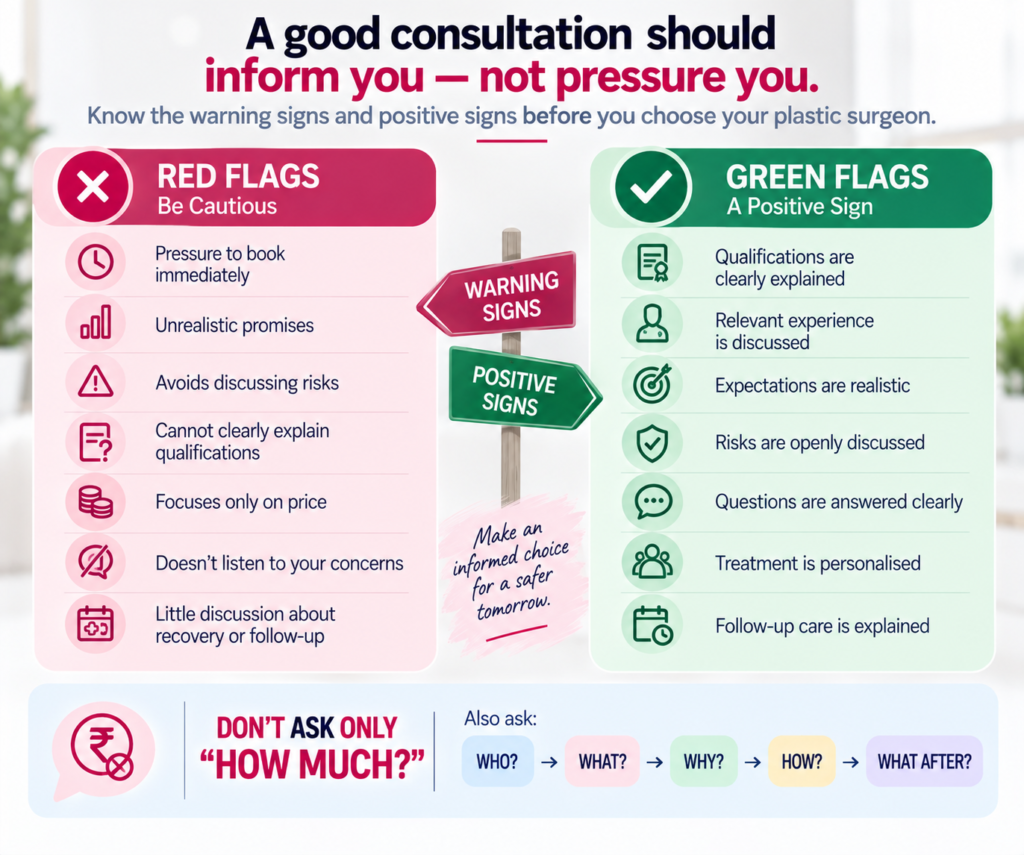
- What are your qualifications in plastic and reconstructive surgery?
- How much experience do you have with this specific procedure?
- Am I a suitable candidate?
- Are there alternatives to surgery?
- What are the main risks?
- What complications should I know about?
- Where will the procedure be performed?
- What type of anaesthesia will be used?
- What should I do to prepare?
- How long might recovery take?
- When can I return to normal activities?
- What follow-up will I need?
- Who should I contact if I develop a problem?
- What does the total cost include?
- What result is realistically achievable for me?
These questions cover areas recommended in ASPS patient-safety and consultation guidance, including qualifications, procedure experience, candidacy, facility, anaesthesia, risks, recovery and complication management.
Frequently Asked Questions (FAQs)
Plastic surgery can be performed safely when the procedure is appropriate, the patient is properly assessed, the surgeon has relevant training and suitable surgical and follow-up arrangements are in place. However, no surgery is completely risk-free.
Risks depend on the procedure and the individual patient. They can include bleeding, infection, wound-healing problems, scarring, anaesthesia-related complications, blood clots, changes in sensation and unexpected aesthetic results.
Choose a suitably trained surgeon, provide complete medical information, understand the risks of your specific procedure, ask where the procedure will be performed, follow preparation instructions and attend recommended follow-up appointments.
Ask about the surgeon’s medical qualification, postgraduate surgical training and specific training in plastic and reconstructive surgery. In India, the NMC publishes competency-based postgraduate training guidelines for M.Ch. Plastic & Reconstructive Surgery.
No. Suitability depends on the patient, procedure, medical history, expectations and other clinical factors. A consultation and appropriate medical assessment are needed before deciding whether surgery is suitable.
Yes. You should understand the important risks and possible complications associated with the specific procedure you are considering.
Recovery varies according to the procedure, extent of surgery and individual patient. Your surgeon should provide recovery guidance specific to the treatment.
Tell your surgeon about medical conditions, medicines, allergies, previous operations, previous reactions to anaesthesia and other relevant health information.
If you are uncertain about the proposed procedure, risks, alternatives or treatment plan, another professional opinion may help you understand your options before deciding.
Yes. APTA Clinic has a plastic surgery department offering cosmetic and reconstructive procedures. Its listed areas include breast surgery, liposuction, body contouring, mommy makeover, facial rejuvenation and scar reduction.
APTA Clinic’s current profile identifies Dr. B. Akshata Kamath, MBBS, MS, MCh, as a Plastic & Reconstructive Surgeon.