
Beard & Mustache Transplant in Mysore
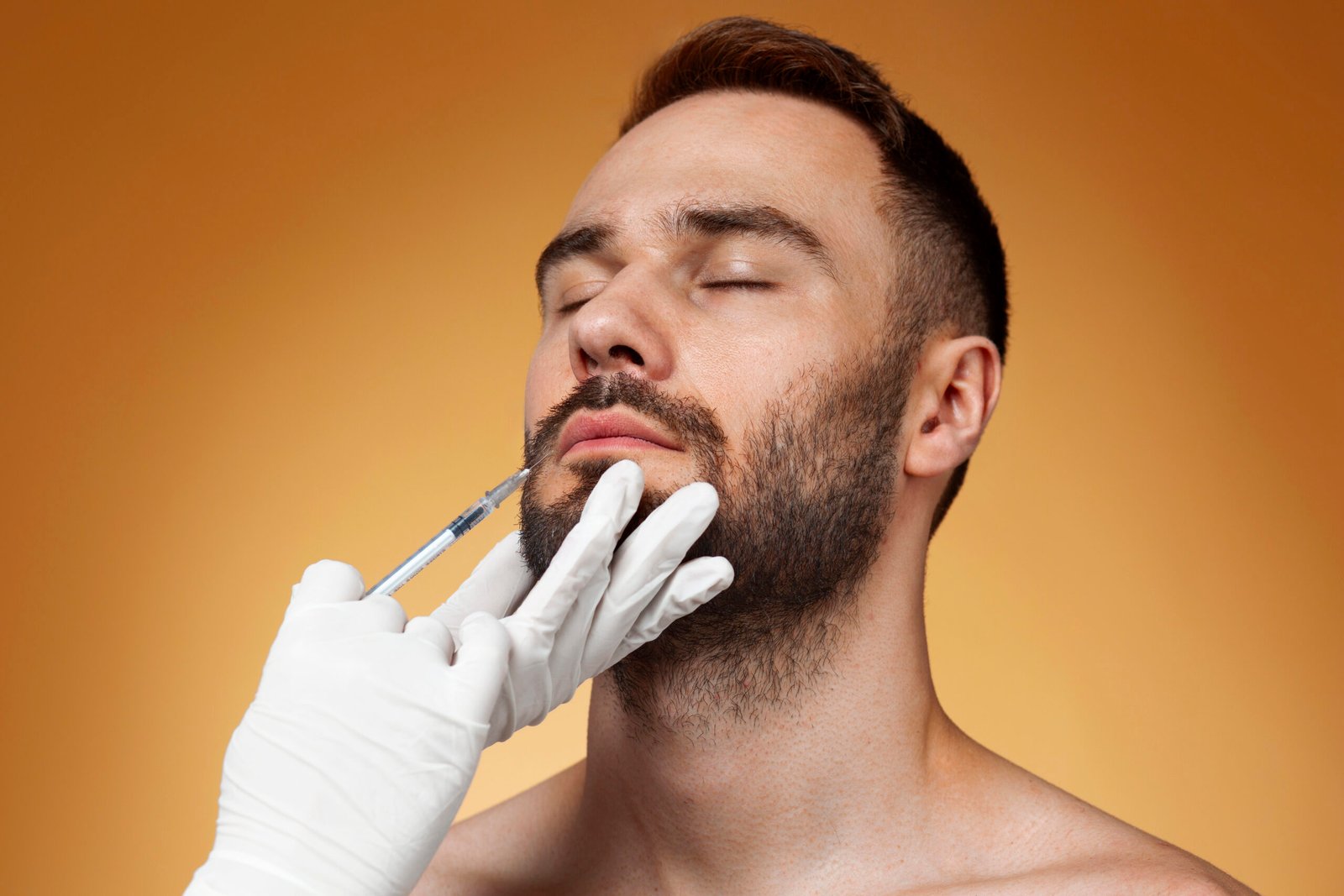
What is Beard & Mustache Transplant?
Beard & Mustache Transplant in Mysore is a cosmetic procedure designed to restore or enhance facial hair in areas where growth is patchy, thin, or absent. Using advanced hair restoration techniques, individual hair follicles—usually harvested from the back of the scalp—are meticulously implanted into the beard and mustache area to achieve a fuller, natural-looking appearance. This treatment is ideal for men who struggle with uneven growth due to genetics, scarring, or hormonal factors.
How Do We at APTA Treat It?
At APTA Clinic, our approach to beard and mustache transplant begins with a personalized consultation to understand your facial structure and aesthetic goals. We use Follicular Unit Extraction (FUE) to harvest donor hair with precision, ensuring minimal scarring and a quick recovery. Our experts then strategically place each follicle in the desired areas to match your natural growth pattern, density, and direction—resulting in seamless integration and aesthetically pleasing outcomes.
Benefits of the Treatment
Natural & Permanent Results
The transplanted follicles grow like natural facial hair, offering a permanent solution that blends seamlessly with existing growth.
Boost in Self-Confidence
A well-defined beard or mustache enhances facial features and helps you feel more confident in your appearance.
Customizable Beard Design
We tailor the procedure to your preferences—whether you want a full beard, goatee, or a sharper mustache definition.
Why Choose APTA for Beard & Mustache Transplant?
APTA Clinic combines advanced FUE technology with artistic expertise to deliver precise and natural-looking facial hair restoration. Our team of experienced specialists ensures each transplant complements your unique facial features, with a strong focus on safety, hygiene, and patient satisfaction. With state-of-the-art facilities and a patient-first philosophy, we provide results that are both lasting and life-changing.
Make Appointment
Expert Guidance, One Appointment Away
Ready to take the next step toward looking and feeling your best? Schedule your consultation with APTA Clinic today. Our experienced specialists are here to guide you with personalized care and expert advice. Whether you’re exploring cosmetic options or seeking advanced treatments, we’ll help you choose what’s right for you. Book your appointment now and let’s begin your journey to enhanced confidence.
Email Address
aptaclinics@gmail.com
Phone Number
+91 7411 707 555
Open Hours
Mon - Sun: 10.30AM - 7.30PM
Office Location
Krishnamurthy puram, Mysore
Personalized Beard & Mustache Transplant Care for Natural-Looking, Fuller Facial Hair
A fuller, well-defined beard and moustache can play an important role in facial appearance and overall confidence. However, some men naturally have sparse facial hair, uneven growth, patchy beard areas, or limited moustache density. Scarring, genetics, hormonal factors, previous injuries, or certain medical conditions can also affect facial hair growth. Beard & Mustache Transplant in Mysore is an advanced hair restoration procedure designed to improve facial hair density and create a more defined, natural-looking beard or moustache.
Unlike temporary cosmetic solutions, a hair transplant uses hair follicles from a suitable donor area and places them into carefully planned recipient areas. Once the transplanted follicles establish themselves, they can produce hair that grows naturally in the treated region.
If you are considering Beard & Mustache Transplant in Mysore, a detailed consultation with a qualified hair restoration specialist is essential. Your facial hair pattern, donor hair availability, skin condition, expectations, and overall health should be assessed before creating a personalized treatment plan.
What Is a Beard and Moustache Transplant?
A beard and moustache transplant is a surgical hair restoration procedure in which individual hair follicles are harvested from a donor area and transplanted into areas of the face where hair density is insufficient.
The procedure can be used to improve:
- Sparse beard growth
- Patchy beard areas
- Thin moustache
- Uneven facial hair
- Poorly defined beard lines
- Hair loss caused by scars
- Areas with minimal natural facial hair
- Beard density and overall facial hair coverage
The objective is not simply to add more hair. Careful placement is necessary to create a natural direction, angle, density, and pattern that complements the patient’s facial structure.
Why Do Men Consider a Beard Transplant?
Facial hair growth varies significantly from person to person. Genetics is one of the most important factors affecting beard density and distribution.
Men may consider transplantation because of:
- Naturally sparse beard growth
- Patchy beard development
- Uneven moustache growth
- Scarring from accidents or surgery
- Inadequate density in specific areas
- Desire for a fuller beard
- Difficulty achieving a defined beard shape
- Cosmetic concerns about facial hair
Some men may also want to improve their ability to style their beard or moustache in different ways.
How Does a Beard and Moustache Transplant Work?
During Beard & Mustache Transplant in Mysore, individual hair follicles are typically taken from a donor area, commonly the scalp when suitable.
The process generally involves three important stages:
- Planning and design
- Follicle extraction
- Implantation into the recipient area
The surgeon carefully designs the beard and moustache according to facial proportions.
The direction and angle of the implanted follicles are particularly important because facial hair grows differently from scalp hair. Proper placement helps produce a more natural appearance.
Donor Hair for Beard Transplantation
The scalp is commonly used as a donor area because it can provide a suitable supply of hair follicles.
Before treatment, the specialist evaluates:
- Donor hair density
- Hair quality
- Hair characteristics
- Donor area stability
- Number of follicles required
- Recipient-area requirements
Not every person has the same donor capacity. A personalized assessment is therefore necessary before determining whether transplantation is suitable.
Who Is a Good Candidate?
A suitable candidate for Beard & Mustache Transplant in Mysore may be a man who:
- Has insufficient beard or moustache density
- Has stable donor hair
- Is in suitable overall health
- Has realistic expectations
- Wants a long-term improvement in facial hair density
- Has areas of facial hair loss or patchiness that can be addressed surgically
Men with active skin infections or certain untreated medical conditions may need to address those issues before undergoing transplantation.
The specialist will determine suitability after evaluating the donor and recipient areas.
Beard Transplant for Patchy Growth
Patchy beard growth is a common reason for considering transplantation.
Some men may have good hair density in certain areas but noticeable gaps around the cheeks, jawline, chin, or sideburns.
Transplanted follicles can be strategically placed into these areas to improve overall density.
The objective is to create a balanced appearance rather than unnecessarily increasing density everywhere.
Moustache Transplant
The moustache is a highly visible facial feature, so careful planning is especially important.
A moustache transplant can be considered for men with:
- Sparse moustache growth
- Uneven moustache density
- Gaps
- Limited natural growth
- Scarring in the moustache region
The surgeon considers the natural direction and angle of moustache hair when placing follicles.
Even small differences in implantation direction can affect the final appearance, making precision particularly important.
Beard Design and Facial Proportions
One of the most important parts of Beard & Mustache Transplant in Mysore is designing the recipient area.
The beard should complement the individual’s:
- Face shape
- Jawline
- Chin
- Cheek structure
- Moustache
- Existing facial hair
- Personal grooming preferences
A natural beard line should not look overly straight or artificial.
The surgeon may discuss the desired beard shape with you before finalizing the treatment design.
FUE Technique for Beard Transplantation
Follicular Unit Extraction, commonly known as FUE, is a frequently used hair transplantation technique.
With FUE, individual follicular units are carefully extracted from the donor area using specialized instruments.
These follicles are then prepared and implanted into the beard or moustache region.
Potential advantages of FUE include:
- Individual follicle harvesting
- No long linear donor scar
- Small extraction sites
- Ability to precisely place follicles
- Suitable for detailed facial hair restoration
The suitability of FUE depends on the individual’s donor hair and treatment requirements.
What Happens During the Procedure?
The exact process varies between patients, but the procedure generally involves several stages.
Consultation and Design
The specialist evaluates your facial hair and donor area and discusses your expectations.
A beard or moustache design is then planned.
Donor Preparation
The selected donor area is prepared for follicle extraction.
Local Anesthesia
Local anesthesia is administered to minimize discomfort during the procedure.
Follicle Extraction
Individual follicular units are carefully extracted from the donor area.
Follicle Preparation
The extracted grafts are prepared and kept under appropriate conditions before implantation.
Recipient Site Creation
Tiny recipient sites are created in the facial area according to the planned direction and density.
Graft Implantation
The follicles are carefully placed into the prepared recipient sites.
The surgeon focuses on maintaining the appropriate angle, direction, and distribution.
Is Beard Transplant Painful?
Local anesthesia is typically used during the procedure, so significant pain is generally minimized during surgery.
Some patients may experience mild discomfort, tenderness, swelling, or sensitivity after the anesthesia wears off.
The level of discomfort varies depending on individual sensitivity and the extent of the procedure.
Your specialist will provide appropriate aftercare instructions.
How Long Does Beard Transplantation Take?
The duration depends on the number of grafts required and the areas being treated.
A small procedure may take less time than a larger beard restoration involving extensive coverage.
During your consultation, the specialist can provide a more personalized estimate based on the number of follicles required.
Recovery After Beard and Moustache Transplant
Recovery after Beard & Mustache Transplant in Mysore is generally gradual.
Temporary effects may include:
- Mild redness
- Swelling
- Small crusts
- Tenderness
- Temporary sensitivity
- Minor bruising in some cases
The transplanted area needs careful handling during the initial healing period.
Your specialist may advise you to:
- Avoid touching or scratching the transplanted area
- Follow prescribed washing instructions
- Avoid strenuous activity for a specified period
- Protect the area from unnecessary trauma
- Follow all medication instructions
- Attend scheduled follow-up appointments
When Does the Transplanted Hair Grow?
Transplanted hair does not immediately grow into its final appearance.
It is normal for transplanted hairs to shed after the initial phase. This is commonly referred to as shock loss or shedding.
The follicles remain beneath the skin and can subsequently enter a new growth phase.
New hair growth develops gradually, and the final outcome can take several months to become apparent.
Patience is therefore an important part of the hair restoration process.
Are Beard Transplant Results Permanent?
Transplanted follicles are generally intended to provide long-term hair growth because they are taken from a donor area that is relatively resistant to common patterns of hair loss.
However, individual results vary.
The quality of the donor hair, surgical technique, healing process, general health, and other factors can influence the final outcome.
A specialist can explain the expected longevity and limitations of treatment during consultation.
Benefits of Beard and Moustache Transplant
A successful transplant can offer several potential benefits:
- Improved beard density
- Fuller moustache appearance
- Better coverage of patchy areas
- Improved beard definition
- Natural-looking facial hair
- Ability to groom and style the beard
- Long-term restoration using the patient’s own hair
Because the procedure uses the patient’s own follicles, the transplanted hair can blend naturally with existing facial hair.
Beard Transplant for Scars
Facial scars caused by accidents, burns, surgery, or other injuries can sometimes prevent normal hair growth.
When the scar tissue and surrounding skin are suitable for transplantation, follicles may be placed into selected scarred areas.
However, scar tissue can have different blood supply and healing characteristics compared with normal skin.
The specialist must therefore carefully evaluate whether transplantation is appropriate.
Choosing a Beard & Mustache Transplant Clinic in Mysore
Choosing the right clinic is important for achieving natural-looking results.
When searching for a Beard & Mustache Transplant Clinic in Mysore, consider:
- Qualified hair restoration specialist
- Experience with facial hair transplantation
- Experience with FUE procedures
- Proper assessment of donor hair
- Personalized beard design
- Appropriate surgical facilities
- Sterile treatment environment
- Clear discussion of risks and expected results
- Comprehensive aftercare and follow-up
Facial hair transplantation requires precision because beard and moustache follicles must be positioned according to natural growth patterns.
Avoid choosing a clinic solely based on low prices or promotional claims.
Why Choose APTA Clinic?
APTA Clinic provides hair restoration and aesthetic treatments with a personalized approach to patient care.
Facial hair restoration requires more than simply transplanting follicles. The surgeon must consider facial proportions, beard design, donor availability, follicle characteristics, hair direction, and the patient’s desired appearance.
For individuals considering Beard & Mustache Transplant in Mysore, an individualized assessment can help determine the number of grafts required and the areas that should be treated.
If you are searching for a Beard & Mustache Transplant Clinic in Mysore, APTA Clinic can help you understand the procedure, expected recovery, potential results, and suitable treatment approach during a consultation.
Preparing for Beard Transplantation
Before surgery, inform your specialist about:
- Existing medical conditions
- Current medications
- Allergies
- Previous surgeries
- Previous hair restoration procedures
- Skin conditions
- History of abnormal scarring
- Any previous reactions to anesthesia
Follow all instructions provided by your specialist before the procedure.
You may also be advised to avoid certain activities or medications before treatment.
Aftercare Tips
Following post-operative instructions carefully can support healing.
General recommendations may include:
- Avoid touching transplanted follicles unnecessarily
- Wash the area only according to your specialist’s instructions
- Avoid strenuous exercise initially
- Protect the area from accidental trauma
- Avoid picking crusts
- Take prescribed medication as directed
- Attend follow-up appointments
Do not apply unapproved cosmetic products to the transplanted area during the early healing period.
Book a Beard Transplant Consultation
Sparse or uneven facial hair can affect the way the beard and moustache frame the face. Beard & Mustache Transplant in Mysore provides a long-term hair restoration option for appropriately selected individuals seeking improved facial hair density and definition.
APTA Clinic offers personalized hair restoration care based on facial structure, donor hair availability, existing facial hair, skin condition, and individual goals. If you are searching for a Beard & Mustache Transplant Clinic in Mysore, a professional consultation can help determine whether you are a suitable candidate and what type of result can realistically be achieved.
Contact APTA Clinic to schedule a consultation and discuss your beard or moustache restoration goals with a qualified specialist.
Frequently Asked Questions
It is a facial hair restoration procedure in which individual hair follicles are harvested from a suitable donor area and transplanted into areas of the beard or moustache that have insufficient density.
Transplanted follicles are generally intended to provide long-term hair growth. However, results vary according to donor hair characteristics, surgical technique, healing, and individual factors.
Initial transplanted hairs may shed after the procedure, followed by gradual new growth. Visible improvement develops progressively, while the final result can take several months.
Yes, transplantation may be used to improve selected areas of patchy beard growth. The surgeon can place follicles strategically to create more even coverage.
Local anesthesia is generally used during the procedure to minimize discomfort. Mild tenderness, swelling, or sensitivity can occur during the recovery period.
In selected cases, transplanted follicles may be used to improve hair coverage over suitable scarred areas. A specialist must assess the scar tissue and blood supply before recommending treatment.
Look for qualified specialists, experience with facial hair transplantation, appropriate donor assessment, personalized beard design, suitable clinical facilities, transparent communication, and comprehensive follow-up care.