Why Does Loose Skin Develop After Major Weight Loss? Causes and Treatment Options
- Home
- Blog
- About Us
Losing a significant amount of weight can change your health, mobility and body shape. However, some people notice that their skin does not shrink at the same rate as their body. Loose or hanging skin may remain around the abdomen, upper arms, thighs, breasts or lower body, even after reaching a healthier weight.
This happens because the skin has a limited ability to return to its previous shape after being stretched for a long time. Age, genetics, the amount of weight lost and skin elasticity can all influence how much excess skin remains.
For people with substantial loose skin, body contouring surgery may be an option. Procedures such as a tummy tuck, arm lift or thigh lift can remove selected areas of excess skin. The right approach depends on the affected area, overall health, weight stability and individual goals.
At APTA Clinic, Mysore, body contouring is listed among the plastic surgery services. A consultation can help determine which options may be appropriate.
Why Does Loose Skin Develop After Major Weight Loss?
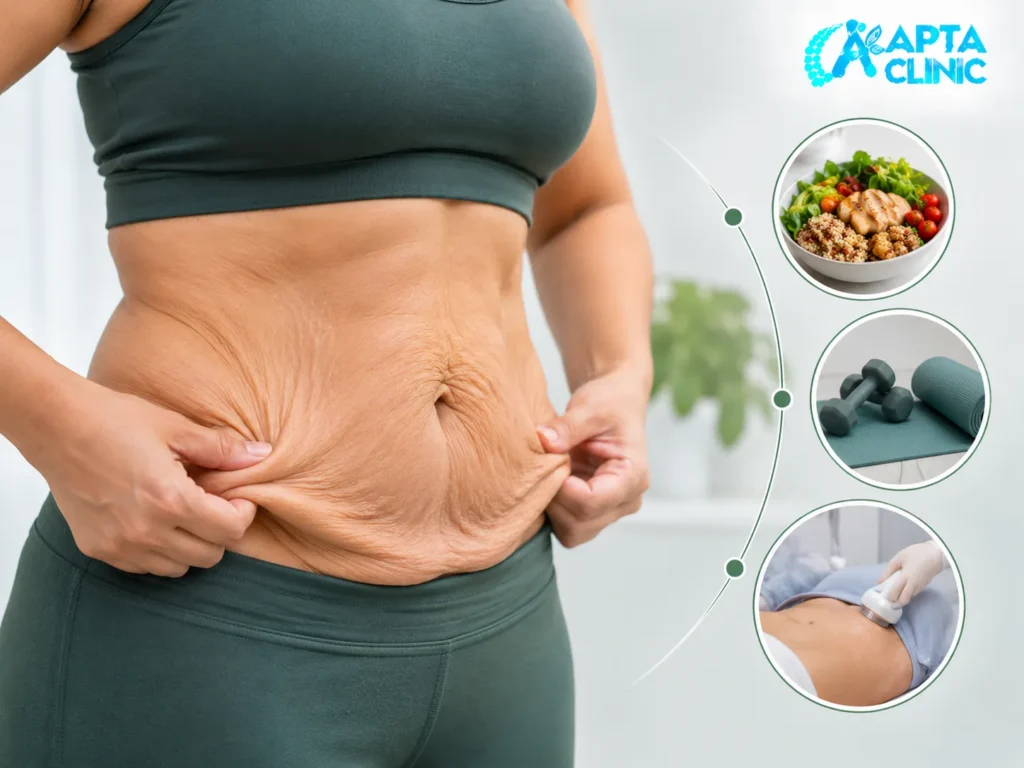
Skin contains collagen and elastin, two structural proteins that help it remain firm and flexible. Collagen provides support, while elastin allows the skin to stretch and return towards its original shape.
When a person gains weight, the skin stretches to accommodate the increased volume beneath it. If the stretching continues for months or years, its supporting structures may lose some of their ability to recoil.
After substantial weight loss, the underlying fat volume becomes smaller. The stretched skin may not contract enough to match the body’s new shape. This can leave folds or hanging areas of excess skin.
The amount of loose skin varies from person to person. Some people notice only mild laxity, while others have larger folds that affect clothing, movement or skin hygiene.
Which Factors Affect Skin Elasticity?
The amount of loose skin after weight loss depends on several factors.
- Amount of Weight Lost
People who lose a large amount of weight may have more noticeable excess skin because the skin has been stretched to accommodate a greater change in body volume.
- Age
Skin gradually loses elasticity with age. The production and organisation of collagen and elastin change over time, which can reduce the skin’s ability to return to its previous shape.
- Duration of Being Overweight
Skin that has remained stretched for many years may have a harder time contracting after weight loss. The duration of stretching can influence the amount of remaining laxity.
- Genetics
People naturally differ in skin thickness, elasticity and tissue characteristics. These differences can affect how the skin responds to weight changes.
- Speed of Weight Loss
Rapid weight loss may make loose skin more noticeable because the body size changes faster than the skin can adapt. However, loose skin can also occur after gradual weight loss.
- Lifestyle and Skin Health
Smoking, prolonged sun exposure and ageing can affect skin quality. Nutrition also matters during weight loss because the body needs adequate nutrients to maintain normal tissue function.
These factors influence skin appearance, but they cannot reliably predict exactly how much skin will tighten after weight loss.
Which Areas of the Body Are Commonly Affected?
Excess skin can develop in several areas, depending on where the body stored fat and how much the skin stretched.
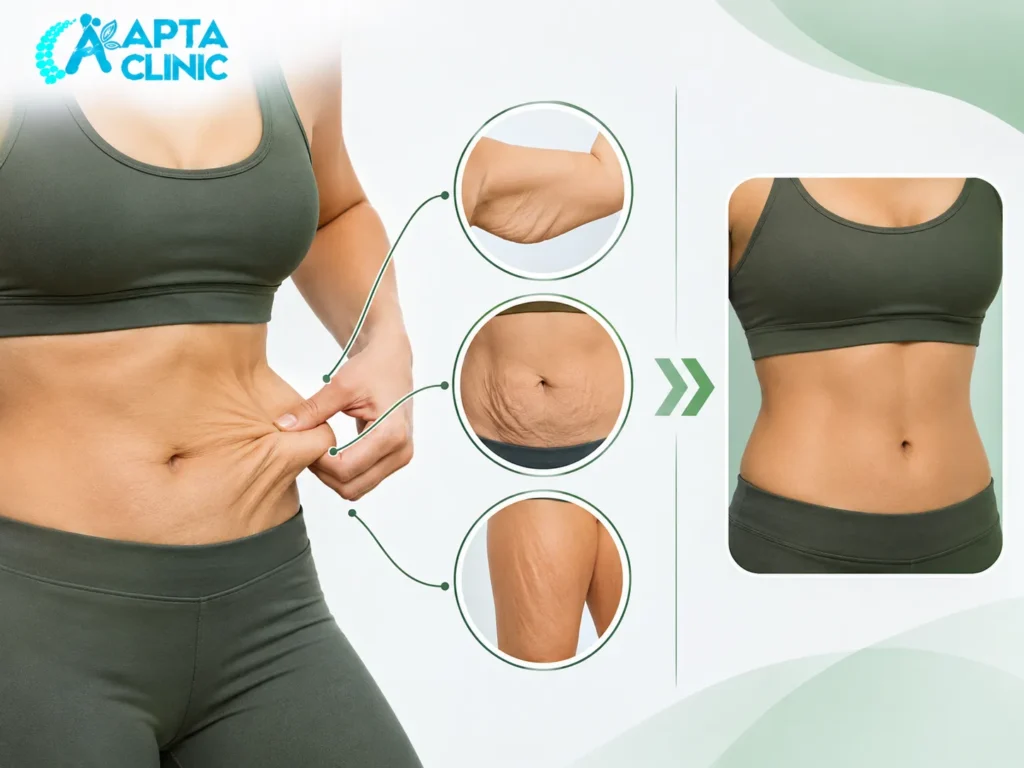
Abdomen: Loose abdominal skin may hang over the lower stomach and form folds. Some people experience rubbing or difficulty keeping the area dry.
Upper arms: Excess skin may hang from the underside of the upper arms, particularly when the arms are raised.
Thighs: Loose skin around the inner or outer thighs may cause friction while walking or exercising.
Breasts: Significant weight changes can affect breast volume, position and skin firmness.
Lower body: The hips, buttocks and lower back may develop folds of excess skin after major weight loss.
The amount of excess skin and its effect on daily activities help determine whether treatment should be considered.
Can Loose Skin Tighten Naturally After Weight Loss?
Some skin tightening may occur over time, particularly when the amount of laxity is mild. The extent of improvement varies with age, skin quality, genetics and how much the skin was stretched.
A few habits can support general skin health:
- Eat a balanced diet with adequate protein and essential nutrients.
- Include strength training as part of an appropriate fitness routine.
- Maintain hydration.
- Avoid smoking.
- Protect exposed skin from excessive sun exposure.
- Maintain a stable, healthy weight.
Strength training can improve muscle definition beneath the skin, which may change the appearance of certain areas. It does not remove substantial excess skin.
Moisturisers and skin-care products can help with dryness and surface texture. They cannot remove large folds of redundant skin. Non-surgical tightening treatments may offer modest improvement in selected cases, but they are not equivalent to surgical skin removal.
If excess skin is substantial, a consultation with a plastic surgeon can help explain the available options.
When Should You Consider Body Contouring Surgery?
Body contouring may be considered when excess skin remains after significant weight loss and causes physical discomfort or concerns about body shape.
People may seek an assessment if loose skin:
- Rubs against other areas of the body.
- Causes recurring irritation or difficulty keeping skin folds clean and dry.
- Makes certain clothes uncomfortable.
- Restricts movement or exercise.
- Remains despite maintaining a stable weight.
- Causes concerns about body proportions.
Surgery is not appropriate for everyone. A plastic surgeon will consider overall health, medical history, skin condition, weight stability and expectations before recommending treatment.
Why Is Weight Stability Important?
Major weight changes after body contouring can affect the surgical result. If a person continues to lose weight, additional loose skin may develop. Significant weight gain can also change the treated areas.
A surgeon will discuss how long your weight should remain stable before surgery. The recommended period depends on your circumstances and the planned procedure.
What Are the Treatment Options for Excess Skin?
The treatment depends on where the excess skin is located and how much tissue needs to be removed. Body contouring can involve a single procedure or a staged treatment plan.
- Tummy Tuck (Abdominoplasty)
A tummy tuck removes excess skin from the abdomen. Depending on the patient’s condition, the procedure may also address certain forms of abdominal muscle separation.
It may be considered when loose abdominal skin remains after significant weight loss or pregnancy.
Liposuction and a tummy tuck serve different purposes. A tummy tuck focuses on excess abdominal skin and selected abdominal wall concerns, while liposuction removes localised fat.
- Arm Lift (Brachioplasty)
An arm lift removes excess skin from the upper arms. It may be considered when loose tissue hangs beneath the upper arm and does not respond to changes in body composition.
The amount and position of excess skin help determine the surgical approach. Scarring is an important part of the decision and should be discussed before treatment.
- Thigh Lift
A thigh lift addresses excess skin around the thighs. The procedure may focus on the inner or outer thigh, depending on the distribution of loose tissue.
It may be considered when skin folds cause friction, discomfort or concerns about the shape of the thighs.
- Lower Body Lift
A lower body lift may be considered when significant excess skin affects several areas around the lower abdomen, hips, back and buttocks.
This is a more extensive operation than treatment of a single area. It requires careful medical evaluation and surgical planning.
- Liposuction
Liposuction removes localised fat deposits from selected areas. It is not a procedure for removing large amounts of hanging skin.
People with good skin elasticity and persistent localised fat may be considered for liposuction. When significant loose skin is present, liposuction alone may not address the main concern and can sometimes make skin laxity more noticeable.
Surgical vs Non-Surgical Body Contouring
Treatment approach | Main purpose | Important consideration |
Surgical body contouring | Removes selected excess skin and reshapes body areas | Involves surgery, scars, anaesthesia and recovery |
Non-surgical tightening | May improve mild skin laxity in selected cases | Usually offers more modest changes |
Liposuction | Removes localised fat deposits | Does not remove substantial hanging skin |
Strength training | Improves muscle strength and definition | Does not remove redundant skin |
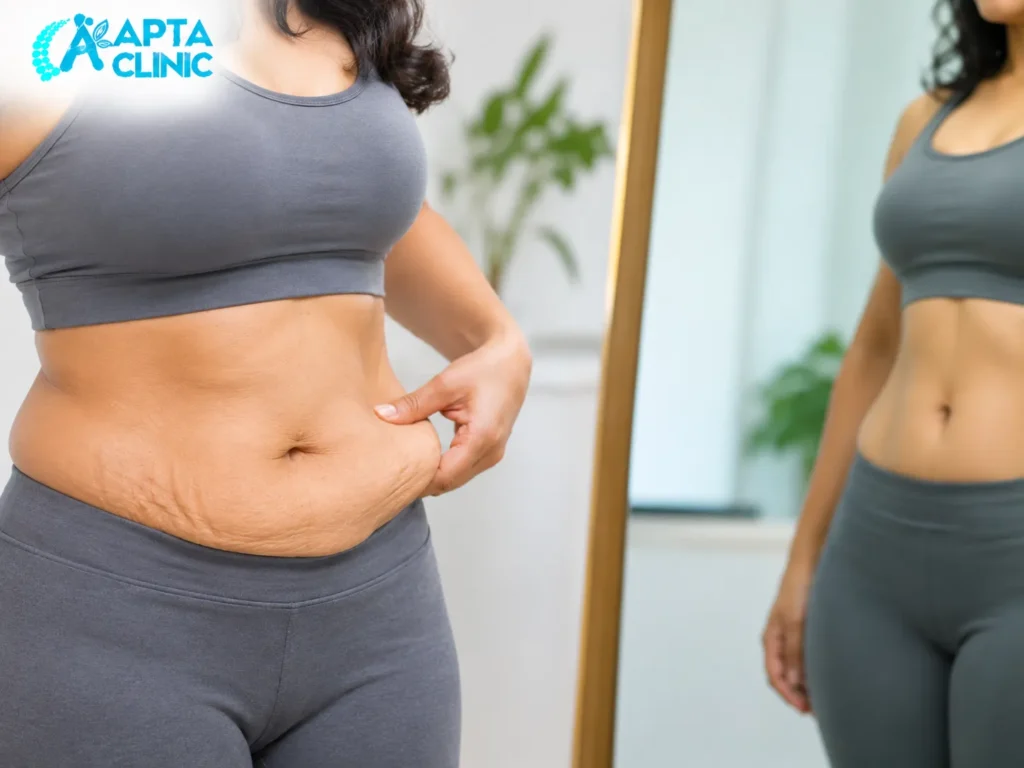
The most suitable approach depends on the amount of loose skin, skin quality, health and treatment goals.
How Is Body Contouring Planned?
The first step is a consultation with a qualified plastic surgeon. The purpose is to understand your concerns and determine whether surgery is appropriate.
During the assessment, the surgeon may review:
- Weight-loss history and current weight.
- How long your weight has remained stable.
- Areas affected by loose skin.
- Skin quality and elasticity.
- Previous surgeries.
- Existing medical conditions.
- Medication and smoking history.
- Expectations and desired changes.
The surgeon may also discuss the type of procedure, incision placement, expected scars, recovery requirements and possible complications.
If more than one area is affected, the surgeon will explain whether procedures can be combined or should be planned separately.
What Happens During Body Contouring Surgery?
The procedure depends on the area being treated and the amount of excess tissue.
In a skin-removal procedure, the surgeon plans incisions to access the affected tissue. Excess skin is removed, and the remaining tissue is repositioned as required.
The type of anaesthesia, operating setting and procedure duration depend on the surgical plan. Patients should receive clear instructions about preparation, medication and arrangements for recovery.
Before agreeing to surgery, ask your surgeon to explain the expected changes, incision locations, scars, alternatives and risks.
What Are the Risks of Skin Removal Surgery?
Body contouring is surgery and carries potential complications. The risks vary according to the procedure, the patient’s health and the amount of tissue being treated.
Possible complications include:
- Bleeding.
- Infection.
- Fluid accumulation beneath the skin.
- Delayed wound healing.
- Visible or widened scars.
- Changes in skin sensation.
- Asymmetry or irregular contours.
- Blood clots.
- Anaesthesia-related complications.
- Need for further surgery.
People with certain medical conditions or a history of smoking may have additional healing risks. The surgeon should assess these factors before recommending an operation.
A detailed discussion of risks and realistic outcomes is an essential part of informed consent.
What Is Recovery Like After Body Contouring?
Recovery depends on the type and extent of surgery. A procedure involving one area may have different recovery requirements from a more extensive body lift.
After surgery, some patients experience swelling, bruising, tightness, tenderness or temporary changes in skin sensation.
Your surgeon may provide instructions about:
- Wound and dressing care.
- Medication.
- Bathing and hygiene.
- Compression garments, if required.
- Walking and physical activity.
- Heavy lifting and exercise restrictions.
- Follow-up appointments.
Do not resume strenuous activity until your surgeon confirms that it is safe. Attend follow-up appointments so that healing can be assessed.
Seek medical attention if you experience symptoms such as significant bleeding, increasing redness, fever, severe or worsening pain, chest pain or difficulty breathing.
Body Contouring at APTA Clinic, Mysore
APTA Clinic lists body contouring among its plastic surgery services. The clinic’s body-contouring information covers procedures such as tummy tuck, liposuction, arm lift, thigh lift and lower body lift.
The appropriate procedure depends on the patient’s anatomy, health and treatment goals. A consultation is needed to determine which options are available and suitable for an individual case.
APTA Clinic’s About page lists Dr. Akshata Kamath as a Plastic & Reconstructive Surgeon. Patients can contact the clinic to confirm the treating clinician and the availability of a particular procedure.
Contact APTA Clinic
Phone: +91 7411 707 555
Krishnamurthy Puram: Mysore – 570004
Additional location: Vijayanagar, Mysore – 570030
Published working hours: Monday to Sunday, 10:30 AM–7:30 PM
Call the clinic to confirm consultation availability, procedure details, pricing and the branch where the relevant service is provided.
Enquire About Body Contouring
If you have loose skin after major weight loss and want to understand your options, contact APTA Clinic to enquire about a plastic surgery consultation.
The consultation can help you understand whether body contouring is appropriate and what treatment considerations apply to your situation.
Frequently Asked Questions (FAQs)
The skin stretches as body volume increases. After substantial weight loss, it may not have enough elasticity to return fully to its previous shape. Age, genetics, the amount of weight lost and the duration of stretching can influence the result.
Mild loose skin may improve over time, but substantial excess skin often remains. Exercise and good nutrition support general health and muscle tone, but they cannot remove large folds of skin.
There is no single weight-loss number that makes everyone suitable for surgery. The decision depends on your current health, weight stability, skin condition and treatment goals.
Your surgeon will recommend an appropriate period based on your health and procedure. Stable weight helps reduce the chance that further weight changes will affect the surgical result.
No. Liposuction removes localised fat deposits. It does not remove substantial excess skin. A skin-removal procedure may be more appropriate when hanging skin is the main concern.
A tummy tuck, also called abdominoplasty, removes excess abdominal skin. The surgeon will assess whether it is suitable and whether any additional abdominal wall treatment is required.
An arm lift may address excess skin around the upper arms, while a thigh lift may address loose tissue around the thighs. Suitability depends on the amount and location of excess skin.
Call +91 7411 707 555 or use the clinic’s contact page to enquire about an appointment. Confirm the relevant branch and treating clinician before visiting.