
Why Do Teeth Turn Yellow? Common Causes & Solutions in Mysore
- Home
- Blog
- About Us
Teeth are not naturally pure white. Their colour can vary from person to person, and teeth may gradually look more yellow as you get older. However, a noticeable change in colour can also result from food and drink stains, tobacco use, enamel wear, certain medications, dental trauma or other dental conditions.
If your teeth have started looking yellow, the first step is to understand what is causing the discoloration. A surface stain may be managed differently from a change occurring within the tooth itself.
Why Do Teeth Turn Yellow?
Yellow teeth can develop for several reasons.
Some causes affect the outside of the tooth, creating surface stains. Others make the naturally yellowish dentin underneath the enamel more visible.
Common causes include:
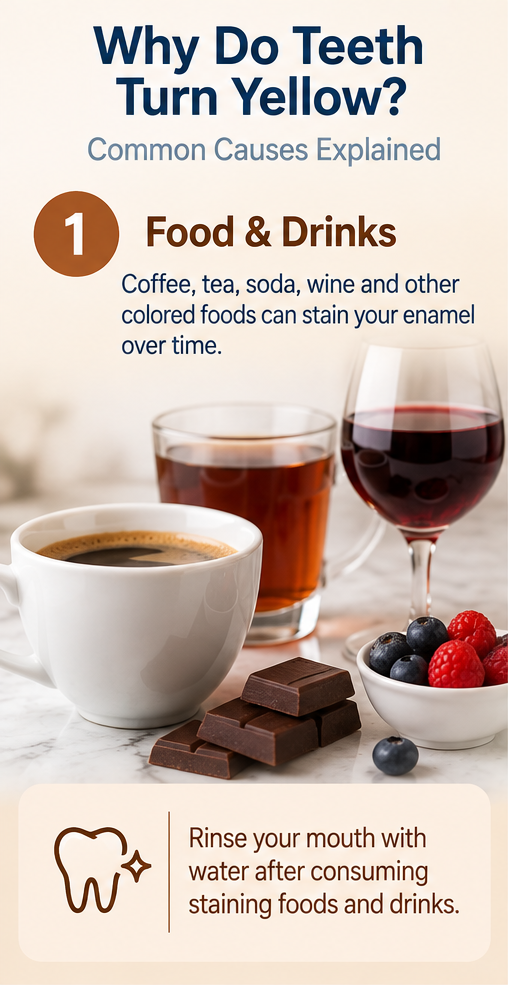
- Coffee, tea and other strongly coloured foods and drinks
- Tobacco use
- Enamel becoming thinner with age
- Acid-related enamel erosion
- Inadequate plaque removal
- Certain medications
- Dental trauma
- Natural differences in tooth colour
- Some forms of tooth discoloration associated with dental conditions
Not every yellow tooth needs whitening. The appropriate approach depends on why the tooth has changed colour.
Common Causes of Yellow Teeth
-
. Coffee, Tea and Other Staining Foods and Drinks
Coffee and tea contain pigments that can attach to the enamel and contribute to surface staining.
Other strongly coloured foods and drinks can also affect the appearance of teeth over time.
Regular brushing and cleaning between the teeth can help maintain oral hygiene, but established stains may not disappear completely through brushing alone.
- Tobacco Use
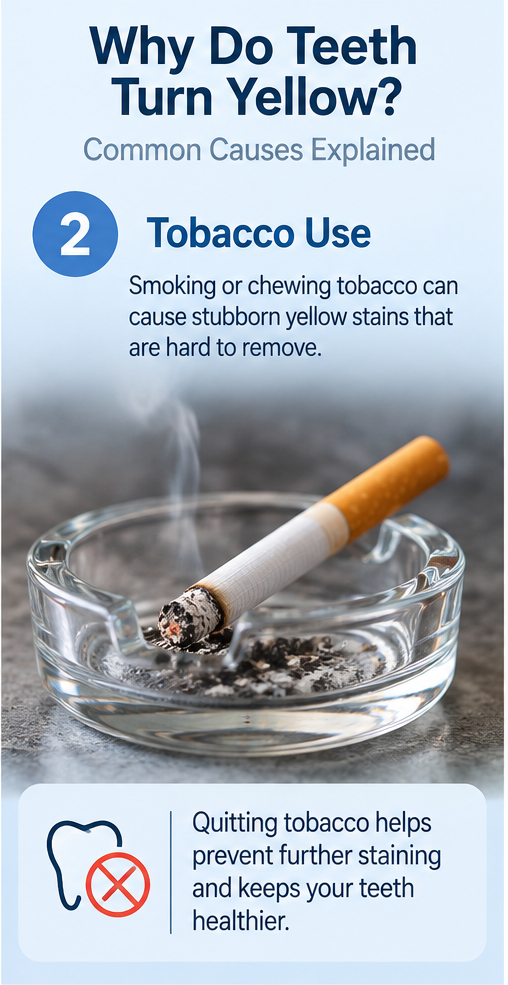
Smoking and other tobacco use can stain teeth.
Tobacco-related stains may appear yellow or brown and can become more noticeable with continued exposure.
Tobacco can also affect gum health and overall oral health, so discoloration is only one reason to avoid tobacco products.
- Natural Tooth Colour and Dentin
A tooth has several layers. Enamel forms the hard outer covering, while dentin lies underneath it.
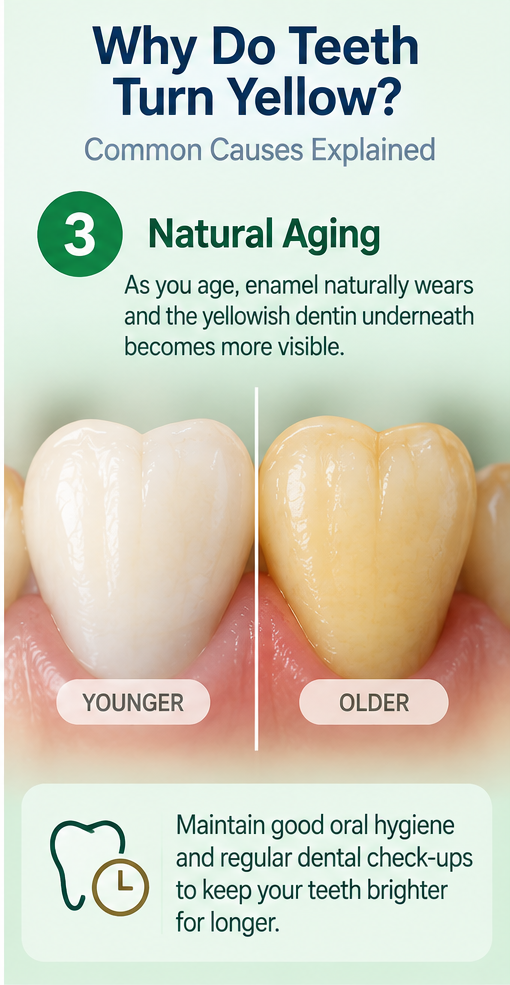
Dentin is naturally more yellow than enamel. As enamel becomes thinner, more of the underlying dentin can show through, making teeth appear yellower.
This means that slightly yellow teeth do not automatically indicate poor oral hygiene.
- Age-Related Enamel Changes
As people age, the enamel layer can gradually become thinner through normal wear.
Because the dentin underneath is naturally more yellow, this can make teeth appear less white over time.
Age-related colour changes are therefore not necessarily caused by a lack of brushing.
- Enamel Erosion
Acid exposure can gradually wear away tooth enamel.
Acidic foods and drinks can contribute to enamel erosion, and frequent exposure can affect both the appearance and sensitivity of teeth.
As enamel becomes thinner, teeth may develop a more yellowish appearance because more dentin becomes visible.
If you regularly consume acidic drinks or foods, reducing frequent acid exposure can help protect the remaining enamel.
- Plaque and Poor Oral Hygiene
Plaque is a sticky film that develops on teeth. If it is not removed effectively through regular brushing and cleaning between the teeth, it can contribute to staining and other oral-health problems.
Yellowish deposits near the gumline may sometimes be related to plaque or hardened deposits rather than a change in the natural colour of the tooth.
Professional dental cleaning may be appropriate when deposits cannot be removed effectively with normal brushing.
- Certain Medications
Some medications can contribute to tooth discoloration.
The type and timing of medication exposure matter. Certain medications taken while teeth are developing can cause internal discoloration, while some medications used later in life can also be associated with tooth darkening.
If you notice a significant colour change after starting a medication, do not stop the medication on your own. Discuss the concern with your dentist and, where appropriate, your doctor.
- Dental Trauma
An injured tooth can sometimes change colour.
Discoloration after an impact can be different from ordinary surface staining because the injury may affect the internal tissues of the tooth.
If one tooth becomes noticeably darker after an accident or injury, arrange a dental examination rather than treating it simply as a cosmetic stain.
- Tooth Decay or Other Dental Problems
Discoloration can sometimes be associated with tooth decay or another dental problem.
Tooth decay may produce white, brown or black changes as it progresses. A dark or unusually discoloured tooth therefore should not automatically be treated as a cosmetic issue.
A dental examination can help determine whether the colour change is simply staining or whether the tooth needs treatment.
Can Yellow Teeth Be Whitened?
Sometimes.
Professional or home whitening may help with certain types of tooth discoloration, particularly some surface and natural yellowish discoloration. However, whitening does not work equally well on every type of stain.
For example, discoloration caused by certain medications, trauma or dental restorations may not respond in the same way as ordinary yellow staining.
Whitening also does not change the colour of dental fillings, crowns, veneers or other restorations.
For this reason, a dental assessment before whitening can help determine whether whitening is appropriate and what result can reasonably be expected.
.
Yellow Teeth Even After Brushing: Why?
Yellow Teeth Even After Brushing: Why?
Brushing removes plaque and helps maintain oral health, but it cannot change the natural colour of every tooth.
If the yellow appearance comes from:
- Natural dentin showing through enamel
- Age-related enamel thinning
- Deeper discoloration
- Medication-related changes
- Previous dental trauma
then simply brushing more frequently may not make the teeth whiter.
In fact, aggressive brushing can contribute to enamel wear and gum problems. More pressure is not necessarily better cleaning.
If your teeth remain yellow despite good oral hygiene, identifying the cause is more useful than repeatedly increasing brushing pressure.
Is It Normal for Teeth to Look Slightly Yellow?
Yes. Healthy teeth are not necessarily bright white.
The natural colour of teeth varies, and the yellowish colour of dentin can become more visible as enamel becomes thinner.
The important distinction is between your natural tooth colour and a new or unusual change.
If your teeth have always had a slightly warm or yellow tone and there are no other symptoms, this may simply reflect your natural tooth colour.
If the colour has changed noticeably, particularly in one tooth, it is worth discussing
What About DIY Teeth-Whitening Remedies?
Be careful with home remedies that involve aggressively scrubbing the teeth.
Using highly abrasive substances can wear away enamel rather than safely removing discoloration. Acidic ingredients can also contribute to enamel erosion.
Natural-looking ingredients are not automatically safe for teeth.
Before trying a whitening product or home whitening method, consider discussing it with a dentist, particularly if you have sensitive teeth, cavities, gum problems, fillings or crowns.
Why Does Bad Breath Return After Brushing?
Bad breath, also called halitosis, can develop when bacteria in the mouth break down food particles and other substances. Brushing cleans the teeth, but bacteria can also collect on the tongue, around the gums, and between teeth. If these areas are not cleaned effectively, an unpleasant smell may return even after brushing.
When Should You See a Dentist?
Yellow teeth do not always require treatment, but professional evaluation is advisable when:
- One tooth suddenly becomes darker.
- The colour change follows an injury.
- Discoloration is accompanied by tooth pain.
- You have sensitivity to hot or cold.
- You notice a hole, crack or damaged area.
- There are brown or black areas on the tooth.
- Your gums bleed, swell or recede.
- Yellow deposits remain despite normal brushing.
- You are considering professional teeth whitening.
- You are unsure whether the discoloration is a stain or a change within the tooth.
A dentist can examine the teeth and gums and determine whether the issue is cosmetic, related to oral hygiene, or associated with another dental condition.
How Can You Prevent Further Discoloration?
You cannot prevent every natural change in tooth colour, but good oral-care habits can help protect your teeth.
Brush Twice a Day
Brush gently with fluoride toothpaste and avoid excessive pressure.
Clean Between Your Teeth
Floss or use another appropriate interdental-cleaning method to remove plaque from areas a toothbrush cannot reach effectively.
Limit Frequent Staining Exposures
If coffee, tea or other strongly coloured foods and drinks are contributing to staining, reducing frequent exposure may help.
Avoid Tobacco
Avoiding tobacco helps reduce staining and supports better oral health.
Protect Your Enamel
Frequent exposure to acidic foods and drinks can contribute to enamel erosion. Limiting repeated acid exposure can help protect the enamel that gives teeth their lighter outer appearance.
Have Regular Dental Check-Ups
Regular dental examinations allow problems such as decay, gum disease, enamel wear and unusual discoloration to be identified earlier.
Can Certain Medicines Cause Teeth to Discolour?
Some medicines can affect the colour of teeth, depending on the medication, the timing of exposure and individual circumstances. Certain medications taken while teeth are developing may cause changes in tooth colour, while other treatments may contribute to staining or changes in the mouth. If you notice a change in tooth colour after starting a medicine, speak with your dentist or prescribing healthcare professional. Do not stop or change prescribed medication without medical advice.
Can Dental Plaque Make Teeth Look Yellow?
Plaque is a sticky film of bacteria that forms on teeth throughout the day. If it is not removed through regular brushing and cleaning between teeth, it can contribute to oral health problems and may collect around the gumline. Plaque can also harden into tartar, which may appear yellowish or brownish. A dentist can assess whether professional cleaning is appropriate to remove hardened deposits.
Why Do Teeth Look More Yellow Near the Gumline?
The colour of a tooth may appear different near the gumline because of the natural shape and thickness of the enamel and the underlying dentin. Plaque or tartar accumulation in this area can also affect its appearance. If you notice a new yellow band, deposits, gum swelling or bleeding near the gumline, consider arranging a dental examination to identify the cause.
Are Yellow Teeth Always a Sign of Poor Oral Hygiene?
No. Tooth colour varies naturally from person to person, and teeth can look yellow even when someone follows a regular oral-care routine. Natural dentin colour, enamel thickness, ageing, staining and certain dental conditions can all affect appearance. Rather than assuming that yellow teeth mean poor hygiene, consider a dental assessment if the colour change is new, uneven or accompanied by other symptoms.
When Should You Get Yellow Teeth Checked?
Consider consulting a dentist if tooth discolouration develops suddenly, affects only one tooth, or occurs alongside pain, sensitivity, swelling, visible damage or changes near the gumline. A dental examination can help distinguish between surface staining, natural tooth colour and changes that may need treatment. The appropriate approach depends on the cause, so it is best to understand why the teeth have changed colour before choosing a whitening product or procedure.
Can Tooth Enamel Become Thin and Make Teeth Look Yellow?
Enamel is the hard outer layer that protects the tooth. When enamel becomes thinner through erosion or wear, the naturally yellowish dentin underneath may become more visible. Frequent exposure to acidic foods and drinks, aggressive brushing and teeth grinding can contribute to enamel wear. A dentist can assess possible enamel changes and advise you on ways to protect your teeth.
Can Stress Affect the Appearance of Your Teeth?
Stress does not usually cause teeth to turn yellow directly, but some stress-related habits may affect your oral health. For example, clenching or grinding your teeth can gradually wear down the enamel. Since the layer beneath enamel, called dentin, is naturally more yellow, enamel wear may make teeth appear more yellow over time. Stress can also affect daily routines, including brushing and flossing, which may allow plaque and surface stains to build up.
Can Smoking or Tobacco Use Make Teeth Yellow?
Smoking and other forms of tobacco use can cause noticeable tooth discolouration. Tobacco contains substances that can leave brown or yellow stains on the tooth surface. These stains may become more difficult to remove when they accumulate over time. Tobacco use can also increase the risk of gum disease and other oral health problems. A dental professional can assess the discolouration and discuss suitable options for improving the appearance of your teeth.
Why Do Some People Have Naturally Yellow Teeth?
Not everyone has naturally bright-white teeth. The natural colour of teeth varies from person to person and can depend on factors such as enamel thickness and the colour of the dentin underneath. When enamel is thinner or more translucent, the yellowish dentin may show through more clearly. This means that slightly yellow teeth are not necessarily a sign of poor oral hygiene. A dentist can help determine whether the colour is natural or related to staining or another dental concern.
Can Ageing Change the Colour of Your Teeth?
Teeth may gradually become more yellow or darker with age. Over time, enamel can wear down, allowing more of the naturally yellow dentin to show through. Years of exposure to foods, drinks and tobacco can also contribute to surface staining. These changes are common, but a sudden or unusual change in tooth colour should be checked by a dentist to identify the possible cause.
What Can You Do to Help Prevent Yellow Teeth?
Good daily oral hygiene can help reduce plaque buildup and some forms of surface staining. Brush twice a day with fluoride toothpaste, clean between your teeth daily, and attend regular dental check-ups. Drinking water after consuming strongly coloured foods or drinks may also help reduce residue on the teeth. If you use tobacco, seeking support to stop can benefit both your oral and general health. Avoid using abrasive home remedies or unverified whitening products, as they may irritate your gums or damage your enamel.
Consult APTA Clinic in Mysore for Your Dental Concerns
If you are concerned about yellow teeth, persistent staining or a change in tooth colour, a dental examination can help you understand what may be causing it. At APTA Clinic, you can consult a dental professional for an assessment and guidance on appropriate oral care and treatment options. Avoid assuming that every case of yellow teeth requires whitening; identifying the cause is an important first step toward choosing suitable care.
Frequently Asked Questions (FAQs)
Brushing removes plaque but does not change the natural colour of dentin. Teeth can also appear yellow because of enamel thinning, surface stains, age, tobacco, acidic exposure or other forms of discoloration.
Not necessarily. Natural tooth colour varies, and dentin is naturally more yellow than enamel. A slightly yellow appearance does not automatically mean that the teeth are unhealthy.
Coffee can contribute to surface staining because it contains pigments that can attach to enamel.
Yes. Tea can contribute to tooth staining, particularly with frequent consumption.
Yes. Tobacco can cause yellow or brown staining on teeth.
Some types of discoloration can respond to whitening, but results depend on the cause. Whitening does not work equally well for all types of discoloration or on dental restorations.
It can be. When enamel becomes thinner because of erosion, more of the naturally yellow dentin underneath may become visible.
No. Increasing brushing pressure is not a safe whitening strategy. Excessive brushing can contribute to enamel wear and gum recession.
APTA Clinic provides an appointment form and lists +91 7411 707 555 as its contact number. Its website lists dental services and locations in Mysore.
APTA Clinic lists locations in Krishnamurthy Puram and Vijayanagar, Mysore.