
Why Do I Have White Spots on My Teeth? Causes & Treatment in Mysore
- Home
- Blog
- About Us
White spots on teeth can have several different causes. Sometimes they are related to early mineral loss in the enamel. In other cases, they may be associated with dental fluorosis, enamel development changes, enamel erosion or plaque-related changes.
The appearance of a white spot alone is not enough to determine its cause.
A white mark that has been present for years may have a different explanation from a spot that recently appeared. Similarly, one isolated white area may need a different evaluation from multiple white spots across several teeth.
If you have noticed a new or persistent white spot, a dental examination can help determine what is causing it and whether treatment is necessary.
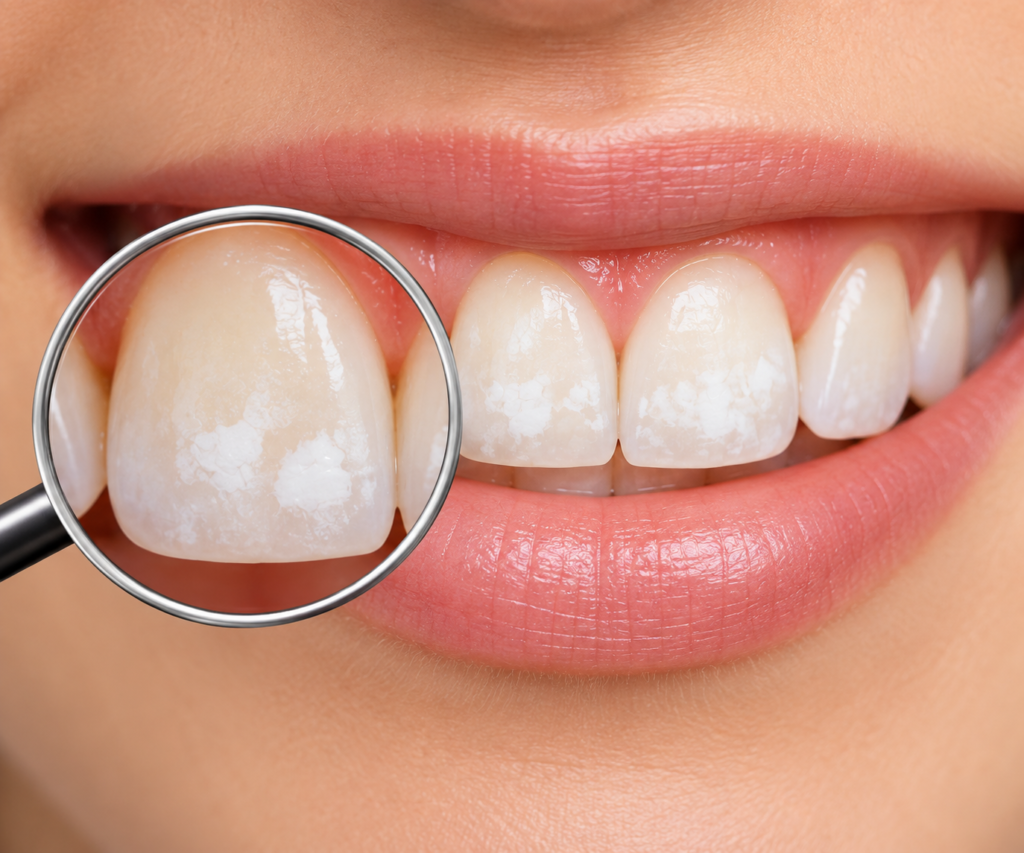
What Do White Spots on Teeth Mean?
White spots are areas of enamel that look different from the surrounding tooth surface.
Healthy enamel is translucent rather than completely opaque. Changes in the mineral content or structure of enamel can make an area look noticeably whiter or chalkier.
One important cause is demineralization. When acids repeatedly affect tooth enamel, minerals can be lost from the tooth surface. A white spot may appear during the early stages of tooth decay.
However, not every white spot is a cavity.
White spots can also result from changes that occurred while a tooth was developing, including dental fluorosis or other enamel-development problems.
That is why identifying the pattern, location and history of the spot is important.
Common Causes of White Spots on Teeth
-
- Early Enamel Demineralization
One of the important causes of white spots is mineral loss from enamel.
Plaque bacteria can produce acids when they interact with sugars and starches in food and drinks. Repeated acid exposure can cause minerals to leave the enamel.
In early tooth decay, the affected area may appear as a white spot before a visible cavity develops.
This is sometimes called a white spot lesion.
Early decay is different from a fully formed cavity. At an early stage, the tooth may not have a hole and may not cause pain.
This is one reason why a new white spot should not automatically be dismissed as a cosmetic issue.
- Dental Fluorosis
Dental fluorosis can cause faint white lines, streaks or spots on teeth.
It occurs when a child takes in too much fluoride while permanent teeth are still developing under the gums. Once the teeth have erupted, new fluorosis cannot develop in those teeth.
Mild fluorosis may be subtle and may not affect tooth function.
Because fluorosis develops during tooth formation, a person who has had the same white markings since the teeth erupted may have a different cause from someone who recently developed a new white spot.
- Enamel Development Problems
Enamel can sometimes develop differently because of hereditary or environmental factors affecting tooth formation.
Developmental enamel defects may produce areas that look whiter, weaker or different from the surrounding enamel.
These changes usually originate while the tooth is developing rather than appearing suddenly in an otherwise fully formed tooth.
A dental professional can help distinguish developmental enamel changes from active tooth decay.
- Enamel Erosion
Repeated exposure to acids can gradually affect enamel.
Acidic foods and drinks, frequent acid exposure and certain oral habits can contribute to enamel erosion.
As the structure of enamel changes, the appearance of the tooth can also change.
If white spots are accompanied by sensitivity or other changes in the tooth surface, a dental evaluation can help determine whether enamel erosion is contributing.
- Plaque Accumulation
Plaque can collect around areas that are difficult to clean.
Changes in the appearance of enamel around plaque-retentive areas can sometimes make white areas more noticeable. More importantly, persistent plaque increases the risk of enamel demineralization and tooth decay.
Regular brushing with fluoride toothpaste and cleaning between teeth can help reduce plaque accumulation.
- White Spots Around Braces
People who have worn orthodontic braces may notice white areas around where brackets were attached.
This can happen when plaque remains around brackets and contributes to mineral loss in the enamel.
The pattern can therefore be different from a naturally occurring developmental white spot.
If you notice white areas after orthodontic treatment, a dentist can determine whether they represent mineral loss or another type of enamel change.
White Spots in Children
White spots on a child’s teeth deserve attention because several causes are possible.
They may be related to:
- Early enamel demineralization
- Dental fluorosis
- Developmental enamel defects
- Other changes affecting tooth formation
Parents should not try to diagnose the cause based on appearance alone.
If a new white area appears, especially close to the gumline or on a tooth that has recently erupted, arrange a dental examination.
Early dental assessment can help identify whether the area represents an early decay process or a stable developmental change.
White Spots From Fluorosis
Dental fluorosis is often misunderstood.
It does not mean that someone has poor oral hygiene. It occurs during tooth development when excessive fluoride exposure affects forming enamel.
Mild fluorosis may appear as subtle white lines or spots.
The timing is an important clue. Fluorosis develops while permanent teeth are forming. It does not suddenly appear on a fully erupted tooth because of drinking fluoridated water or using fluoride toothpaste later in life.
If you are unsure whether white spots represent fluorosis or another enamel change, a dental examination can help.
Do White Spots Mean You Have a Cavity?
Not necessarily.
A white spot can be an early sign of tooth decay because mineral loss can change the appearance of enamel before a cavity forms.
But white spots can also be caused by fluorosis, enamel-development changes or other non-cavity-related factors.
The history of the spot matters.
For example:
- A spot that recently appeared may need evaluation for active enamel changes.
- Several similar markings present since childhood may have a developmental cause.
- White areas around previous braces may be related to plaque-associated demineralization.
- A white spot that becomes brown, develops a hole or is associated with sensitivity may require particular attention.
A dentist can assess the tooth and determine whether the area appears stable or requires treatment.
When Should You See a Dentist?
Consider a dental examination if:
- A white spot has appeared recently.
- The spot is getting larger or changing colour.
- The tooth becomes sensitive.
- The area develops a brown or dark appearance.
- You notice a hole, pit or rough surface.
- The spot is present close to the gumline.
- Several new white spots appear.
- You have a history of braces and notice significant enamel changes.
- You are concerned about fluorosis or enamel defects.
- You are unsure whether the area is cosmetic or related to tooth decay.
Prompt evaluation is particularly important if a white area is accompanied by toothache, swelling, fever or other signs of infection.
Can White Spots on Teeth Go Away?
It depends on the cause.
Some early enamel mineral-loss changes may be managed before they progress to a cavity. The tooth’s natural remineralization process, fluoride exposure and improvement of oral hygiene can be part of early management when appropriate.
Other white spots, such as developmental enamel changes or fluorosis, do not simply disappear through brushing.
This is why identifying the cause is more important than trying random whitening products or home remedies.
A dentist can determine whether the priority should be preventing further mineral loss, monitoring the area or considering a cosmetic or restorative approach.
If the Cause Is Early Demineralization
The goal may be to stop the mineral-loss process and protect the enamel from further damage.
Your dentist may recommend improvements to oral hygiene, fluoride exposure, diet or other preventive measures depending on the individual situation.
If the Cause Is Tooth Decay
Treatment depends on how advanced the decay is.
Very early mineral loss may sometimes be managed without a conventional filling. Once a cavity has formed, restorative treatment may be required.
APTA Clinic’s published dental services include dental fillings.
If the Cause Is Fluorosis
Mild fluorosis may not require treatment from a health perspective.
If the appearance is a cosmetic concern, a dentist can discuss whether an appropriate cosmetic option exists for the particular pattern and severity.
Not every whitening treatment will produce the same result for every type of discoloration.
If the Cause Is an Enamel Development Defect
Treatment depends on the severity, location and appearance of the affected enamel.
Some cases may simply be monitored, while others may require restorative or cosmetic management.
The appropriate option should be determined after examination.
What Happens During a Dental Evaluation?
A dental professional will usually begin by looking at the teeth and asking about the history of the white spots.
Useful information can include:
- When you first noticed them
- Whether they have changed
- Whether they are present on one or several teeth
- Whether they were present during childhood
- Previous orthodontic treatment
- Oral hygiene habits
- Fluoride exposure
- Any tooth sensitivity or pain
- Previous dental treatment
The dentist may also assess the texture and condition of the enamel and look for other signs of tooth decay or enamel defects.
Additional tests or imaging may be recommended when necessary.
The purpose is to identify the cause rather than simply treat the colour difference.
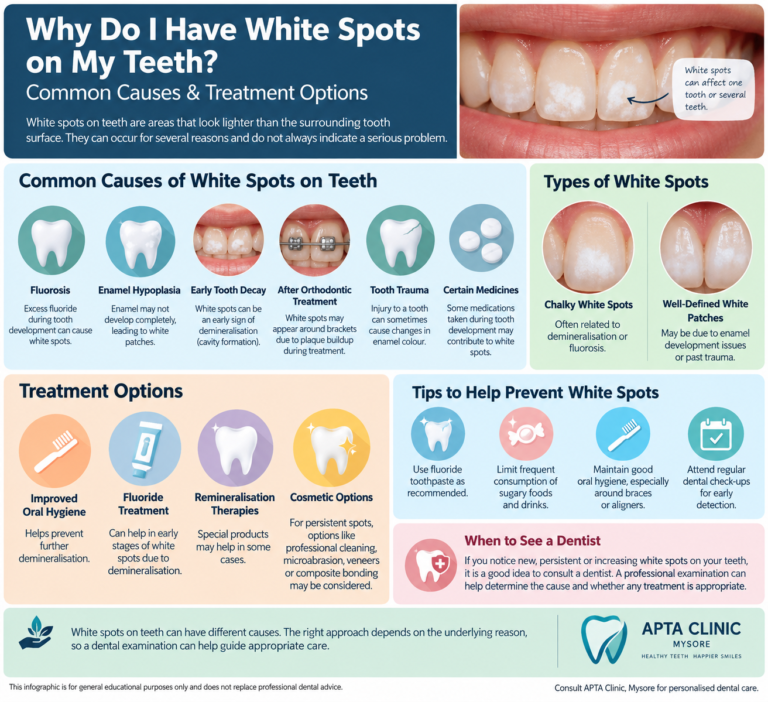
What Can You Do at Home?
Until you know the cause, focus on protecting your teeth rather than trying aggressive whitening methods.
- Brush twice daily with fluoride toothpaste.
- Clean between your teeth daily.
- Avoid brushing with excessive pressure.
- Limit frequent sugary snacks and drinks.
- Pay attention to frequent acidic food and drink exposure.
- Do not scrape or aggressively polish white spots.
- Avoid unverified DIY whitening methods.
- Arrange a dental examination if the spots persist or change.
If the white area is an early sign of mineral loss, protecting the enamel from further acid attacks is particularly important.
Can White Spots on Teeth Be an Early Sign of Tooth Decay?
Yes. In some cases, a white spot is an early sign of tooth decay. When plaque bacteria produce acids, minerals can leave the enamel. This process is called demineralisation. The affected area may appear dull, cloudy or chalky compared with the surrounding enamel.
At this stage, a cavity may not yet have formed. Early decay can sometimes be arrested or improved through appropriate preventive care, including fluoride and changes to habits that contribute to repeated acid attacks. If mineral loss continues, the enamel can weaken further and a cavity may develop. A dentist can examine the tooth and determine whether the spot is related to early decay or another enamel condition.
Why Do White Spots Appear on Teeth After Braces?
White spots may become noticeable after braces are removed. They are often related to enamel demineralisation, which can happen when plaque collects around brackets and wires. Bacteria in plaque produce acids that can remove minerals from the enamel, leaving pale or chalky-looking areas. Braces themselves do not directly create these marks, but cleaning around orthodontic appliances can be challenging.
White spots associated with early enamel mineral loss may improve when the cause is addressed and the teeth receive appropriate preventive care. However, established marks may remain visible and require a dental professional to assess them. If you notice white patches during or after orthodontic treatment, arrange a dental check-up rather than trying to scrape or polish them away at home.
What Is the Difference Between Fluorosis and Enamel Hypoplasia?
Dental fluorosis and enamel hypoplasia are two developmental conditions that can affect the appearance of teeth, but they are not the same.
Dental fluorosis occurs when a child receives too much fluoride while their teeth are still developing. It may appear as white flecks, lines or patches on the enamel. Fluorosis develops during tooth formation; it cannot newly develop in fully formed adult teeth. Mild fluorosis may not affect the function of the teeth, although the appearance can concern some people.
Enamel hypoplasia occurs when the enamel does not develop fully. Depending on the extent of the condition, the enamel may have thin areas, pits, grooves or changes in colour. Because enamel may be less protective in affected areas, a dentist may recommend monitoring and preventive care.
The appearance of these conditions can overlap with other causes of white spots. A dental examination is therefore important before deciding on treatment.
How Are White Spots on Teeth Diagnosed?
A dentist will usually begin by asking when you first noticed the white spots and whether they have changed over time. They may ask about your dental history, orthodontic treatment, oral hygiene routine and relevant childhood dental history. These details can help narrow down the possible causes.
The dentist will examine the affected teeth and surrounding gums, looking at the location, shape, colour and surface appearance of the spots. They may also check for plaque accumulation, signs of enamel damage or areas that could indicate early decay. Depending on the findings, further examination or monitoring may be recommended.
It is not always possible to identify the cause from appearance alone. Avoid assuming that a white spot is simply a stain or a cavity without a professional assessment. Understanding what has changed in the enamel helps guide appropriate care.
Can Teeth Whitening Remove White Spots?
Teeth whitening does not necessarily remove white spots. Whitening products change the colour of natural tooth structure, but white marks caused by fluorosis, enamel development changes or demineralisation may respond differently from ordinary surface stains. In some cases, whitening may make the contrast between a white spot and the surrounding enamel more noticeable, at least temporarily.
A dentist can assess whether whitening is suitable and explain what it may realistically achieve. Depending on the cause and appearance of the spots, other approaches may be considered instead of—or sometimes alongside—whitening. Tooth-coloured restorations and other cosmetic procedures are not suitable for every case, so treatment should be planned according to the condition of the enamel and the person’s needs.
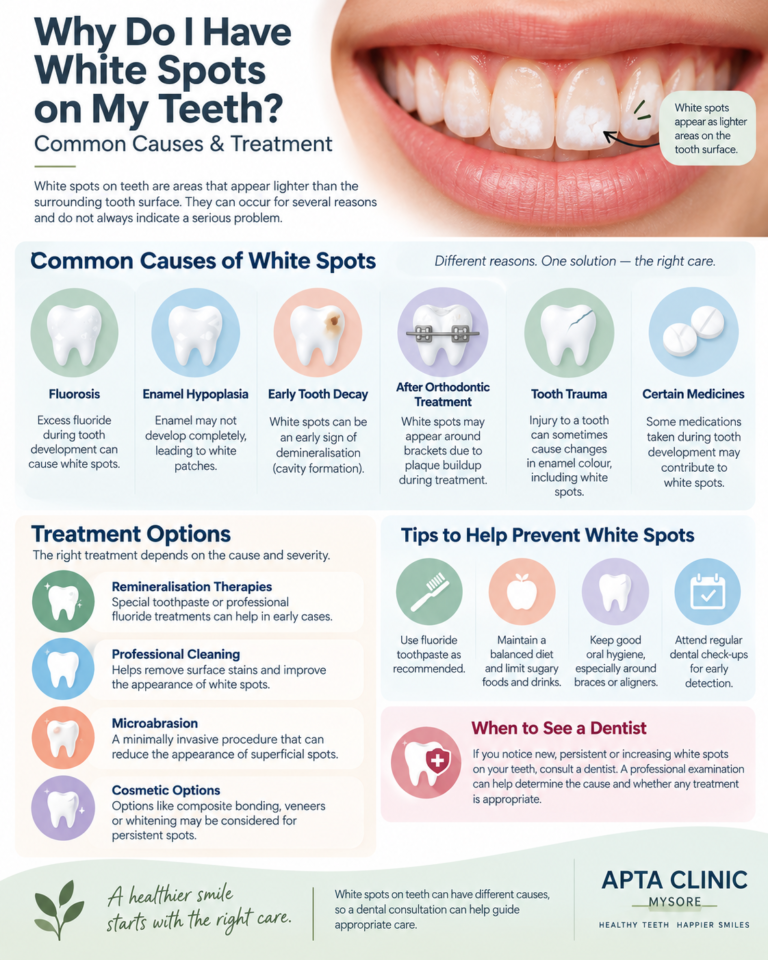
Consult APTA Clinic in Mysore for Your Dental Concerns
White spots on teeth are not all the same.
Some are harmless developmental changes, while others can represent early enamel mineral loss and may be an early sign of tooth decay. Because the causes can look similar, professional examination is more reliable than trying to identify the cause from appearance alone.
If you have noticed a new, changing or persistent white spot on your teeth, consider arranging a dental consultation in Mysore to have it assessed.
Frequently Asked Questions (FAQs)
Brushing removes plaque but does not change the natural colour of dentin. Teeth can also appear yellow because of enamel thinning, surface stains, age, tobacco, acidic exposure or other forms of discoloration.
It depends on the cause. Early mineral loss may sometimes be managed through remineralization and preventive care, while developmental changes and fluorosis generally do not simply disappear.
They can be. Dental fluorosis develops when excessive fluoride exposure occurs while permanent teeth are forming. However, fluoride is not the only cause of white spots.
Appearance alone is not always enough. A dentist may assess the location, texture, history and other signs of decay to determine whether the area represents early tooth decay.
Children can develop white spots for several reasons, including early enamel mineral loss, fluorosis and developmental enamel defects. A dental examination can help distinguish between them.
Brushing can remove plaque but does not necessarily remove changes within the enamel. Aggressive brushing should be avoided because it can damage teeth and gums.
Whitening does not necessarily remove the cause of white spots and may not make all types of discoloration disappear. The cause should be identified before choosing a cosmetic treatment.
White areas around previous orthodontic brackets can sometimes result from plaque-related mineral loss during orthodontic treatment.
APTA Clinic provides an appointment form and lists +91 7411 707 555 as its contact number. Its website lists dental services and locations in Mysore.
APTA Clinic lists locations in Krishnamurthy Puram and Vijayanagar, Mysore.