
What Causes Bad Breath Even After Brushing? In Mysore
- Home
- Blog
- About Us
You brush your teeth, rinse your mouth and expect your breath to feel fresh. But what if the unpleasant smell comes back shortly afterward?
Bad breath that persists even after brushing can have several causes. Brushing removes plaque and food particles from the surfaces of your teeth, but it does not necessarily address every source of unpleasant mouth odour.
Bacteria on the tongue, gum problems, cavities, dry mouth and certain foods or habits can all contribute to persistent bad breath.
If the problem keeps returning despite good oral hygiene, it may be worth having your teeth and gums examined.
Why Does Bad Breath Come Back After Brushing?
Brushing cleans the accessible surfaces of your teeth, but bad breath can originate from other areas of the mouth.
Bacteria can accumulate on the tongue, between teeth and around the gumline. These bacteria can produce unpleasant-smelling compounds.
Brushing alone may therefore provide only temporary relief if the underlying cause remains
Common Causes of Bad Breath Even After Brushing
- Bacteria on the Tongue
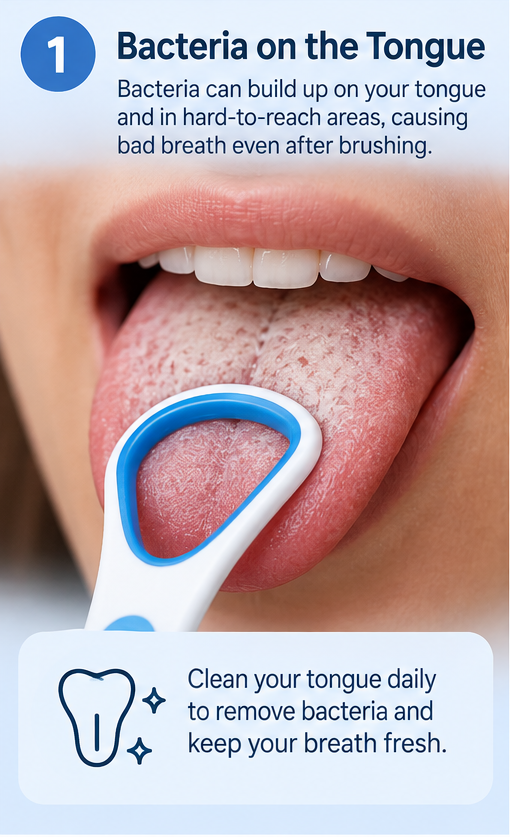
The tongue has a textured surface where bacteria, food particles and dead cells can accumulate.
This coating can contribute to unpleasant breath even when your teeth appear clean.
Gently cleaning the tongue as part of your daily oral-hygiene routine may help reduce the buildup.
- Plaque and Gum Problems
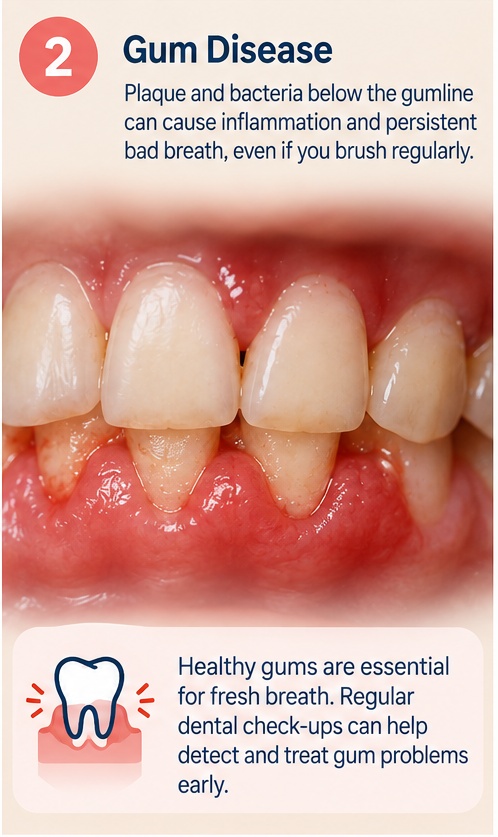
Plaque is a layer of bacteria that forms on teeth and around the gumline.
If plaque is not removed effectively, it can contribute to gum inflammation. Gum disease can be associated with persistent bad breath as well as symptoms such as bleeding, swelling or tenderness.
If you regularly notice bad breath together with bleeding or swollen gums, a dental examination can help determine whether gum disease may be contributing.
- Cavities and Other Dental Problems
Tooth decay can sometimes contribute to unpleasant mouth odour.
Food particles and bacteria may become trapped in or around a damaged tooth. A cavity may also cause sensitivity or toothache, although symptoms can vary.
Persistent bad breath combined with tooth pain, sensitivity or visible damage is a reason to arrange a dental examination.
- Dry Mouth
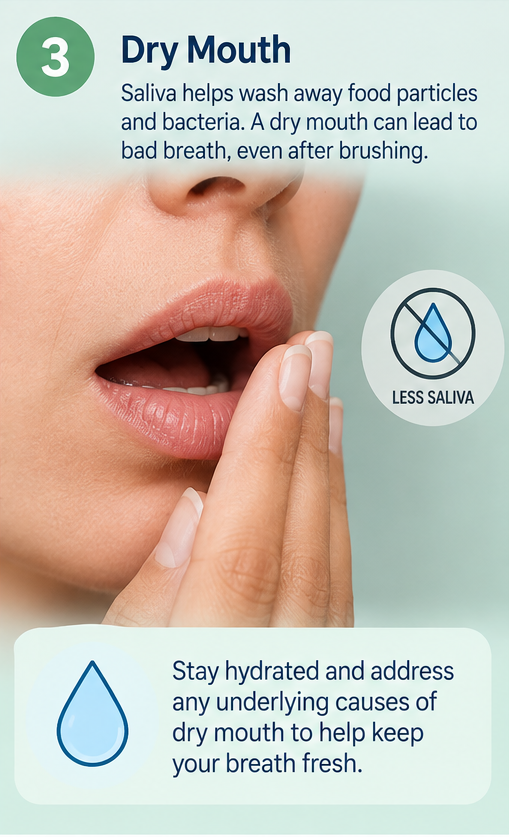
Saliva plays an important role in naturally cleaning the mouth.
When your mouth does not produce enough saliva, bacteria and debris may accumulate more easily, potentially contributing to bad breath.
Dry mouth can occur for different reasons, including dehydration, certain medicines and other health conditions.
If your mouth frequently feels dry, mention this during a dental or medical consultation.
- Food and Dietary Habits
Some foods can temporarily affect breath after eating.
Foods such as garlic and onions contain compounds that can contribute to noticeable odour. Certain dietary patterns can also alter the smell of your breath.
If the odour disappears after the food has been digested and normal oral hygiene is maintained, food may be a contributing factor.
Persistent bad breath, however, should not automatically be attributed to diet.
- Smoking and Tobacco Use
Tobacco use can contribute to unpleasant breath and can also affect oral health.
Smoking may leave odour-producing substances in the mouth while increasing the risk of gum problems.
If you use tobacco and have persistent bad breath, discussing your oral health with a dental professional can be useful.
- Other Possible Causes
Bad breath is often related to the mouth, but it can sometimes occur alongside conditions outside the mouth.
Problems involving the nose, throat, digestive system or other aspects of general health may sometimes contribute to unusual breath odour.
For persistent or unexplained symptoms, a healthcare professional can help determine whether further evaluation is appropriate.
How Is Tooth Sensitivity Treated?
Treatment depends on the cause.
A dentist first needs to determine why the tooth is sensitive. Depending on the findings, management may include:
Desensitizing Toothpaste
Toothpaste formulated for sensitivity can help reduce discomfort for some people. It generally needs consistent use rather than a single application.
If sensitivity continues despite appropriate use, a dental examination is still important.
Fluoride Treatment
Fluoride can strengthen enamel and may help reduce sensitivity in appropriate cases.
A dentist can determine whether professional fluoride treatment is suitable for your teeth.
When Should You See a Dentist?
How Can You Reduce Bad Breath?
Good oral hygiene is an important part of managing everyday mouth odour.
Brush your teeth regularly
Brush your teeth twice a day using appropriate brushing technique.
Pay attention to the gumline without brushing aggressively.
Clean between your teeth
Food and plaque can remain between teeth even after brushing.
Cleaning between the teeth regularly can help remove material that a toothbrush cannot reach.
Clean your tongue
Gently cleaning the tongue can help reduce bacterial buildup on its surface.
Can Bad Breath Be a Sign of a Dental Problem?
Yes.
Persistent bad breath can sometimes be associated with conditions affecting the teeth or gums.
For example, gum disease may cause persistent unpleasant breath, particularly when accompanied by gum inflammation. Untreated cavities and areas where food becomes trapped can also contribute.
However, bad breath alone cannot identify a specific dental condition.
A dental examination is needed to determine the underlying cause.
Bad Breath in Mysore: When Should You Get It Checked?
If you live in Mysore and have persistent bad breath despite brushing regularly, consider getting the cause evaluated rather than relying only on mouthwash or repeated brushing.
Bad breath can have a simple explanation, but recurring symptoms can also be associated with dental problems that require professional attention.
A dental consultation can help identify whether the problem is related to oral hygiene, the teeth, gums, dry mouth or another factor.
Why Does Bad Breath Return After Brushing?
Bad breath, also called halitosis, can develop when bacteria in the mouth break down food particles and other substances. Brushing cleans the teeth, but bacteria can also collect on the tongue, around the gums, and between teeth. If these areas are not cleaned effectively, an unpleasant smell may return even after brushing.
Your Tongue May Be Contributing
Your Tongue May Be Contributing
Food Can Remain Between Your Teeth
Food particles can become trapped between teeth, particularly in areas that are difficult to reach with a toothbrush. Bacteria can act on these particles and contribute to bad breath. Cleaning between your teeth regularly with floss or another suitable interdental cleaning method can help keep these areas cleaner.
Dry Mouth Can Make Breath Smell Worse
Saliva naturally helps clean the mouth and remove food particles. When the mouth becomes dry, this cleaning effect can be reduced, allowing bacteria and debris to accumulate more easily. Dry mouth can occur for several reasons, including dehydration, certain medicines and other conditions. Drinking enough water and discussing persistent dry mouth with a healthcare professional may be helpful.
Gum Problems May Cause Persistent Bad Breath
Bad breath can sometimes occur alongside gum problems. Plaque buildup can irritate the gums and contribute to inflammation. Signs such as bleeding gums, swelling, redness, gum recession or persistent unpleasant breath may warrant a dental examination.
What Can You Do If Brushing Does Not Fix Bad Breath?
Good daily oral hygiene is an important first step. Brush twice a day with fluoride toothpaste, clean between your teeth regularly, and gently clean your tongue. Staying hydrated can also support normal saliva flow.
However, repeatedly using breath fresheners or mouthwash may only temporarily mask an unpleasant smell. If bad breath continues despite maintaining good oral hygiene, finding the underlying cause is more useful than simply covering the odour.
When Should You See a Dentist?
Consider consulting a dentist if your bad breath:
- Continues for several weeks
- Returns soon after brushing
- Occurs together with bleeding or swollen gums
- Is accompanied by tooth pain or sensitivity
- Comes with a persistent bad taste
- Does not improve despite good oral hygiene
A dental examination can help identify whether the problem is related to plaque, gum health, tooth decay, dry mouth or another oral condition.
Can Morning Bad Breath Be Normal?
Many people notice an unpleasant smell when they wake up, even if they brushed their teeth before going to bed. Saliva production can decrease during sleep, allowing bacteria and debris to remain in the mouth for longer. Morning breath often improves after drinking water, brushing, cleaning the tongue and eating, but persistent bad breath throughout the day may have another underlying cause.
Can Tonsil Stones Cause Bad Breath?
Not every case of persistent bad breath originates from the teeth. Tonsil stones can develop when debris becomes trapped in the small folds of the tonsils, and they may contribute to an unpleasant smell. If your oral hygiene is good but bad breath continues and you frequently notice throat discomfort or small white deposits around the tonsils, discussing the symptoms with a healthcare professional may be appropriate.
Can Certain Foods Cause Bad Breath Even After Brushing?
Some foods can temporarily affect the smell of your breath even after brushing. Foods such as garlic and onions contain compounds that can contribute to noticeable odour, and the effect may last beyond the time the food remains in your mouth. Brushing, cleaning between the teeth and drinking water can support oral hygiene, but some food-related odours may take time to naturally disappear.
Can Cavities Cause Bad Breath?
Tooth decay can sometimes contribute to an unpleasant smell or taste, particularly when food and bacteria collect around a damaged tooth or cavity. You may also notice other symptoms such as tooth sensitivity, pain or a visible change in the tooth. If bad breath occurs together with these symptoms, a dental examination can help determine whether tooth decay or another dental problem is involved. bleeds, a dentist can examine the tooth and gum around it and recommend appropriate care.
Does Mouthwash Permanently Get Rid of Bad Breath?
Mouthwash may help freshen breath, but it does not necessarily address the underlying reason for persistent bad breath. Depending on the cause, simply masking the odour may not resolve problems such as plaque buildup, gum inflammation, tooth decay or dry mouth. Good brushing and interdental cleaning remain important, while persistent symptoms may require professional evaluation.
Why Does My Breath Smell Bad Even Though My Teeth Look Clean?
Teeth can appear clean while bacteria or debris remain on the tongue, between the teeth or around the gumline. Some oral conditions also do not produce an obvious visible change in the early stages. If you consistently notice unpleasant breath despite brushing and maintaining good oral hygiene, a dental professional can examine your mouth and help determine what may be contributing to the problem.
Can Dehydration Make Your Breath Smell Bad?
Not drinking enough fluids can contribute to a dry mouth, which may allow bacteria and debris to remain in the mouth more easily. You may notice unpleasant breath when you have not been drinking enough water, particularly during hot weather or after physical activity. Maintaining adequate hydration can support normal saliva production and help keep the mouth more comfortable.
Can Sleeping With Your Mouth Open Cause Bad Breath?
Breathing through the mouth while sleeping can contribute to dryness, especially if you frequently wake up with a dry mouth. Reduced moisture in the mouth can make it easier for bacteria and debris to accumulate, which may contribute to morning breath. If you regularly wake with significant mouth dryness or persistent bad breath, discussing the issue with a healthcare professional can help identify possible contributing factors.
Consult APTA Clinic in Mysore for Your Dental Concerns
Book a Dental Consultation
Cold sensitivity does not always indicate a serious problem, but recurring sensitivity deserves attention.
A dental examination can help determine whether the cause is enamel wear, exposed roots, decay, a damaged tooth or another condition and whether treatment is necessary.
If you are looking for dental care in Mysore, you can contact APTA Clinic to discuss your symptoms and arrange an appointment.
Frequently Asked Questions (FAQs)
Brushing cleans the surfaces of your teeth but may not remove bacteria from the tongue, between the teeth or around the gums. Dry mouth, gum disease, cavities, foods and tobacco can also contribute.
If the underlying source of the odour remains, brushing may provide only temporary improvement. Bacteria on the tongue, gum problems, dry mouth or trapped food can cause the smell
Yes. Persistent bad breath can occur with gum disease, particularly when there is inflammation around the gums.
A cavity or damaged tooth can contribute to unpleasant breath, particularly if food and bacteria become trapped around the affected area.
It can. Bacteria, food particles and dead cells can accumulate on the tongue, so gently cleaning the tongue can be part of a good oral-hygiene routine.
Yes. Reduced saliva can allow bacteria and debris to accumulate more easily, which may contribute to bad breath.
If bad breath persists despite good oral hygiene, particularly if you also have bleeding gums, swelling, tooth pain, sensitivity or a persistent bad taste, consider arranging a dental examination.
Sometimes sensitivity can be associated with deeper inflammation or infection, but sensitivity alone does not mean that root canal treatment is required. A dentist must assess the tooth before recommending treatment.
APTA Clinic provides an appointment form and lists +91 7411 707 555 as its contact number. Its website lists dental services and locations in Mysore.
APTA Clinic lists locations in Krishnamurthy Puram and Vijayanagar, Mysore.