
Types of Dentures in Mysore: Fit, Options and How to Choose
- Home
- Blog
- About Us
Missing teeth can make it harder to chew certain foods, affect speech and change the appearance of your smile. Dentures are dental appliances designed to replace missing teeth and help restore everyday oral function.
If you are looking for dentures in Mysore, the first step is understanding which options may suit your mouth. Some people need a complete denture because all teeth in an upper or lower arch are missing. Others may be able to use a partial denture to replace a few missing teeth. Implant-supported dentures are another option for suitable patients.
The right choice depends on the number of missing teeth, the condition of your gums and jawbone, any remaining natural teeth, your budget and the maintenance you can manage. A dental examination can help determine which treatments are appropriate for you.
What Are Dentures?
Dentures are custom-made dental appliances that replace missing teeth. Most conventional dentures are removable and rest on the gums or work alongside the natural teeth that remain.
Replacing missing teeth may make chewing and speaking easier and help restore the appearance of your smile. However, dentures do not feel exactly like natural teeth. They can take time to get used to, and adjustments may be necessary to improve comfort and fit.
Before recommending a denture, a dentist examines the mouth, checks the remaining teeth and gums, and assesses the available support. This helps determine the type of appliance that may work best.
What Are the Different Types of Dentures?
The main types of dentures differ in how many teeth they replace, how they are supported and when they can be fitted.
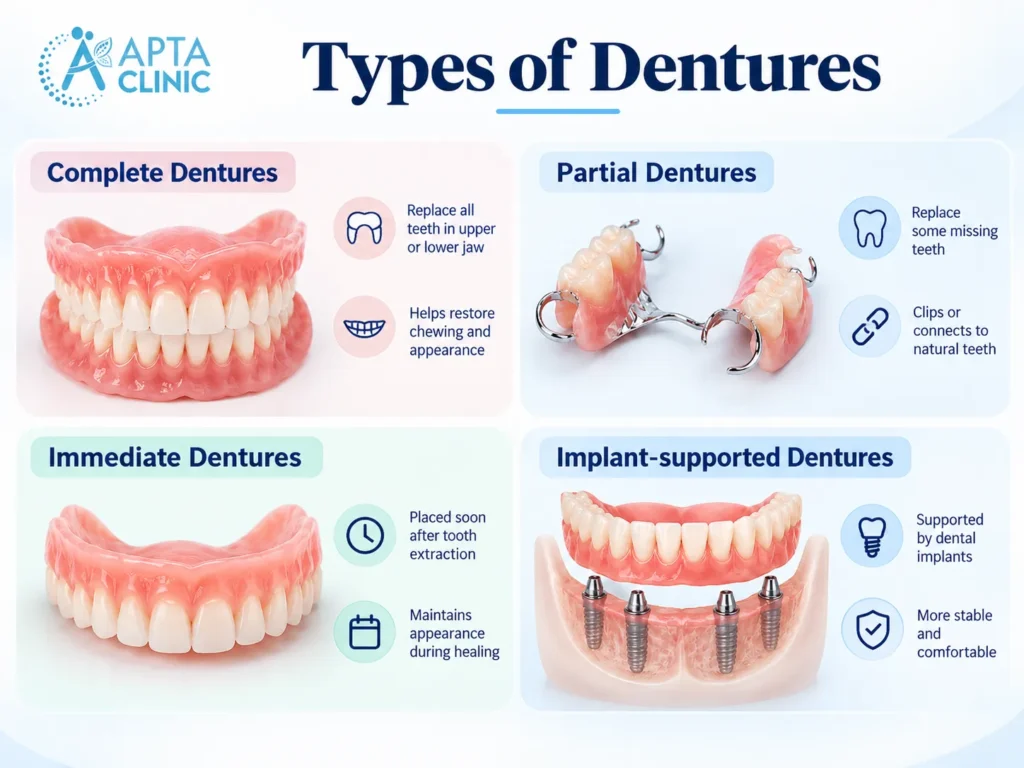
- Complete Dentures
Complete dentures replace all the teeth in the upper jaw, lower jaw or both. They may be recommended when no natural teeth remain in the affected arch.
A complete denture rests on the oral tissues and is shaped to replace the missing teeth. Its fit and stability depend partly on the condition and shape of the gums and underlying jawbone.
Over time, the mouth can change, which may cause a denture to feel loose. Regular dental reviews help identify whether an adjustment, relining or replacement is needed.
Your dentist can explain whether a conventional complete denture or another tooth-replacement approach is suitable for you.
- Partial Dentures
Partial dentures replace some missing teeth when other natural teeth remain. They fill selected gaps and are designed to work with the teeth still present.
Depending on the design, a partial denture may have a plastic base or a metal framework combined with other materials. Clasps or other components may help hold it in position.
The remaining teeth need to be assessed before treatment. If they are damaged, loose or affected by gum disease, those problems may need attention before a partial denture is made.
Partial dentures can be removable, allowing you to take them out for cleaning according to your dentist’s instructions.
- Immediate Dentures
Immediate dentures are prepared before planned tooth extractions and inserted soon after the teeth are removed. They can help avoid a period without replacement teeth during the initial healing stage.
There is an important limitation: the gums and underlying tissues change shape as the mouth heals. A denture that fits soon after extraction may become loose as healing progresses.
Your dentist may recommend adjustments, relining or a replacement denture later. Whether an immediate denture is appropriate depends on your oral health, the planned extractions and your treatment goals.
- Implant-Supported Dentures
Implant-supported dentures use dental implants placed in the jawbone to help retain or support the replacement teeth. Depending on the design, the denture may be removable or form part of a more fixed restoration.
Some patients consider this option when they want additional retention compared with a conventional removable denture. However, implant treatment involves a separate assessment and may require surgery and healing time.
The dentist needs to evaluate your oral health, available jawbone support and overall suitability for implant treatment. Cost, maintenance requirements and any additional procedures should also be discussed.
Implant-supported dentures are not suitable for everyone. Ask about the expected benefits, limitations and alternatives before making a decision.
How Do You Choose the Right Denture?
There is no single denture type that suits every patient. Your dentist will consider several factors before recommending a treatment.
Number of missing teeth: Complete dentures may be considered when all teeth in an arch are missing. Partial dentures may be appropriate when some natural teeth remain.
Condition of the remaining teeth: The health and stability of the natural teeth matter, particularly when a partial denture will rely on them for support.
Gum and jawbone health: Changes in the gums and jawbone can affect the fit and retention of dentures. Your dentist will examine these tissues before planning treatment.
Comfort and stability: Ask how the denture will be supported, what you may experience during the adjustment period and whether follow-up visits are likely to be needed.
Cleaning and maintenance: Removable dentures require regular cleaning and careful handling. You should understand how to maintain the appliance and your oral health.
Treatment budget: The initial fee is only one part of the cost. Consider follow-up appointments, adjustments, repairs, relining and eventual replacement.
Personal preference: Some people prefer a removable appliance, while others want to explore a bridge or implant-supported restoration. Your dentist can explain which alternatives are clinically appropriate.
Before choosing a treatment, ask about the expected fit, daily care, limitations, likely appointments and long-term costs.
How Are Dentures Fitted?
The process varies depending on the type of denture and the condition of your mouth. Several stages may be involved.
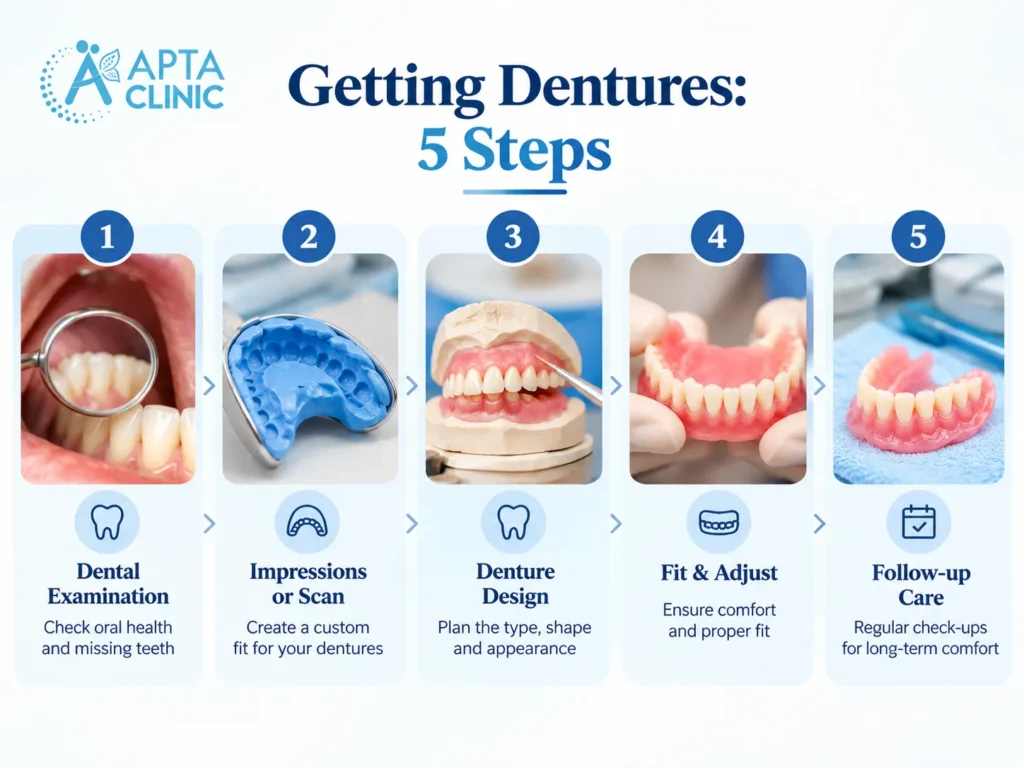
- Dental examination
The dentist checks your gums, remaining teeth, bite and general oral health. Existing dental problems may need treatment before the denture is prepared.
- Measurements and impressions
Measurements and impressions of your mouth are taken, or a digital scanning method may be used where available. These records help the dental team plan an appliance that fits your oral anatomy.
- Denture design and fabrication
The denture is made according to the teeth being replaced, the available support and the selected materials. The number of appointments and the time required vary by case.
- Fitting appointment
Once the denture is ready, the dentist checks its fit, appearance and function. Areas that rub or create pressure may need adjustment.
- Follow-up visits
Follow-up appointments allow the dentist to assess comfort and check the health of your gums. Adjustments may be necessary as you adapt to the appliance or as your mouth changes.
Do not cut, bend or reshape a denture yourself. Home alterations can damage it or make the fit worse.
What Should You Expect When Adjusting to New Dentures?
New dentures can feel unfamiliar at first. Eating and speaking may take practice, and some people experience temporary soreness or irritation.
Your dentist may suggest starting with softer foods and gradually introducing a wider variety of foods as you become more comfortable. Reading aloud or practising common words may also help you adapt to changes in speech.
A denture should not cause persistent pain. Contact your dentist if you develop sores, ongoing irritation, difficulty eating or speaking, or excessive movement of the appliance. Repeated rubbing should be assessed rather than ignored.
The shape of your gums and jawbone can change over time, even after you have worn dentures for years. Regular dental check-ups help identify changes in fit, wear and oral health.
How Should You Clean and Maintain Dentures?
Daily cleaning helps remove food debris and plaque from dentures. It is also important to keep your gums, tongue and any remaining natural teeth clean.
Follow the care instructions provided by your dentist. General practices include:
- Remove and clean removable dentures regularly using a suitable denture brush and cleanser.
- Rinse the appliance after meals to remove food particles.
- Clean your gums, tongue and the roof of your mouth gently.
- Continue brushing any remaining natural teeth with fluoride toothpaste.
- Handle dentures over a folded towel or a basin of water to reduce the risk of breakage if they slip.
- Store dentures according to the manufacturer’s and dentist’s instructions so they do not dry out or become distorted.
- Avoid hot or boiling water, which may damage some denture materials.
- Follow your dentist’s advice about whether and when to remove dentures overnight. Special instructions may apply immediately after tooth extraction.
- Attend dental reviews even if you wear complete dentures.
If your denture becomes cracked, damaged or loose, arrange a dental assessment. Do not use household glue or attempt to repair it yourself.
Dentures vs Dental Bridges vs Dental Implants
Dentures are one way to replace missing teeth. A dental bridge or an implant-based restoration may also be suitable, depending on your oral health and treatment needs.
Treatment | How it works | What to consider |
Dentures | A removable appliance replaces some or all missing teeth. | Requires regular cleaning, careful handling and fit checks. |
Dental bridge | A replacement tooth is supported by neighbouring teeth or another suitable structure. | Suitability depends on the gap and the condition of the supporting teeth. |
Dental implants | Implants placed in the jawbone can support a crown, bridge or denture. | Requires assessment of bone support, oral health, healing and suitability for treatment. |
None of these options is automatically best for every patient. A bridge may require preparation of supporting teeth, while implant treatment may involve surgery and a healing period. Dentures may need periodic adjustment as the mouth changes.
Ask your dentist to compare the suitable options for your situation, including their maintenance needs, limitations and total expected cost.
What Affects the Cost of Dentures in Mysore?
The cost of dentures in Mysore depends on the treatment required. There is no single price that applies to every patient.
The estimate may depend on:
- Whether you need complete or partial dentures.
- The material and design selected.
- The number and position of missing teeth.
- Whether teeth need to be extracted before treatment.
- Whether existing dental or gum problems need attention.
- Whether immediate dentures or implant-supported options are being considered.
- The number of appointments and adjustments required.
- Future repairs, relining, replacement and maintenance.
When discussing the cost, ask for a written treatment plan that explains what is included in the fee. Check whether examinations, additional procedures and follow-up appointments are charged separately.
Comparing treatment options based only on the initial price can be misleading. Ask about maintenance requirements and possible future expenses as well.
When Should You See a Dentist About Dentures?
Consider a dental appointment if you have missing teeth and want to discuss replacement options. You should also arrange an assessment if your existing dentures:
- Slip or move when you eat or speak.
- Cause persistent soreness, rubbing or mouth ulcers.
- Have become cracked, worn or damaged.
- No longer fit as comfortably as before.
- Make chewing or speaking difficult.
- Are associated with red, swollen or bleeding gums.
Seek prompt dental care for significant pain, swelling, possible infection or a wound that is not healing. Sudden swelling that affects breathing or swallowing requires emergency medical care.
A dentist can assess whether an adjustment, repair, relining or replacement is appropriate. Do not continue wearing a painful or poorly fitting denture without seeking advice.
Exploring Denture Options at APTA Clinic in Mysore
APTA Clinic lists dentures among its dental services. If you are considering replacing missing teeth, you can contact the clinic to ask about an assessment and the treatment options available for your situation.
The clinic’s denture service information covers complete dentures, partial dentures, immediate dentures and implant-supported dentures. Availability and suitability of each option should be confirmed directly with the clinic.
APTA Clinic contact details
- Phone: +91 7411 707 555
- Website: https://aptaclinic.com/
- Locations listed: Krishnamurthy Puram, Mysore, and Vijayanagar, Mysore.
Before visiting, confirm the relevant clinic location, appointment availability and whether the type of denture in mysore you are considering is offered.
A dental examination is the best starting point. It allows the dentist to assess your mouth, discuss suitable replacement options and explain the expected fitting process, maintenance requirements and treatment cost.
Frequently Asked Questions (FAQs)
The most suitable option depends on how many teeth are missing, whether natural teeth remain and the condition of your gums and jawbone. A dentist can assess whether complete, partial, immediate or implant-supported dentures are appropriate.
Complete dentures replace all teeth in the upper or lower arch. Partial dentures replace selected missing teeth when some natural teeth remain.
Dentures may feel unfamiliar initially, and some people need time and adjustments to become comfortable. Persistent pain, sores or excessive movement should be checked by a dentist.
Clean removable dentures regularly with a suitable denture brush and cleanser. Rinse them after meals, maintain the health of your gums and remaining teeth, and follow your dentist’s instructions for storage and overnight care.
Arrange an appointment with your dentist. Changes in the gums and jawbone can affect the fit. Avoid using adhesives as a substitute for professional assessment when a denture is persistently loose, and never attempt to reshape it yourself.
The cost depends on the denture type, materials, design, condition of your mouth and follow-up needs. Contact the clinic for an assessment and a personalised written estimate.
Visit https://aptaclinic.com/ or call +91 7411 707 555 to ask about denture services, appointment availability and the appropriate clinic location.
Immediate dentures can sometimes be prepared before planned extractions and placed soon afterward. Because the gums change shape during healing, adjustments, relining or replacement may be needed.