
Persistent Itching and Skin Rashes: When Should You See a Dermatologist?
- Home
- Blog
- About Us
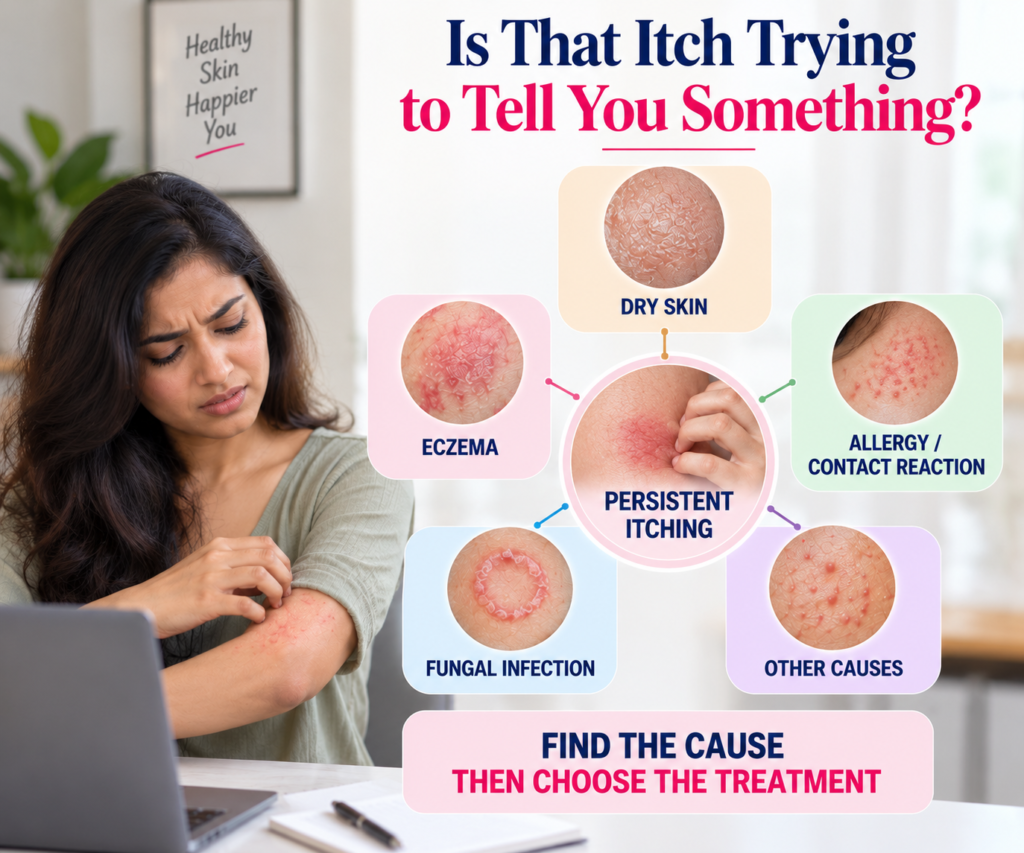
An occasional itch or mild rash may settle after the trigger is removed or the skin has had time to recover. Persistent itching is different. If the itch keeps returning, affects your sleep or daily activities, damages the skin from scratching, or appears without an obvious reason, it may be worth having the cause assessed.
Skin rashes can have many causes. Dry skin, irritation, allergic reactions, infections, inflammatory skin conditions, insect bites and reactions to medicines can all cause itching or visible changes on the skin. Some conditions can also cause significant itching without an obvious rash.
If you are looking for skin rash treatment in Mysore, the first step is understanding whether the problem is likely to settle with basic skin care or whether a dermatologist should examine it.
When Should You See a Dermatologist for Itching?
Consider arranging a dermatology consultation if your itching:
- continues instead of settling
- keeps coming back
- interferes with sleep
- makes everyday activities difficult
- causes repeated scratching or skin damage
- occurs without an obvious trigger
- appears with a persistent rash
- is accompanied by swelling, sores, scaling or other skin changes
Persistent itching does not automatically mean that you have a serious medical condition. It does mean that finding the reason for the itching may be more useful than repeatedly treating the symptom without knowing what is causing it.
The American Academy of Dermatology notes that persistent itch can have several possible causes and that a dermatologist can help identify the underlying problem.
What Can Cause an Itchy Skin Rash?
There is no single cause of an itchy rash.
Depending on the person and the circumstances, possible causes include:
- dry or irritated skin
- contact with an irritating substance
- allergic skin reactions
- inflammatory skin conditions
- infections
- insect bites
- reactions to medicines
- certain underlying medical conditions
Contact dermatitis is one example. The skin may react to something that touches it, including fragrances, cosmetics, hair products, metals, fabrics or other substances. The rash may be itchy, painful, swollen, dry or blistered.
This is why an itchy rash should not automatically be labelled as an allergy. Several different skin conditions can produce similar symptoms.
Can a Mild Rash Go Away on Its Own?
Some short-lived rashes improve after the trigger is removed or with simple skin care.
For example, temporary irritation may settle after stopping a newly introduced product or avoiding an exposure that is irritating the skin.
A mild rash that is limited to a small area, is improving, is not painful and is not associated with other concerning symptoms may sometimes be monitored.
However, continued symptoms deserve attention. If the rash does not improve, repeatedly returns or develops new symptoms, a medical assessment becomes more appropriate.
When Does a Skin Rash Need Medical Evaluation?
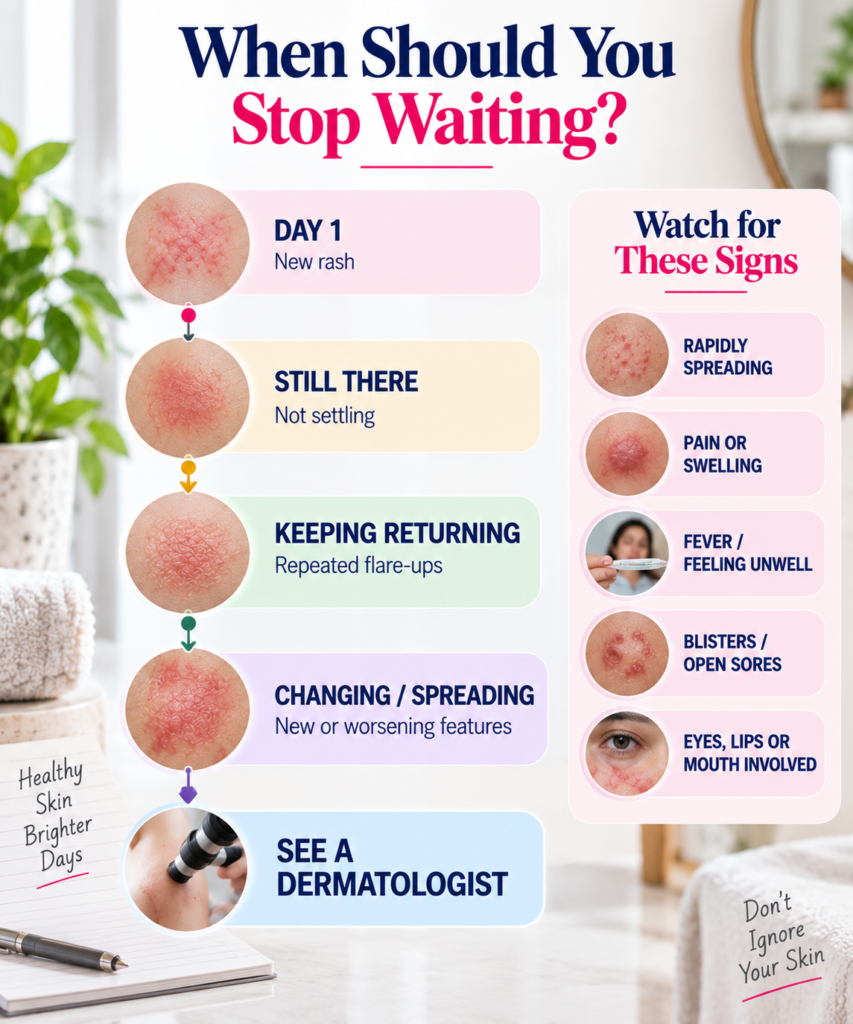
A rash should be medically assessed when it is persistent, worsening or accompanied by other concerning symptoms.
The American Academy of Dermatology advises seeking medical attention for a rash that:
- covers most of the body
- spreads rapidly
- is painful
- blisters
- develops into open sores or raw skin
- occurs with fever or illness
- affects the eyes, lips, mouth or genital skin
Signs that may indicate infection include pus, yellow or golden crusts, increasing pain, swelling, warmth or an unpleasant smell.
These signs do not tell you exactly what the condition is. They are reasons to have the skin assessed rather than continuing to guess at home.
What If the Rash Keeps Coming Back?
A rash that disappears and then returns can be difficult to understand, particularly if you have already changed soaps, detergents, moisturisers, cosmetics or other products.
Recurring symptoms can have different causes. A dermatologist may need to look at when the rash appears, where it occurs and what you have been exposed to before each episode.
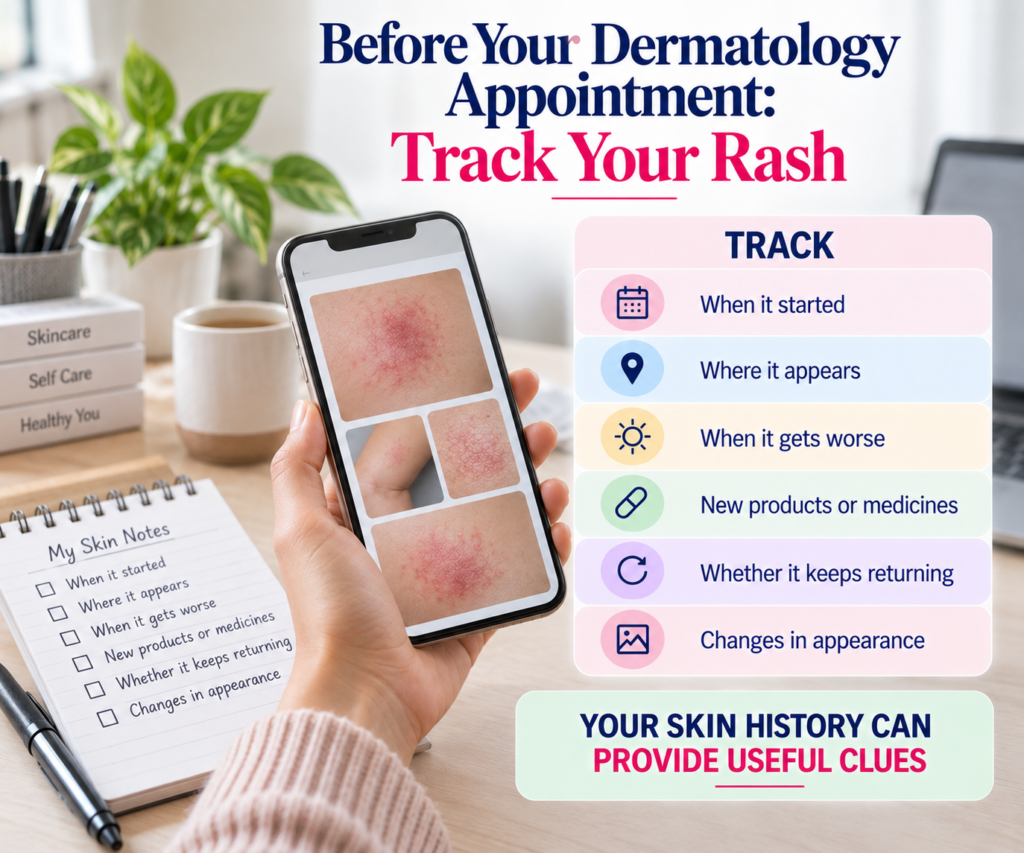
Before your appointment, make a note of:
- when the rash first appeared
- how often it returns
- where it usually occurs
- whether it follows use of a particular product
- whether sweating or weather affects it
- whether anyone else at home has similar symptoms
- which creams or medicines you have already used
- whether symptoms occur after food, medication or another new exposure
This information can help the doctor understand the pattern.
When contact dermatitis is suspected and the trigger is difficult to identify, dermatologists may sometimes use patch testing to investigate possible allergic reactions.
What If Itching Is Affecting Your Sleep?
Itching that repeatedly wakes you at night should not simply be dismissed as a minor inconvenience.
Persistent itch can interfere with sleep, concentration and normal activities. Scratching during the night can also damage the skin.
If you regularly wake because of itching or find that scratching has caused cuts, bleeding or raw skin, consider discussing the problem with a dermatologist.
Can Scratching Make an Itchy Rash Worse?
Yes. Scratching can provide temporary relief, but repeated scratching can further irritate the skin.
It may:
- damage the surface of the skin
- cause small cuts
- increase irritation
- lead to bleeding
- make the skin more vulnerable to infection
For appropriate cases of itchy skin, the American Academy of Dermatology recommends measures such as keeping the skin moisturised with a fragrance-free moisturiser and using a cool, damp cloth to soothe the itch.
These measures can help with discomfort, but persistent or unexplained itching still needs appropriate evaluation.
What If the Rash Is Painful or Spreading?
Pain, rapid spread and increasing inflammation are reasons to take a rash seriously.
Some rashes can become infected. Pus, yellow or golden crusting, increasing pain, swelling, warmth, an unpleasant smell or fever can be signs of infection.
However, these symptoms do not automatically mean that an infection is present. Several skin conditions can appear similar, so the cause needs to be assessed.
What About Swelling, Discharge or Blisters?
Swelling, discharge, blistering and open sores are changes that may require medical assessment.
The location of the rash also matters. Rashes involving the eyes, lips, mouth or genital skin should be evaluated by a medical professional.
If itching or a rash is accompanied by sudden swelling of the lips, mouth, tongue or throat, or by difficulty breathing or swallowing, seek emergency medical care. These symptoms can occur during a severe allergic reaction.
What Can You Do If Basic Skin Care Has Not Helped?
When your skin is irritated, simplifying your routine may help.
If a newly introduced product appears to be causing irritation, avoiding the suspected trigger can be useful. Fragrance-free products may also be preferable for irritated or itchy skin.
However, repeatedly changing products without knowing the cause may not solve a persistent rash.
If the itching or rash continues, the more useful question is what is causing it.
A dermatologist can examine the affected skin, review your symptoms and decide whether further evaluation is necessary.
Why Is Self-Diagnosing a Rash Unreliable?
Many skin conditions have overlapping symptoms.
Redness, itching, scaling, dryness, swelling and bumps can occur with different conditions. A rash that looks similar to something you have experienced before may have a different cause this time.
Photographs and online information can help you understand possible causes, but they cannot reliably establish a diagnosis for your individual skin.
Repeatedly applying different treatments based on a guessed diagnosis can also make the original problem harder to assess.
For persistent or unexplained symptoms, professional evaluation is generally more useful than continuing to experiment with treatments.
What Happens During a Dermatology Consultation?
A dermatology consultation usually begins with questions about your symptoms and medical history.
Your dermatologist may ask:
- When did the itching or rash begin?
- Has it happened before?
- Is it getting worse or improving?
- Where did it first appear?
- Has it spread?
- Is it itchy, painful or both?
- Have you recently started using a new skincare, haircare or household product?
- Have you started any new medicines?
- Have you travelled recently or had any relevant exposure?
- What treatments have you already tried?
- Is anyone else experiencing similar symptoms?
The doctor will then examine the affected skin.
Depending on the findings, additional evaluation may or may not be necessary. For some recurring rashes, identifying the exposure or trigger may be an important part of the assessment.
How Does the Cause Affect Treatment?
There is no single treatment that works for every itchy rash.
Management depends on the underlying cause. A dermatologist may consider different approaches when symptoms are related to:
- skin irritation
- an allergic reaction
- dry skin
- an inflammatory skin condition
- an infection
- a medicine-related reaction
- another underlying problem
Treatment may involve avoiding a known trigger, changing skin-care habits, moisturising, managing inflammation, treating an identified infection or investigating the cause further.
The appropriate treatment depends on the diagnosis and the individual’s circumstances.
For this reason, a cream that helped someone else may not be suitable for your rash.
When Is a Skin Rash an Emergency?
Most skin rashes are not emergencies. Some symptoms, however, should not wait for a routine dermatology appointment.
Seek urgent medical care if a rash is accompanied by:
- difficulty breathing
- difficulty swallowing
- sudden swelling of the lips, mouth, tongue or throat
- rapidly spreading symptoms with significant illness
- extensive blistering or peeling
- severe or rapidly worsening symptoms
Difficulty breathing or swallowing and sudden swelling around the mouth or throat can indicate a severe allergic reaction and require immediate medical attention.
If you think you are experiencing a medical emergency, seek emergency medical care rather than waiting for a dermatology consultation.

Questions to Ask During a Dermatology Consultation
If you are seeing a dermatologist for persistent itching or a recurring rash, you may want to ask:
- What could be causing these symptoms?
- Do I need any tests?
- Could any of my skincare products be contributing?
- What should I stop using?
- How should I care for the affected skin?
- When should I return?
Skin Rash Treatment in Mysore: When Should You Seek Professional Care?
If you are searching for skin rash treatment in Mysore, consider seeking professional assessment when itching or a rash:
- persists
- keeps returning
- spreads
- becomes painful
- interferes with sleep or daily activities
- causes skin damage
- does not improve with basic care
The source information for this page states that APTA Clinic lists dermatology among its services and also has a trichology service for scalp-related concerns. It lists locations in Krishnamurthy Puram and Vijayanagar, Mysore.
The Main Point
An itchy rash is a symptom, not a diagnosis.
A short-lived irritation may settle after the trigger is removed. Persistent or recurring itching deserves more attention, especially when it affects sleep, damages the skin, spreads or appears with other changes.
A dermatologist can examine the skin, consider the pattern of symptoms and decide whether further evaluation or treatment is appropriate.
If you have persistent itching or a recurring rash, arrange a dermatology consultation rather than repeatedly guessing at the cause.
Frequently Asked Questions (FAQs)
Consider seeing a dermatologist when itching persists, repeatedly returns, interferes with sleep or daily activities, causes skin damage from scratching, or occurs with a persistent or unexplained rash.
Persistent itching can have many possible causes, including dry skin, irritation, allergic reactions, infections, inflammatory skin conditions, some medicines and certain underlying medical conditions. A clinical assessment may be needed to determine the cause.
A rash should be assessed if it spreads rapidly, is painful, covers a large part of the body, blisters, develops into open sores, occurs with fever or illness, or affects the eyes, lips, mouth or genital skin.
Persistent itching that interferes with sleep or daily activities is a reasonable reason to seek professional evaluation. Long-standing itch can affect quality of life.
Difficulty breathing or swallowing, sudden swelling of the lips, mouth, tongue or throat, or other signs of a severe allergic reaction require emergency medical attention.
If a newly introduced product appears to be irritating your skin, avoiding the suspected trigger may help. Fragrance-free products may be preferable for itchy or irritated skin. Persistent symptoms should still be medically assessed.
Yes. Products that come into contact with the skin can sometimes cause irritation or allergic contact dermatitis. Fragrances and ingredients in cosmetics, shampoos and other personal-care products can be potential triggers.
A photograph can provide useful information, but it may not be enough to establish a diagnosis. A dermatologist may need to examine the skin and ask about the history, symptoms, possible exposures and previous treatments.
The supplied page information states that APTA Clinic lists dermatology among its services and also provides trichology care for hair and scalp concerns.
The supplied information states that APTA Clinic’s trichology service lists concerns including dandruff, scalp inflammation, itching, dry scalp, excess oil production and folliculitis.