
Laser Treatment for Uneven Skin Tone: When Is It Considered and How Is It Treated?
- Home
- Blog
- About Us
Uneven skin tone can show up as dark spots, patches or areas of increased pigmentation. It may develop gradually or appear after acne, skin irritation, sun exposure or hormonal changes.
Laser treatment can help with some pigmentation concerns, but it is not suitable for every type of uneven skin tone. The cause of the pigmentation matters. So do your skin tone, the depth and pattern of the pigment, previous treatments and your tendency to develop pigmentation after procedures.
If you are considering laser skin treatment in Mysore, a dermatology assessment is a sensible starting point. Looking at a dark spot alone does not tell you which treatment will be safest or most useful.
Can Laser Treatment Improve Uneven Skin Tone?
Yes. Certain laser and light-based treatments can improve selected pigmentation concerns.
The important part is choosing the right treatment for the actual condition.
For example, some superficial sun-related pigmentation may respond to pigment-targeting procedures. Melasma can be more difficult to manage because it may recur and can respond differently depending on the person and the characteristics of the pigmentation.
Laser treatment also carries a risk of unwanted pigment changes. This is particularly relevant for darker skin, which can be more prone to burns and post-treatment dark marks with some laser procedures.
That is why a dermatologist should assess the pigmentation and your skin before a laser procedure is selected.
What Causes an Uneven Skin Tone?
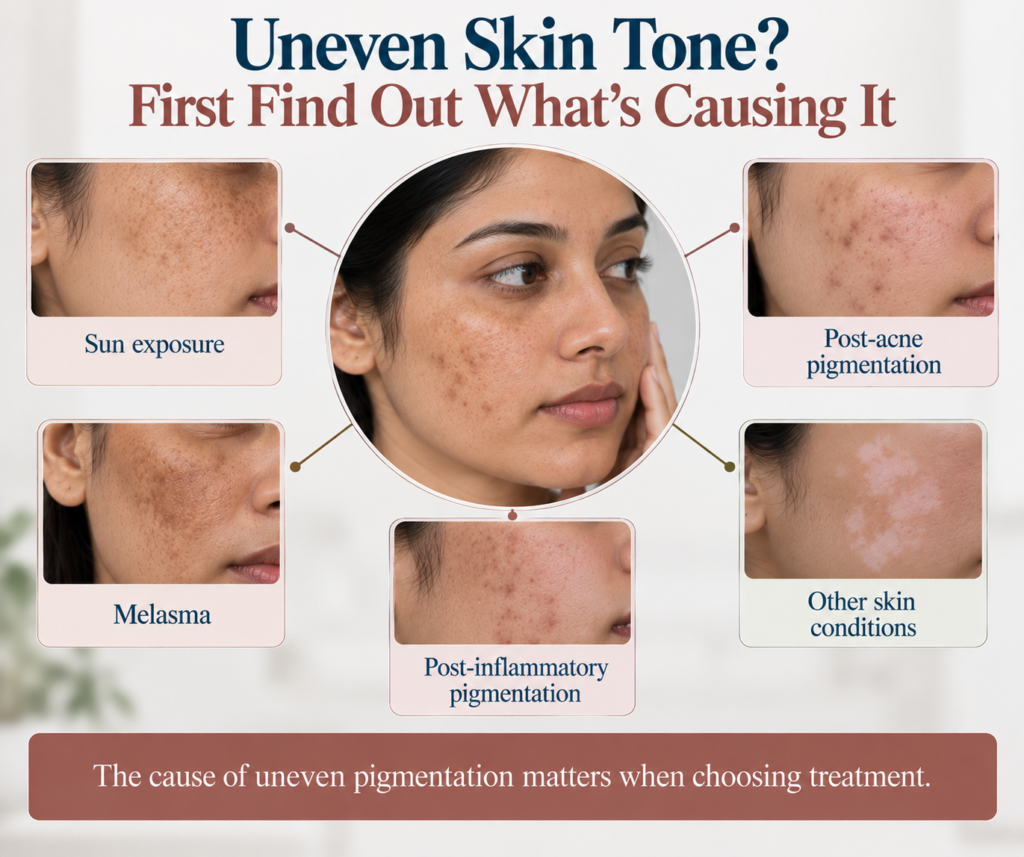
Uneven skin tone describes how the skin looks rather than one specific medical condition. Several different problems can cause darker or irregularly coloured areas.
Sun exposure
UV exposure can stimulate melanin production and make existing pigmentation more visible. It can also contribute to certain sun-related brown spots.
If the skin continues to receive significant sun exposure after treatment, pigmentation may return or become darker. Sun protection therefore remains an important part of managing many pigmentation concerns.
Post-acne pigmentation
A dark mark that remains after a pimple has healed may be post-inflammatory hyperpigmentation (PIH).
PIH develops when inflammation or injury causes increased pigment in the affected area. It can be particularly noticeable in darker skin tones and may take longer to fade.
Pigmentation after inflammation or irritation
Pigmentation can follow dermatitis, infections, physical irritation or other forms of skin inflammation.
If the inflammation continues, treating the visible pigmentation alone may not solve the problem. The underlying trigger also needs attention.
Melasma
Melasma causes patches of darker pigmentation, commonly on the face. Sun exposure and hormonal factors can influence it.
Melasma can be persistent and may return even after improvement. Laser or other light-based procedures may be considered in selected cases, but they are not automatically the first treatment.
Freckles and sun-related spots
Some brown spots are associated with sun exposure and may respond to specific pigment-targeting treatments.
However, a brown spot should not automatically be assumed to be a cosmetic pigmentation problem. A dermatologist first needs to establish what it represents.
Skin irritation
Repeated irritation from skincare products, procedures or inflammatory skin conditions can contribute to pigmentation.
When new pigmentation keeps appearing, finding and controlling the source of irritation can be as important as treating the existing marks.
Can Laser Treatment Improve Uneven Skin Tone?
Yes. Certain laser and light-based treatments can improve selected pigmentation concerns.
The important part is choosing the right treatment for the actual condition.
For example, some superficial sun-related pigmentation may respond to pigment-targeting procedures. Melasma can be more difficult to manage because it may recur and can respond differently depending on the person and the characteristics of the pigmentation.
Laser treatment also carries a risk of unwanted pigment changes. This is particularly relevant for darker skin, which can be more prone to burns and post-treatment dark marks with some laser procedures.
That is why a dermatologist should assess the pigmentation and your skin before a laser procedure is selected.
When Might Laser Skin Treatment Be Considered?
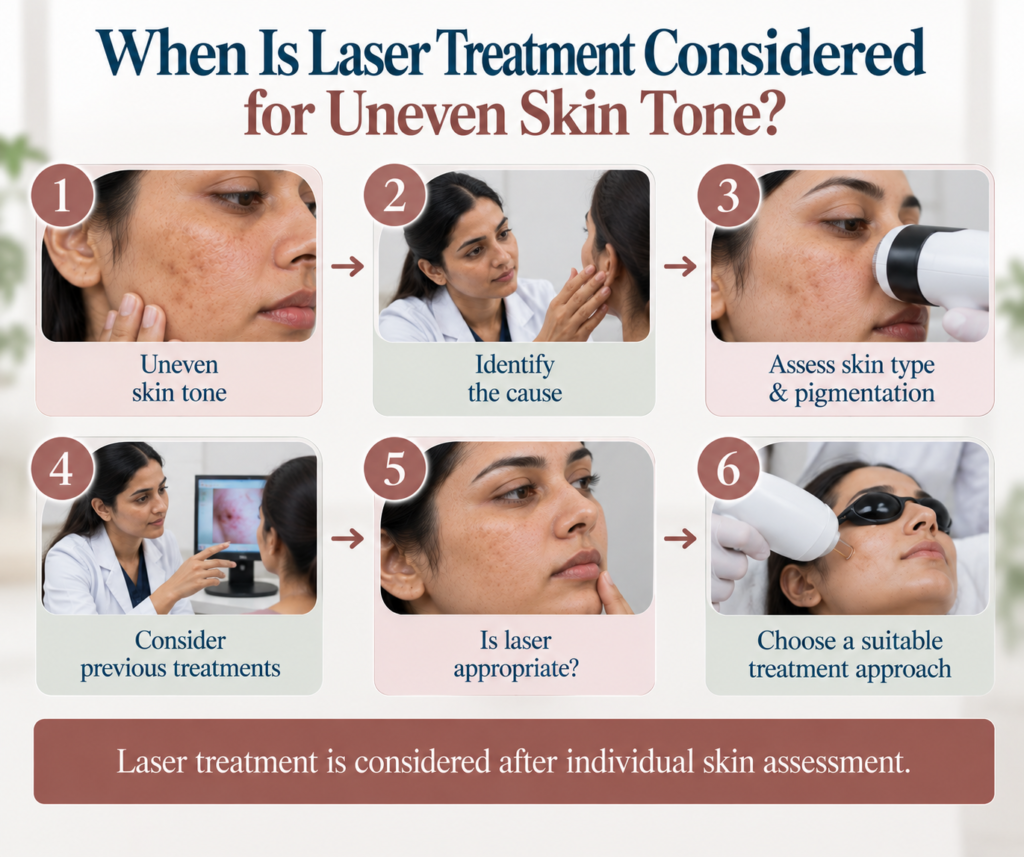
A dermatologist may consider laser or another light-based procedure when the diagnosis and characteristics of the pigmentation make it appropriate.
This may include:
- Selected sun-related pigmentation
- Certain superficial brown spots
- Some localized pigmentation concerns
- Pigmentation that has not responded sufficiently to other treatments
- Specific conditions for which a particular laser or light-based treatment is appropriate
The appearance of a dark spot alone does not determine whether laser treatment is suitable.
Your dermatologist may first assess the cause, skin characteristics and previous treatment history before deciding whether a procedure is worthwhile.
Some pigmentary problems can also become darker after physical treatments. Chemical peels, laser treatments and intense pulsed light can help selected pigmentation concerns, but they can also aggravate post-inflammatory pigmentation in some situations.
When May Laser Treatment Not Be the First Option?
Laser treatment may not be the first choice when the cause of the pigmentation has not been established.
A dermatologist may recommend another approach first when:
- The diagnosis is uncertain
- Active inflammation is present
- Acne is continuing to cause new pigmentation
- The pigmentation may respond to topical treatment
- Ongoing sun exposure is worsening the problem
- There is a higher risk of post-inflammatory pigmentation
- The possible benefit does not justify the treatment risks
- A non-procedural approach is more appropriate
This can be particularly relevant for melasma. Treatment may involve sun protection and topical medication, with procedures considered selectively.
If your dermatologist recommends skincare or another treatment instead of laser, it does not mean the pigmentation is being overlooked. The alternative may simply be better suited to the underlying condition.
How Does a Dermatologist Decide If Laser Treatment Is Suitable?
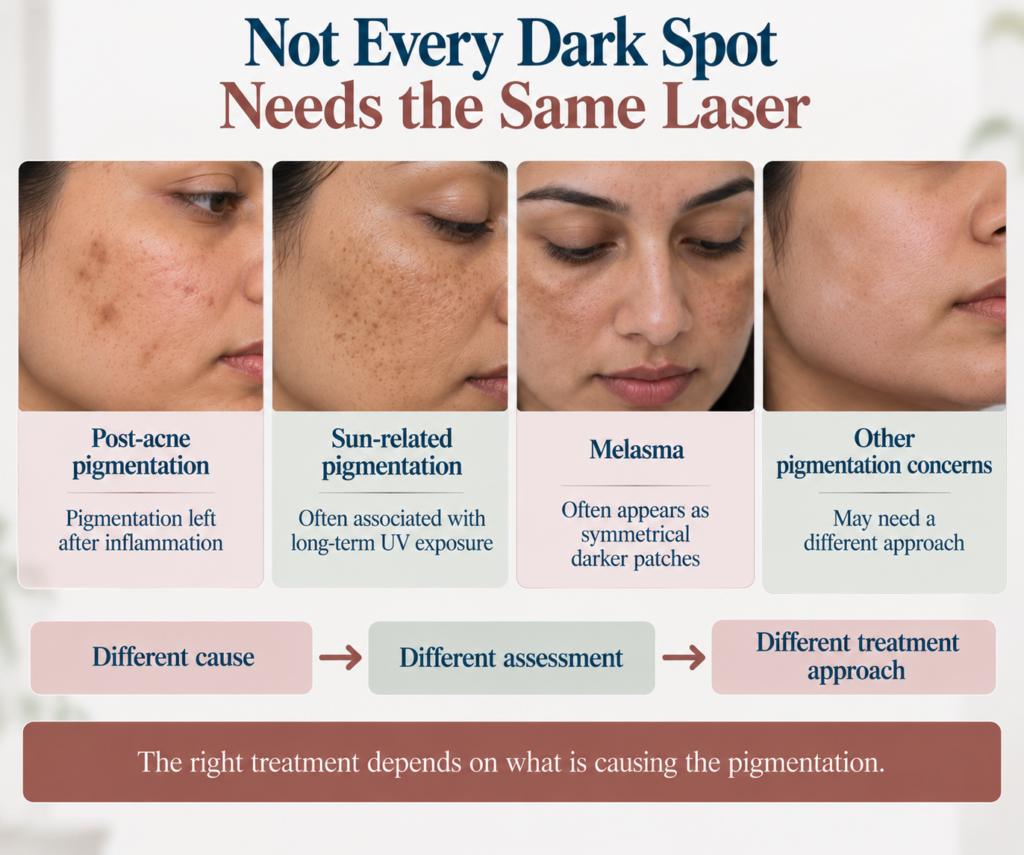
There is no single laser setting or treatment plan that works for every pigmentation concern.
A dermatologist may look at several factors.
Type of pigmentation
Melasma, post-acne pigmentation, sun-related spots and other pigmentary conditions can behave differently. Identifying the likely diagnosis helps guide treatment selection.
Skin tone and characteristics
Skin tone matters when assessing procedural risk. Darker skin can be more susceptible to unwanted pigment changes following some laser treatments.
Location of the pigmentation
Pigmentation on the face, around the eyes or on other areas of the body may require different considerations.
Depth and pattern of pigment
The location and depth of pigment can influence which treatments are considered. A dermatologist may use close examination and, when appropriate, tools such as a dermatoscope or Wood’s lamp.
How long the pigmentation has been present
A recent dark mark following acne may be managed differently from pigmentation that has remained for several years.
Previous treatments
Tell your dermatologist about creams, chemical peels, laser treatments or other procedures you have already tried. Your previous response can help with treatment planning.
Current skincare routine
Products that irritate the skin can contribute to pigmentation. Your dermatologist may therefore review the products you currently use.
Active acne or inflammation
If acne or another inflammatory condition is still active, controlling it may be necessary before treating the resulting pigmentation.
Medical history and medications
Some medications can affect how skin responds to light-based procedures. Tell your dermatologist about prescription medicines, over-the-counter products and supplements you use.
Previous reactions to procedures
If your skin has become darker after a peel, laser treatment or another procedure in the past, mention this during your consultation.
What Happens During a Consultation for Laser Skin Treatment?
A consultation involves more than choosing a laser.
Your dermatologist may:
- Discuss your concern
You may be asked when the pigmentation started, where it appears and whether it has changed. - Review your medical and skincare history
Previous treatments, skincare products, medicines and relevant medical history may be discussed. - Examine the skin
The dermatologist looks at the colour, pattern and distribution of the pigmentation. - Consider possible causes
Different causes of pigmentation can require different approaches. - Assess your skin characteristics
Skin tone and the likelihood of pigmentary side effects are considered. - Discuss treatment options
Depending on the diagnosis, options may include laser, topical treatment, sun protection, chemical peels or treatment of an underlying skin condition. - Discuss risks and expectations
You should understand the possible benefits, limitations and risks before deciding on treatment. - Explain preparation and aftercare
Your dermatologist can explain what you should do before and after the selected procedure.
The American Academy of Dermatology similarly recommends consultation with a dermatologist before laser treatment, particularly because treatment choice and risks vary between skin types and conditions.
What Are the Other Options for Uneven Skin Tone?
- Laser is only one possible treatment.
Depending on the cause, a dermatologist may consider:
Sun protection
Daily sun protection is important for many pigmentation concerns. For melasma and some forms of hyperpigmentation, the American Academy of Dermatology recommends broad-spectrum SPF 30 or higher. Tinted sunscreen containing iron oxide can also help protect against visible light, which can contribute to worsening pigmentation.
Topical treatments
Depending on the diagnosis, a dermatologist may recommend prescription medication or specific skincare ingredients.
Products marketed as quick pigmentation removers should not be chosen solely on advertising claims. Some inappropriate products can irritate the skin and potentially make pigmentation more difficult to manage.
Chemical peels
Selected chemical peels may be useful for some pigmentation concerns. The type and strength need to be chosen according to the person’s skin and the condition being treated.
Treating acne or inflammation
If acne or another inflammatory condition is responsible for repeated pigmentation, treating that condition can help reduce the development of new marks.
Other dermatologist-directed procedures
Depending on the diagnosis, another procedure may be recommended instead of laser or used as part of a broader treatment plan.
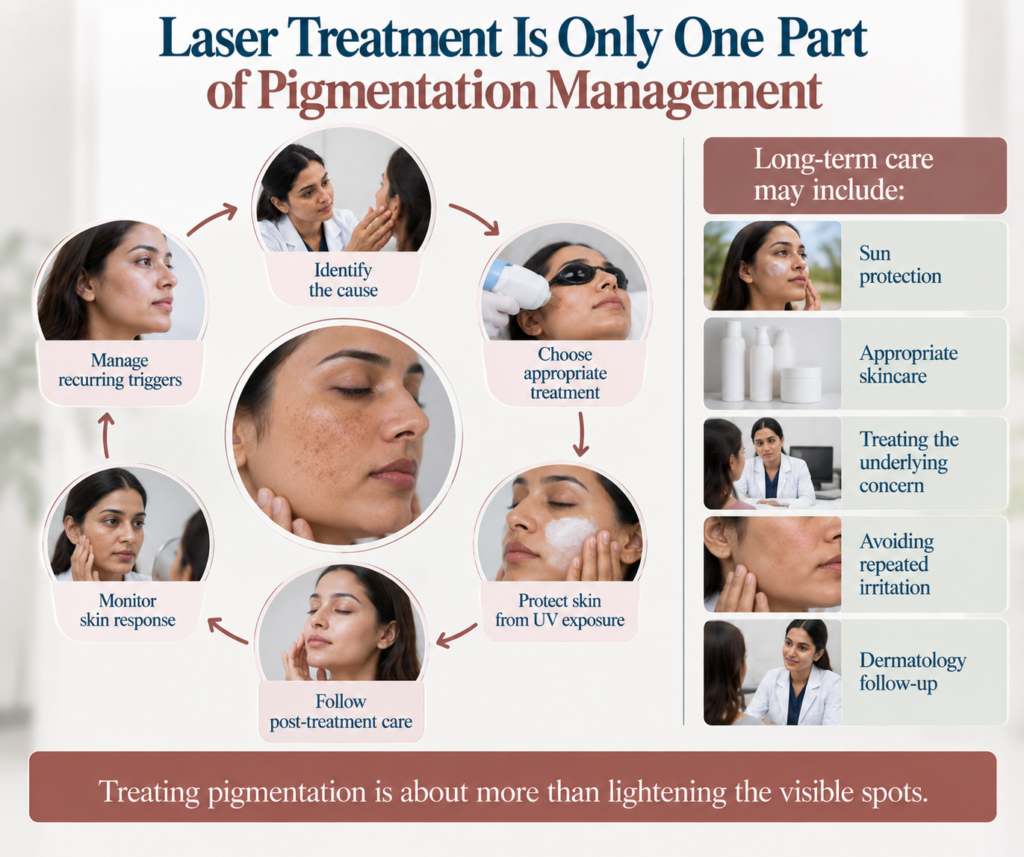
The goal is to address the cause of the pigmentation rather than focus only on the visible colour change.
What Are the Possible Risks of Laser Skin Treatment?
Laser treatment is not risk-free.
Possible effects include:
- Temporary redness
- Swelling
- Sensitivity or irritation
- Temporary changes in pigmentation
- Darkening of treated skin
- Lightening of treated skin
- Burns or other skin injury
- Recurrence of pigmentation
The risk depends on the treatment used, the condition being treated, your skin characteristics and how the procedure is performed.
Darker skin requires particular care because some laser treatments can trigger post-inflammatory hyperpigmentation or other unwanted pigment changes.
This is one reason treatment should be selected after an appropriate assessment rather than based only on the name of a laser.
What Should You Expect After Laser Treatment?
Some people experience temporary redness, sensitivity or other local skin changes after treatment.
Your dermatologist will provide aftercare instructions based on the procedure performed.
You may be advised to:
- Follow the recommended aftercare routine
- Protect treated skin from unnecessary sun exposure
- Use sunscreen as advised
- Avoid unnecessary irritation
- Avoid changing your skincare routine without guidance
- Attend follow-up appointments when recommended
Pigmentation does not always disappear immediately. Improvement can be gradual, and some conditions require longer-term management.
Can Uneven Skin Tone Return After Laser Treatment?
Yes.
Laser treatment may reduce visible pigmentation, but it does not necessarily remove the factors that caused it.
Pigmentation can recur because of:
- Sun exposure
- Hormonal influences
- Skin inflammation
- Acne
- The underlying pigmentation disorder
- Individual skin response
- Inadequate sun protection
Melasma is one example of a pigmentation condition that can persist or recur. Long-term management may therefore be important even after visible improvement.
How to Choose Laser Skin Treatment in Mysore
If you are searching for laser skin treatment in Mysore, consider the assessment and treatment approach rather than choosing a provider solely from before-and-after photographs or the name of a particular laser.
Useful questions include:
- Will my skin be examined before treatment?
- What is the likely cause of my pigmentation?
- Is laser actually appropriate for my condition?
- How does my skin tone affect the treatment plan?
- What alternatives are available?
- What are the possible side effects?
- What level of improvement is realistic?
- What preparation and aftercare will I need?
- Will follow-up be part of the treatment plan?
A proper assessment becomes especially important when pigmentation is persistent, recurrent, spreading or changing.
Laser Skin Treatment for Pigmentation at APTA Clinic, Mysore
APTA Clinic provides dermatology and laser-related care in Mysore. The clinic’s current information lists locations in Krishnamurthy Puram and Vijayanagar and the contact number +91 7411 707 555.
Its dermatology information describes selected laser-based procedures for pigmentation concerns and recommends professional assessment before treatment.
Because pigmentation can have different causes, treatment is selected according to the individual concern. Depending on the assessment, the plan may involve laser treatment, topical care, chemical peels, treatment of an underlying skin condition or another approach.
When Should You See a Dermatologist?
Consider a dermatology consultation if:
- Dark spots persist or repeatedly return
- Pigmentation is spreading or changing
- Acne keeps leaving dark marks
- Pigmentation develops after irritation or another skin condition
- You are considering laser treatment
- Previous pigmentation treatment has not helped
- Your skin became darker after a cosmetic procedure
- You are unsure what is causing the colour change
A dermatologist can assess the pattern and possible cause instead of assuming that every dark spot has the same origin.
Final Takeaway
Uneven skin tone can have several causes, and laser treatment is not automatically the right answer for every pigmentation concern.
Laser skin treatment in Mysore may be considered for selected pigmentation problems after a dermatologist assesses the diagnosis, skin characteristics, pigment pattern, previous treatments and risk of unwanted pigment changes.
For some people, sun protection, topical treatment, chemical peels or treatment of active acne and inflammation may be more appropriate.
If you have persistent dark spots or uneven pigmentation, a dermatology consultation can help identify the likely cause and determine which treatment approach is appropriate for your skin.
Frequently Asked Questions (FAQs)
Laser treatment may be suitable for selected pigmentation concerns. It is not appropriate for every cause of uneven skin tone. A dermatologist should assess the likely cause, your skin characteristics, treatment history and possible alternatives first.
Laser treatment should not be presented as a guaranteed or permanent way to remove pigmentation. Some pigmentation can improve significantly, while other conditions may require continued management or may return.
Depending on the technology used, laser and light-based treatments may be considered for selected pigmentation, sun-related spots, acne scars and other dermatological concerns. The appropriate treatment depends on the condition being treated.
Laser treatment can be appropriate for selected patients when the procedure is properly assessed and performed. It still carries risks, including redness, irritation and pigmentary changes. Darker skin can have a higher risk of burns and post-treatment dark marks with some procedures.
Tell your dermatologist about your medications, supplements, skincare products, previous procedures and any history of pigmentation following treatment. Follow the preparation instructions provided for your specific procedure.
Not necessarily. Melasma can persist and recur. Management may include sun protection and topical treatments, with procedures considered selectively according to the individual case.
Laser treatment can be used for selected concerns in darker skin, but additional care may be necessary because some procedures carry a higher risk of burns and post-treatment dark marks. Treatment should be selected according to the individual’s skin and condition.
A photograph may show that pigmentation is present, but it cannot reliably establish its cause or determine the safest treatment. A dermatologist may need to examine the skin directly and review your medical and treatment history.
APTA Clinic’s current website describes selected laser-based procedures for pigmentation concerns and recommends professional evaluation before treatment. The exact treatment depends on the type of pigmentation and individual skin characteristics.
APTA Clinic currently lists locations in Krishnamurthy Puram and Vijayanagar, Mysore. The published contact number is +91 7411 707 555.