Jaw Correction Surgery in Mysore: Who Needs Orthognathic Surgery and What Recovery Involves
- Home
- Blog
- About Us
Jaw correction surgery, also called orthognathic surgery, is an operation that repositions the upper jaw, lower jaw or both. It may be considered when a significant difference in jaw position affects the way the teeth meet, chewing, facial balance or other functions and orthodontic treatment alone cannot correct the underlying skeletal problem.
Not everyone with an uneven bite needs surgery. Some problems involve the position of the teeth and can be treated with orthodontics. Others arise from the size or position of the jawbones and need a different approach. An assessment helps distinguish between these situations.
APTA Clinic in Mysore lists orthognathic surgery among its facial surgery services. If you are considering corrective jaw surgery, the first step is to understand what may be causing the problem, what treatment involves and how much time you may need for preparation and recovery.
What Is Orthognathic Surgery?
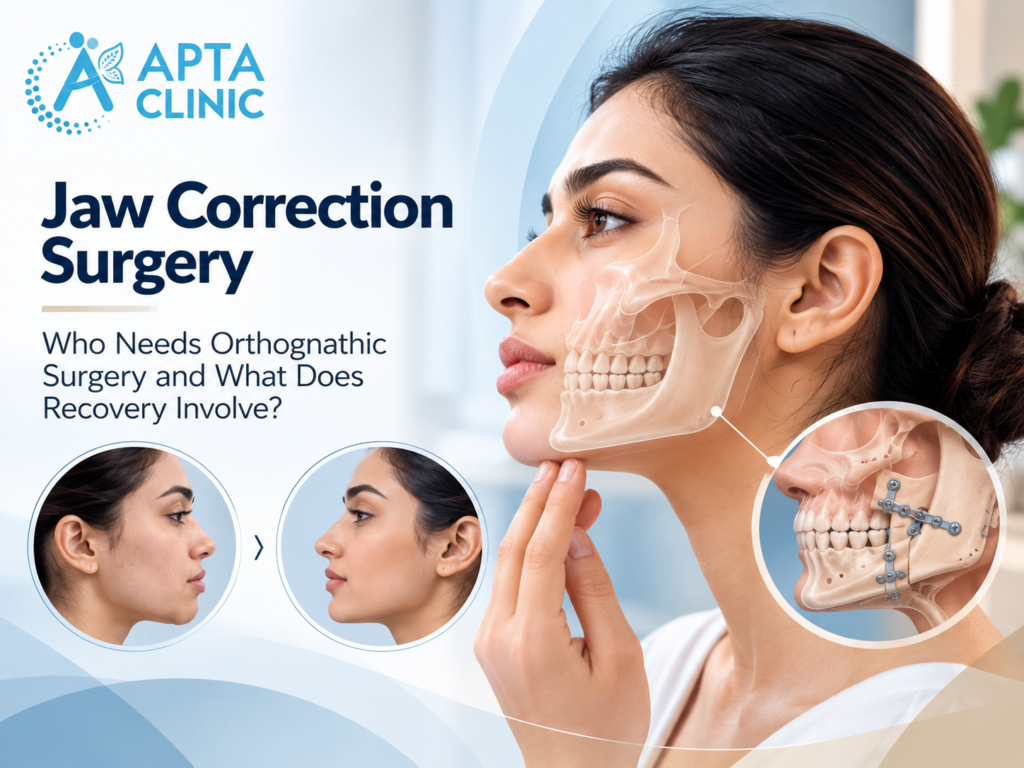
Orthognathic surgery corrects certain problems in the relationship between the upper and lower jaws. The procedure may involve moving the upper jaw, the lower jaw or both to establish a more appropriate relationship between the jaws and teeth.
The term jaw correction surgery is sometimes used broadly. Orthognathic surgery specifically addresses skeletal jaw discrepancies; it is not the same as routine dental treatment, braces alone or every type of jaw operation.
A person may have teeth that appear uneven because of their position, or the teeth may be affected by the way the jawbones developed. These problems can look similar but require different treatment plans.
Corrective jaw surgery is usually considered when a significant skeletal discrepancy cannot be adequately corrected with orthodontics alone. Treatment often involves an orthodontist and an oral and maxillofacial surgeon working together.
Who May Need Corrective Jaw Surgery?
A consultation may be appropriate if you have a persistent bite problem or a jaw-position concern that affects everyday activities. The symptoms alone do not establish that surgery is necessary.
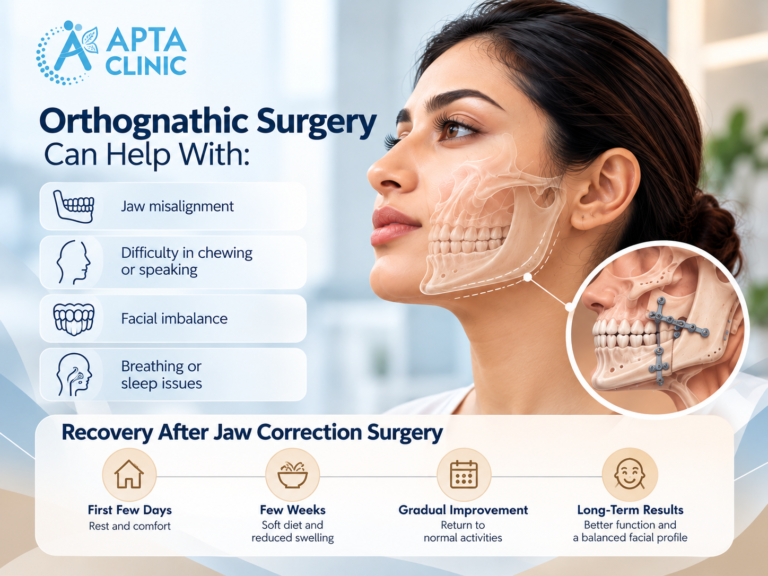
A specialist may assess whether the jawbones are contributing to one or more of the following problems:
- Difficulty biting or chewing: The upper and lower teeth may not meet in a way that allows comfortable, effective biting.
- A significant underbite or overbite: The position of one jaw may be contributing to an abnormal relationship between the upper and lower teeth.
- An open bite: Some upper and lower teeth may remain apart when the mouth is closed.
- A crossbite associated with jaw position: The teeth may meet in an abnormal relationship because of a skeletal discrepancy.
- Facial asymmetry: One side of the lower face may appear different because the jaws developed or sit unevenly.
- Difficulty bringing the lips together comfortably: In selected cases, the relationship between the jaws and teeth can contribute to this concern.
- A functional problem linked to jaw structure: A specialist may investigate whether the skeletal relationship contributes to a particular speech, chewing or airway concern.
These examples describe reasons for assessment, not automatic indications for surgery. The decision depends on the severity and cause of the problem, dental health, general health, stage of facial growth and the benefits expected from treatment.
When should you seek an assessment?
Consider arranging a dental or specialist assessment if a bite problem persists, chewing is difficult, the teeth do not meet comfortably, or you have a known jaw discrepancy. A dentist or orthodontist may be able to assess the problem and advise whether a surgical opinion is appropriate.
A new jaw problem following an accident, especially with severe pain, swelling, bleeding or difficulty opening the mouth, may need urgent medical or dental assessment rather than a routine consultation.
Jaw Problems That May Require Assessment
Underbite
An underbite occurs when the lower front teeth sit in front of the upper front teeth. This can result from tooth position, jaw position or a combination of both.
If the problem is mainly dental, orthodontic treatment may be sufficient. If the underlying jawbones are significantly misaligned, braces alone may not correct the skeletal relationship. A specialist can explain whether jaw surgery should be considered.
Overbite and excessive overjet
An overbite describes the vertical overlap of the upper front teeth over the lower front teeth. Overjet refers to how far the upper front teeth sit ahead of the lower front teeth.
These are related but different measurements. Their causes can include tooth position and skeletal jaw relationships. Treatment depends on the nature and severity of the discrepancy.
Open bite
An open bite occurs when some upper and lower teeth do not touch when the mouth closes. It can affect biting into food and may have dental, skeletal or other contributing factors.
Orthodontic treatment may help in selected cases. When a significant skeletal discrepancy is responsible, corrective jaw surgery may form part of the treatment plan.
Facial asymmetry caused by jaw position
Facial asymmetry has many possible causes, including natural differences between the two sides of the face, dental alignment, soft tissue and jaw structure.
If the jawbones are contributing to a substantial asymmetry, orthognathic surgery may be one option to discuss. The procedure cannot be chosen from appearance alone; the underlying cause needs to be assessed first.
APTA Clinic also has a dedicated page for
Jaw size or position differences
The upper or lower jaw may sit farther forward or backward than expected, or the two jaws may not relate to each other in a way that allows a comfortable bite.
The aim of assessment is to determine whether the concern comes from the teeth, the jawbones or both. This distinction guides the choice between orthodontics, surgery or a combined approach.
Can Braces Correct Jaw Misalignment Without Surgery?
Sometimes. Braces move teeth; they do not change the size or reposition a fully developed jawbone in the way orthognathic surgery can.
When a bite problem is mainly dental, an orthodontist may be able to correct it without surgery. If a significant skeletal discrepancy remains, orthodontics alone may not achieve the planned bite relationship.
For some patients, braces are used before surgery to position the teeth in preparation for the planned jaw movement. Orthodontic treatment often continues after surgery to refine the bite.
This means that braces and jaw surgery are not necessarily alternatives. They can be parts of the same treatment plan.
During assessment, ask the orthodontist or surgeon:
- Is my bite problem mainly dental, skeletal or both?
- Could orthodontic treatment alone reasonably address it?
- If surgery is being considered, why are braces needed before or after it?
- What are the limitations of each option?
- What happens if I choose not to have surgery?
The answers should relate to your own examination and treatment goals.
Types of Orthognathic Surgery
The procedure depends on which part of the jaw needs to move and the nature of the discrepancy.
Upper jaw surgery
The upper jaw is called the maxilla. Surgery involving this jaw may be considered when its position contributes to a significant bite or facial skeletal problem.
The planned movement depends on the individual anatomy and treatment goals. The surgeon should explain how the movement may affect the bite and surrounding facial proportions.
Lower jaw surgery
The lower jaw is called the mandible. Surgery may be considered when its position contributes to a skeletal underbite, overbite or another jaw discrepancy.
The procedure aims to reposition the jaw according to the treatment plan. The risks, recovery needs and likely changes depend on the movement required and the individual case.
Double jaw surgery
Some people have a discrepancy involving both the upper and lower jaws. In those cases, a surgeon may consider moving both jaws as part of one treatment plan.
Double jaw surgery is not automatically better than surgery on one jaw. The appropriate approach depends on the diagnosis, the intended bite relationship and the planned changes to the facial skeleton.
Other procedures
Some patients may need another type of dental, oral or facial procedure rather than orthognathic surgery. A chin procedure, for example, is not the same as repositioning the jaw to correct the bite. Your clinician should explain which structure needs treatment and why.
APTA Clinic lists orthognathic surgery as a service. Confirm the exact procedure available and the clinician responsible for assessment before making treatment arrangements.
How Is Jaw Surgery Planned?
Planning matters because jaw movement affects the relationship between the teeth, facial bones and surrounding structures. The treatment team needs to understand both the bite and the underlying skeletal position.
- Clinical and dental examination
The clinician reviews your concern, medical history and dental history. The assessment may include the way your teeth meet, jaw movement, facial proportions and any functional difficulties.
- Dental records and imaging
Depending on the case, planning may use dental photographs, X-rays, dental models, bite records or three-dimensional imaging. Not every patient requires every investigation. The clinician should explain which records are needed and how they will influence the treatment plan.
- Orthodontic planning
Braces may be needed before surgery to place the teeth in positions that work with the planned jaw movement. During this stage, the bite can sometimes appear temporarily less even. Ask your orthodontist what changes to expect and how long the preparation may take.
- Surgical planning and consent
The surgeon explains the proposed procedure, intended movements, possible benefits, limitations and risks. You should also understand the alternatives, expected recovery, follow-up appointments and likely costs before consenting to treatment.
- Coordination after surgery
Orthodontic treatment and follow-up may continue after the operation. The team monitors healing and the way the teeth settle into their new relationship.
The full treatment journey can take substantially longer than the operation itself. Ask for a personalised timeline that includes orthodontics, surgery, healing and follow-up.
What Happens Before, During and After Surgery?
Before the operation
Preparation depends on the procedure and your medical history. You may need pre-operative assessment, dental checks, imaging, orthodontic planning and instructions about medicines, food and drink before anaesthesia.
Tell your healthcare team about your medical conditions, allergies, medicines, supplements, tobacco use and previous reactions to anaesthesia. Do not stop prescribed medicines unless your clinician tells you to.
Arrange help at home for the early recovery period. You may find everyday tasks, preparing meals and caring for dependants difficult while swelling, tiredness and restricted jaw movement are present.
During the operation
Orthognathic surgery is generally performed under general anaesthesia. The surgeon accesses the relevant jawbone, makes planned bone cuts, repositions the jaw and stabilises it with suitable fixation devices.
The exact steps depend on the procedure. Many approaches use incisions inside the mouth, although the surgical approach varies and the surgeon should explain whether any external incision is expected.
The operation can take several hours. The duration, hospital stay and immediate post-operative arrangements depend on the complexity of the procedure and the patient’s circumstances.
Immediately after surgery
The care team monitors your recovery from anaesthesia, manages discomfort and checks that you can drink and follow the required care instructions. Swelling, bruising, a feeling of tightness, a sore throat or temporary changes in sensation can occur.
Your treating team will provide instructions for oral hygiene, medicines, diet, activity and follow-up. Follow those instructions rather than relying on a general online timetable.
Recovery After Jaw Correction Surgery
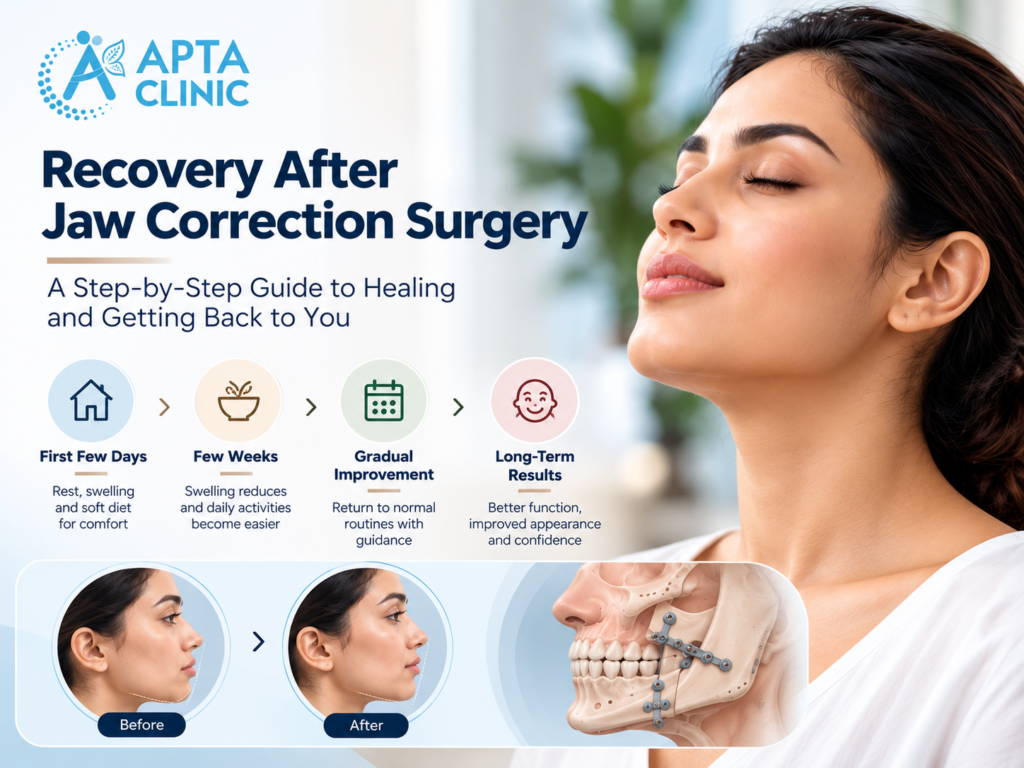
Recovery is a process rather than a single date. The initial swelling improves over time, while bone healing, changes in sensation and orthodontic treatment can continue for much longer.
The exact timeline depends on whether one jaw or both jaws are treated, the complexity of surgery, your health and how healing progresses.
The first few days
Swelling, bruising, discomfort and jaw stiffness are common after surgery. Your mouth may feel tight, and eating can be difficult at first. The team will explain how to manage discomfort, keep your mouth clean and take any prescribed medicines.
Follow the surgeon’s instructions on drinking, nutrition, oral hygiene and activity. Contact the treating team if symptoms are more severe than expected or you are unsure whether a symptom is normal.
The first few weeks
Swelling usually reduces gradually, but it may remain noticeable for several weeks. Some patients experience temporary numbness or tingling around the lips, chin, cheeks, teeth or other areas, depending on the operation.
A liquid, puréed or soft diet may be required for a period while the jaw heals. Do not move to harder foods simply because you feel better; the timing should come from your surgical team.
You may also have follow-up visits to review healing, oral hygiene and your bite. If you have braces, your orthodontist will explain how treatment continues after surgery.
Returning to work, study and daily activities
The time away from work or study varies. It depends on the extent of surgery, the demands of your routine and your recovery. Physically demanding work may require a different return plan from desk-based work.
Ask your surgeon when you can safely drive, exercise, lift heavy objects or return to contact sports. Avoid activities that could put the healing jaw at risk until you are cleared to resume them.
Longer-term healing
Bone healing continues beyond the first few weeks. The final appearance and bite may take time to settle as swelling decreases and orthodontic treatment progresses. Changes in sensation can also take time to improve, and in some cases they may persist.
Keep your follow-up appointments even if you feel well. They allow the treatment team to monitor healing, review your bite and adjust the plan if needed.
Risks and Possible Complications
Orthognathic surgery is a significant operation. It can help selected patients with skeletal jaw problems, but it also has risks. Your surgeon should explain which risks apply to the planned procedure and how they will be managed.
Possible complications include:
- Bleeding or infection.
- Reactions or complications related to general anaesthesia.
- Swelling, pain or difficulty opening the mouth during recovery.
- Temporary or persistent changes in sensation, including numbness or tingling.
- Dental injury or problems with the bite.
- Delayed healing or changes in the position of the jaw during healing.
- The need for further treatment or an adjustment to the treatment plan.
The list is not exhaustive, and the likelihood of each complication varies. Ask about the risks specific to your operation rather than relying on a general statement that surgery is safe.
Practical ways to prepare for recovery
Before surgery, ask your care team what you will need at home. Helpful preparations may include:
- Foods that fit the prescribed liquid or soft diet.
- A plan for getting enough fluids and nutrition.
- Prescribed medicines and clear instructions for taking them.
- Supplies recommended for oral hygiene.
- Transport home and help during the first few days.
- A written schedule for follow-up appointments.
These are general preparations. Your surgeon’s advice takes priority because the requirements differ by procedure.
When should you contact a clinician urgently?
Follow the emergency and aftercare instructions provided by your surgical team. Seek urgent medical care for difficulty breathing, uncontrolled bleeding, rapidly increasing swelling or another severe or rapidly worsening symptom. Contact your surgeon promptly for fever, discharge from the wound, worsening pain or concerns about hydration or nutrition.
If you have not had surgery and develop a sudden jaw or facial change after an injury, seek timely medical assessment. Do not treat an acute injury as a routine cosmetic concern.
Cost of Orthognathic Surgery in Mysore
The cost of jaw correction surgery varies with the procedure and the care required. A treatment plan involving one jaw may have different costs from a more complex plan involving both jaws. Orthodontic treatment, investigations, hospital or facility charges, anaesthesia, medicines and follow-up can also affect the overall amount.
Before making a decision, ask for an itemised estimate and clarify which elements are included. Ask whether orthodontic care is billed separately and whether additional costs may arise during recovery.
Insurance coverage depends on the policy, exclusions and the medical reason for treatment. Do not assume that corrective jaw surgery is automatically covered or excluded. Check with your insurer and request confirmation for your specific treatment plan.
APTA Clinic’s publicly available page does not provide a verified, procedure-specific price for every type of orthognathic surgery. Contact the clinic to enquire about current consultation fees, procedure availability and costs.
How Does Jaw Misalignment Affect Everyday Life?
Jaw misalignment can influence more than facial appearance; it may also affect everyday comfort and oral function. Some people experience difficulty biting or chewing food, uneven tooth contact, jaw discomfort or challenges closing their lips comfortably. In certain cases, differences in jaw position can contribute to noticeable facial asymmetry or uneven wear on the teeth. The severity of these concerns varies, and similar symptoms can have other causes. A dental or maxillofacial specialist can assess the bite, jaw movement and facial structure to identify the underlying issue. Understanding how jaw alignment affects daily activities helps patients make informed decisions about appropriate treatment and whether further evaluation is necessary.
Is APTA Clinic the Right Place to Start?
APTA Clinic lists orthognathic surgery among its facial surgery services in Mysore. Its existing service page describes corrective jaw surgery as an option for selected skeletal and dental irregularities that cannot be managed through orthodontics alone.
If you are considering an assessment, explain your main concern: for example, difficulty with your bite, a jaw that appears significantly forward or backward, or a known skeletal discrepancy. Ask which specialist will evaluate you, whether orthodontic coordination is needed and what investigations may be recommended.
A consultation should clarify whether the concern is mainly dental, skeletal or a combination. It should also explain the likely treatment stages, risks, alternatives, recovery requirements and costs before you decide whether to proceed.
Contact APTA Clinic
- Phone: +91 7411 707 555
- Email: aptaclinics@gmail.com
- Location: Krishnamurthy Puram, Mysore, Karnataka
- Website: APTA Clinic
Frequently Asked Questions (FAQs)
It may be considered for people with a significant skeletal jaw discrepancy that affects the bite or function and cannot be adequately corrected with orthodontics alone. An examination is needed to determine whether surgery is appropriate.
It may help when the underbite is caused by the position of the jawbones. If the problem is mainly related to tooth position, orthodontic treatment may be enough. Assessment helps distinguish between these causes.
recommending a treatment plan.
Braces move teeth but do not reposition fully developed jawbones. They can correct many dental problems, but a significant skeletal discrepancy may need a combined orthodontic and surgical approach.
It can involve the upper jaw, the lower jaw or both. The choice depends on the location and nature of the skeletal discrepancy.
The timeline includes assessment, orthodontic preparation where needed, surgery, healing and possible post-operative orthodontics. It can extend over many months or longer. Your treatment team should provide a personalised estimate.
Initial swelling and discomfort usually improve gradually over the first few weeks, but bone healing and orthodontic treatment take longer. The time needed to return to normal activities varies by procedure and individual recovery.
Your surgeon may recommend a liquid, puréed or soft diet during early healing. The type of food and the time needed before advancing the diet depend on your operation. Follow the plan provided by your care team.
Repositioning the jaw can change facial proportions as well as the bite. The extent of change depends on the planned movements and individual anatomy. Ask the surgeon to explain the likely functional and appearance-related changes without treating a predicted result as a guarantee.
APTA Clinic lists locations in Krishnamurthy Puram and Vijayanagar, Mysore.