
What Causes an Itchy, Flaky Scalp? Common Scalp Conditions and Treatment Options
- Home
- Blog
- About Us
An itchy scalp with visible flakes is often associated with dandruff, but that is not the only possible cause. Seborrheic dermatitis, eczema, psoriasis, reactions to hair-care products and certain scalp infections can produce similar symptoms.
The pattern matters. Small white flakes without significant redness may have a different explanation from thick scales, painful patches or itching accompanied by hair loss. Identifying the likely cause helps determine whether a change in hair-care routine is enough or whether a dermatologist should assess the scalp.
What Causes an Itchy, Flaky Scalp?
Scalp itching and flaking occur when the skin becomes irritated, inflamed or sheds visible scales. The underlying reason can vary from person to person.
Common causes include dandruff, inflammatory skin conditions, sensitivity to hair products and infections affecting the scalp.
Dandruff
Dandruff is a common cause of flakes in the hair and on clothing. It may also make the scalp itchy. It is not simply a sign of poor hygiene, and frequent washing does not always eliminate it.
Dandruff can be associated with oily skin, individual skin sensitivity, hair-care habits and the activity of naturally occurring microorganisms on the skin. Mild cases can often be managed with an appropriate anti-dandruff shampoo used according to its instructions.
If the flakes persist despite suitable self-care, or the scalp becomes very itchy, red or swollen, seek medical advice.
Seborrheic dermatitis
Seborrheic dermatitis is an inflammatory skin condition that commonly affects oily areas, including the scalp. It can cause itching and white or yellowish scales that may look dry or greasy.
Some people also develop flaky patches around the eyebrows, sides of the nose or behind the ears. Symptoms may improve and return over time.
Dandruff is often considered a mild form of seborrheic dermatitis. More persistent or inflamed symptoms may need a treatment plan tailored to the affected areas and severity.
Scalp psoriasis
Scalp psoriasis can cause well-defined patches with thick scales. The affected skin may look red, darker or otherwise different from the surrounding skin, depending on the person’s skin tone.
The scales can appear silvery-white, and itching may range from mild to severe. Scratching or forcibly removing thick scales can cause bleeding and may contribute to temporary hair loss.
Psoriasis can resemble dandruff, so persistent thick scaling or inflamed patches deserve assessment rather than repeated attempts to scrape the flakes away.
Eczema and contact dermatitis
Eczema can make the scalp dry, itchy and inflamed. Contact dermatitis occurs when the skin reacts to a substance it encounters, such as an ingredient in hair dye, shampoo, styling products or fragrances.
A reaction may cause itching, redness, burning, scaling or, in some cases, swelling and blisters. Symptoms that begin soon after introducing a new product may suggest irritation or an allergic reaction, although the timing alone cannot confirm the cause.
Stop using a product that appears to trigger a reaction. Seek medical advice if the irritation persists or becomes significant. Facial swelling or difficulty breathing after a product exposure requires emergency medical care.
Scalp ringworm
Scalp ringworm, also called tinea capitis, is a fungal infection. It may cause itchy, scaly patches and broken hairs or areas of hair loss. Some cases develop marked inflammation or tender, swollen areas.
Unlike ordinary dandruff, scalp ringworm usually needs medical treatment. Shampoo alone is generally not sufficient to treat the infection.
If you notice patchy hair loss with scaling, or a painful or swollen scalp, arrange a medical assessment. Avoid sharing combs, brushes or other personal items while an infectious condition is being investigated.
Irritation from hair-care products
Shampoo, conditioner, hair dye, oils, gels and styling sprays can sometimes irritate the scalp. Product residue left behind after washing may also contribute to discomfort in some people.
If itching began after changing products, review what you introduced and avoid repeatedly applying products that make the symptoms worse. Rinse hair thoroughly and use products according to their directions.
Persistent symptoms should not automatically be blamed on a product, particularly if there are sores, thick plaques or hair loss. Another scalp condition may need to be considered.
Dry Scalp vs Dandruff: What's the Difference?
Dry scalp and dandruff can both cause visible flakes and itching, so it is not always easy to tell them apart at home.
A dry scalp may be associated with tightness, dryness or fine flakes, particularly when the skin is irritated by washing habits or products. Dandruff may produce more noticeable flakes and can occur with either oily or dry-feeling skin.
Seborrheic dermatitis may cause greasy or yellowish scales, while psoriasis can produce thicker, more defined patches. These are general patterns, not a reliable way to diagnose yourself.
If you are unsure which condition you have, or if the symptoms keep returning, a dermatologist can examine the scalp and advise whether further evaluation is needed.
How Can You Care for an Itchy, Flaky Scalp at Home?
For mild flaking without warning signs, a few practical steps may help.
Choose an appropriate shampoo
An over-the-counter anti-dandruff shampoo may help with mild dandruff. Depending on the product, active ingredients can include ketoconazole, selenium sulfide, salicylic acid or other ingredients intended to control flakes.
Different shampoos work in different ways. Follow the product label carefully, including how often to use it and how long to leave it on the scalp before rinsing. A shampoo suitable for one person may not be suitable for another.
If you have a sensitive scalp, coloured hair or a condition such as psoriasis, ask a pharmacist or clinician for guidance about product selection.
Wash according to your scalp and hair type
There is no single washing schedule that suits everyone. An oily scalp may need more frequent washing, while some hair types become dry with frequent shampooing.
Use a gentle technique and avoid scratching with your fingernails. Rinse thoroughly to reduce the chance of product residue irritating the skin.
Avoid scratching and picking at scales
Scratching can damage the skin and make inflammation worse. It may also cause bleeding or temporary hair loss in areas where the scalp is already inflamed.
If the urge to scratch is persistent, focus on finding and treating the cause rather than repeatedly removing flakes.
Review recently introduced products
Think about whether the symptoms started after changing your shampoo, hair dye, oil or styling routine. Temporarily avoiding a suspected irritant may help, but ongoing or severe symptoms need assessment.
Avoid applying harsh household remedies or combining multiple medicated products without advice. More products do not necessarily mean better results.
When Should You See a Dermatologist?
Consider a dermatology appointment if:
- Itching or flaking persists despite using an appropriate anti-dandruff shampoo as directed.
- Your scalp is very itchy, red, swollen or painful.
- Thick scales, persistent plaques or sores develop.
- You notice patchy hair loss or broken hairs along with scaling.
- Symptoms spread to the face, ears or other areas.
- The problem repeatedly returns or affects sleep and everyday activities.
- You suspect an allergic reaction or are unsure whether the symptoms are caused by dandruff.
Seek prompt medical attention if the scalp becomes severely painful, develops significant swelling, produces pus or is accompanied by fever. Rapidly worsening symptoms may require more urgent evaluation.
These signs do not all indicate the same condition. A clinical assessment helps determine what is happening and which treatment, if any, is appropriate.
What Happens During a Scalp Consultation?
A clinician may ask when the itching began, how the flakes look, whether symptoms come and go, and which shampoos or hair products you use. They may also ask about previous skin conditions, medicines and changes in hair growth.
The scalp is then examined for scaling, redness, inflammation, broken hairs or other visible changes. In many cases, the history and examination provide useful clues. Additional tests may be considered if an infection or another condition is suspected.
Treatment depends on the cause. It may involve an appropriate shampoo, medication applied to the scalp, prescription treatment or other care selected for the diagnosed condition. Not everyone needs the same treatment.
If you have already tried several products, bring their names or packaging to your appointment. This can help the clinician understand what you used and whether it caused irritation or provided any relief.
How to Tell the Difference Between Dandruff, Dry Scalp and Scalp Psoriasis
Dandruff, dry scalp and scalp psoriasis can all cause itching and visible flakes, which makes it difficult to identify the problem by looking at the hair alone. However, there may be differences in how these conditions appear and feel. Dandruff is often associated with loose white or yellowish flakes and may occur alongside an oily or irritated scalp. A dry scalp may produce smaller, dry flakes and a feeling of tightness, particularly when the skin loses moisture. Scalp psoriasis, on the other hand, may cause thicker, more noticeable patches covered with white or silvery scales. Some people also experience redness, soreness or itching around the affected areas. These conditions can sometimes overlap, and their symptoms are not always easy to distinguish. Rather than assuming every white flake is dandruff, consider how long the problem has lasted, whether the scalp is inflamed and whether similar patches appear around the ears, hairline or other parts of the body. A dermatologist can examine the scalp and help identify the condition responsible for the flaking.
Can Hair Dye, Shampoo and Styling Products Cause an Itchy Scalp?
An itchy scalp does not always begin with dandruff or a pre-existing skin condition. Sometimes, a reaction to a hair-care product is responsible. Hair dyes, shampoos, conditioners, fragrances, gels, sprays and styling products contain ingredients that may irritate sensitive skin or trigger allergic contact dermatitis in some individuals. You might notice itching, redness, burning, dryness or a rash after introducing a new product. Hair dye reactions can sometimes appear beyond the scalp, including around the hairline, ears, forehead and neck. The reaction may not occur immediately, so think about products you have recently started using or changed. Stop using a suspected product if it causes irritation, and avoid repeatedly applying it to see whether the reaction returns. Choose gentle, fragrance-free products where appropriate, but remember that even products labelled as gentle can cause reactions in some people. If symptoms continue, become uncomfortable or involve swelling or significant inflammation, seek medical advice. A dermatologist can help determine whether the problem is product-related and whether further evaluation is needed.
Why Scratching an Itchy Scalp Can Make the Problem Worse
When your scalp feels itchy, scratching may provide temporary relief. However, repeatedly rubbing or scratching the affected area can increase irritation and make the skin more uncomfortable. Vigorous scratching may damage the skin surface, create small wounds and sometimes lead to crusting or secondary infection. It can also disturb thick scales and make an already inflamed scalp more sensitive. Some people continue scratching without noticing it, particularly while working, watching television or sleeping. Instead of using your nails to remove flakes, handle your scalp gently when washing and avoid forceful brushing. Keep your fingernails clean and try not to pick at crusted or inflamed areas. More importantly, persistent itching should not be managed by repeatedly scratching or changing shampoos without understanding the cause. Dandruff, psoriasis, eczema, allergic reactions and fungal infections may all require different approaches. Addressing the underlying condition is more useful than repeatedly trying to suppress the sensation of itching.
Why the Right Treatment Depends on the Cause of Scalp Flaking
Not every itchy, flaky scalp responds to the same shampoo or topical product. A treatment that helps one condition may be ineffective or unsuitable for another. For example, dandruff and seborrheic dermatitis may be managed with specific anti-dandruff or medicated shampoos, while scalp psoriasis may require treatments that address thicker scales and inflammation. Contact dermatitis may improve when the triggering product is identified and avoided. A fungal scalp infection, however, may require prescription antifungal medication rather than shampoo alone. This is why repeatedly purchasing different products without understanding the cause can delay appropriate care. Even when a medicated shampoo is recommended, its active ingredient, frequency of use and contact time may differ depending on the product and the condition being treated. Follow the product instructions or your dermatologist’s advice rather than assuming that using it more often will produce faster results. If a product causes burning, worsening irritation or a new rash, stop using it and seek professional guidance. The aim is to control the underlying scalp problem while avoiding unnecessary irritation.
What Happens During a Dermatologist's Examination for an Itchy, Flaky Scalp?
A dermatology consultation can help identify why your scalp keeps itching or developing flakes, particularly when ordinary hair-care changes have not helped. The assessment generally begins with questions about when the symptoms started, how often they occur, whether they worsen after washing or using particular products, and whether you have noticed pain, redness, scaling or hair loss. Your dermatologist may also ask about previous scalp conditions, allergies, medications and family history of skin problems. The scalp is then examined for the appearance, location and thickness of flakes, inflammation, crusting, broken hairs or patches of reduced hair density. In many cases, the history and physical examination provide useful diagnostic information. If the appearance is unclear, further evaluation may be considered. This could include examining affected hairs or skin samples, testing for a suspected fungal infection or, in selected cases, taking a small skin sample for closer examination. The next step depends on the findings rather than a standard treatment plan for everyone. Sharing details about products you use and treatments you have already tried can make the consultation more informative.
Can an Itchy, Flaky Scalp Cause Hair Loss?
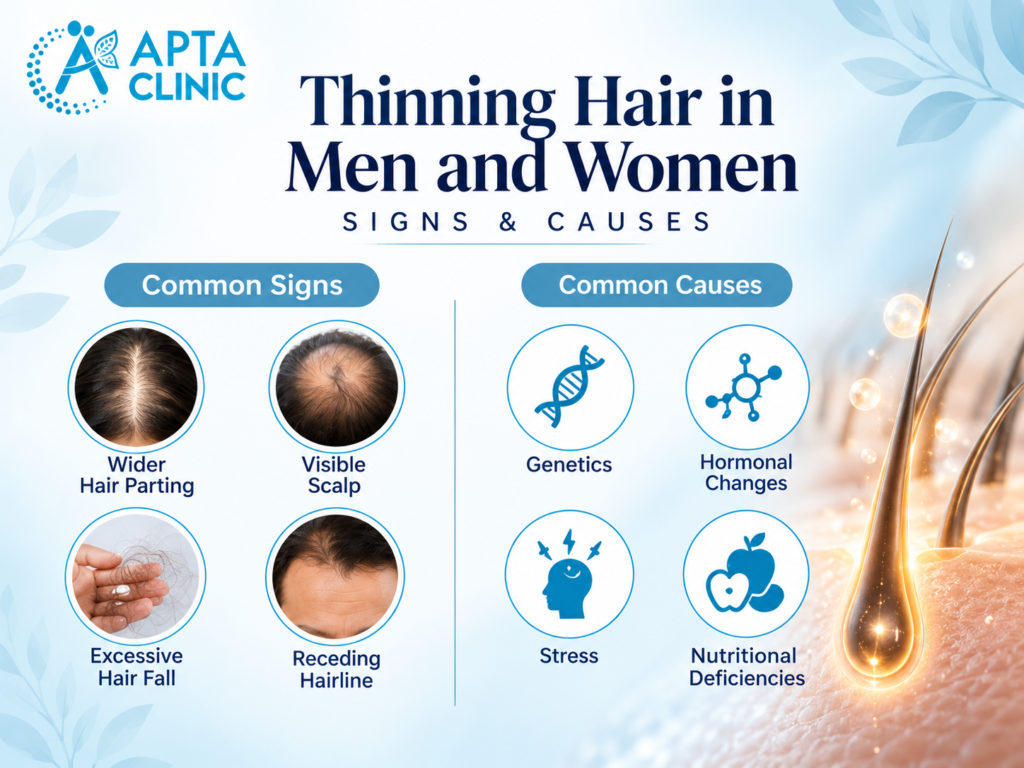
An itchy, flaky scalp does not necessarily mean you will experience hair loss, but certain underlying scalp conditions can affect hair growth. Persistent inflammation, repeated scratching and forcefully removing scales may damage fragile hair strands or contribute to temporary hair shedding. Conditions such as scalp psoriasis can cause temporary hair loss, while fungal infections such as scalp ringworm may cause itchy, scaly patches with broken hairs or visible bald spots. In some cases, untreated infections can lead to more lasting damage. Avoid scratching or picking at affected areas, especially if you notice redness, soreness, crusting or patches of missing hair. A dermatologist can examine your scalp, identify the underlying condition and recommend appropriate treatment. Addressing the cause early is important for protecting scalp health and reducing the risk of further hair damage.
Scalp and Hair Care at APTA Clinic in Mysore
If scalp itching and flaking persist, professional assessment may help identify whether the problem is dandruff, an inflammatory skin condition, a reaction to a product or another cause.
APTA Clinic lists dermatology and trichology among its services in Mysuru. Its trichology service page discusses hair and scalp concerns, including dandruff and itching. The appropriate assessment and treatment depend on your symptoms and clinical findings.
To enquire about a consultation, contact APTA Clinic directly.
APTA Clinic contact details
- Phone: +91 7411 707 555
- Website: https://aptaclinic.com/contact-us/
- Listed locations: Krishnamurthy Puram and Vijayanagar, Mysuru
- Published working hours: Monday to Sunday, 10:30 AM–7:30 PM
Confirm the correct branch, current appointment availability and consultation fee before visiting.
Frequently Asked Questions (FAQs)
Yes. Dandruff commonly causes visible flakes and itching. However, similar symptoms can occur with seborrheic dermatitis, psoriasis, eczema and other scalp conditions.
Regular shampoo may remove oil and product residue, but it may not control dandruff or another scalp condition. An appropriate anti-dandruff shampoo may help mild dandruff. Follow the product instructions and seek advice if symptoms persist.
Follow the instructions for the product you choose. The NHS advises seeking medical help if dandruff has not improved after at least four weeks of anti-dandruff shampoo use, or sooner if symptoms are severe, painful, very itchy, red or swollen.
Yes. Hair dye and other hair-care products can trigger irritation or allergic contact dermatitis in some people. Stop using a suspected product and seek medical advice if symptoms persist or worsen.
Some scalp conditions can contribute to temporary hair loss or broken hairs, particularly when inflammation, infection or repeated scratching is involved. Patchy hair loss with scaling should be assessed by a clinician.
Seek an assessment if symptoms persist, become severe, involve painful or swollen areas, spread beyond the scalp, or occur alongside patchy hair loss. A dermatologist can help identify the cause and discuss suitable treatment.
Call +91 7411 707 555 or visit https://aptaclinic.com/contact-us/ to enquire about appointment availability, the appropriate location and consultation fees.