
HIFU vs Radiofrequency Skin Tightening: How Do These Treatments Differ in Mysore?
- Home
- Blog
- About Us
If you are exploring non-surgical skin tightening, you may have come across HIFU and radiofrequency (RF). Both use energy to heat tissue and may encourage collagen remodelling, but the way they deliver that energy is different.
HIFU uses focused ultrasound energy to target selected tissue depths. Radiofrequency uses electrical energy to generate heat in the treated tissue. The effects depend on the device, the treatment method and the skin concern being addressed.
Neither treatment is automatically the better choice for everyone. Someone concerned about mild looseness around the jawline may have different needs from someone looking to improve skin texture or fine lines.
This guide compares HIFU vs radiofrequency skin tightening, including how the procedures work, what results may be realistic, their risks and the questions worth asking before treatment. It also explains what to check if you are considering HIFU treatment in Mysore.
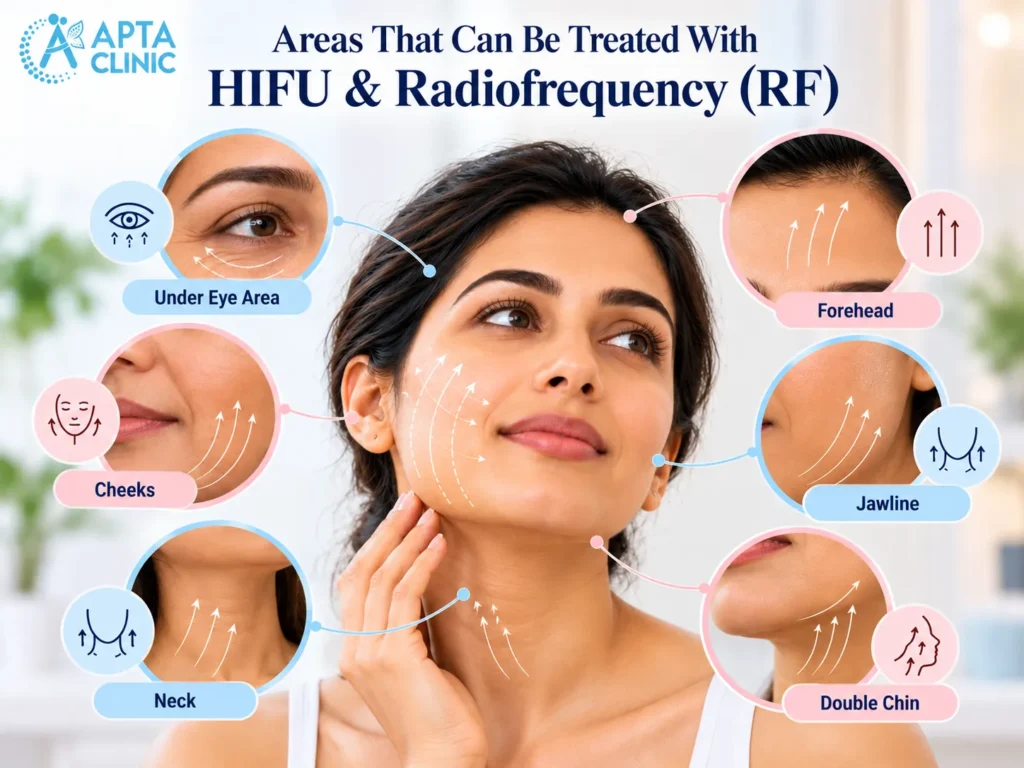
What Is HIFU Skin Tightening?
HIFU stands for High-Intensity Focused Ultrasound. It is a non-surgical aesthetic treatment that delivers focused ultrasound energy to selected depths beneath the skin.
The energy creates controlled areas of heat, triggering a tissue response that may encourage collagen remodelling. For some people, this can lead to a gradual, modest improvement in skin firmness or the appearance of lifting.
How does HIFU work?
During treatment, the provider uses a device to deliver focused ultrasound energy to planned areas. The depth and settings depend on the device and the treatment area.
HIFU is used for selected concerns involving skin laxity, including certain areas of the face and neck. It is not suitable for everyone, and the outcome depends on factors such as skin condition, anatomy, the degree of laxity and the treatment plan.
It is worth keeping expectations realistic. HIFU may help selected people with mild to moderate skin laxity, but it cannot reproduce the results of a surgical facelift when substantial lifting or skin removal is required.
What Is Radiofrequency Skin Tightening?
Radiofrequency skin tightening uses electromagnetic energy to generate heat in the skin and underlying tissues. This controlled heating may stimulate collagen remodelling and improve aspects of skin firmness or texture.
However, radiofrequency is a broad category of treatments rather than a single procedure. Conventional non-invasive RF and RF microneedling deliver energy in different ways and have different recovery and risk profiles.
Conventional radiofrequency
Non-invasive RF devices generally deliver energy through an applicator placed against the skin. The heating pattern depends on the technology used.
Depending on the device and treatment plan, conventional RF may be considered for selected concerns involving mild skin laxity, firmness or fine lines.
The device specifications matter. A provider should explain what technology is being used and what improvement is realistic for your particular concern.
Radiofrequency microneedling
RF microneedling is a separate procedure. It uses small needles to deliver radiofrequency energy into the skin.
Because the needles penetrate the skin, RF microneedling has a different risk and recovery profile from non-invasive RF. The two should not be treated as interchangeable simply because both use radiofrequency energy.
The U.S. Food and Drug Administration (FDA) issued a safety communication in October 2025 reporting serious complications associated with certain uses of RF microneedling, including burns, scarring, unwanted fat loss and nerve damage.
Anyone considering RF microneedling should discuss the specific procedure, potential complications, provider qualifications and alternatives before proceeding.
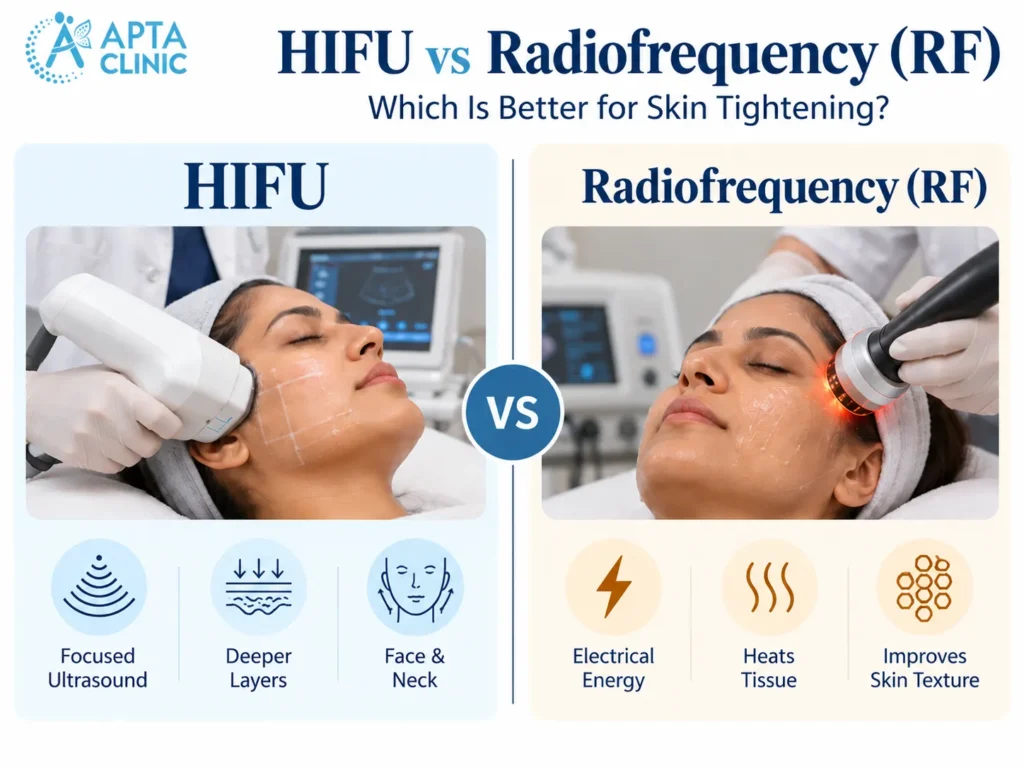
HIFU vs Radiofrequency: Key Differences
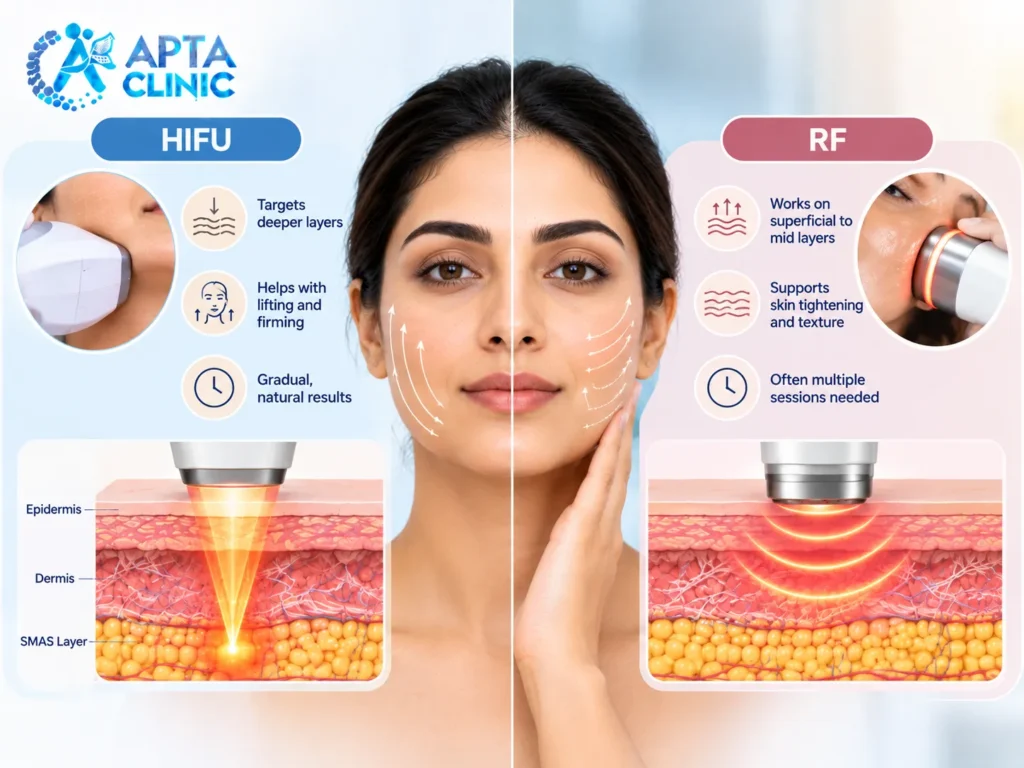
The main difference is how the energy reaches and heats the tissue. This influences how the provider plans treatment, but it does not mean one technology is always more effective than the other.
Comparison | HIFU | Radiofrequency |
Energy used | Focused ultrasound | Radiofrequency electrical energy |
Energy delivery | Focused at selected tissue depths | Heating pattern depends on the device |
Potential treatment goals | Selected skin-laxity and lifting concerns | Selected firmness, laxity or texture concerns, depending on the device |
Treatment method | Usually an external applicator; device designs vary | External applicator for conventional RF or needles for RF microneedling |
Results | May develop gradually | May develop gradually |
Number of sessions | Depends on the device, treatment plan and response | Depends on the technology and treatment plan |
Recovery | Often limited, but temporary discomfort or swelling may occur | Varies between conventional RF and RF microneedling |
Suitability | Depends on skin laxity, anatomy and treatment goals | Depends on the skin concern, device type, medical history and goals |
This is a general comparison. Actual treatment depth, settings, expected outcomes and recovery depend on the particular device and how it is used.
Which Treatment May Suit Your Skin Concern?
Rather than asking which treatment is universally better, start by identifying the concern you want to address. The appropriate option depends on what is causing the change in your skin.
If your main concern is skin laxity
HIFU may be considered for selected people seeking a modest improvement in facial or neck laxity. Some RF treatments may also help with mild looseness.
The extent of sagging matters. Significant loose skin may not respond sufficiently to a non-surgical procedure. If that is your concern, ask about realistic alternatives instead of assuming an energy-based treatment will provide a substantial lift.
If your concern is skin texture or fine lines
Some radiofrequency approaches are used for selected concerns involving skin texture and fine lines. RF microneedling may be considered in certain cases, but its risks and benefits need to be assessed separately from conventional RF.
HIFU and RF are not direct substitutes for every skin concern. Pigmentation, acne scarring, wrinkles and loss of facial volume may require different approaches depending on their causes.
If you prefer minimal downtime
Non-invasive HIFU and conventional RF may involve relatively little downtime for many people. Temporary redness, swelling, tenderness or discomfort can still occur.
RF microneedling involves needle penetration, so its recovery requirements can differ. Ask the provider about the exact procedure being offered rather than relying on general descriptions of radiofrequency treatment.
How Do Results, Discomfort and Downtime Compare?
Neither HIFU nor RF produces identical results for everyone. Changes may develop gradually as the skin responds to the treatment.
The degree of improvement depends on the device, treatment settings, area being treated, existing skin condition and individual response. A particular result or level of lifting cannot be guaranteed.
During treatment, you may experience warmth, tingling, pressure or discomfort. How it feels depends on the technology, the area being treated and your personal sensitivity. Tell the provider if the sensation becomes unexpectedly painful or feels like burning.
Before booking, ask these practical questions:
- When might I begin to notice a change?
- How will improvement be assessed?
- Is the recommended plan one session or several?
- What side effects are associated with this particular device?
- What recovery precautions will I need to follow?
- What are the options if the result is less noticeable than expected?
A suitable provider should explain the likely benefits and limitations without promising a particular degree of lifting.
What Are the Risks and Safety Considerations?
Non-surgical treatments still carry risks. The potential complications depend on the technology, device settings, treatment area and the provider’s experience.
Possible effects of energy-based skin tightening include temporary redness, swelling, tenderness or discomfort. Excessive or incorrectly delivered heat can cause burns or other tissue injury. The risk profile differs between HIFU, conventional RF and RF microneedling.
Before treatment, tell the provider about your medical history, medicines, allergies, previous aesthetic procedures and any implanted electronic device or metal in the relevant area. Ask whether any of these factors affect your suitability for the proposed treatment.
If you are considering RF microneedling, read the FDA’s safety communication and discuss the procedure’s specific risks and alternatives with a qualified healthcare professional.
Choose a provider who can explain the device being used, assess your skin and discuss how complications would be managed.
How Much Do HIFU and Radiofrequency Treatments Cost?
There is no single price for either treatment. The total cost depends on several factors:
- The device and treatment method.
- The area being treated.
- The extent of the skin concern.
- The number of sessions recommended.
- The provider and clinic.
- Whether follow-up appointments or additional treatments are included.
RF microneedling and conventional non-invasive RF may have different pricing because they are different procedures. Comparing only the cost of one session may not give you a useful picture of the overall expense.
APTA Clinic’s current HIFU pricing has not been verified for this article. Its availability of radiofrequency treatment should also be confirmed directly. Contact the clinic to check current services, pricing and appointment availability before making a decision.
How to Choose Between HIFU and Radiofrequency in Mysore
If you are comparing skin-tightening treatments in Mysore, begin with the concern you want to address rather than choosing a procedure based on online comparisons alone.
During a consultation, ask the provider to explain:
- What is contributing to your skin concern?
- Which treatment, if any, is appropriate for you, and why?
- What device and treatment method will be used?
- What level of improvement is realistic?
- What risks, side effects and recovery requirements apply?
- Are there suitable alternatives, including no treatment or a surgical option?
- What is the total expected cost?
The recommendation should account for your skin, medical history, goals and expectations. You should have enough information to weigh the potential benefits against the risks before deciding.
Exploring HIFU at APTA Clinic in Mysore
APTA Clinic has a dedicated page describing its HIFU treatment in Mysore. If you are considering this option, review the clinic’s HIFU service information and contact the clinic to enquire about current availability and appointments.
Radiofrequency treatment availability at APTA Clinic has not been verified for this article. The comparison above is intended to explain the technologies and does not imply that the clinic offers every type of RF procedure.
APTA Clinic contact details
- Phone: +91 74117 07555
- Location: Krishnamurthy Puram, Mysore. Confirm the correct branch address before visiting.
- Website: https://aptaclinic.com/
- Related service: HIFU treatment in Mysore
Before booking, ask which device is used, what assessment is required, what results may be realistic and what the treatment will cost.
The best next step is an individual assessment, not a decision based solely on which technology sounds more advanced. Understanding the cause of your skin concern will help you discuss the available options with greater confidence.
Medical information note: This article is for general educational purposes and does not replace personalised medical advice. Treatment suitability and outcomes vary. Consult a qualified healthcare professional before choosing an aesthetic procedure.
Frequently Asked Questions (FAQs)
Neither is universally better. HIFU uses focused ultrasound energy, while RF uses radiofrequency energy to heat tissue. The appropriate choice depends on the skin concern, treatment area, device and individual suitability.
HIFU delivers focused ultrasound energy to selected tissue depths. Radiofrequency generates heat according to the design of the device. Conventional RF and RF microneedling are also different procedures, so it is important to confirm which method is being proposed.
Not necessarily. The appearance beneath the chin may be influenced by skin laxity, fat distribution and other anatomical factors. HIFU or certain RF devices may be considered for selected concerns, but neither should be assumed to address every cause. An assessment can help determine the appropriate approach.
The number of sessions depends on the device, treatment area, skin condition and treatment plan. Some approaches may involve one session, while others may require a series. Ask the provider to explain the recommended schedule and why it suits your goals.
The sensation varies by device, treatment area and personal sensitivity. You may experience warmth, tingling, pressure or discomfort. Ask about ways to manage discomfort and inform the provider if you experience intense pain or a burning sensation.
Recovery depends on the exact procedure. Non-invasive HIFU and conventional RF may involve limited downtime for many people, although temporary redness, swelling or tenderness can occur. RF microneedling penetrates the skin and has a different recovery and risk profile.
Prices vary according to the device, treatment area, number of sessions and provider. Contact the clinic for current pricing and compare the complete treatment plan rather than the price of a single session.
APTA Clinic has a dedicated page for HIFU treatment in Mysore. Radiofrequency treatment availability has not been verified for this article. Contact the clinic at +91 74117 07555 to confirm the treatments currently offered and enquire about an appointment.