
Facial Asymmetry: Causes, Treatment Options and When to Consult a Specialist
- Home
- Blog
- About Us
One side of your face may look different from the other. Perhaps your chin sits off-centre, your jawline looks uneven, or one cheek appears fuller. These differences are common and do not automatically mean that treatment is necessary.
Facial asymmetry treatment starts with identifying the reason for the difference. The cause may involve bone structure, jaw alignment, teeth, soft tissue or facial movement. Each requires a different assessment, and the appropriate treatment depends on the findings.
APTA Clinic lists facial asymmetry correction among its facial surgery services in Mysore. If you are concerned about an uneven facial appearance, an assessment can help you understand the available options and whether any treatment is appropriate.

What Is Facial Asymmetry?
Facial asymmetry refers to differences in the shape, size, position or contour of features on the two sides of the face. It may affect the jaw, chin, cheeks, eyes or other facial structures.
Some differences are subtle and have no effect on everyday function. Others may be more noticeable or occur alongside bite problems, difficulty moving facial muscles or changes following an injury.
The aim of an assessment is to understand what is causing the difference. Treatment should address the underlying concern rather than focus only on how the face looks in a photograph.
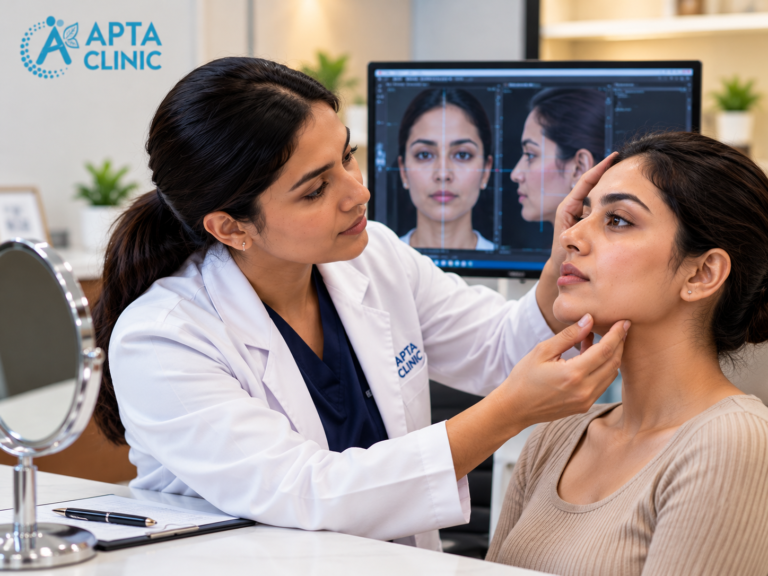
Assessing facial asymmetry involves examining the face as a whole rather than focusing on a single feature. A clinician may evaluate facial proportions, jaw position, chin alignment, bite function and the movement of facial muscles, depending on the patient’s concerns. Medical history, previous injuries and the timeline of changes can also help guide the assessment. If a structural or dental issue is suspected, further evaluation or referral to an appropriate specialist may be recommended. This assessment helps determine whether the asymmetry is a normal variation, requires monitoring or may benefit from a suitable treatment plan.
What Causes Facial Asymmetry?
Facial asymmetry can develop naturally or occur because of a structural, dental, muscular or acquired condition.
Differences in bone structure
The jaw, chin and cheekbones influence the shape and proportions of the face. Differences in their development or position can make one side appear more prominent than the other.
When the jaw is involved, the difference may also affect how the upper and lower teeth meet. An examination can help determine whether the concern is primarily structural or has another cause.
Dental and jaw alignment
The position of the teeth and the relationship between the jaws can influence the appearance of the lower face. An uneven bite may occur alongside jaw asymmetry.
If you notice both facial imbalance and difficulty with chewing or bite alignment, a dental or orthodontic assessment may be appropriate. Some cases require input from more than one specialist.
Soft-tissue differences
Fat, muscle and other soft tissues contribute to facial contours. Differences in tissue volume can make one cheek, temple or side of the face look fuller.
Selected soft-tissue concerns may be suitable for non-surgical treatment. These approaches cannot correct every underlying structural problem.
Previous injury or surgery
An injury involving facial bones or soft tissues can change facial contours. The effects depend on the structures involved and how they heal.
If facial asymmetry develops after an accident, seek medical assessment, particularly when there is pain, swelling, a change in vision or difficulty moving the jaw.
Differences in facial movement
Sometimes the face appears uneven mainly when smiling, speaking or making expressions. This may involve facial muscle activity or a neurological condition rather than bone structure.
New facial weakness or drooping should be assessed urgently. It should not be treated as a routine cosmetic concern.
Surgical correction
The choice depends on what is causing the asymmetry.
Consideration | Non-surgical treatment | Surgical treatment |
Potential use | Selected soft-tissue or contour concerns | Selected structural or skeletal concerns |
Assessment | Needed before treatment | Needed for diagnosis and surgical planning |
Recovery | Depends on the procedure | Depends on the operation and individual healing |
Limitations | Cannot correct every structural difference | Involves surgical risks and recovery |
Suitability | Determined individually | Determined individually |
Neither approach is suitable for every concern. Ask the treating professional why a particular treatment is being considered, what it can realistically achieve and what alternatives are available.
When Should You Consult a Specialist?
Consider an appointment if a persistent facial difference concerns you, your jaw or chin appears misaligned, your bite feels uneven, or an old injury has changed your facial contours.
An assessment may also be useful when the asymmetry has become more noticeable over time or affects everyday functions such as chewing.
You do not necessarily need treatment for mild asymmetry. A specialist may explain that observation is reasonable if the difference does not require intervention.
When to seek emergency help: Sudden facial drooping or weakness, especially when accompanied by arm weakness or difficulty speaking, can be a sign of stroke. Seek emergency medical help immediately rather than waiting for a routine appointment.
How Is Facial Asymmetry Assessed?
The first step is a clinical evaluation of the facial difference and its possible cause.
Depending on your concern, the assessment may include:
- A discussion of when the asymmetry began and whether it has changed.
- Review of relevant medical history, previous injuries, dental treatment and earlier procedures.
- Examination of facial proportions, jaw position and movement.
- Assessment of the bite when dental or skeletal alignment may be involved.
- Photographs or medical imaging when clinically indicated.
The investigations needed vary from one person to another. Not everyone requires scans or surgery.
APTA Clinic’s existing service information describes facial analysis and investigations such as photographs, scans and bite analysis as part of its assessment approach. The specific investigations appropriate for an individual should be determined clinically.
What Are the Treatment Options for Facial Asymmetry?
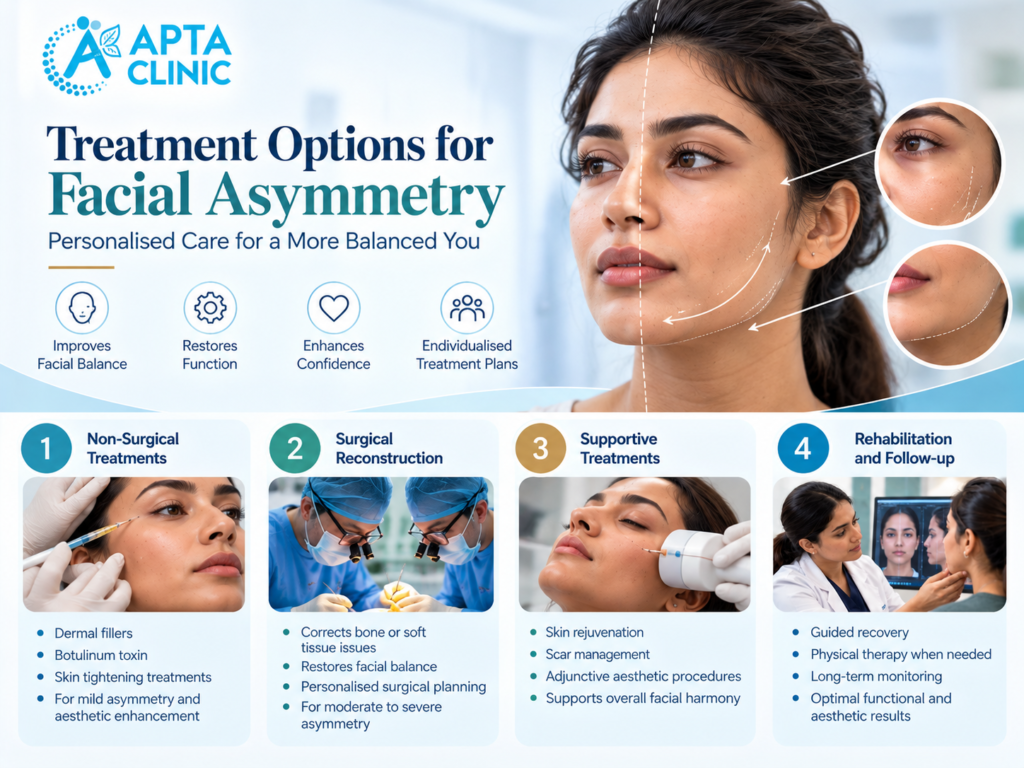
There is no single treatment that corrects every type of facial asymmetry. The appropriate approach depends on the cause, the affected structures, functional concerns and the individual’s goals.
Non-surgical treatment
Selected differences in soft-tissue volume or contour may be considered for non-surgical aesthetic treatment. Depending on the assessment, a clinician may discuss injectable treatments or other suitable procedures.
These treatments have limitations and potential risks. They cannot reposition facial bones or correct every significant jaw or skeletal difference.
Dental or orthodontic treatment
When tooth position or bite alignment contributes to the facial imbalance, dental or orthodontic evaluation may be appropriate.
The need for treatment depends on the findings. A cosmetic procedure alone may not address an underlying bite problem.
How Facial Asymmetry Can Affect Daily Life
Facial asymmetry affects people differently. For some, it is a minor difference in facial proportions that does not interfere with everyday activities. For others, concerns about facial appearance may affect confidence, while jaw-related asymmetry can sometimes be associated with difficulties in biting, chewing or speaking. Understanding whether the concern is primarily aesthetic, functional or both helps guide the next steps. An appropriate clinical assessment can help clarify the available options without assuming that every difference requires correction.
Facial Asymmetry and Jaw Alignment
The position of the upper jaw, lower jaw and chin can influence the balance of the face. In some cases, an uneven bite, differences in jaw development or a shift in jaw position may contribute to visible asymmetry. A dental or maxillofacial specialist can evaluate these factors and determine whether further assessment is appropriate. Treatment recommendations depend on the underlying findings; cosmetic procedures alone may not address an asymmetry caused by a structural jaw problem.
What Factors Influence the Choice of Treatment?
Choosing an approach to facial asymmetry involves more than considering how the face looks in a photograph. A clinician may consider when the asymmetry developed, whether it is changing, the structures involved, any functional difficulties, previous injuries and the person’s expectations. Depending on these factors, the next step may involve observation, further investigation, a dental assessment or discussion of suitable surgical or non-surgical options. The benefits, limitations, possible complications and recovery requirements should be explained before a decision is made.
Risks, Recovery and Expected Results
The risks depend on the procedure. Non-surgical treatments may cause temporary reactions or other complications specific to the treatment. Surgery may involve bleeding, infection, scarring, changes in sensation, healing difficulties or an outcome that differs from expectations.
Recovery varies according to the procedure and individual healing. A selected non-surgical treatment may involve less downtime than surgery, while structural correction can require a longer recovery period.
Treatment aims to improve a specific concern, not to guarantee perfect symmetry. Natural differences between the two sides of the face are common, and the degree of improvement varies.
Your treating professional should explain the relevant risks, expected recovery and aftercare before treatment begins.
Preparing for a Facial Asymmetry Consultation
Before your appointment, note when you first noticed the difference and whether it has changed over time. Bring relevant dental or medical records, details of previous facial injuries or procedures, and a list of any symptoms such as jaw discomfort or difficulty chewing. You may also prepare questions about the likely cause, whether additional investigations are needed, which specialists may be involved and what outcomes are realistic. If you are considering an assessment at APTA Clinic, Mysore, contact the clinic first to confirm the availability of the appropriate specialist and consultation service.
Facial asymmetry can affect different parts of the face, and identifying the area involved helps determine what kind of assessment may be appropriate. Upper facial asymmetry may involve differences in eyebrow height or the position of the eyes. Midface asymmetry can involve the cheeks or nose, while lower facial asymmetry may affect the jawline, chin or alignment of the teeth. Some people have differences in soft-tissue volume, whereas others have variations in the underlying bone structure. These patterns can overlap, so a clinical examination is more useful than relying on a single photograph to identify the possible cause.
The Role of Facial Proportions in Treatment Planning
Facial assessment involves looking at the relationship between different structures rather than evaluating one feature in isolation. The position of the chin, the shape of the jawline, the alignment of the teeth and the distribution of soft tissue may all influence the overall appearance of the face. A clinician may examine these features from different angles and consider functional concerns alongside aesthetic goals. The purpose is to understand which factors contribute to the perceived imbalance and whether any intervention is appropriate. Treatment planning should be individualised rather than based on a universal standard of facial symmetry.
Can Facial Asymmetry Change Over Time?
Facial asymmetry may remain stable for many years, or its appearance may change with growth, ageing, dental changes, injury or certain medical conditions. Changes in facial soft tissue can also make previously subtle differences more noticeable. A gradual change may warrant a planned clinical assessment, particularly if it is accompanied by jaw discomfort, bite changes or difficulties with facial movement. Sudden asymmetry is different: new facial drooping or weakness requires immediate medical attention, especially when accompanied by speech difficulties, numbness or vision changes.
What Questions Should You Ask About Facial Asymmetry Treatment?
A consultation is an opportunity to understand the concern and make an informed decision. Useful questions include: What might be causing the asymmetry? Does it involve the teeth, jaw, soft tissue or another structure? Are additional examinations or investigations necessary? Which specialist would be appropriate? What are the benefits and limitations of the available options? What risks, recovery requirements and follow-up appointments should be expected? Asking these questions can help clarify the treatment process and prevent decisions based solely on online images or advertised results.
Setting Realistic Expectations for Facial Asymmetry Correction
The outcome of any intervention depends on the underlying cause, the treatment selected and individual anatomical factors. Although some procedures may improve a specific difference in facial contour or alignment, perfect symmetry cannot be guaranteed. Treatment may also involve limitations, healing time or the need for follow-up care. Before proceeding, patients should understand what a proposed intervention is intended to address, which concerns may remain and whether the expected result aligns with their goals. A clear discussion of realistic outcomes is an important part of responsible facial treatment planning.
Facial Asymmetry Treatment in Mysore: Choosing the Next Step
People looking for facial asymmetry treatment in Mysore should begin by identifying whether their concern relates mainly to facial appearance, jaw alignment, dental function or a change in facial movement. The appropriate assessment may involve different clinical specialties depending on the findings. At APTA Clinic, Mysore, prospective patients can contact the clinic to confirm whether a suitable consultation or referral pathway is available for their concern. The decision about treatment should follow an appropriate assessment, with clear information about alternatives, limitations, risks and expected recovery.
Facial Asymmetry Treatment at APTA Clinic, Mysore
APTA Clinic lists facial asymmetry correction among its facial surgery services. Its published information describes assessment of facial structure and possible surgical and non-surgical approaches, depending on the nature of the concern.
The clinic has a location in Krishnamurthy Puram, Mysuru. Contact the clinic to confirm which specialist is appropriate for your concern, current appointment availability and whether the required service is available.
Arrange a consultation
If an uneven jawline, chin or other facial difference concerns you, contact APTA Clinic to discuss an assessment.
APTA Clinic, Mysuru
- Address: 1226/3B, Krishnaraja Boulevard Road, Krishnamurthy Puram, Mysuru, Karnataka 570004.
- Phone: +91 7411 707 555
- Email: aptaclinics@gmail.com
Ask the clinic about current consultation fees, appointment availability and any additional investigations that may be required.
This content is for general educational purposes and does not replace an individual medical assessment.
Frequently Asked Questions (FAQs)
Facial asymmetry can result from natural facial development, differences in bone structure, jaw alignment, dental position, soft-tissue distribution or previous injuries. A specialist assessment can help identify the likely cause.
Minor facial asymmetry is common and may not require treatment. Exercises or home remedies cannot reliably correct structural differences in facial bones or jaw alignment. The appropriate approach depends on the underlying cause.
Some soft-tissue or contour differences may be addressed with non-surgical treatments. However, these treatments cannot correct every skeletal or jaw-related concern. A clinical assessment helps determine which options may be suitable.
The appropriate specialist depends on the cause. A plastic and reconstructive surgeon may assess certain structural or soft-tissue concerns, while a dentist, orthodontist or oral and maxillofacial surgeon may be relevant when the jaw or bite is involved.
The cost depends on the cause, investigations required and treatment recommended. Contact APTA Clinic for current consultation fees and a personalised estimate. No single price applies to every case.
The timeline varies according to the treatment. Some non-surgical procedures may require little downtime, while surgical correction can involve a longer recovery period. Your treating specialist can explain the expected timeline for your specific treatment.
All surgical procedures carry risks. These may include bleeding, infection, scarring, changes in sensation and healing complications. A specialist should explain the potential benefits, risks and alternatives before you decide whether to proceed.
Yes. Differences in jaw development or alignment can affect the shape of the lower face and chin. If an uneven jaw is accompanied by bite problems or difficulty chewing, a dental or appropriate surgical assessment may be helpful.
APTA Clinic lists locations in Krishnamurthy Puram and Vijayanagar, Mysore.