
Dimple Creation Surgery in Mysore: What Patients Should Know Before the Procedure
- Home
- Blog
- About Us
Some people naturally have cheek dimples that appear when they smile. Others may consider creating a similar feature through cosmetic surgery.
Dimple creation surgery in Mysore, also called dimpleplasty, is an elective facial procedure that creates an indentation in the cheek. The procedure is generally performed from inside the cheek by modifying the relationship between the inner cheek tissues and the skin.
The position of the dimple, facial anatomy, healing and the person’s expectations can all affect the final appearance. Understanding these factors before treatment can help you decide whether a consultation is appropriate for you.
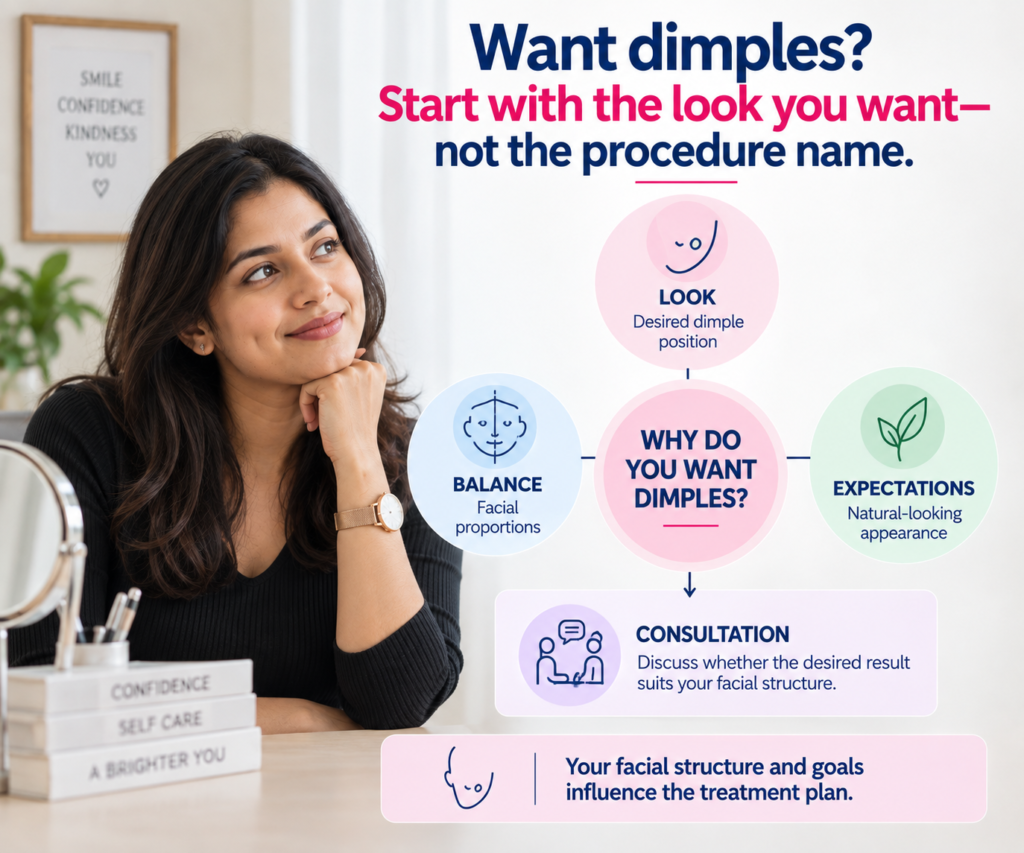
What Is Dimple Creation Surgery?
Dimple creation surgery is a cosmetic procedure designed to create a cheek indentation that resembles a natural dimple.
Natural dimples are associated with differences in the anatomy of the cheek. Dimpleplasty attempts to reproduce the appearance by creating a controlled connection between deeper cheek tissues and the skin.
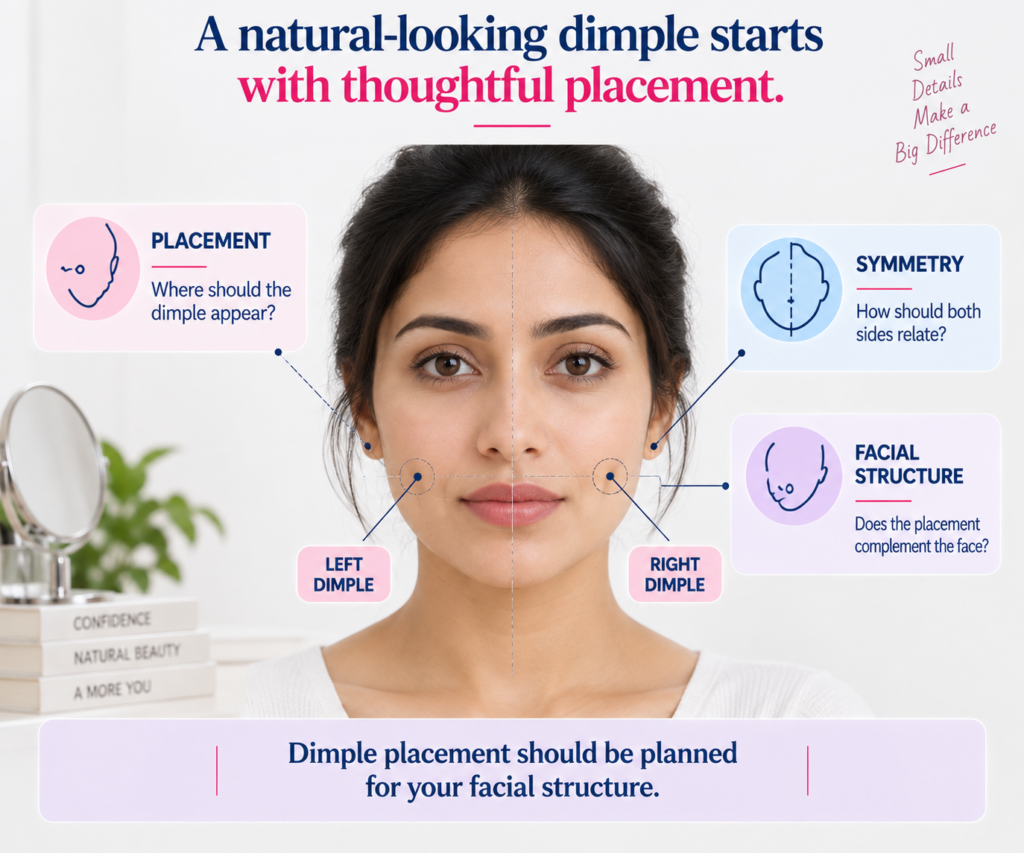
Unlike a natural dimple, a surgically created dimple is deliberately positioned. The proposed location and depth need to be considered in relation to the person’s facial structure.
The procedure is elective and is generally performed for aesthetic reasons.
Why Do People Consider Dimple Creation?
People may consider dimpleplasty because they like the appearance of cheek dimples and want this feature to become part of their smile.
The decision is personal. A photograph of someone else’s dimples can be useful for explaining what you like, but it cannot show exactly how the same dimple would look on a different face. Facial structure and tissue characteristics vary between individuals.
How Are Natural and Surgically Created Dimples Different?
Natural dimples result from individual facial anatomy. A surgically created dimple is produced by changing the relationship between tissues inside the cheek and the overlying skin.
A newly created dimple may look deeper or more noticeable during the early healing period. As swelling decreases and the tissues settle, its appearance can change.
For this reason, the appearance immediately after surgery should not be considered the final result.
Who May Be Considered for Dimple Creation Surgery?
Dimple creation is an individualized cosmetic procedure.
During an assessment, the surgeon may consider:
- Facial structure
- Cheek anatomy
- Skin and soft-tissue characteristics
- Desired dimple position
- Desired depth
- Whether one or both cheeks are being considered
- Previous facial procedures or injuries
- General health
- Expectations about symmetry
A person considering elective cosmetic surgery should have realistic expectations about what the procedure can achieve.
There is no facial structure that guarantees a particular result.
Why Does Facial Anatomy Matter?
The cheek contains muscles, soft tissue, nerves, ducts and other structures. Dimple creation therefore requires careful planning of the proposed location.
The position should be selected according to the person’s facial anatomy rather than copied directly from another person’s face.
This is one reason an in-person consultation is important before deciding on treatment.
Is There an External Scar?
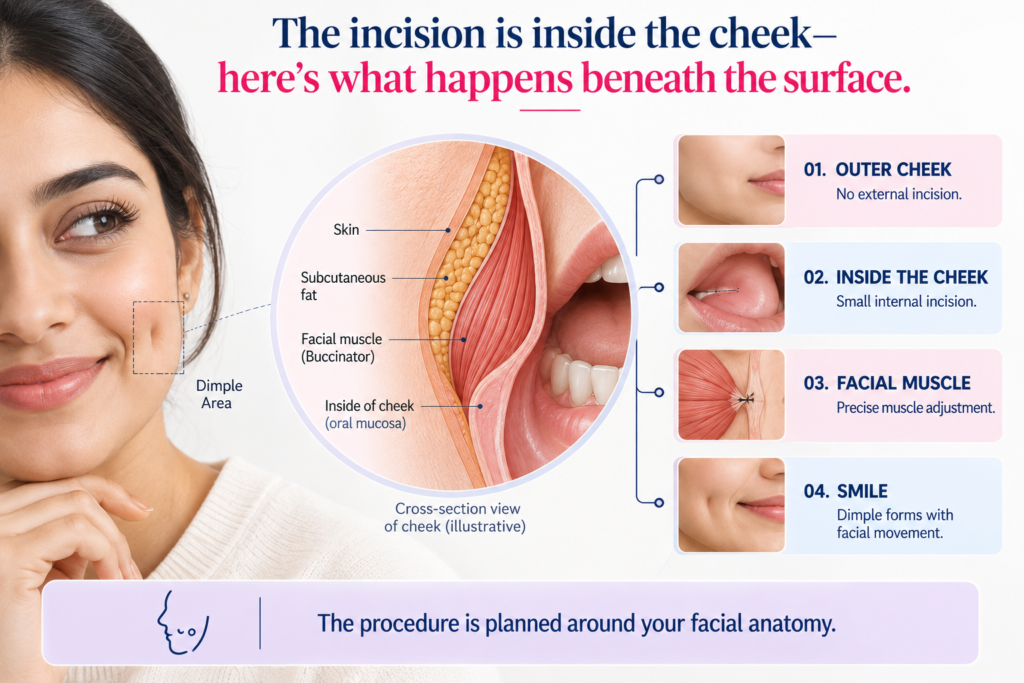
Dimpleplasty is generally approached from inside the cheek, so there may not be an obvious external facial incision.
APTA Clinic describes its technique as using a small incision inside the cheek and states that there are no external scars.
An incision inside the mouth is still a surgical wound, so oral care and the surgeon’s aftercare instructions remain important.
How Is Dimple Creation Surgery Generally Performed?
The exact technique can vary between surgeons.
Dimpleplasty is commonly performed through an incision inside the cheek. The surgeon creates a controlled connection between deeper cheek tissue and the skin so that the selected area becomes indented when the face moves.
Current ASPS information similarly describes dimpleplasty as an approach performed through the inside of the cheek, with technique varying between surgeons.
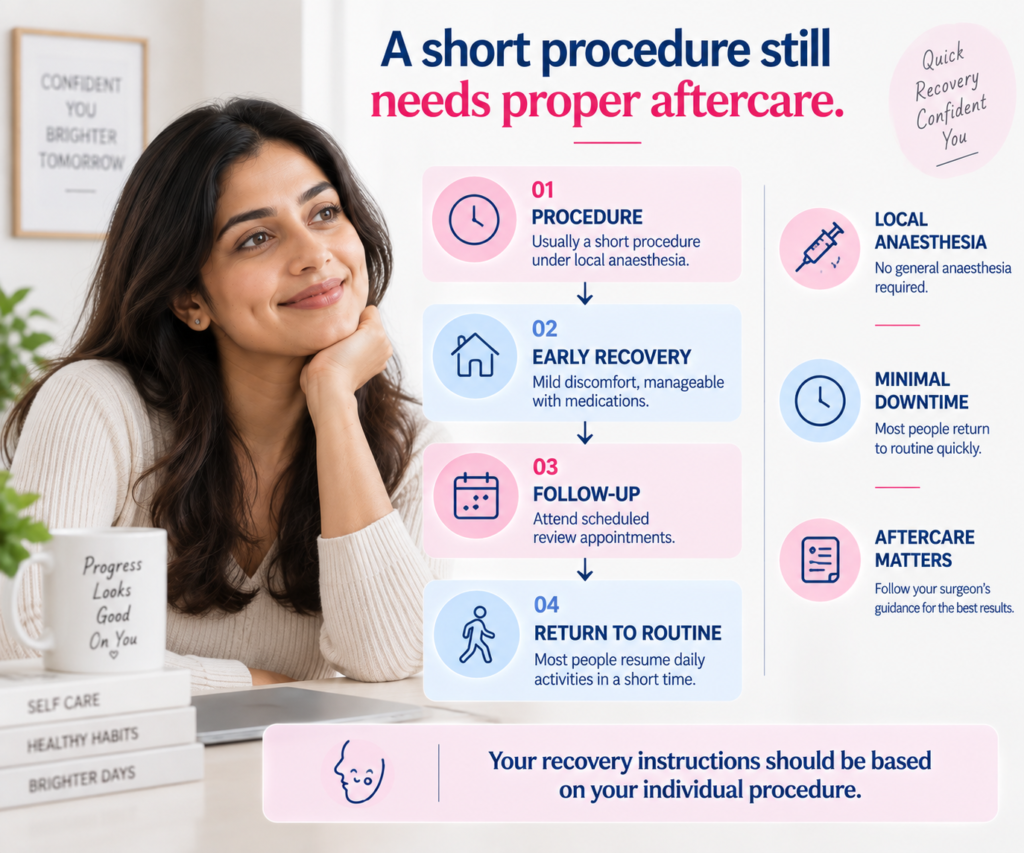
At APTA Clinic, the supplied information states that dimple creation involves a small incision inside the cheek and modification of the underlying facial tissues. It also states that the procedure is performed under local anaesthesia and takes approximately 20–30 minutes. Actual duration can vary between patients.
Is Dimple Creation Performed Under Local Anaesthesia?
According to the supplied APTA Clinic information, its dimple-creation procedure is performed under local anaesthesia.
Anaesthesia planning is discussed during consultation and depends on the procedure and the patient’s circumstances.
What Happens During a Dimple Creation Consultation?
The consultation should begin with what you want the dimple to look like.
You may discuss:
- Whether you want one dimple or two
- Where you would like the dimple positioned
- How prominent you want it to appear
- Whether you want it mainly visible while smiling
- Your facial proportions
- Your medical history
- Previous facial procedures
- Expectations about symmetry
- Recovery and aftercare
The surgeon can then assess your facial anatomy and explain whether the procedure is appropriate and what technique may be used.
This is also the time to ask about complications, healing, changes in appearance and what options may be available if you are dissatisfied with the result.
What Is Recovery Like After Dimple Creation?
Recovery differs between patients.
Swelling, tenderness or tightness can occur during the early healing period. The dimple may also appear deeper than expected at first. As the swelling decreases and the tissues heal, the appearance can change.
ASPS describes dimpleplasty as a procedure with relatively limited downtime, although recovery instructions vary according to the technique and surgeon.
APTA Clinic describes minimal downtime and a quick return to normal activities. Your own surgeon should provide the specific advice for work, exercise, diet and oral care.
Can the Dimple Look Too Deep at First?
Yes.
A newly created dimple can look deeper or more prominent during the early healing period. ASPS notes that this appearance may soften as healing progresses.
The supplied source also advises allowing time for the tissues to heal before judging the final appearance.
Will the Dimple Look Exactly Like a Natural Dimple?
Not necessarily.
The aim is to create a dimple that suits the person’s facial structure. The final appearance can be influenced by anatomy, tissue characteristics, the selected position and individual healing.
A surgeon should therefore discuss what is realistically achievable rather than promise an identical match to a natural dimple or a reference photograph.
Can the Two Dimples Be Perfectly Symmetrical?
Perfect symmetry cannot be guaranteed.
Faces are naturally not completely symmetrical, and healing may differ between the two sides. If two dimples are created, their positions can be planned with facial proportions in mind, but slight differences may remain.
If symmetry is important to you, discuss this before surgery.
Are Dimple Creation Results Permanent?
The long-term appearance can vary during the healing process.
Some dimpleplasty techniques are designed to produce a long-lasting or permanent indentation. ASPS describes dimpleplasty as capable of producing permanent dimples while noting that the appearance changes as tissues heal.
APTA Clinic describes its dimple-creation results as permanent.
Because individual healing differs, discuss the expected longevity of the procedure with your surgeon rather than assuming that every result will behave in exactly the same way.
What Are the Possible Risks?
Dimple creation is an elective surgical procedure and carries potential risks.
Possible complications listed in the supplied material include:
- Infection
- Bleeding
- Swelling
- Pain or discomfort
- Asymmetry
- Changes in sensation
- Unsatisfactory cosmetic appearance
- Changes in the dimple over time
- Need for revision or further treatment
Because the procedure involves the cheek, the anatomy of the area needs to be considered carefully. Discuss your individual risks with your surgeon before consenting to treatment.
Can Dimple Creation Cause Problems Inside the Cheek?
The procedure involves an incision inside the mouth, so oral aftercare is important.
Depending on the technique, the surgical team may provide instructions about keeping the area clean, eating and drinking during the early healing period and caring for internal sutures.
Do not assume that the aftercare for one dimpleplasty technique is identical to another.
When Can Normal Activities Be Resumed?
There is no single recovery schedule that applies to everyone.
Dimpleplasty generally has limited downtime compared with larger cosmetic operations, but swelling or discomfort can temporarily affect eating, speaking or facial movement.
ASPS also notes that individual postoperative instructions can include guidance on diet, oral care and returning to activities.
Your surgeon should tell you when it is appropriate to return to work, exercise and other normal activities.
What Should You Ask a Plastic Surgeon Before Dimple Creation?
Before deciding on surgery, ask:
- Am I suitable for dimple creation?
- Where would the dimple be positioned?
- How would you determine its location?
- Would one or both cheeks be treated?
- Which technique would you use?
- What type of anaesthesia would be used?
- How long should the procedure take?
- What should I expect during the first few days?
- How should I care for the inside of my cheek?
- When can I return to work and exercise?
- How may the dimple change while healing?
- Could the result become less noticeable or change over time?
- What complications should I know about?
- What options would I have if I were unhappy with the final appearance?
These questions can help you understand the procedure before making an elective cosmetic decision.
How Much Does Dimple Creation Surgery Cost in Mysore?
There is no single price that applies to every patient.
The cost can depend on factors such as the surgeon, consultation, technique, anaesthesia, facility and whether one or both cheeks are treated.
The supplied APTA Clinic information does not state a fixed price for dimple creation. An exact quotation therefore needs to be obtained directly from the clinic after assessment and treatment planning.
Is Dimple Creation Covered by Insurance?
Dimple creation is generally performed for cosmetic reasons, so routine health insurance coverage should not be assumed.
Insurance policies differ. Anyone concerned about coverage should check the terms of their individual policy.
Why Does Consultation Matter for Dimple Creation Surgery in Mysore?
The procedure itself may be relatively short, but planning the dimple requires attention to facial anatomy and the person’s expectations.
The position that looks appropriate on one face may not produce the same appearance on another.
The supplied information identifies APTA Clinic as a multi-specialty clinic in Mysuru offering plastic surgery and facial surgery services, with Dr. B. Akshata Kamath, MBBS, MS, MCh, listed as a Plastic & Reconstructive Surgeon. Its dedicated dimple-creation information describes a consultation-led approach and local anaesthesia.
Is Dimple Creation Right for You?
Dimple creation is an elective cosmetic choice. Having no natural dimples does not mean that surgery is necessary.
Before deciding, consider whether you are comfortable with changing your facial appearance and understand the possible variation in results, recovery, risks and long-term appearance.
If you are considering dimple creation surgery in Mysore, a consultation with a qualified plastic surgeon can help you understand whether the procedure is appropriate for your facial anatomy and what result may realistically be achievable.
Considering Dimple Creation Surgery in Mysore?
Dimpleplasty can create a cheek indentation for someone who wants this facial feature. The decision should be based on an understanding of the procedure rather than on a photograph or a promise of an identical result.
During a consultation, you can discuss the proposed dimple position, technique, anaesthesia, recovery, oral aftercare, risks, symmetry and expected appearance.
APTA Clinic provides dimple-creation treatment in Mysuru and its supplied information invites patients to schedule a consultation to discuss their aesthetic goals and treatment options.
Frequently Asked Questions (FAQs)
Dimple creation surgery, also called dimpleplasty, is a cosmetic procedure that creates an indentation in the cheek resembling a natural dimple. It is generally performed through the inside of the cheek.
Yes. The supplied APTA Clinic information includes a dedicated dimple-creation service in Mysuru and describes the procedure as being performed through a small incision inside the cheek.
Dimpleplasty generally involves creating a controlled connection between tissues inside the cheek and the skin so that an indentation appears when smiling. The exact technique can vary between surgeons.
Anaesthesia is used during the procedure to control discomfort. Some swelling, tenderness or discomfort may occur during recovery. Your surgeon can explain what to expect based on the planned technique.
Not necessarily. The dimple may initially look deeper or more prominent because of swelling and early tissue healing. Its appearance can change as the tissues settle.
Patients should not assume that dimpleplasty can be easily reversed. Because the procedure changes the relationship between facial tissues, the possibility of dissatisfaction or revision should be discussed before surgery.
The number of dimples can be discussed during consultation. Whether one or both cheeks are treated depends on the person’s goals and the surgeon’s assessment.
Ask about the proposed dimple position, technique, anaesthesia, recovery, oral aftercare, possible complications, changes during healing, symmetry and what options may exist if you are dissatisfied with the result.
The supplied information states that APTA Clinic’s dimple-creation page provides an appointment option for patients who want to discuss their aesthetic goals and treatment planning.
Potential risks include infection, bleeding, swelling, discomfort, asymmetry, changes in sensation and an unsatisfactory cosmetic result. Individual risks should be discussed with the surgeon before treatment.