
Diabetic Footwear in Mysore: How to Choose Shoes That Help Protect Your Feet
- Home
- Blog
- About Us
A shoe that feels comfortable in the morning may start rubbing against your foot after several hours of walking. For someone with diabetes, that small problem deserves attention. If nerve damage has reduced sensation in the feet, the friction may cause a blister without being noticed.
Choosing appropriate footwear is an important part of diabetic foot care. Shoes should fit securely, leave enough room for the toes and protect the skin from repeated pressure and rubbing.
If you are searching for diabetic footwear in Mysore, it helps to understand which features matter and when ordinary shoes may not be sufficient. People with reduced sensation, foot deformities or a history of ulcers may need a professional assessment before choosing specialised shoes or custom insoles.
Why Is the Right Footwear Important for People With Diabetes?
Diabetes can affect the feet by damaging nerves and, in some people, impairing blood circulation.
Diabetic peripheral neuropathy can reduce your ability to feel pain, pressure, heat or minor injuries. If circulation is also impaired, a wound may take longer to heal.
Consider what happens when a shoe rubs against your heel. Someone with normal sensation will usually notice the discomfort and adjust the shoe. Someone with reduced sensation may continue walking until the skin breaks.
Appropriate footwear helps protect against these everyday injuries. However, shoes alone cannot prevent every diabetic foot complication. Regular foot inspections, diabetes management and timely medical care remain essential.
What Features Should You Look for in Diabetic Footwear?
Not every person with diabetes needs the same type of shoe. The right choice depends on foot shape, sensation, circulation, walking habits and any history of foot problems.
Here are six features to check before buying footwear.
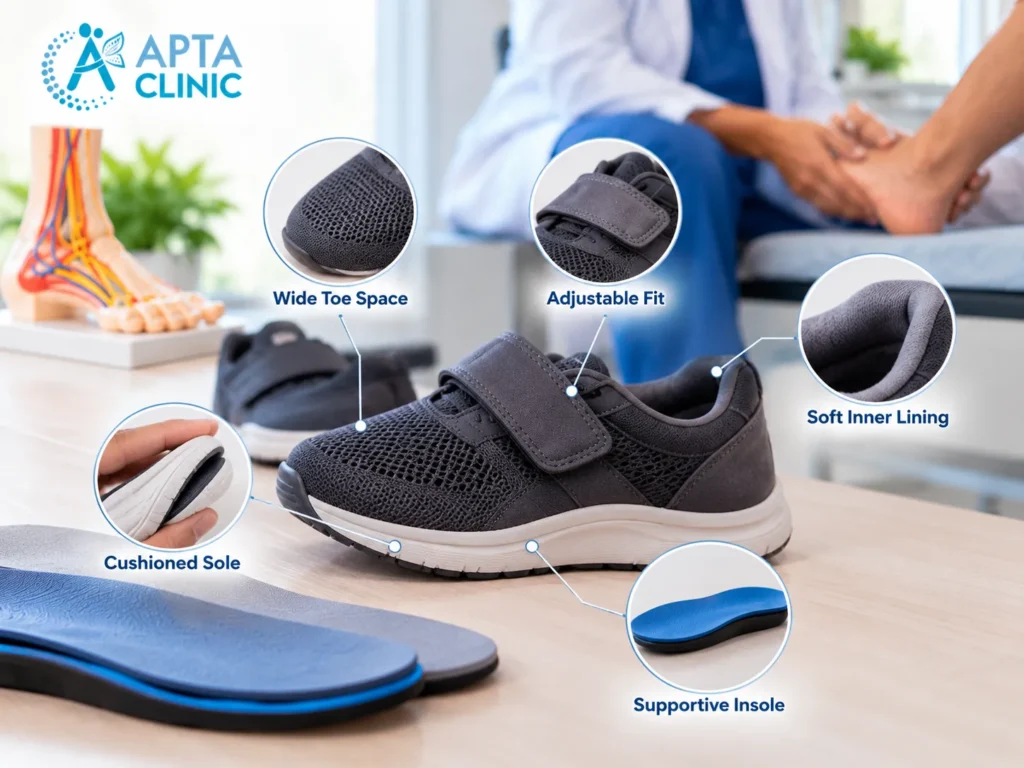
1. A Wide and Comfortable Toe Box
The toe box is the front section of the shoe that surrounds your toes. It should provide enough width and depth for your toes to rest naturally.
Your toes should not feel squeezed together or press against the front of the shoe.
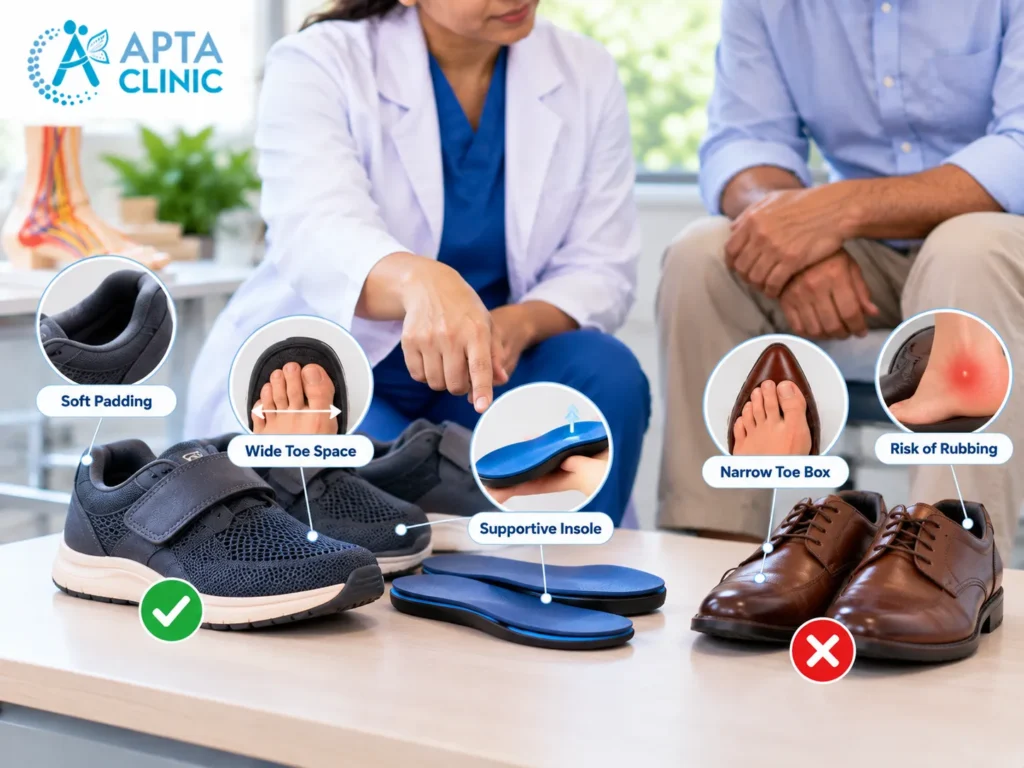
Extra room may be particularly helpful if you have bunions, hammertoes, swelling or other changes in foot shape. Avoid pointed shoes that create pressure around the toes or prominent joints.
A wide shoe is not automatically the right shoe, though. It must still hold your foot securely without allowing excessive movement.
2. A Smooth Interior
Run your hand around the inside of the shoe before wearing it. Check for rough seams, hard edges, loose stitching or damaged lining that could rub against your skin.
A smooth interior can help reduce friction, especially when sensation is reduced.
Make it a habit to inspect your shoes for small stones, debris or damaged areas before putting them on. These may injure your feet without causing noticeable discomfort.
3. Suitable Cushioning and Pressure Distribution
Cushioning can improve comfort during walking, but extra softness alone does not guarantee adequate foot protection.
Some people have pressure points caused by foot deformities, previous ulcers or changes in the way they walk. They may need professionally selected insoles or therapeutic footwear designed to redistribute pressure.
If you have a history of diabetic foot ulcers, seek advice about suitable footwear rather than relying on the cushioning or appearance of a shoe.
4. A Stable Sole With Good Grip
Choose footwear with a stable sole and sufficient grip for the surfaces on which you walk.
The shoe should feel secure when you stand and move. Avoid footwear that slips off easily, feels unstable or allows your foot to slide forward.
A secure fit helps reduce repeated movement and friction inside the shoe.
5. Breathable Materials
Materials that allow ventilation can improve comfort and help manage moisture during daily use.
Your footwear should also protect your feet from rough surfaces and sharp objects. Keep your shoes clean and dry, and change damp socks when necessary.
If you notice persistent moisture, skin cracking or irritation, ask a healthcare professional about appropriate foot care.
6. Adjustable Fastening
Laces, straps or other adjustable fastenings help keep a shoe securely in place.
Adjustable footwear may be useful when foot shape varies or swelling occurs. The fastening should hold the shoe comfortably without creating tight pressure across the top of your foot.
If swelling changes considerably during the day, seek advice about the safest fit.
Which Types of Shoes Are Suitable for Diabetic Feet?
The most suitable footwear depends on your individual foot health and daily activities.
Walking Shoes
Well-fitting walking shoes may be appropriate for everyday use if they provide adequate toe space, a smooth interior, secure fastening and a stable sole.
Try them on with the socks you normally wear. Check that your heel remains secure and that no part of the shoe rubs against your skin.
Athletic Shoes
Athletic shoes can work for walking and other activities when their fit and construction suit your needs.
Look beyond the brand, appearance or advertised cushioning. The shoe should accommodate your toes, protect the skin and remain secure during movement.
Wide-Fit and Extra-Depth Shoes
Some people need more space than standard footwear provides.
Wide-fit or extra-depth shoes may help accommodate bunions, hammertoes, swelling or other changes in foot shape. The appropriate design depends on where pressure develops and how the shoe fits the entire foot.
Specialised Diabetic Shoes and Custom Insoles
People at higher risk of foot complications may benefit from therapeutic footwear or custom orthotic inserts.
These options may be considered for people with significant foot deformities, previous ulcers, unusual pressure distribution or other identified risks.
A professional assessment helps determine whether specialised footwear is appropriate. Custom diabetic shoes are not necessary for everyone who has diabetes.
If you currently have an ulcer or an open wound, you may need a clinician-directed plan to reduce pressure on the affected area. Ordinary footwear may not provide sufficient protection.
How Do You Choose the Right Shoe Size and Fit?
The number printed on a shoe does not guarantee that it will fit correctly. Sizes can vary between brands, styles and designs.
Follow these steps when shopping for footwear.
- Measure both feet. One foot may be larger than the other. Choose a fit that safely accommodates the larger foot.
- Shop later in the day if possible. Feet may become larger as the day progresses, so check the fit under typical conditions.
- Wear your usual socks. Try the shoes with the socks you expect to wear regularly.
- Check the toe space. Your toes should not press against the front or sides of the shoe.
- Check the heel and fastening. Your heel should stay secure without rubbing, and the shoe should not slip excessively.
- Walk in both shoes. Notice any rubbing, pressure, instability or discomfort.
- Inspect your feet afterwards. Look for redness, blisters or marks that may indicate pressure.
If you have reduced sensation, comfort alone is not a reliable way to judge the fit. Ask a healthcare professional to assess your footwear if you have high-risk feet, a previous ulcer or a foot deformity.
Do You Need Special Diabetic Shoes or Insoles?
Not everyone with diabetes needs specially manufactured shoes. Regular footwear may be suitable if it fits correctly and protects the feet.
A specialist assessment may be particularly important if you have:
- Reduced sensation in your feet
- A previous diabetic foot ulcer
- A current or recently healed wound
- Significant bunions, hammertoes or other deformities
- Repeated blisters or pressure-related skin damage
- Changes in foot shape or walking pattern
- A history of Charcot foot or other serious foot complications
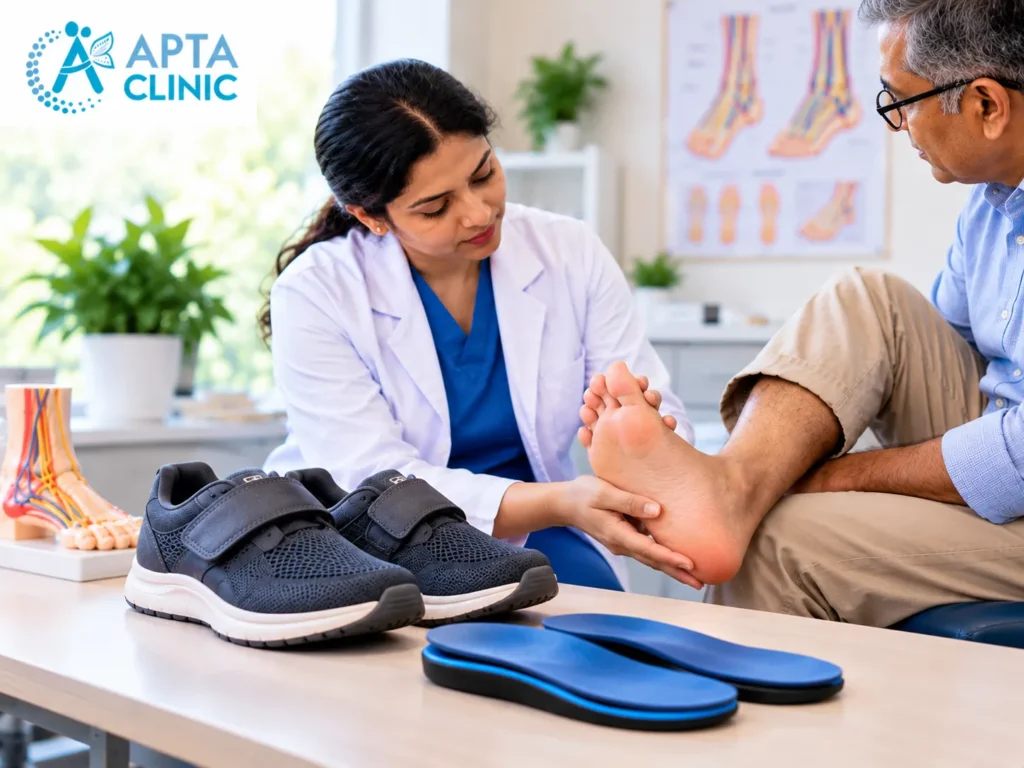
A clinician can assess your skin, foot shape, circulation, sensation and areas of excessive pressure. These findings help determine whether protective footwear, therapeutic shoes or custom insoles may be useful.
Avoid purchasing custom insoles or pressure-relieving products solely because they are marketed for diabetes. Their suitability depends on your individual needs.
If you have an active foot wound, get medical advice about pressure relief and wound management before deciding which footwear to use.
What Footwear Mistakes Should People With Diabetes Avoid?
Some common footwear choices can increase the risk of skin damage, particularly when sensation is reduced.
Wearing Tight or Pointed Shoes
Shoes that squeeze the toes or rub against the sides of the feet can cause blisters, calluses and pressure injuries.
Do not assume tight shoes will stretch enough to become safe. Choose a fit that accommodates your feet from the beginning.
Walking Barefoot
Avoid walking barefoot, even indoors. Small objects, rough flooring and hot surfaces can injure feet with reduced sensation.
Wear protective footwear that is appropriate for your environment.
Wearing Poorly Fitting Slippers or Loose Sandals
Footwear that slips off easily, exposes your feet to injury or causes repeated friction may be unsuitable, especially if you have neuropathy or previous foot problems.
Choose footwear that stays securely in place and provides adequate protection.
Wearing New Shoes for Long Periods Immediately
New shoes can create pressure points even when they initially feel comfortable.
Introduce new footwear gradually and inspect your feet after each wear. If you notice redness, blistering or skin damage, stop using the footwear until the cause has been assessed.
Ignoring Damaged Footwear
Worn-out soles, rough lining, exposed seams and damaged fastenings can increase the risk of injury.
Check your shoes regularly and replace them when they no longer protect your feet adequately.
Using Home Remedies for Corns and Calluses
Do not cut corns or calluses yourself or use strong chemical removal products without professional advice. These methods can damage the skin and create wounds.
Seek appropriate foot care if thickened skin or recurring pressure areas develop.
How Should You Care for Your Feet While Wearing Shoes?
Choosing suitable footwear is only one part of diabetic foot protection. Daily habits also matter.
Inspect your feet every day. Check the soles, heels, toes and spaces between the toes for cuts, blisters, redness, swelling or changes in skin colour. Use a mirror or ask someone to help if you cannot see your feet clearly.
Check your shoes before wearing them. Remove debris and look for rough or damaged areas inside the footwear.
Wear clean, well-fitting socks. Avoid socks that bunch up, rub against your skin or create tight pressure.
Wash and dry your feet carefully. Use warm rather than hot water and dry thoroughly, particularly between the toes.
Avoid direct heat. Do not use hot-water bottles or heating pads on feet with reduced sensation.
Attend regular foot examinations. Ask your healthcare professional how often your feet should be checked based on your individual risk.
Manage diabetes with professional guidance. Following your individual treatment plan is important for reducing the risk of complications.
If you notice a new wound, blister or area of skin damage, seek medical advice promptly. Do not rely on the absence of pain to decide whether the injury is serious.
When Should You Consult a Diabetic Foot Care Specialist?
Arrange a medical assessment if you experience persistent numbness, tingling, burning sensations, recurring pressure marks or footwear that repeatedly damages your skin.
People with diabetes should also seek prompt medical attention for a new blister, cut, ulcer, swelling, redness, unusual warmth or discharge. If sensation is reduced, an injury may need attention even when it does not hurt.
Blackened skin, spreading redness, severe swelling, fever or signs of a serious infection require urgent medical assessment. Seek emergency care if symptoms are severe or rapidly worsening.
A professional assessment can help identify whether nerve damage, circulation problems, foot deformities or pressure points are affecting your feet. It can also help determine whether ordinary protective footwear is appropriate or more specialised care is needed.
Diabetic Foot Care at APTA Clinic in Mysore
People with diabetes who experience foot wounds, reduced sensation, pressure-related injuries or other foot problems may benefit from a clinical assessment.
APTA Clinic has a dedicated Diabetic Foot Care Clinic in Mysore. Its published service information describes diabetic wound assessment, circulation and nerve-function evaluation, and management options for diabetes-related foot complications. Nerve conduction studies are also listed among its services.
The appropriate examination or treatment depends on the patient’s condition and clinical findings.
This article provides general guidance on choosing footwear. It does not establish that APTA Clinic sells diabetic shoes, manufactures custom footwear or offers a dedicated footwear-fitting service. Contact the clinic to confirm which assessment and treatment services are currently available.
Contact APTA Clinic
Clinic: APTA Clinic, Mysuru
Address: 1226/3B, Krishnaraja Boulevard Road, Jayanagar, Krishnamurthy Puram, Mysuru, Karnataka 570014
Phone: +91 7411 707 555
Contact the clinic to enquire about diabetic foot assessment and confirm appointment availability before visiting.
Conclusion
The right footwear can help protect the feet of people living with diabetes by reducing friction, providing sufficient toe space and limiting avoidable pressure. Look for a comfortable fit, a smooth interior, a stable sole and secure fastening rather than choosing shoes based on appearance or brand alone.
If you have reduced sensation, a foot deformity, recurring blisters or a history of ulcers, seek professional advice about whether specialised footwear or custom insoles may be appropriate.
Daily foot inspections, suitable footwear and timely medical assessment work together to reduce the risk of diabetic foot complications.
Medical disclaimer: This article is for educational purposes only. It does not replace individual medical advice, diagnosis or treatment. People with diabetes-related foot problems should seek assessment from a qualified healthcare professional.
Frequently Asked Questions (FAQs)
The most suitable footwear has enough room for the toes, a smooth interior, secure fastening, a stable sole and a comfortable fit. People with neuropathy, foot deformities or previous ulcers may need specialised footwear based on a clinical assessment.
Wide shoes may help when standard footwear compresses the toes or creates pressure over bunions and other deformities. However, the shoe must also fit securely around the heel and midfoot. A shoe that is too wide can allow excessive movement and friction.
Not everyone with diabetes needs specialised shoes. Regular footwear may be suitable if it fits properly and protects the feet. People with previous ulcers, significant deformities or other high-risk features may benefit from therapeutic footwear or custom insoles after professional assessment.
Cushioned shoes can improve comfort, but cushioning alone does not guarantee safe pressure distribution. People with reduced sensation or pressure-related injuries may need footwear or insoles selected according to their foot shape and clinical findings.
Footwear that exposes the feet to injury, slips off easily or causes friction may be unsuitable, especially for people with neuropathy. Choose secure, protective footwear appropriate for your foot condition, and avoid walking barefoot even indoors.
The cost depends on whether you need regular protective shoes, specialised therapeutic footwear or custom-made shoes and insoles. Prices vary by design, materials and individual requirements. Contact footwear providers for current prices and ask your healthcare professional which type is appropriate. APTA Clinic’s published service information does not establish a price for diabetic footwear.
There is no single replacement schedule for everyone. Inspect shoes regularly for worn soles, damaged lining, loose fastenings and changes in fit. Replace footwear when it no longer protects your feet adequately, and seek advice if your foot shape or swelling changes.
APTA Clinic has a dedicated Diabetic Foot Care Clinic in Mysore. Its published services cover diabetic foot and wound assessment and evaluation of nerve function and circulation. Contact the clinic at +91 7411 707 555 to confirm appointment availability and the services appropriate for your needs.