
Dental Crown vs. Filling: Which Treatment May Be Suitable for a Damaged Tooth?
- Home
- Blog
- About Us
If you have a cavity, chipped tooth or damaged filling, you may be wondering whether you need a dental filling or a crown. Both treatments can restore a tooth, but they are used in different situations.
A dental filling is generally used to repair a more limited area of damage, while a crown covers and helps protect a tooth that needs more extensive restoration. The suitable option depends on how much healthy tooth structure remains, the location and extent of the damage, and the forces the tooth must withstand when biting and chewing.
At APTA Clinic in Mysore, dental crowns and fillings are among the restorative services listed on the clinic’s website. A dental assessment can help determine which approach may be appropriate for your tooth.
What Is the Difference Between a Dental Crown and a Filling?
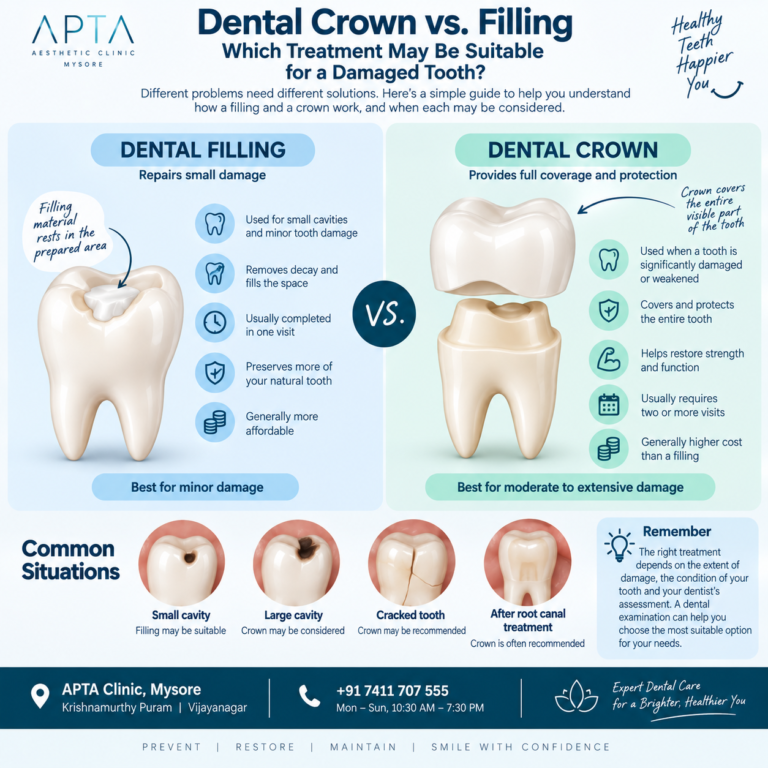
A dental filling repairs a specific area of a tooth, commonly after decay has been removed. The filling material is placed into the prepared area to restore its shape and function.
A dental crown is a custom-made covering that fits over a tooth. It may be considered when a tooth is weakened, extensively damaged or needs more coverage and support than a filling can provide.
Neither treatment is automatically the right choice for every damaged tooth. A dentist needs to examine the tooth and consider its condition before recommending a restoration.
When Might a Dental Filling Be Considered?
A filling may be suitable when the damaged area is limited and enough healthy tooth structure remains to support the restoration.
A dentist may consider a filling for situations such as:
- A cavity that can be restored with a filling.
- A small area of tooth damage or fracture.
- Repair of certain worn or defective restorations.
- A damaged area where sufficient tooth structure remains to support a direct restoration.
The material used may depend on the size and location of the restoration, appearance, biting forces and other clinical considerations. Tooth-coloured composite is one available filling material; other materials may be considered according to the individual case.
A filling restores the affected area, but the tooth can still develop new decay around or elsewhere on it. Good oral hygiene and regular dental check-ups remain important after treatment.
Dental Crown vs. Filling: Key Differences
|
Feature |
Dental Filling |
Dental Crown |
|
Main purpose |
Repairs a specific damaged area |
Covers the tooth to restore and protect it |
|
Typical consideration |
More limited damage with enough supporting tooth structure |
More extensive damage or a weakened tooth needing broader coverage |
|
Coverage |
Fills the prepared area |
Covers the visible portion of the tooth |
|
Tooth preparation |
The dentist prepares the area that needs restoration |
The tooth is shaped to accommodate the crown |
|
Materials |
May include composite, amalgam or other suitable restorative materials |
May include ceramic, porcelain or metal-based materials, depending on the case |
|
Maintenance |
Requires routine oral hygiene and dental review |
Also requires routine oral hygiene and dental review; the tooth beneath the crown can still develop decay |
|
Best choice |
Depends on the extent and location of damage |
Depends on the extent and location of damage |
The table provides general information, not a diagnosis. A dentist can explain which restoration is suitable after examining your tooth.
When Might a Dental Crown Be Considered?
A crown may be considered when a tooth has lost a substantial amount of structure or needs broader coverage to help restore its strength and function.
Examples may include:
- A tooth with extensive decay and insufficient remaining structure for a suitable filling.
- A significantly chipped or broken tooth.
- A weakened tooth that needs additional coverage.
- A tooth that has become worn or damaged.
- Certain teeth that have undergone root canal treatment, depending on their condition and restoration needs.
A crown does not make a tooth immune to future problems. The tooth beneath it can still develop decay, and the crown itself may require maintenance or replacement over time. Your dentist can explain the expected care and limitations of the proposed restoration.
What Factors Does a Dentist Consider?
The choice between a crown and a filling is based on more than the visible size of a cavity or chip. A dentist may consider:
- How Much Healthy Tooth Structure Remains
A tooth with a relatively small damaged area may have enough remaining structure to support a filling. If a large portion of the tooth is weakened or missing, a crown may be considered.
- The Location of the Tooth
Front and back teeth have different roles and experience different biting forces. The tooth’s position can affect the material and restoration design that a dentist recommends.
- The Extent of Decay or Damage
The dentist will assess how far decay or a fracture extends and whether the remaining tooth can support a restoration. Damage that reaches deeper structures may require additional treatment planning.
- The Tooth’s Existing Condition
Previous fillings, cracks, wear, symptoms and any history of root canal treatment may influence the decision. A dentist will consider the full condition of the tooth rather than choosing a restoration based on appearance alone.
- Bite and Chewing Forces
The way your teeth meet when you bite can affect the stresses placed on a restoration. Grinding or clenching may also be relevant to treatment planning and maintenance.
- Appearance and Material Preferences
The colour and appearance of the restoration may matter, particularly for visible teeth. The dentist can explain which materials are suitable for the location and condition of the tooth and discuss their advantages and limitations.
What Happens During the Dental Assessment?
A dental consultation usually begins with a discussion about your concern, such as pain, sensitivity, a chipped tooth or a cavity. The dentist examines the affected tooth and may recommend additional diagnostic checks, such as dental X-rays, when clinically appropriate.
The assessment helps the dentist understand:
- The extent of decay, fracture or other damage.
- How much healthy tooth structure remains.
- Whether the tooth may need treatment beyond a filling or crown.
- Which restoration options may be suitable.
- What maintenance or follow-up may be needed.
You can ask the dentist to explain the findings, the alternatives and why a particular option is being recommended. If more than one approach is suitable, discuss the differences in coverage, materials, expected maintenance and cost.
What Can Affect the Cost of a Crown or Filling?
The cost of restorative dental treatment can vary. Factors that may affect the final amount include:
- The size and complexity of the damaged area.
- The tooth’s location and condition.
- The material selected.
- Whether additional treatment is needed before the restoration.
- The number of teeth being treated.
- The restoration’s design and laboratory requirements, where applicable.
A specific price cannot be determined from the treatment name alone. Ask the clinic for a treatment estimate after the dentist has assessed your tooth. You can also ask what the estimate includes and whether additional procedures may be required.
How Should You Care for a Filling or Crown?
Good oral hygiene helps protect your natural teeth and restorations.
- Brush twice daily with fluoride toothpaste.
- Clean between your teeth every day.
- Attend regular dental check-ups as advised.
- Follow the dentist’s instructions after treatment.
- Contact your dentist if a restoration feels loose, breaks, causes persistent discomfort or affects your bite.
A crown does not prevent decay from developing at its edges, and a filled tooth can develop further decay or damage. Ongoing care and monitoring are therefore important for both types of restoration.
When Should You Seek Dental Care?
Arrange a dental assessment if you notice a cavity, a chipped or cracked tooth, a damaged filling, persistent sensitivity or discomfort when biting. Early assessment can help identify the problem and clarify which treatment options may be appropriate.
Seek urgent dental advice if you have severe or worsening pain, facial or gum swelling, fever associated with dental symptoms, or difficulty opening your mouth. If swelling affects breathing or swallowing, seek emergency medical care immediately.
Do not attempt to repair a damaged tooth yourself or delay care because the visible damage appears small. The extent of a problem is not always clear from the surface.
What Is a Dental Filling?
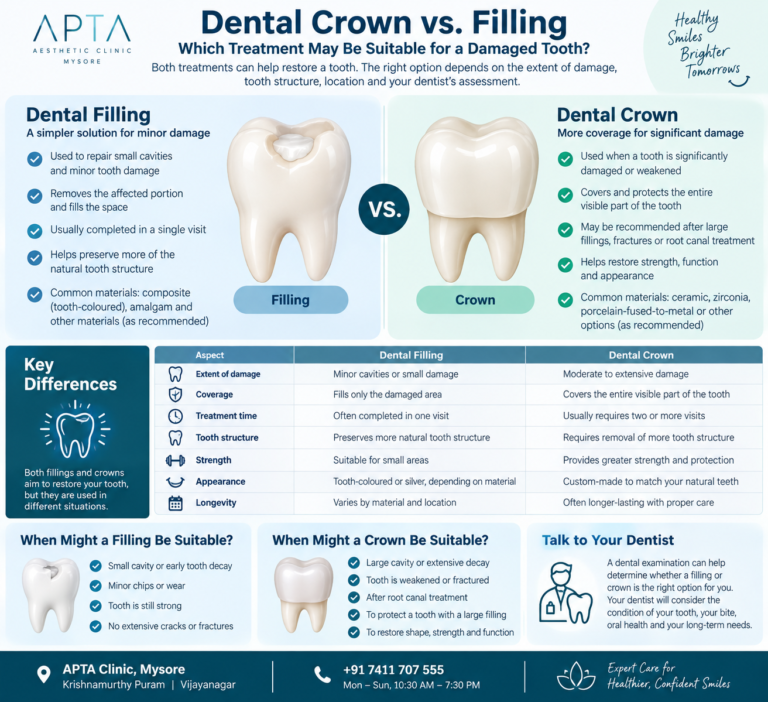
A dental filling is used to repair a cavity or a relatively small area of tooth damage. During treatment, the dentist removes decayed tissue where necessary and fills the prepared space with a restorative material.
Common filling materials include tooth-coloured composite resin and other materials selected according to the tooth and clinical situation.
A filling may be considered when:
- The cavity is relatively small or moderate in size.
- Enough healthy tooth structure remains to support the restoration.
- The damaged area can be repaired without covering the entire tooth.
- The tooth does not require more extensive protection.
Fillings can restore the tooth’s shape and function. However, a very large filling in a weakened tooth may not provide the same coverage and support as a crown. Your dentist will assess the remaining tooth structure before recommending treatment.
Which Treatment May Be Suitable for You?
If the damage is limited and the tooth retains enough healthy structure, a filling may be sufficient. If the tooth is extensively damaged or weakened, a crown may be considered to cover and support it.
Your dentist may assess:
- The size, depth and location of the damaged area
- How much healthy tooth structure remains
- Whether the tooth is cracked or weakened
- The amount of pressure the tooth experiences during chewing
- Whether the tooth has previously received treatment
- Your oral health, symptoms and treatment preferences
Sometimes, other treatment may be needed before a filling or crown can be placed. For example, if decay has affected the inner pulp of the tooth, the dentist may discuss root canal treatment. A clinical examination is necessary to determine the appropriate approach.
What Is a Dental Crown?
A dental crown is a custom-made cap that fits over a prepared tooth. It restores the tooth’s shape and appearance while covering and supporting the remaining structure.
Crowns may be considered when a tooth has extensive decay, a significant fracture, substantial wear or insufficient healthy structure to support a conventional filling. They may also be recommended for some teeth following root canal treatment, depending on the tooth and its condition.
A crown may be considered when:
- A large portion of the tooth is damaged or weakened.
- The tooth has a substantial fracture.
- An existing restoration is large or has failed.
- The tooth needs additional coverage and support.
- The dentist determines that a filling alone may not adequately restore the tooth.
Crowns can be made from different materials, including ceramic, porcelain-based materials and metal alloys. The material selected depends on factors such as the tooth’s location, functional demands, appearance and clinical requirements.
What Happens During Treatment?
For a filling: The dentist examines the tooth, removes decay where needed, prepares the affected area and places the filling material. The restoration is shaped and checked to ensure it fits comfortably with your bite.
For a crown: The dentist examines and prepares the tooth, which usually involves reshaping it to make room for the crown. Impressions or a digital scan may be taken so the crown can be made to fit. A temporary crown may be placed while the final restoration is prepared. At a later appointment, the dentist checks the fit and bite before securing the crown.
The exact process and number of visits depend on the tooth, the selected material and the treatment plan.
Why You Should Not Delay Dental Assessment
Tooth decay and damage can progress if left untreated. A cavity may become larger, and a weakened tooth may become more vulnerable to further damage. Early assessment can help your dentist identify the problem and discuss suitable treatment options.
Seek dental advice if you notice persistent toothache, sensitivity, a visible cavity, a chipped tooth or discomfort when chewing. These symptoms can have different causes, so they should be assessed rather than self-diagnosed.
Dental Fillings and Crowns at APTA Clinic, Mysore
APTA Clinic lists dental fillings and dental crowns among its dental services. If you have a damaged tooth or have been advised that you may need restorative treatment, a dental consultation can help clarify the condition of the tooth and the options available.
During your appointment, ask your dentist:
- Is a filling likely to be sufficient for my tooth?
- Would a crown provide the coverage or support my tooth needs?
- Are there other treatment options I should consider?
- What materials are available, and what are their differences?
- How many appointments may be required?
- What will the treatment and follow-up care involve?
Consult APTA Clinic in Mysore for Your Dental Concerns
Book a dental consultation with APTA Clinic in Mysore to discuss your tooth and understand which restorative treatment may be appropriate for your needs.
APTA Clinic contact details
- Krishnamurthy Puram, Mysore – 570004
- Vijayanagar, Mysore – 570030
- Phone: +91 7411 707 555
- Listed hours: Monday to Sunday, 10:30 AM–7:30 PM
Frequently Asked Questions (FAQs)
It depends on the extent of the damage and how much healthy tooth structure remains. A filling may be suitable for limited damage, while a crown may be considered when the tooth needs more extensive coverage and support.
Yes. If a cavity has damaged a substantial amount of tooth structure, a dentist may recommend a crown rather than a conventional filling. The decision depends on the tooth’s condition and examination findings.
A filling can often be completed in one appointment. A crown may require preparation and a separate appointment to fit the final restoration, although treatment processes vary.
Yes. A crown covers the tooth but does not make it immune to decay. Brushing, cleaning between teeth and regular dental check-ups remain important.
A dentist needs to examine the tooth and may recommend imaging when appropriate. They can then explain whether a filling, crown or another treatment is suitable.
Not always. The restoration recommended after root canal treatment depends on the tooth’s location, how much healthy structure remains, and its condition. Your dentist can explain whether a crown or another restoration is appropriate for your tooth.
APTA Clinic’s website lists both dental crowns and dental fillings among its dental services. Contact the clinic to enquire about an assessment and appointment availability.
APTA Clinic provides an appointment form and lists +91 7411 707 555 as its contact number. Its website lists dental services and locations in Mysore.
APTA Clinic lists locations in Krishnamurthy Puram and Vijayanagar, Mysore.