
What Causes Sagging Skin on the Face and Neck?
- Home
- Blog
- About Us
You might notice that your cheeks look less full than they once did, your jawline seems softer, or loose skin has appeared beneath your chin. These changes often develop gradually. Although ageing plays a major role, it is not the only reason skin begins to sag.
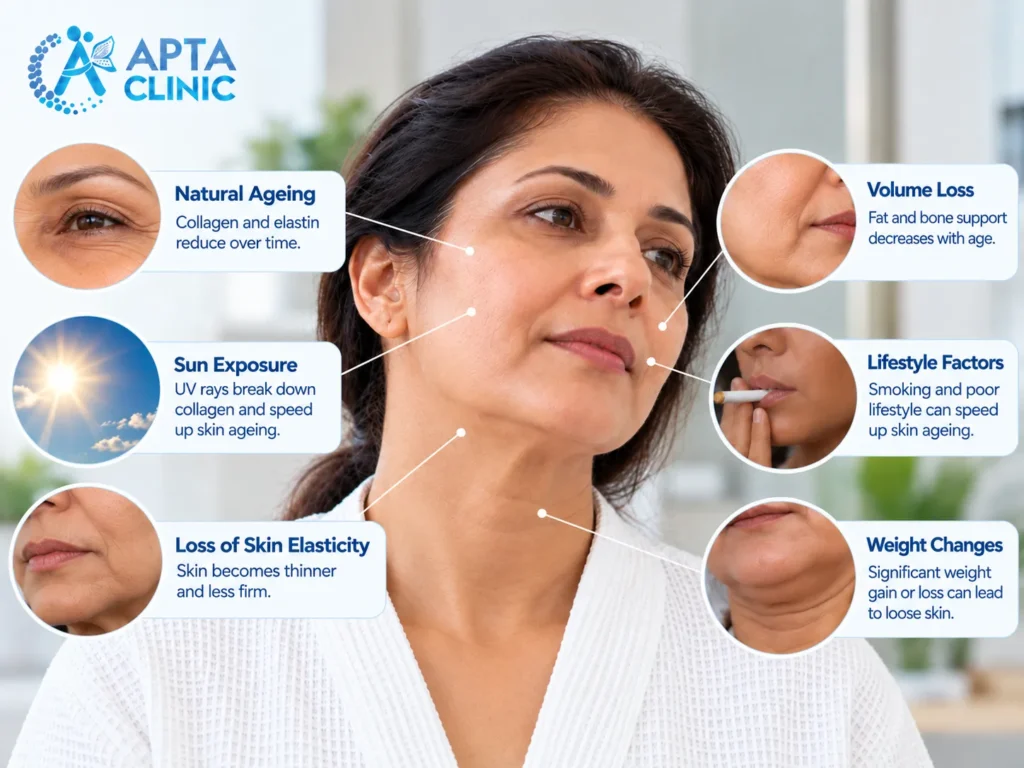
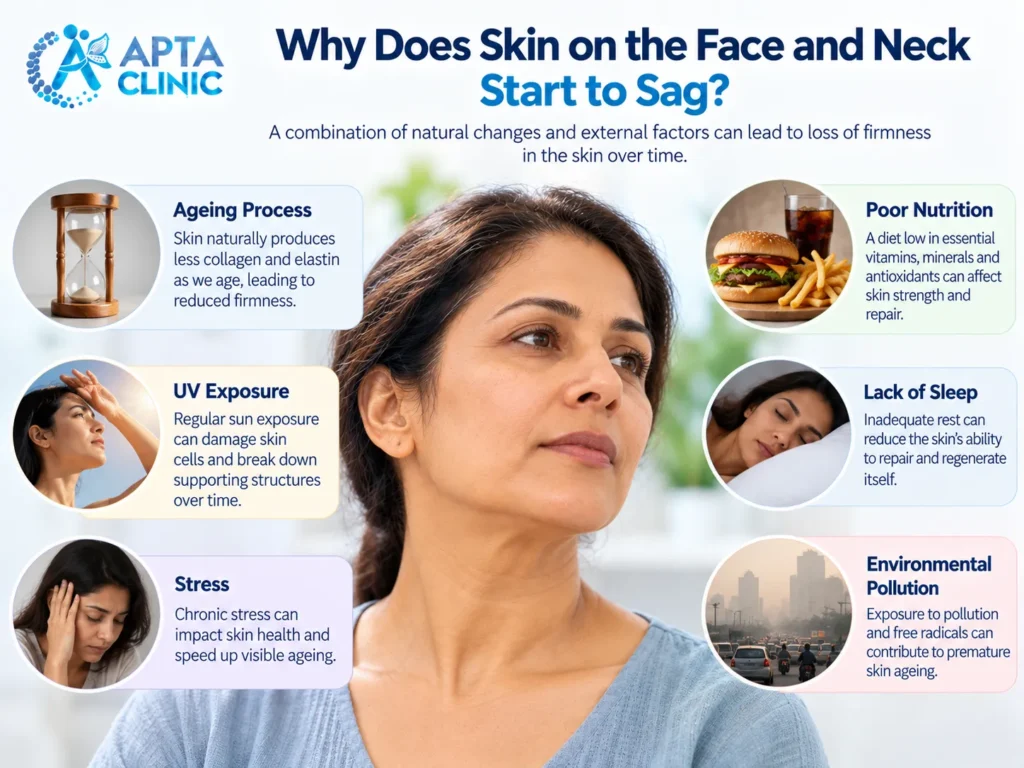
Collagen and elastin help the skin maintain its structure and flexibility. Over time, these proteins change, while the fat and bone beneath the skin can also lose volume or shift. Years of sun exposure, smoking and substantial weight changes may add to the effect.
The pattern varies from person to person. Two people of the same age can have quite different facial contours because of their genetics, skin condition and lifestyle.
Understanding the causes of sagging skin can help you decide what to do next. Some changes can be managed with sun protection and a consistent skincare routine. More noticeable skin laxity may lead you to consider a professional assessment and treatments such as HIFU, depending on your needs.
What Causes Sagging Skin?
Skin firmness depends on more than the surface layer. The skin’s structural proteins, the volume beneath it and the tissues supporting the face all influence its appearance.
- Natural ageing and collagen loss
Collagen is a protein that gives the skin structural support. As you age, collagen production changes and the existing collagen network gradually deteriorates.
The skin may become thinner and less firm. Fine lines can deepen, and the cheeks, jawline and neck may begin to look different.
These changes are part of the ageing process. Skincare can help maintain the condition of the skin, but it cannot prevent every age-related change.
- Reduced elastin and skin elasticity
Elastin allows the skin to stretch and move back towards its original shape. Ageing and environmental damage can affect the skin’s elasticity.
When the skin becomes less elastic, it may not return as readily after being stretched. This can contribute to loose skin around the lower cheeks, beneath the chin and along the neck.
Collagen and elastin have different roles, but both influence how firm the skin looks and feels.
- Changes in facial volume and underlying support
Sagging does not come from the skin surface alone. Fat compartments in the face can lose volume or change position, and the underlying bone structure also changes with age.
As a result, the cheeks may look flatter, folds around the nose and mouth may become more noticeable, and the jawline may lose definition. A fuller-looking area beneath the chin can also have several causes.
This distinction matters when considering treatment. A procedure intended to tighten skin may not address changes caused mainly by reduced facial volume or other underlying structures.
- Sun exposure and premature skin ageing
Repeated exposure to ultraviolet (UV) radiation damages collagen and elastin. Over time, this damage can contribute to wrinkles, uneven pigmentation, changes in skin texture and loss of firmness. These changes are known as photoageing.
People who spend long periods outdoors without adequate sun protection may develop visible signs of sun damage earlier.
The American Academy of Dermatology recommends sun protection to help reduce premature skin ageing. Broad-spectrum sunscreen with SPF 30 or higher, shade and protective clothing can help limit further UV damage.
- Smoking and lifestyle factors
Smoking is associated with premature skin ageing and wrinkles. It can affect the skin’s appearance over time, although the degree of change differs between individuals.
Sleep, nutrition and regular physical activity are important for general health and can support a consistent skincare routine. However, healthy habits cannot fully reverse established skin laxity.
If you smoke, stopping can reduce continued exposure to a factor associated with premature ageing.
- Significant weight changes
When body size changes substantially, the skin stretches. After significant weight loss, it may not return fully to its earlier shape. The amount of loose skin depends on factors such as age, genetics, the degree of weight change and how long the skin was stretched.
Changes in body weight can also affect facial fullness. A loss of volume may make existing folds or a less defined jawline more noticeable.
If you are trying to manage your weight, avoid crash diets or rapid weight-loss approaches. A stable, healthy approach is generally more useful for long-term health.
Why Does Skin Sag on the Face and Neck?
The face and neck have different skin thicknesses and underlying structures. Age-related changes can therefore appear differently across these areas.
- Cheeks: Reduced fullness or a softer appearance.
- Jawline: Less definition or the development of jowls.
- Under the chin: Loose skin or a fuller-looking area.
- Neck: Fine lines, crepey texture or skin laxity.
- Around the mouth: More noticeable folds and changes in facial contours.
These concerns can occur together, but they do not always have the same cause. For example, a less defined jawline may involve skin laxity, changes in facial volume or both.
A professional assessment can help determine what may be contributing to the changes and whether a proposed treatment is likely to address them.
Can Sagging Skin Be Prevented or Slowed?
Ageing cannot be stopped, but you can take steps to reduce avoidable skin damage and maintain skin health.
Protect your skin from the sun
Apply broad-spectrum sunscreen with SPF 30 or higher to exposed skin, including your face and neck. Follow the product directions for reapplication, especially after sweating or spending a long time outdoors. A hat, shade and protective clothing provide additional protection.
Keep your skincare routine simple
A gentle cleanser and a moisturiser suited to your skin can help maintain hydration. Moisturiser may temporarily make fine lines look less prominent, but it will not lift significant loose skin.
Avoid adding several active ingredients at once if you are unsure how your skin will respond.
Ask about active skincare ingredients
Some ingredients, including retinoids, may improve certain signs of photoaged skin. They can also cause irritation and are not suitable for everyone.
Ask a qualified healthcare professional whether an ingredient is appropriate for you, particularly if you have sensitive skin, an existing skin condition, or are pregnant or planning a pregnancy.
Avoid smoking
Stopping smoking can reduce continued exposure to a factor linked with premature skin ageing. If you need help quitting, a healthcare professional can discuss available support.
Maintain a stable, healthy weight where possible
Substantial weight changes can affect facial fullness and skin laxity. If weight management is one of your goals, focus on sustainable habits rather than rapid changes.
These measures can support skin health, but they cannot eliminate every age-related change.
What Treatments May Help With Sagging Skin?
The right treatment depends on the area involved, the degree of skin laxity, your general health and what you hope to change. A treatment that suits mild looseness may not provide enough improvement for pronounced sagging.
Skincare and sun protection
Skincare can improve hydration and some aspects of skin texture. Products that address sun damage may help with selected signs of photoageing.
However, creams and moisturisers generally offer limited improvement in established loose skin. Be cautious of products that promise dramatic lifting or results comparable to surgery.
Non-surgical skin tightening
Some procedures use energy-based technology to heat targeted tissue and encourage changes in collagen. Ultrasound-based treatments and radiofrequency procedures are examples, although the technology and effects differ.
Results depend on the device, treatment settings, the person’s skin and the severity of laxity. Improvement may be gradual, and non-surgical procedures do not reproduce the results of a surgical facelift when there is substantial excess skin.
Before treatment, discuss expected results, possible side effects, the provider’s qualifications and any alternatives.
Surgical options for more pronounced sagging
When skin laxity is significant, non-surgical treatments may not provide the degree of change a person wants. Depending on individual needs and medical suitability, a surgical procedure may be worth discussing with an appropriately qualified specialist.
A consultation should cover potential benefits, risks, recovery requirements, limitations and alternatives before you make a decision.
Is HIFU Suitable for Sagging Skin?
High-Intensity Focused Ultrasound, commonly called HIFU, is a non-surgical aesthetic treatment that uses focused ultrasound energy to heat targeted tissue. It is intended to stimulate changes in the treated tissue, including collagen remodelling.
HIFU may be considered for selected people with mild to moderate skin laxity who want to explore a non-surgical option. The degree of improvement varies, and a particular result cannot be guaranteed. It is not a substitute for surgery when substantial skin removal or lifting is needed.
Before deciding whether HIFU is appropriate, ask the provider about:
- The specific areas that can be treated.
- Whether your degree of skin laxity is suitable for the procedure.
- When improvement might become noticeable and how much change is realistic.
- Possible discomfort, side effects and treatment limitations.
- The total cost and whether additional sessions may be suggested.
Your medical history, current medicines and previous aesthetic procedures may also affect the assessment. Treatment should be recommended after an individual consultation, not based on age or a photograph alone.
APTA Clinic has a dedicated page describing its HIFU treatment in Mysore. You can review the service information and contact the clinic to discuss whether the treatment may be appropriate for your concerns.
When Should You Seek a Professional Skin Assessment?
Consider an appointment if loose skin on your face or neck concerns you, if you are unsure which treatment to choose, or if you want a realistic explanation of the likely benefits and risks.
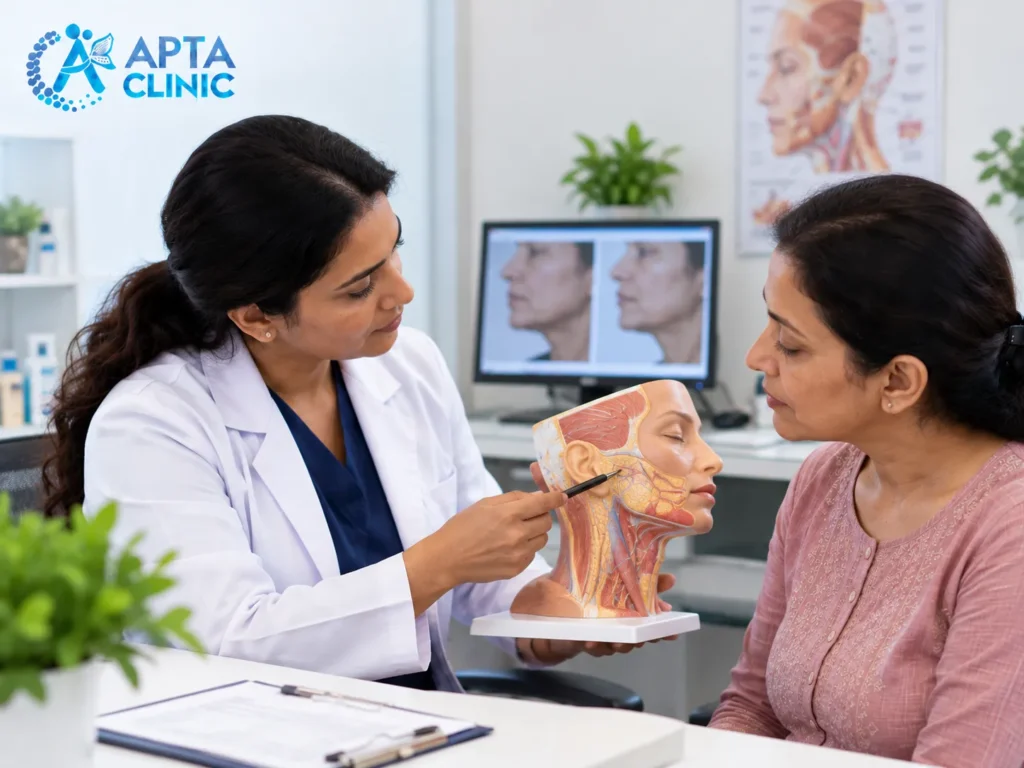
During an assessment, the provider should examine the area of concern, review relevant medical history and discuss your goals. Ask which changes the proposed treatment can address and which it cannot.
You should have time to consider the information and compare appropriate alternatives before deciding whether to proceed.
One important distinction: sudden facial drooping is not a typical sign of gradual skin ageing. If facial drooping develops suddenly, especially with arm weakness, difficulty speaking, confusion or other new neurological symptoms, seek emergency medical attention immediately.
Exploring Skin-Tightening Options in Mysore
If you have noticed sagging skin on your face or neck and want to understand your options, APTA Clinic in Mysore provides information about HIFU treatment and non-surgical skin tightening.
You can enquire about the service, explain your concerns and ask whether an assessment is appropriate for you. The expected outcome will depend on your skin, the area being treated and the procedure recommended.
APTA Clinic contact details
- Phone: +91 74117 07555
- Website: https://aptaclinic.com/
- Service to enquire about: HIFU treatment in Mysore
The most useful first step is to understand what is causing the change in your skin. Once that is clear, you can make a more informed decision about skincare or professional treatment.
Medical information note: This article is for general educational purposes and does not replace individual medical advice. A qualified healthcare professional should assess your circumstances before you choose an aesthetic treatment.
Frequently Asked Questions (FAQs)
Age-related changes in collagen, elastin and facial volume are major contributors. Genetics, sun exposure, smoking and substantial weight changes can also influence when sagging becomes noticeable.
There is no single age when skin begins to sag. The timing varies with genetics, skin type, sun exposure, lifestyle and changes in facial structure. Some people notice changes earlier, while others experience them more gradually.
Sun protection and healthy habits can help maintain skin health and reduce additional damage. They cannot fully reverse significant skin laxity. Moisturisers may temporarily make skin look plumper, but they do not lift loose skin in the way surgery can.
Collagen loss can contribute to reduced skin firmness, but jowls and a fuller-looking area beneath the chin can also involve fat distribution, loose skin and changes in underlying structures. An assessment can help identify the likely causes.
HIFU may provide some improvement for selected people with mild to moderate skin laxity. Results vary, and it may not be suitable for substantial sagging. A qualified provider should assess the treatment area, expectations, risks and alternatives before recommending it.
Improvement is generally gradual as the skin responds to treatment. The timing and degree of change depend on the device, treatment plan and individual factors. Ask your provider what results are realistic for your circumstances.
The cost depends on the treatment, the area being treated, the extent of skin laxity and whether additional sessions are recommended. APTA Clinic’s current HIFU pricing has not been verified for this article. Contact the clinic for an up-to-date quote before booking.
You can visit APTA Clinic’s website to review its service information or call +91 74117 07555 to enquire about an appointment. Confirm current availability and pricing directly with the clinic.