
Body Contouring in Mysore After Major Weight Loss: What Are Your Options?
- Home
- Blog
- About Us
Losing a significant amount of weight can change your body considerably. For some people, however, the skin does not tighten enough after the weight is lost. Loose folds may remain around the abdomen, arms, thighs, breasts or other areas.
This is one reason people consider body contouring in Mysore after major weight loss.
Body contouring refers to a group of surgical procedures that can remove excess skin, address selected areas of localized fat and reshape areas affected by substantial weight reduction. It is not a weight-loss treatment. The procedure or combination of procedures considered depends on where the excess skin is located, skin quality, weight stability, overall health and the person’s goals.
What Is Body Contouring After Major Weight Loss?
After substantial weight loss, skin and supporting tissues may not fully conform to the body’s reduced size. This can leave folds or hanging skin around the abdomen, arms, thighs, breasts, buttocks and lower body.
Post-weight-loss body contouring is designed to address these changes. Depending on the patient’s anatomy, procedures may include:
- Tummy tuck or abdominoplasty
- Lower body lift
- Arm lift or brachioplasty
- Thigh lift
- Breast lift or other breast-contouring procedures
- Liposuction in selected areas
The need for surgery varies from person to person. Some people are comfortable with the changes that remain after weight loss. Others may find loose skin troublesome because of clothing fit, movement, comfort or personal appearance.
A consultation helps determine whether surgery is appropriate and which areas, if any, should be considered.
Why Does Major Weight Loss Leave Loose Skin?
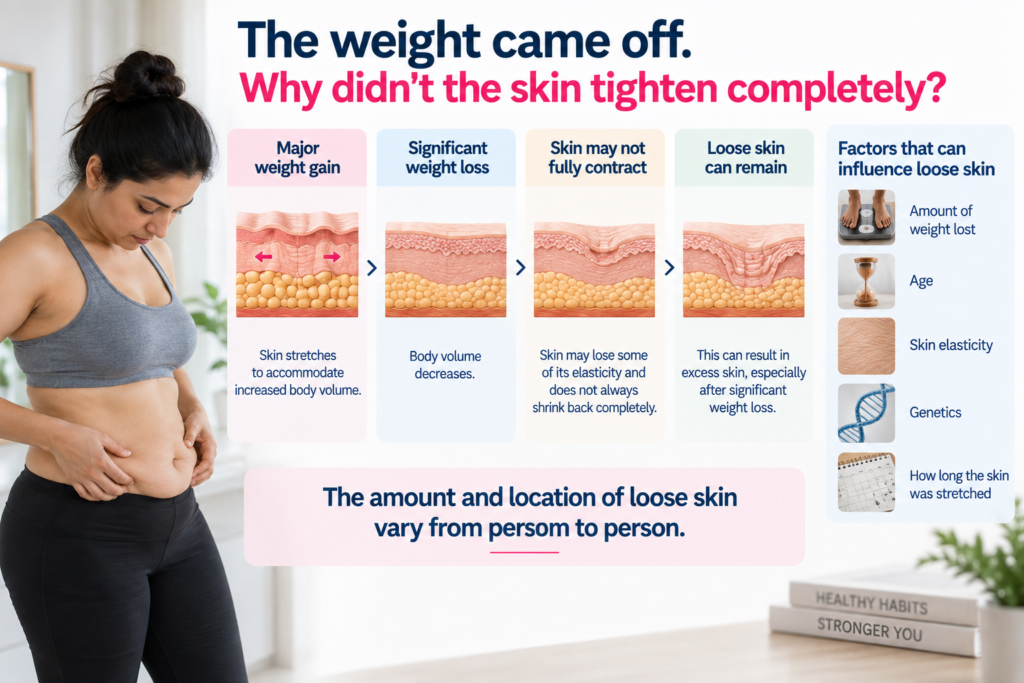
Skin stretches as the body increases in size. After substantial weight loss, it may not have enough elasticity to contract completely around the reduced body volume.
The amount of loose skin varies considerably. Age, genetics, the amount of weight lost, skin elasticity and how long the skin remained stretched can all influence the result.
The location of the excess skin also differs. One person may mainly have abdominal skin laxity, while another may have loose skin around the arms, thighs, breasts and lower torso.
This is why post-weight-loss body contouring is planned according to the individual rather than around a single standard procedure.
Is Stable Weight Important Before Body Contouring?
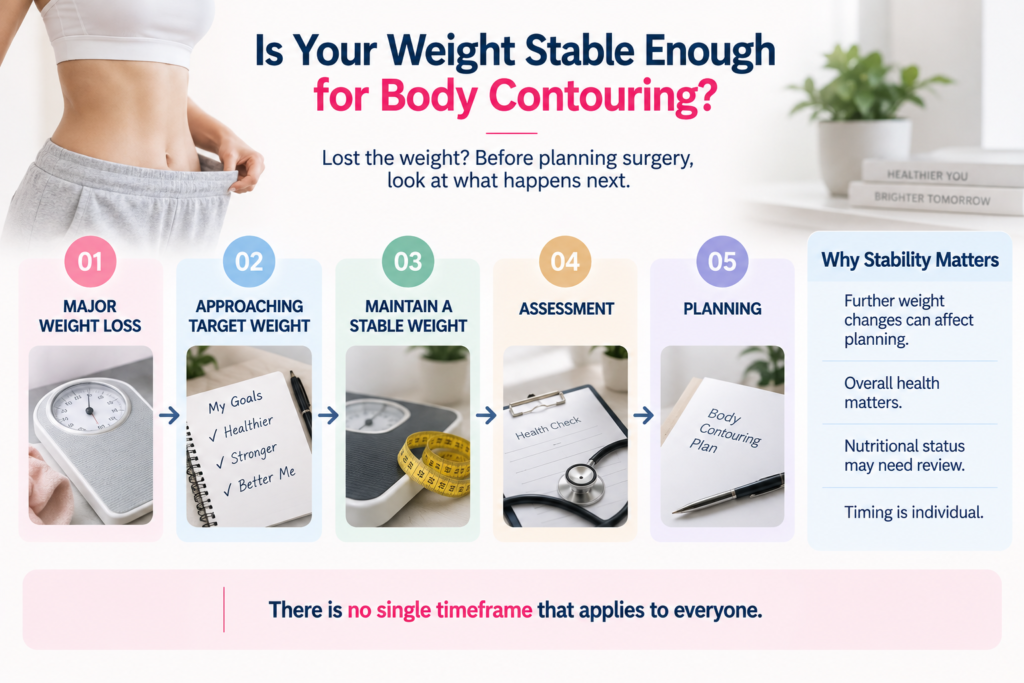
Yes. Weight stability is an important consideration when planning body-contouring surgery after major weight loss.
The American Society of Plastic Surgeons notes that people considering post-weight-loss body contouring should generally have reached, or come close to, their target weight and be able to maintain a stable weight. Significant weight fluctuations can affect the surgical outcome and may increase complications.
There is no single number on the weighing scale that applies to every patient. Timing depends on the person’s weight history, health and circumstances.
If your weight loss followed bariatric surgery or another major weight-loss treatment, nutritional status also deserves attention. Recent ASPS guidance highlights the importance of identifying nutritional deficiencies and ensuring adequate protein, vitamins and minerals before body-contouring surgery because nutritional problems can interfere with wound healing.
What Are the Main Body-Contouring Options?
Tummy Tuck or Abdominoplasty
A tummy tuck focuses on the abdomen. It can remove excess abdominal skin and, depending on the surgical plan, address changes in the abdominal wall.
It may be considered when a significant amount of loose skin remains around the abdomen after weight loss.
A tummy tuck and liposuction serve different purposes. Liposuction primarily removes localized fat, while a tummy tuck addresses excess abdominal skin and the abdominal contour.
A tummy tuck leaves a surgical scar. Before surgery, ask where the scar is expected to sit, how extensive it may be and what factors can influence healing.
Lower Body Lift
A lower body lift may be considered when excess skin extends beyond the abdomen and involves areas around the lower torso, buttocks or outer thighs.
After major weight loss, loose skin may affect several connected areas. A lower body lift can therefore form part of a broader contouring plan when the patient’s anatomy makes it appropriate. ASPS includes lower body lifts among the procedures used to address sagging tissues after substantial weight loss.
Because this can involve a larger surgical area, the extent of surgery, expected recovery and possible complications need to be discussed carefully.
Arm Lift or Brachioplasty
Significant weight loss can leave loose skin along the upper arms.
An arm lift, also called brachioplasty, removes selected excess skin from the upper arm. The procedure leaves a scar, and its location and length depend on the surgical approach and the amount of skin that needs to be removed.
The decision involves weighing the concern caused by loose skin against the permanent scar that comes with surgical skin removal.
Thigh Lift
Loose skin can also remain around the thighs following substantial weight loss.
A thigh lift can address selected areas of excess thigh skin. The appropriate approach depends on where the laxity is located and how much excess tissue is present.
A physical examination is needed before deciding whether a thigh lift, another procedure or no surgery is appropriate.
Breast Lift or Breast Contouring
Major weight loss can alter breast volume and leave loose or sagging skin.
Depending on the individual’s anatomy and goals, breast-contouring surgery may be considered. This can include a breast lift or another breast procedure when appropriate.
The treatment plan depends on factors such as breast shape, the amount of excess skin, remaining tissue volume and the patient’s goals.
Liposuction
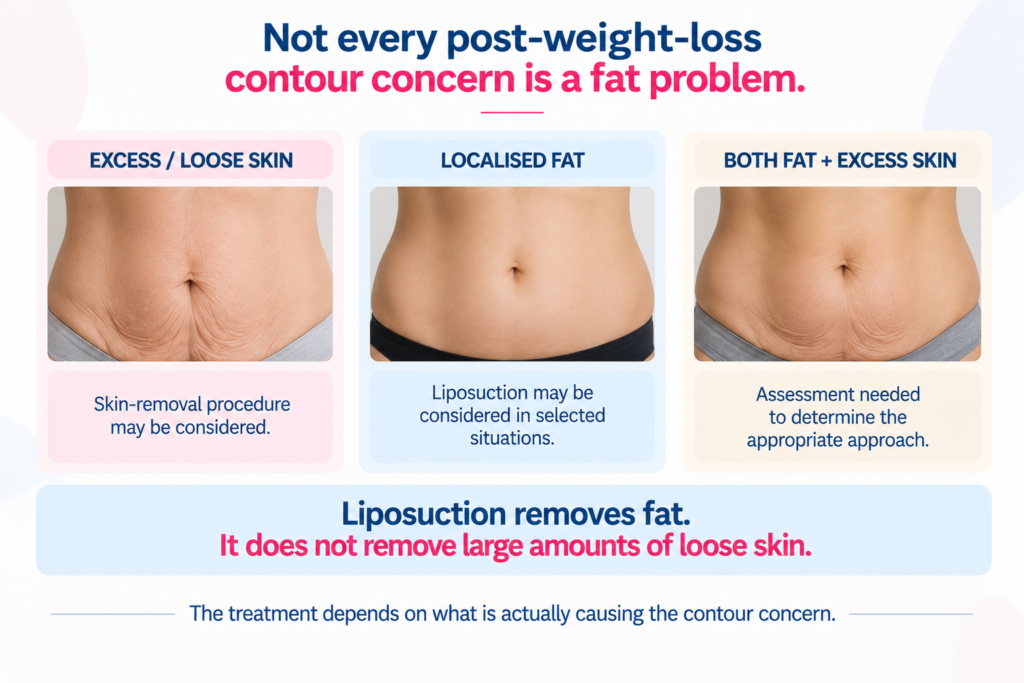
Liposuction removes selected deposits of localized fat. It is not a treatment for major weight loss.
APTA Clinic’s source material describes liposuction as a procedure for localized fat deposits rather than a weight-loss solution.
After major weight loss, liposuction may sometimes be considered when localized fat remains and the skin has suitable characteristics. However, liposuction alone does not remove large amounts of loose skin. When significant skin laxity is present, a skin-removal procedure may need to be considered.
Can More Than One Body-Contouring Procedure Be Performed?
Sometimes more than one area needs attention. For example, a person may have excess abdominal skin along with loose skin around the arms or thighs.
Depending on the circumstances, a surgeon may discuss treating more than one area during the same operation or dividing treatment into separate stages.
The decision depends on factors such as:
- Overall health
- The amount and location of excess skin
- The extent of the proposed surgery
- Previous operations
- Nutritional status
- Anaesthesia considerations
- Expected recovery
- Individual surgical risk
Treating every affected area at once is not automatically appropriate. The overall surgical burden needs to be considered when planning treatment.
How Do You Know Which Procedure You May Need?
The location and amount of excess skin are important starting points.
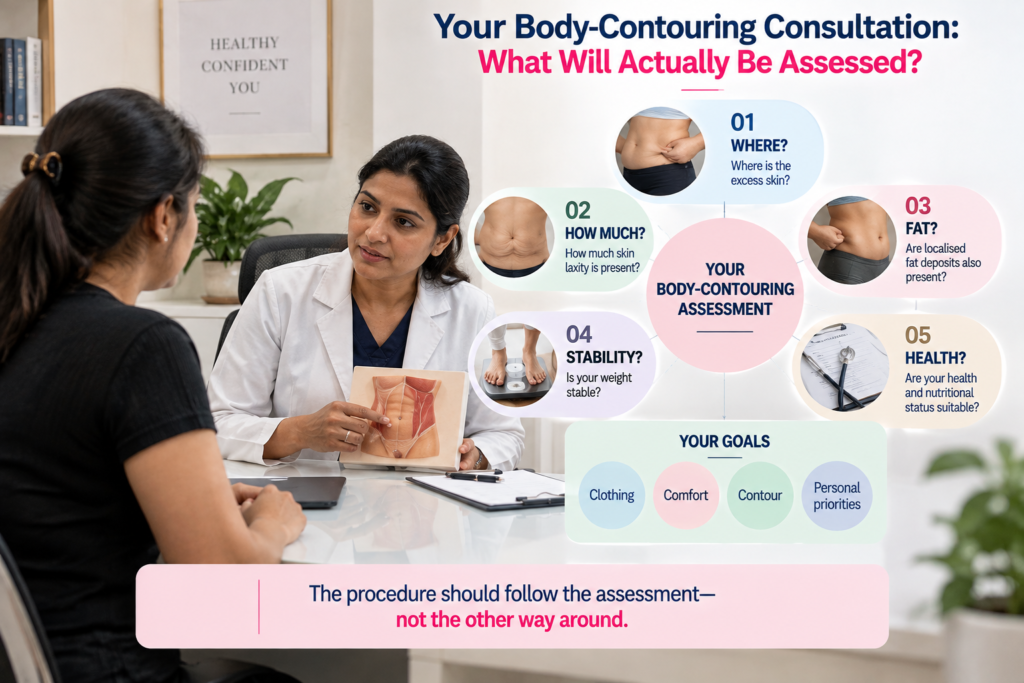
During a consultation, your plastic surgeon may assess several things.
Where Is the Excess Skin?
Is the main concern around the abdomen, arms, thighs, breasts, buttocks or several areas?
The answer helps determine which procedures could address the affected tissue.
How Much Skin Is Present?
A small amount of skin laxity and extensive hanging skin can require very different approaches.
Is There Localized Fat?
If some localized fat remains, liposuction may be discussed where appropriate. It should not be considered a substitute for surgery designed to remove significant excess skin.
Is Your Weight Stable?
Continued major weight changes can alter the body-contouring plan and the eventual contour. Stable weight is generally an important part of planning post-weight-loss body contouring.
Are You Medically Fit for Surgery?
Your medical history, medications, smoking status, nutritional status and other health factors can influence whether elective surgery is appropriate.
What Are Your Goals?
Some people are primarily concerned about clothing fit. Others are bothered by a particular area of loose skin or want changes to their overall body contour.
These goals should be discussed during consultation so the proposed treatment addresses the concerns that matter to you.
Why Nutrition Matters After Major Weight Loss
Nutrition deserves particular attention after substantial weight reduction.
People who have lost a significant amount of weight, particularly following bariatric surgery, can develop nutritional deficiencies. Current ASPS guidance highlights nutritional screening and individualized nutritional planning before body-contouring surgery because inadequate nutrition can affect wound healing and recovery.
Your surgeon may therefore recommend reviewing your nutritional status before elective surgery.
This is also why deliberately following a restrictive diet immediately before surgery should not be assumed to be helpful. Your medical team can advise you about appropriate nutrition and preparation based on your circumstances.
What About Scarring?
Scarring is an important part of any surgical body-contouring discussion.
The location, length and appearance of scars depend on the procedure, surgical approach and individual healing.
For example, a tummy tuck produces an abdominal scar, while an arm lift or thigh lift leaves a scar in the treated area.
Before surgery, ask:
- Where will the scar be?
- How extensive is it expected to be?
- How does the scar usually change during healing?
- What wound-care instructions will I need?
- What factors could affect my healing?
The expected contour is only one part of the decision. Scarring and recovery should also be understood before consenting to surgery.
What Is Recovery Like After Body Contouring?
Recovery depends on the procedure performed and the amount of surgery involved.
After body-contouring surgery, patients may experience swelling, bruising, discomfort and temporary restrictions on physical activity. A more extensive operation generally requires more recovery planning than a smaller procedure.
Your surgeon should give you specific instructions about:
- Wound care
- Medication
- Physical activity
- Driving
- Returning to work
- Exercise
- Follow-up appointments
- Warning signs that need medical attention
It is difficult to compare your recovery directly with someone else’s. Different procedures, surgical extent and individual health factors can result in very different recovery experiences.
What Are the Potential Risks?
Body-contouring surgery is significant surgery and carries potential risks.
Possible complications can include bleeding, infection, blood clots, fluid accumulation, poor wound healing, changes in skin sensation, skin loss, scarring and contour irregularities. The risks vary according to the procedure and the patient’s individual circumstances.
For patients who have experienced major weight loss, wound-healing and nutritional issues deserve particular attention. Recent ASPS guidance notes that nutritional deficiencies can contribute to healing problems after body contouring.
A consultation should include a clear discussion of both the expected changes and the potential complications.
What Should You Ask During a Body-Contouring Consultation?
If you are considering body contouring in Mysore after major weight loss, preparing questions before your appointment can make the consultation more useful.
You may want to ask:
- Which areas of excess skin could be treated?
- Would skin-removal surgery, liposuction or a combination be appropriate?
- Is my current weight stable enough for surgery?
- Should I wait longer before considering the procedure?
- How does my medical history affect the treatment plan?
- Do I need a nutritional assessment?
- Where will the surgical scars be?
- What activity restrictions should I expect?
- How much time should I plan for recovery?
- What complications should I understand before consenting to surgery?
- Could more than one area be treated?
- Would staged procedures be more appropriate if several areas need treatment?
These questions can help you understand why a particular treatment is being proposed and what the surgery would involve.
Body Contouring in Mysore: What to Consider Before Choosing a Clinic
When researching body-contouring surgery, look beyond photographs or an advertised price.
Before proceeding, make sure you understand:
- Who will evaluate you
- The surgeon’s relevant qualifications
- Which procedures are being proposed
- What the surgery involves
- Where the scars are expected to be
- What recovery may involve
- What complications are possible
- How follow-up will be handled
- What the quoted treatment cost includes
APTA Clinic is a multi-specialty clinic in Mysuru. Its listed services include plastic surgery, facial surgery, dermatology, dental care, trichology and diabetic foot care. The clinic lists Dr. B. Akshata Kamath, MBBS, MS, MCh, as a Plastic & Reconstructive Surgeon.
The clinic’s body-contouring information describes consultation-based planning and includes options such as liposuction and tummy tuck procedures.
Is Body Contouring Right After Major Weight Loss?
There is no single answer that applies to everyone.
Some people may have enough loose skin to consider surgery, while others may not need or want a procedure. Suitability depends on factors such as the amount and location of excess skin, weight stability, general health, nutritional status, anatomy and personal goals.
Body contouring also should not be viewed as a replacement for weight management. Its purpose is to address changes in body contour after weight reduction.
If you have lost a significant amount of weight and are concerned about loose skin, a consultation can help determine whether surgical body contouring is appropriate and which areas may need attention.
Body Contouring in Mysore After Weight Loss: Final Considerations
Major weight loss can leave changes that diet and exercise alone cannot always address. For some people, the main concern is loose abdominal skin. For others, the arms, thighs, breasts or lower body may be affected.
The appropriate procedure depends on your anatomy and health rather than the amount of weight you have lost alone. Stable weight, adequate nutrition, medical fitness, expected scarring and recovery should all form part of the discussion before surgery.
If you are considering body contouring in Mysore, a consultation with a qualified plastic surgeon can help you understand the available options and whether surgery is appropriate for your situation.
Medical Disclaimer
This article is for general educational purposes and does not replace an individual consultation, examination or medical advice from a qualified healthcare professional.
Frequently Asked Questions (FAQs)
Body contouring is a group of surgical procedures used to address excess skin, selected areas of localized fat and changes in body contour after substantial weight loss. It is not a weight-loss treatment.
No. Suitability depends on factors such as the amount and location of excess skin, weight stability, overall health, nutritional status, anatomy and personal goals.
There is no single timeframe that applies to every patient. In general, surgeons want weight to be stable before elective post-weight-loss body contouring because further significant changes can affect treatment planning and the final contour.
In selected patients, more than one procedure may be considered. However, combining procedures is not appropriate for everyone. The extent of surgery, overall health, nutritional status and individual surgical risk need to be assessed.
Yes. Potential risks include bleeding, infection, blood clots, fluid accumulation, poor wound healing, changes in sensation, skin loss, scarring and contour irregularities. Individual risks should be discussed with your surgeon.
Body contouring should not automatically be scheduled immediately after bariatric surgery. Weight stability, recovery and nutritional status need to be considered before elective surgery. The appropriate timing should be discussed with your treating and plastic surgeons.
The choice depends on the location and amount of excess skin, localized fat, skin quality, weight stability, medical history, nutritional status and your goals. A clinical examination is needed before deciding which procedure may be appropriate.
Yes. Surgical body contouring involves incisions and therefore leaves scars. Their location and extent vary according to the procedure and the patient’s healing. Scar placement should be discussed before surgery.
APTA Clinic has a dedicated body-contouring service page and describes treatment options including liposuction and tummy tuck procedures.
You can contact APTA Clinic to arrange a consultation. The appointment can be used to discuss your weight-loss history, areas of excess skin, health considerations, possible procedures, recovery and risks.