Reconstructive vs Cosmetic Facial Surgery: Which Approach Addresses Your Concern?
- Home
- Blog
- About Us
Facial surgery can serve different purposes. Some procedures help repair damage caused by an injury, address a congenital difference or improve a problem with facial structure. Others focus on changing an existing feature to better match a person’s aesthetic preferences. These are the broad aims of reconstructive and cosmetic facial surgery.
The distinction depends mainly on the reason for treatment. Reconstructive surgery generally aims to restore form or function affected by a medical condition, injury or developmental difference. Cosmetic surgery aims to change appearance when the primary concern is aesthetic. The two can overlap, as a procedure may improve facial function and appearance at the same time.
At APTA Clinic in Mysore, the website lists facial surgery services that include facial trauma care, cleft surgeries, orthognathic surgery and correction of facial asymmetry. The appropriate treatment for an individual concern depends on a clinical assessment, the structures involved and the person’s goals.
If you are unsure which type of facial surgery may be relevant, understanding the difference can help you prepare for a consultation with a qualified specialist.
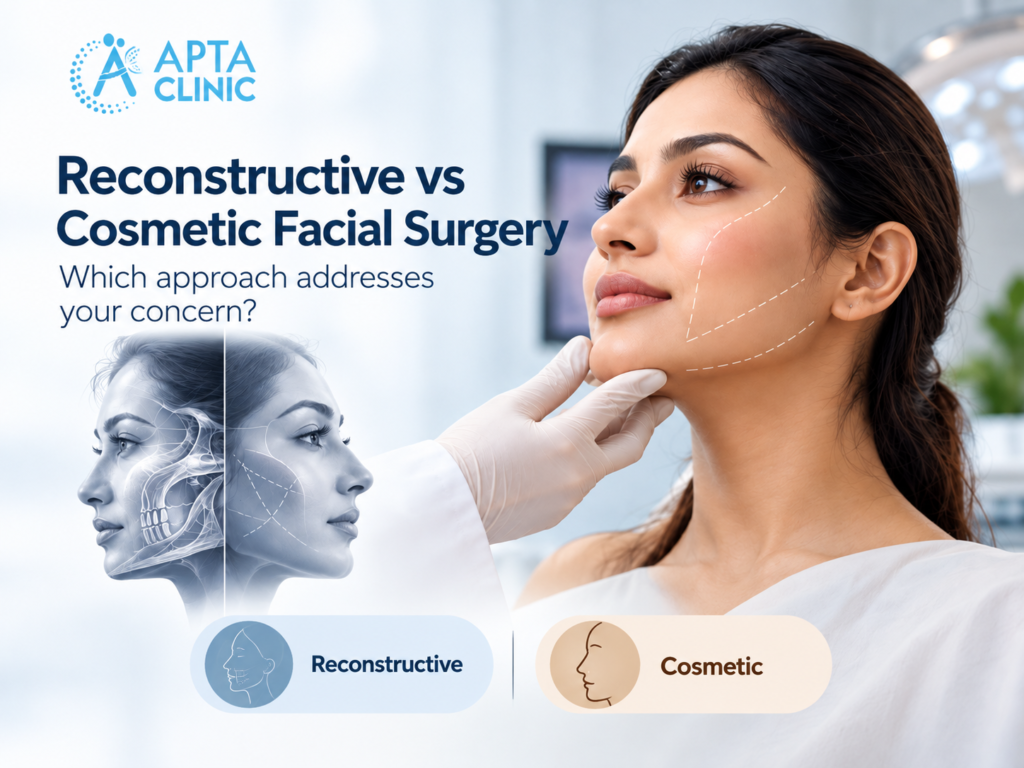
What Is the Difference Between Reconstructive and Cosmetic Facial Surgery?
The main difference between reconstructive and cosmetic facial surgery is the purpose of treatment, rather than simply how the procedure is performed. Some techniques used in reconstructive surgery may also be used in cosmetic procedures, depending on the patient’s needs and treatment goals.
Reconstructive Facial Surgery
Reconstructive facial surgery addresses changes or abnormalities in facial structures caused by conditions such as injuries, congenital differences, disease or developmental problems. Depending on the case, the goal may be to improve function, restore structure, improve appearance or address a combination of these concerns.
Examples include repairing certain facial injuries or fractures, addressing selected congenital facial differences such as cleft conditions, evaluating significant jaw-position problems that affect the bite or facial structure, and correcting selected structural differences following injury or disease. The procedure depends on the problem being treated. Not every facial injury or structural difference requires surgery, and the recommended treatment may involve another medical specialty.
Cosmetic Facial Surgery
Cosmetic facial surgery focuses primarily on changing the appearance of facial features. Someone may consider it because they are unhappy with a feature’s shape, proportion or contour, even when that feature does not cause a functional problem.
Depending on the procedure and the provider’s services, cosmetic concerns may involve facial contours, the nose, chin or other features. A consultation helps establish whether surgery is suitable, whether a less invasive option is reasonable and what limitations apply.
Aesthetic treatment should be based on an informed decision rather than pressure to match a particular face, photograph or beauty trend. A responsible consultation includes a discussion of potential risks, alternatives and realistic outcomes.
Can One Procedure Be Both Reconstructive and Cosmetic?
reconstructive and cosmetic surgery are not always separate categories. For example, treatment for a facial injury may need to address both the alignment of affected structures and the resulting appearance. Jaw surgery may be considered because of a functional bite problem while also changing facial proportions.
The medical reason for treatment, the expected benefits and the risks all matter when deciding how a procedure should be classified.
When Is Reconstructive Facial Surgery Considered?
A reconstructive assessment may be appropriate when a facial concern affects function, follows an injury or relates to a congenital or structural difference. The suitable treatment depends on the cause of the concern, its severity and the structures involved.
Facial Injury or Trauma
An accident, fall or other injury can affect the bones, soft tissues or other structures of the face. Some injuries need urgent assessment, while others may leave a lasting change in contour or alignment that can be evaluated after the immediate injury has been managed.
The appropriate treatment depends on the location and severity of the injury. A person should not assume that every visible change requires an operation. A medical professional can determine whether observation, wound care, further investigations, specialist referral or reconstructive treatment is appropriate.
Congenital Facial Differences
Some facial differences are present from birth or develop as the face grows. These may affect appearance, speech, feeding, dental alignment or other functions, depending on the condition. Treatment planning can involve more than one specialty and may take a person’s age and stage of development into account.
APTA Clinic lists cleft surgeries among its facial surgery services. The suitability and availability of a particular procedure should be confirmed directly with the clinic.
Jaw Alignment and Bite Concerns
The position of the upper and lower jaws can influence facial proportions and how the teeth meet. In selected cases, an assessment for orthognathic surgery may be appropriate, particularly when a significant jaw discrepancy affects the bite or other functions.
Not every uneven jaw or bite problem needs surgery. Dental or orthodontic treatment may be appropriate in some cases, while more complex skeletal concerns require specialist evaluation. The treatment decision depends on the underlying cause, the severity of the problem and the patient’s individual needs.
Patients can refer to APTA Clinic’s orthognathic surgery service for related information.
Facial Asymmetry
The two sides of a person’s face are rarely identical. Mild differences are common and do not automatically require treatment. More noticeable asymmetry can arise from bone structure, dental alignment, soft tissue, previous injury or other causes.
The first step is to identify what is contributing to the difference. A treatment intended to change soft-tissue volume, for instance, may not address an underlying jaw-position problem. A qualified specialist can assess the relevant structures and explain which treatment options, if any, may be suitable.
APTA Clinic has a dedicated page on facial asymmetry treatment in Mysore.
When Might Cosmetic Facial Surgery Be Appropriate?
Cosmetic facial surgery may be considered by someone who wants to change a feature’s appearance and understands the possible benefits, limitations and risks. A consultation should explore the specific concern rather than begin with a predetermined procedure.
Two people who describe the same feature as uneven may have different anatomy and different expectations. They may therefore need different advice. Before deciding on treatment, consider what specific change you would like to make, whether the concern is mainly about appearance or also affects function, and whether the feature is stable or has changed recently.
It is also important to discuss non-surgical alternatives where appropriate, understand the likely recovery period and potential complications, and establish whether your expectations are realistic for your anatomy and the proposed procedure.
A specialist may advise against surgery if the likely benefit is limited, the risks outweigh the expected benefit or another approach is more suitable. Choosing not to proceed is also a valid outcome of a consultation.
APTA Clinic lists facial rejuvenation among its services. Contact the clinic to confirm which specific cosmetic facial procedures are currently available and which specialist assesses them.
Can Facial Surgery Improve Both Function and Appearance?
Yes, facial surgery can improve both function and appearance in selected cases. Facial structure, appearance and function can be closely connected. Jaw position may influence both the bite and the outline of the lower face. An injury can affect facial movement or alignment as well as appearance. Congenital conditions can also involve functional and aesthetic concerns.
However, a change in appearance does not automatically mean function will improve. Similarly, an operation intended to improve function may not produce a particular cosmetic result.
During a consultation, ask the specialist which problem the proposed procedure is intended to address and whether the expected benefit is functional, aesthetic or both. It is also helpful to understand what the procedure is unlikely to change, whether other specialists or treatments should be considered, and what risks and recovery requirements apply to your situation.
These questions help ensure that the treatment plan addresses your actual concern rather than an assumed one.
Which Facial Surgery Approach May Address Your Concern?
- The following examples can help you prepare for a consultation. They are general guidance, not a diagnosis or a recommendation for an individual patient.
|
|
|
|
|
|
|
|
|
|
|
|
|
|
- The last example is particularly important. Sudden facial drooping or weakness, especially with difficulty speaking, weakness in an arm or other sudden neurological symptoms, may be a sign of stroke. Seek emergency medical help immediately. Do not wait for a routine facial surgery consultation.
What Happens During a Facial Surgery Consultation?
- A consultation gives the specialist an opportunity to understand the concern, review relevant history and decide whether further assessment is needed.
- 1. Discussing your concern
- You may be asked when you first noticed the difference, whether it has changed, whether it followed an injury and whether it affects daily activities. Explain what you would like to improve and any concerns you have about treatment.
- 2. Reviewing medical and dental history
- Your history may include previous facial injuries or operations, dental or orthodontic treatment, current medicines, allergies and relevant medical conditions. Share this information accurately, including previous cosmetic procedures.
- 3. Examining the relevant structures
- The examination will depend on the concern. It may include looking at facial proportions, jaw position, bite, soft tissues or facial movement. Photographs or imaging may be considered if they would help answer a clinical question.
- Not every patient needs every test. The specialist should explain why an investigation is recommended and how its findings could influence the plan.
- 4. Discussing possible approaches
- Depending on the findings, the options may include observation, non-surgical treatment, dental or orthodontic care, surgery, or assessment by another specialist. The available choices depend on the condition and the services provided by the clinic.
- 5. Making an informed decision
- Before agreeing to a procedure, ask about its purpose, likely benefits, limitations, alternatives, risks, expected recovery and follow-up. You should have enough information to decide without feeling pressured to proceed immediately.
- A consultation does not mean that surgery is automatically necessary.
How Are Treatment Options Decided?
The treatment plan should reflect the cause of the concern rather than the appearance of the feature alone. A difference caused by soft tissue may need a different approach from one involving the facial bones or jaw. Treating the visible contour without understanding the cause may not address the concern as expected.
Function can also influence the decision. A bite problem, difficulty related to an injury or another functional concern may require assessment beyond cosmetic appearance. Age and development can matter because facial growth, medical history and the stability of a condition may affect when certain treatments are considered.
The expected benefits must justify the risks. Surgery involves recovery and possible complications, so the specialist should explain the trade-offs, including the option of not treating a concern when intervention is unlikely to provide enough benefit.
Your expectations should also be clear. Describing the change you hope to see in practical terms can help the specialist understand your goals. Photographs may help communicate a concern, but they cannot guarantee that a particular result is achievable.
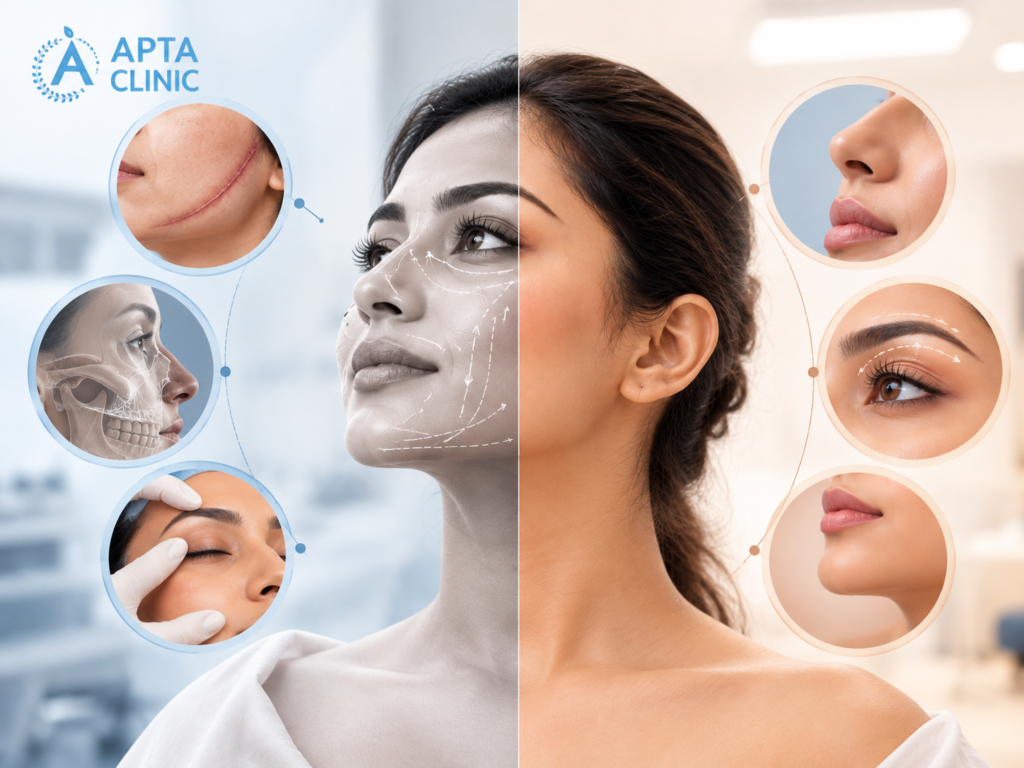
Risks, Recovery and Realistic Expectations
The risks and recovery period vary considerably between facial procedures. A consultation should cover the risks that apply to the proposed treatment rather than offering a general assurance that facial surgery is safe.
Possible risks of surgery include bleeding, infection, scarring, reactions to anaesthesia, changes in sensation, asymmetry, healing problems and the possibility that the result may differ from expectations. Other risks depend on the procedure and the structures involved.
Recovery may involve swelling, bruising, tenderness, changes in diet or activity, wound care and follow-up visits. The length of recovery cannot be estimated accurately until the proposed procedure is known.
Before treatment, ask the specialist how much time you should allow for recovery, which symptoms are expected and which require medical attention. Discuss when you can return to work, exercise and normal activities, what follow-up appointments will be needed, and what to do if your recovery or results differ from what was discussed.
Follow the treating professional’s aftercare instructions and contact the clinic if you have concerns during recovery. Seek urgent medical care for severe or rapidly worsening symptoms.
Risks and Possible Complications
Orthognathic surgery is a significant operation. It can help selected patients with skeletal jaw problems, but it also has risks. Your surgeon should explain which risks apply to the planned procedure and how they will be managed.
Possible complications include:
- Bleeding or infection.
- Reactions or complications related to general anaesthesia.
- Swelling, pain or difficulty opening the mouth during recovery.
- Temporary or persistent changes in sensation, including numbness or tingling.
- Dental injury or problems with the bite.
- Delayed healing or changes in the position of the jaw during healing.
- The need for further treatment or an adjustment to the treatment plan.
The list is not exhaustive, and the likelihood of each complication varies. Ask about the risks specific to your operation rather than relying on a general statement that surgery is safe.
How Much Does Facial Surgery Cost in Mysore?
The cost of facial surgery in Mysore depends on the procedure, the complexity of the concern, the investigations required, the clinical setting, anaesthesia where applicable and follow-up care. Reconstructive and cosmetic procedures can differ substantially in their scope, so a single price would not be meaningful for every patient.
For an accurate estimate, ask the clinic to explain what the quoted fee includes. Depending on the proposed treatment, you may want to ask about consultation fees, investigations, surgical or facility charges, medicines, follow-up visits and any additional costs.
Insurance coverage also depends on the policy and the reason for treatment. Some policies distinguish between medically necessary reconstructive care and elective cosmetic procedures, but coverage is not automatic. Ask your insurer and the treating provider to confirm the position for your specific case before making financial decisions.
APTA Clinic does not publish a verified price for every facial surgery procedure on the pages reviewed for this article. Contact the clinic for current fees and procedure-specific information.
When should you contact a clinician urgently?
Follow the emergency and aftercare instructions provided by your surgical team. Seek urgent medical care for difficulty breathing, uncontrolled bleeding, rapidly increasing swelling or another severe or rapidly worsening symptom. Contact your surgeon promptly for fever, discharge from the wound, worsening pain or concerns about hydration or nutrition.
If you have not had surgery and develop a sudden jaw or facial change after an injury, seek timely medical assessment. Do not treat an acute injury as a routine cosmetic concern.
Cost of Orthognathic Surgery in Mysore
The cost of jaw correction surgery varies with the procedure and the care required. A treatment plan involving one jaw may have different costs from a more complex plan involving both jaws. Orthodontic treatment, investigations, hospital or facility charges, anaesthesia, medicines and follow-up can also affect the overall amount.
Before making a decision, ask for an itemised estimate and clarify which elements are included. Ask whether orthodontic care is billed separately and whether additional costs may arise during recovery.
Insurance coverage depends on the policy, exclusions and the medical reason for treatment. Do not assume that corrective jaw surgery is automatically covered or excluded. Check with your insurer and request confirmation for your specific treatment plan.
APTA Clinic’s publicly available page does not provide a verified, procedure-specific price for every type of orthognathic surgery. Contact the clinic to enquire about current consultation fees, procedure availability and costs.
Reconstructive and Cosmetic Facial Surgery at APTA Clinic, Mysore
APTA Clinic’s website lists facial surgery services, including facial trauma care, cleft surgeries, orthognathic surgery and correction of facial asymmetry. Its website also lists facial rejuvenation under plastic surgery services. The exact procedure, clinical suitability and current availability should be confirmed with the clinic.
If you are uncertain whether your concern is reconstructive, functional or primarily cosmetic, explain what has changed, how long you have noticed it and whether it affects your daily life. This gives the clinic a clearer starting point for directing your enquiry.
Contact APTA Clinic
You can contact APTA Clinic by phone at +91 7411 707 555 or by email at aptaclinics@gmail.com. The clinic is located in Krishnamurthy Puram, Mysore, Karnataka. Visit the APTA Clinic website to enquire
Frequently Asked Questions (FAQs)
Reconstructive surgery generally aims to restore form or function affected by injury, a congenital difference, disease or another medical condition. Cosmetic surgery primarily aims to change appearance. Some procedures have both functional and aesthetic goals.
No. Reconstructive treatment may be considered for congenital differences, developmental problems, disease-related changes or injuries. Whether surgery is appropriate depends on the condition and the person’s needs.
Cosmetic surgery is generally intended to address appearance rather than a medical problem. However, the distinction depends on the reason for treatment and the clinical circumstances. A specialist can explain the purpose of a proposed procedure.
It can in selected cases. For example, treatment for a jaw-position problem may address a bite concern and also change facial proportions. The expected functional and aesthetic outcomes should be discussed separately during consultation.
The appropriate specialist depends on the concern. Facial injuries, jaw-position problems, congenital conditions and cosmetic concerns may require different expertise. Check the clinician’s qualifications and experience relevant to the proposed procedure, and ask whether another specialty should be involved.
The reason for the concern is a useful starting point, but it does not determine the answer on its own. A specialist needs to assess the affected structures, function, medical history and your goals before discussing appropriate options.
The clinician will usually discuss your concern and medical history, examine the relevant area and decide whether further assessment is needed. You can then discuss possible treatments, alternatives, risks, recovery and costs. A consultation does not commit you to surgery.
Coverage depends on the policy, the medical reason for treatment, exclusions and the insurer’s approval process. Do not assume that a procedure will be covered or excluded based on its name alone. Obtain written confirmation where possible.
APTA Clinic lists locations in Krishnamurthy Puram and Vijayanagar, Mysore.