
Skin Allergies and Recurrent Rashes: What Could Be Triggering Them?
- Home
- Blog
- About Us
A rash that keeps coming back can be frustrating, particularly when you cannot work out what is causing it. You may notice itching, redness, dryness, burning, small bumps or swelling. The symptoms may settle for a while and then return.
A recurring rash does not necessarily mean you have a skin allergy.
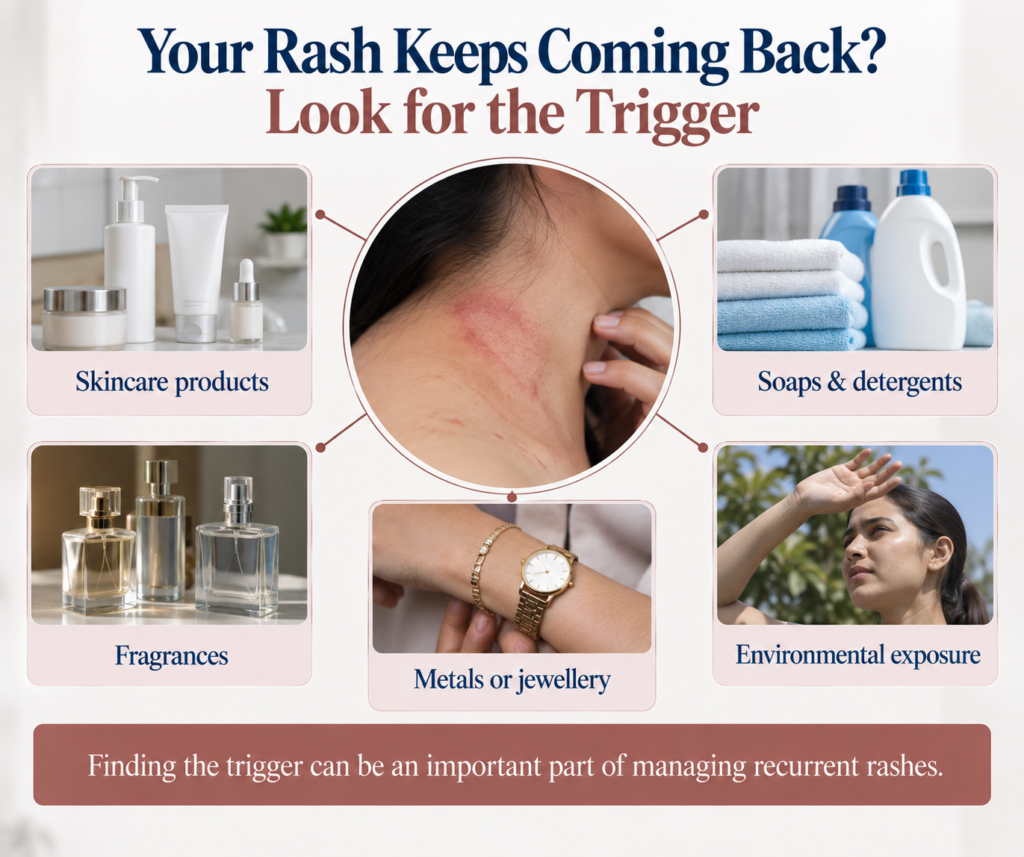
Allergic contact dermatitis, irritant contact dermatitis, eczema, fungal infections and other inflammatory skin conditions can look similar. Sometimes the trigger is something that comes into regular contact with the skin, such as a cosmetic, fragrance, detergent, jewellery or hair product.
Finding the cause is an important part of skin allergy treatment in Mysore. A dermatologist can look at the pattern of the rash, your symptoms, medical history and possible exposures before deciding what treatment may be appropriate.
What Is a Skin Allergy?
A skin allergy occurs when the immune system reacts to a substance that is normally harmless to most people. Contact with the allergen can produce itching, redness, swelling or a rash.
One example is allergic contact dermatitis. It develops when an allergen that touches the skin triggers an immune response. Fragrances, certain metals, cosmetics and other substances can cause this type of reaction.
There is another condition that can look very similar: irritant contact dermatitis. In this case, the substance directly irritates or damages the skin rather than triggering an allergic immune response.
The distinction matters because the cause affects how the rash should be managed.
Allergic reactions
Allergic contact dermatitis can develop after the skin has become sensitised to a particular substance. The reaction does not necessarily appear immediately after every exposure, which can make the trigger difficult to identify.
Irritation from products or substances
A rash can result from irritation rather than a true allergy.
Soaps, detergents, solvents, repeated water exposure, friction, heat and sweating can irritate the skin. Repeated exposure can affect the skin barrier and lead to dryness, redness, burning or cracking.
Eczema and other inflammatory conditions
Some inflammatory skin conditions naturally flare and settle over time. In these cases, there may not be one external allergen responsible for every episode.
Environmental factors
Heat, sweating, humidity, dust and other environmental exposures can aggravate some skin conditions.
Infections
Certain fungal and other skin infections can produce persistent or recurring rashes. These require a different treatment approach from an allergic reaction.
Medicines
Some medicines can cause skin reactions. If a rash began after starting or changing a medicine, tell your doctor. Do not stop a prescribed medicine on your own.
A rash that repeatedly returns does not, by itself, confirm that you have an allergy.
Why Do Skin Rashes Keep Coming Back?
A recurring rash can have several explanations.
Continued exposure to a trigger
If you continue using or encountering the substance responsible for the reaction, the rash can keep returning.
Potential sources include:
- Skincare products
- Perfume or fragrance
- Hair products
- Soap or cleanser
- Laundry detergent
- Jewellery
- Adhesives
- Workplace substances
One useful clue is when and where the rash appears. The pattern may reveal an exposure that is easy to overlook.
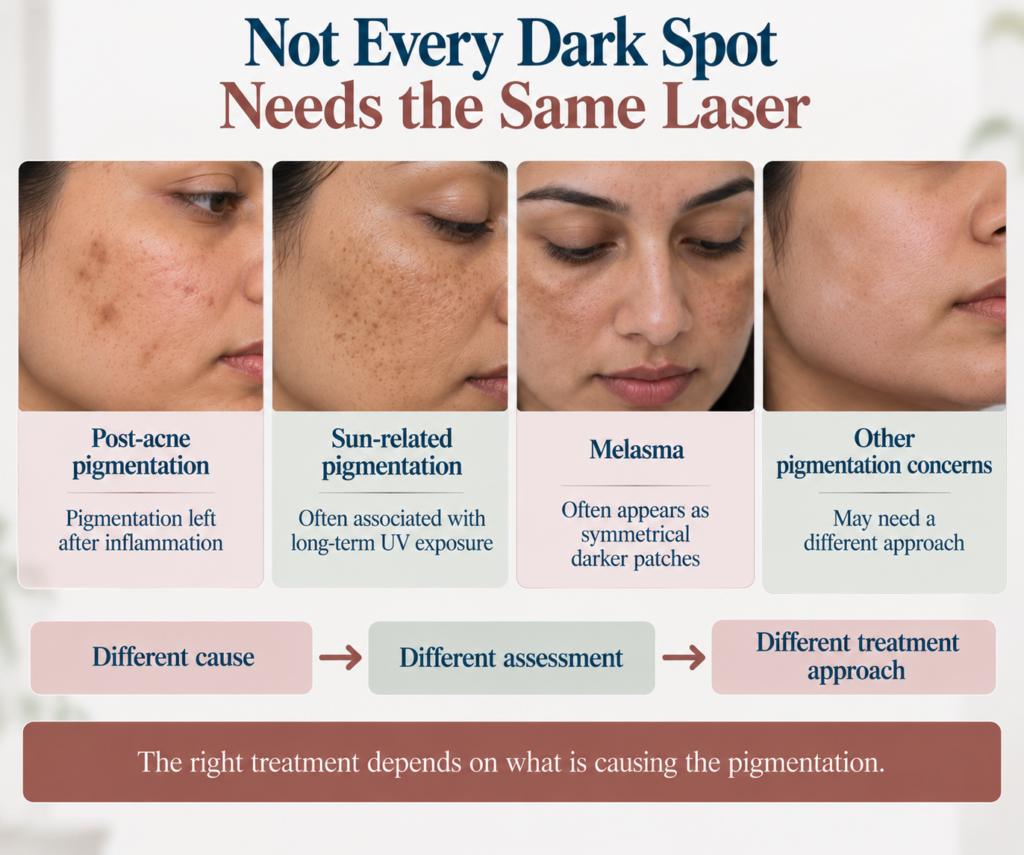
When Might Laser Skin Treatment Be Considered?
A dermatologist may consider laser or another light-based procedure when the diagnosis and characteristics of the pigmentation make it appropriate.
This may include:
- Selected sun-related pigmentation
- Certain superficial brown spots
- Some localized pigmentation concerns
- Pigmentation that has not responded sufficiently to other treatments
- Specific conditions for which a particular laser or light-based treatment is appropriate
The appearance of a dark spot alone does not determine whether laser treatment is suitable.
Your dermatologist may first assess the cause, skin characteristics and previous treatment history before deciding whether a procedure is worthwhile.
Some pigmentary problems can also become darker after physical treatments. Chemical peels, laser treatments and intense pulsed light can help selected pigmentation concerns, but they can also aggravate post-inflammatory pigmentation in some situations.
Common Triggers of Skin Allergies and Rashes
The trigger varies from person to person. Some common possibilities are worth considering.
Personal-care products
Products applied to the skin can cause irritation or allergic reactions in some people.
These include:
- Fragrances
- Cosmetics
- Moisturisers
- Cleansers
- Sunscreens
- Shampoos
- Hair dyes
- Other hair products
Fragrance ingredients are recognised causes of allergic contact dermatitis.
Household exposures
Everyday household products can irritate sensitive skin. These may include:
- Laundry detergents
- Cleaning products
- Disinfectants
- Soaps
- Other chemical products
Repeated exposure may be more problematic when the skin barrier is already irritated.
Metals and other materials
Jewellery containing metals such as nickel can cause allergic contact dermatitis in people who are sensitised to them.
Other possible exposures include adhesives, clothing materials and dyes.
Environmental factors
Some people notice that their symptoms become worse with:
- Heat
- Sweat
- Dust
- Humidity
- Friction
- Certain plants
- Particular work environments
These patterns can provide clues, but they are not enough by themselves to establish a diagnosis.
Medicines and other substances
A medication or another substance may sometimes be associated with a skin reaction.
If you think a medicine is responsible, speak with the prescribing doctor or another appropriate healthcare professional before making any changes.
What Do Skin Allergy Symptoms Look Like?
A skin reaction can cause:
- Itching
- Redness or other colour changes
- Dryness
- Burning
- Stinging
- Swelling
- Small bumps
- Blisters
- Scaling
- Cracking
- Tenderness
Contact dermatitis can occur on different parts of the body. The hands, face and neck are common areas, although other areas can also be affected.
The appearance of inflammation can vary with skin tone. On darker skin, inflammation may appear brown, purple or grey rather than bright red.
Because many conditions can look alike, the appearance of a rash alone cannot confirm that it is an allergy.
The American Academy of Dermatology similarly recommends consultation with a dermatologist before laser treatment, particularly because treatment choice and risks vary between skin types and conditions.
Skin Allergy vs Other Causes of Recurrent Rashes
Possible cause | What it means |
Allergic contact dermatitis | An immune reaction to an allergen that contacts the skin |
Irritant contact dermatitis | Direct irritation or damage caused by a substance or environmental exposure |
Eczema | A group of inflammatory skin conditions that can flare and settle |
Fungal infection | An infection that can cause persistent or spreading skin changes |
Other skin conditions | Conditions that need clinical assessment to identify the cause |
These conditions can overlap in appearance. A person can also have more than one skin problem at the same time.
A dermatologist may consider the location of the rash, timing, appearance, exposure history and other clinical findings before reaching a diagnosis.
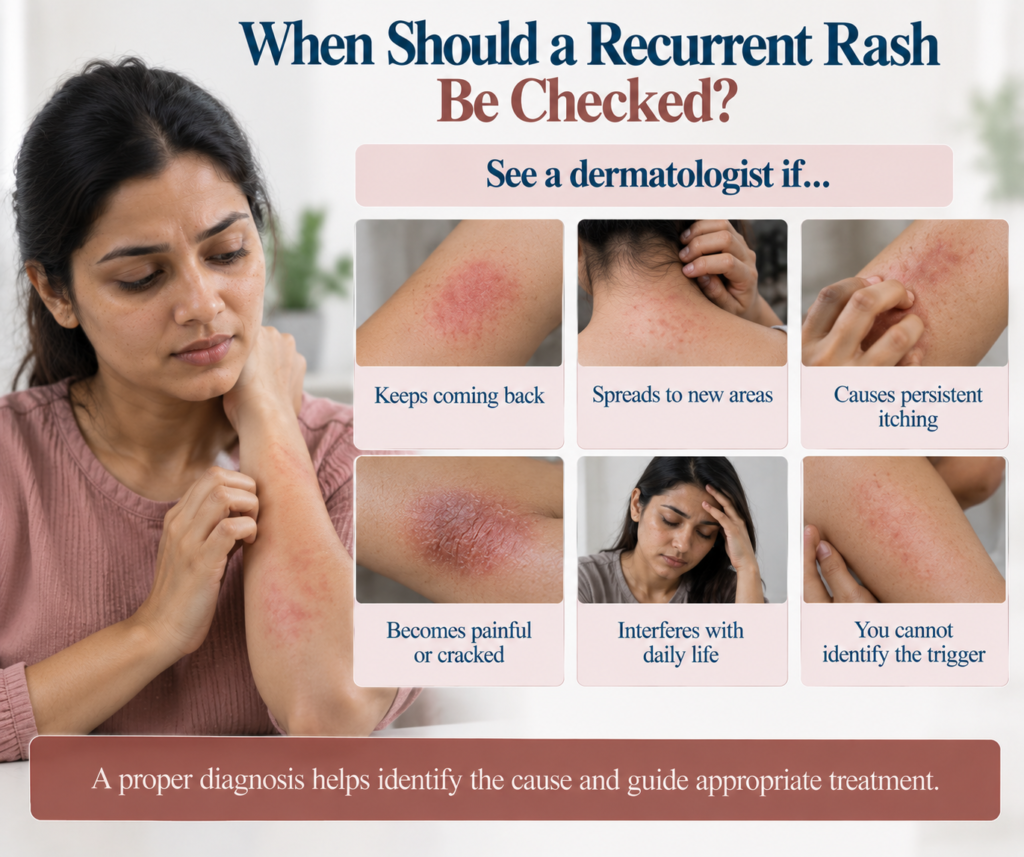
When Should You See a Dermatologist for a Recurrent Rash?
Consider a dermatology consultation when:
- The rash keeps returning
- Symptoms are becoming worse
- The rash is spreading
- Itching is severe or persistent
- The skin becomes painful
- Swelling or blistering develops
- There is discharge or a possible infection
- Symptoms interfere with sleep or daily activities
- You cannot identify a possible trigger
- Basic measures have not helped
- The rash started after a new product or medicine
- You continue to have reactions despite avoiding an obvious trigger
Persistent or recurrent contact dermatitis may need professional assessment, particularly when the cause is unclear or initial treatment has not helped.
When Is a Skin Rash an Emergency?
A rapidly developing severe allergic reaction requires urgent medical attention.
Seek emergency care if you develop:
- Difficulty breathing
- Rapid swelling of the lips, tongue or throat
- Severe facial swelling together with breathing or swallowing problems
- Fainting or feeling as though you may collapse
Do not wait for a routine dermatology appointment if symptoms suggest a potentially serious allergic reaction.
Timing of the rash
The relationship between an exposure and the appearance of symptoms can provide useful clues.
Some allergic contact reactions can develop hours or even days after exposure. This delayed timing can make an everyday trigger difficult to recognise.
How Is a Skin Allergy Diagnosed?
There is no single symptom that proves a recurring rash is caused by an allergy.
A dermatologist may ask about several aspects of the problem.
Your symptoms
You may be asked:
- When did the rash first appear?
- How long does each episode last?
- Does it itch, burn or hurt?
- Does it appear in the same place each time?
- Does it spread?
Products and substances
Your dermatologist may ask about:
- Skincare products
- Cosmetics
- Hair products
- Soaps
- Detergents
- Jewellery
- Workplace substances
- Hobbies
- Other regular exposures
Medication history
Mention medicines that you have recently started, stopped or changed, including relevant supplements.
Previous episodes
If you have had similar rashes before, the timing and pattern of those episodes can help with the assessment.
Physical examination
The dermatologist examines the rash and considers its distribution, appearance and relationship to possible exposures.
Further testing
Additional testing may be recommended when appropriate.
For suspected allergic contact dermatitis, patch testing can help identify specific contact allergens. It can be particularly useful when dermatitis is persistent or repeatedly returning.
Other investigations may be needed when the dermatologist is considering conditions such as a fungal infection.
What Is the Treatment for Skin Allergies?
Treatment depends on the cause.
If an allergen or irritant is identified, reducing or avoiding exposure is an important part of management. Treatment for contact dermatitis commonly includes avoiding the substance responsible for the reaction.
Depending on the diagnosis, treatment may involve:
- Avoiding an identified trigger
- Topical treatments
- Medicines prescribed according to the condition
- Treatment to reduce inflammation or itching
- Skin-barrier care
- Treatment of an underlying inflammatory condition
- Treatment of an identified infection
- Other dermatologist-directed treatment
There is no single “skin allergy cream” that is appropriate for every recurring rash.
Repeatedly trying different products without knowing the cause can sometimes further irritate already sensitive skin.
How Can You Identify Your Skin Allergy Triggers?
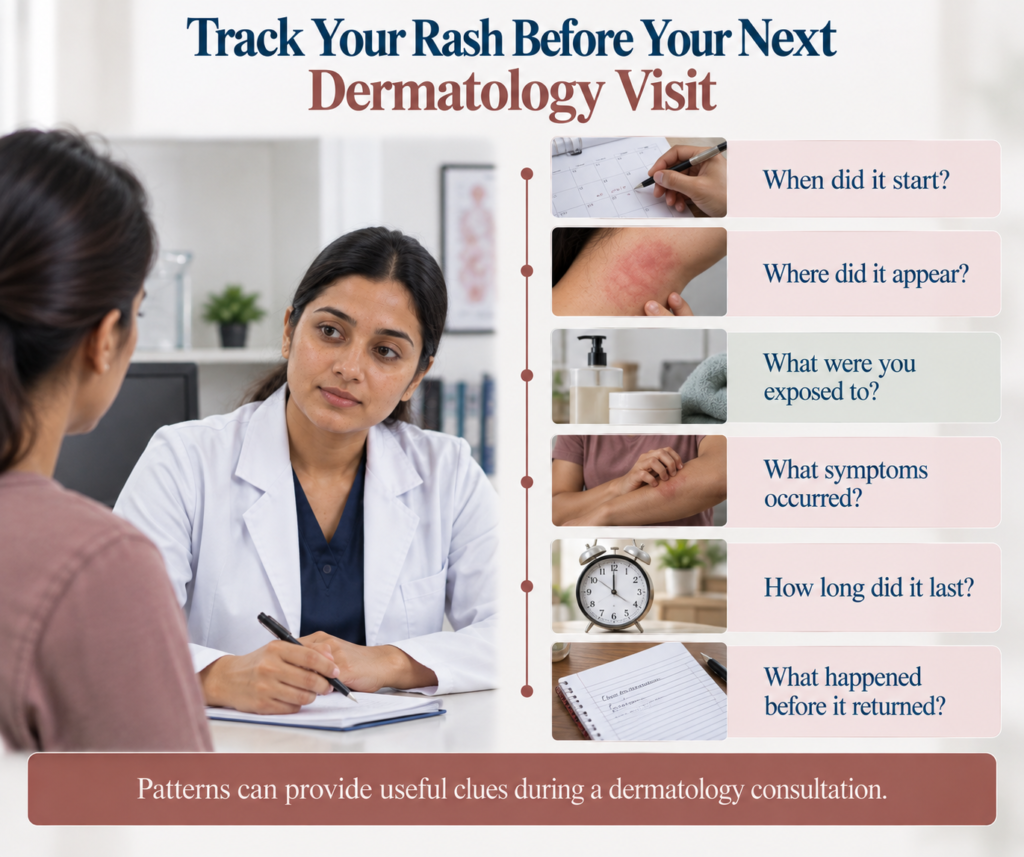
Keeping track of your symptoms can make a dermatology consultation more useful.
Keep a symptom record
Write down:
- When the rash appears
- Where it appears
- How long it lasts
- What symptoms occur
- What seems to make it better or worse
Review recently introduced products
Think about products introduced before the first episode or before a flare.
Include:
- Face products
- Body products
- Hair products
- Cosmetics
- Perfumes
- Soaps
- Detergents
Consider jewellery and materials
If the rash develops around the ears, neck, wrists, waist or another area that contacts jewellery or clothing, mention this pattern to your dermatologist.
Record medication changes
Keep a list of medicines and supplements and tell your healthcare professional about recent changes.
Observe environmental patterns
Notice whether symptoms appear more often with:
- Heat
- Sweating
- Particular workplaces
- Specific activities
- Certain environments
Do not deliberately expose yourself to a suspected allergen to test whether it causes a reaction. If allergy testing is appropriate, discuss it with a healthcare professional.
Can Skin Allergies Be Prevented?
Prevention depends on identifying the cause.
Depending on the situation, useful measures may include:
- Avoiding known allergens
- Reducing exposure to identified irritants
- Using skincare products appropriate for your skin
- Avoiding unnecessary product changes
- Reading product labels when relevant
- Following recommended skincare measures
- Following prescribed treatment
- Attending follow-up appointments when advised
For contact dermatitis, avoiding the responsible allergen or irritant is an important part of preventing repeated episodes.
Knowing the actual trigger makes prevention more practical.
How Is the Right Skin Allergy Treatment Chosen?
Treatment depends on factors such as:
- Cause of the rash
- Severity
- Duration
- Location
- Suspected trigger
- Medical history
- Previous treatments
- Current medicines and skincare
- Whether an infection is present
- Whether another skin condition better explains the symptoms
This is why skin allergy treatment in Mysore should begin with assessment rather than choosing a product simply because the rash looks like an allergy.
For example, allergic contact dermatitis may require identification and avoidance of an allergen. Irritant dermatitis may require reducing exposure to substances that damage the skin barrier. A fungal infection requires a different treatment approach altogether.
Skin Allergy Treatment in Mysore at APTA Clinic
APTA Clinic provides dermatology care in Mysore, with locations listed in Krishnamurthy Puram and Vijayanagar. The clinic’s published contact number is +91 7411 707 555.
APTA Clinic also has information on allergy-related dermatology care for recurring itching, rashes, hives and swelling, with assessment based on symptoms, medical history and possible triggers.
Dr. Swathi Anand is listed by APTA as a Dermatologist & Aesthetician, with qualifications including MBBS, DDVL and Fellowship (RGUHS).
If a rash keeps returning or you cannot identify what is triggering it, a dermatology consultation can help determine whether the symptoms are more consistent with an allergic reaction, irritation, eczema, infection or another skin condition.
Final Takeaway
A recurring itchy or irritated rash does not automatically mean that you have a skin allergy.
Allergic contact dermatitis, irritant dermatitis, eczema, infections and other skin conditions can produce similar symptoms. The timing and location of the rash, possible exposures, medical history and examination findings can help a dermatologist work out the likely cause.
If the rash keeps returning and you cannot identify the trigger, professional assessment can help you move beyond repeatedly treating the symptoms without knowing what is causing them.
If you are looking for skin allergy treatment in Mysore, APTA Clinic can assess the concern and determine an appropriate treatment approach based on the suspected cause.
Frequently Asked Questions (FAQs)
Recurrent rashes can have several causes, including allergic contact dermatitis, irritant dermatitis, eczema, infections, environmental exposures and reactions to certain medicines. Continued exposure to a trigger can also cause symptoms to return.
Yes. A skin allergy can recur when you continue to encounter the substance responsible for the reaction. Identifying and avoiding the relevant allergen is an important part of managing allergic contact dermatitis.
Common triggers include fragrances, cosmetics, skincare products, soaps, detergents, metals such as nickel, adhesives, plants and certain workplace chemicals. Irritants can also include repeated water exposure, friction and some cleaning products.
Consider a dermatology consultation if the rash keeps returning, spreads, becomes painful, causes severe or persistent itching, interferes with daily activities, develops blisters or discharge, or has no obvious trigger.
Allergic contact dermatitis itself is not contagious. Some conditions that resemble an allergic rash, including certain infections, can spread between people. Diagnosis therefore matters.
Allergic contact dermatitis involves an immune response to an allergen. Irritant contact dermatitis results from direct irritation or damage to the skin. They can look similar but have different causes and may need different management.
Yes. Detergents can irritate the skin and, depending on their ingredients, may also be associated with contact allergy. Repeated exposure can contribute to dermatitis.
Patch testing can be used when allergic contact dermatitis is suspected. It helps identify substances that may be causing a delayed allergic skin reaction and can be useful in persistent or recurrent dermatitis.
Rapid swelling of the face, lips or tongue, especially when accompanied by difficulty breathing or swallowing, requires urgent medical attention. Do not wait for a routine dermatology appointment when a severe allergic reaction is suspected.
APTA Clinic has a dedicated allergy-treatment service page describing care for recurring itching, rashes, hives and swelling, with assessment based on symptoms, medical history and possible triggers.