
Hair Transplant for Men and Women in Mysore
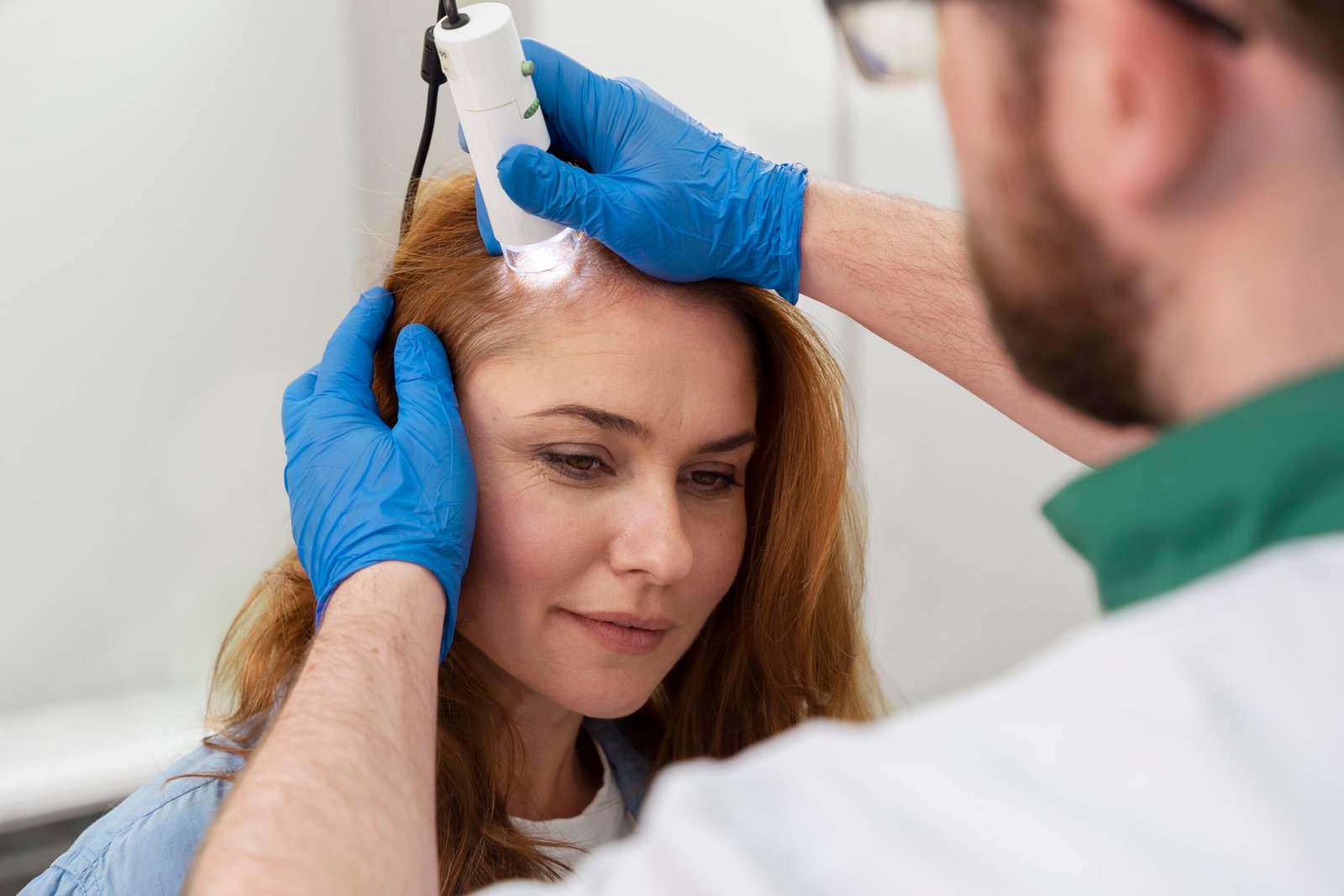
What is Hair Transplant – Men and Women?
Hair Transplant for Men and Women in Mysore is a safe and effective cosmetic procedure designed to restore hair in areas affected by thinning or baldness. It involves transplanting healthy hair follicles, typically from the back of the scalp, to areas experiencing hair loss. At APTA Clinic, we offer advanced solutions for both men and women using globally trusted methods like Follicular Unit Extraction (FUE) and Follicular Unit Transplantation (FUT), tailored to deliver natural-looking and long-lasting results.
How Do We at APTA Treat It?
At APTA Clinic, we provide personalized body contouring solutions tailored to your unique body goals. Our experts use advanced techniques such as liposuction, tummy tucks, and non-surgical fat reduction methods like laser and radiofrequency therapy. Each treatment is planned after a thorough consultation, ensuring minimal downtime, precise results, and maximum safety, all under the care of our experienced plastic surgeons and medical professionals.
Benefits of the Treatment
Natural Hairline Restoration
Our skilled surgeons ensure every follicle is strategically placed to match your natural hairline, providing seamless integration and natural appearance.
Permanent Hair Regrowth
Hair transplanted from the donor area is genetically resistant to balding, offering a long-lasting and reliable solution to hair loss.
Boost in Confidence and Appearance
Regaining a fuller head of hair often leads to improved self-esteem and personal confidence in social and professional settings.
Why Choose Hair Transplant – Men and Women at APTA?
Choosing APTA Clinic means trusting a team that prioritizes safety, aesthetics, and personalization. Our board-certified professionals use internationally acclaimed methods, advanced equipment, and a patient-first approach. Whether you are a man experiencing a receding hairline or a woman facing thinning patches, we tailor each transplant to your specific needs. With proven results, expert care, and compassionate support, APTA Clinic ensures your hair restoration journey is smooth, confident, and truly transformative.
Make Appointment
Expert Guidance, One Appointment Away
Ready to take the next step toward looking and feeling your best? Schedule your consultation with APTA Clinic today. Our experienced specialists are here to guide you with personalized care and expert advice. Whether you’re exploring cosmetic options or seeking advanced treatments, we’ll help you choose what’s right for you. Book your appointment now and let’s begin your journey to enhanced confidence.
Email Address
aptaclinics@gmail.com
Phone Number
+91 7411 707 555
Open Hours
Mon - Sun: 10.30AM - 7.30PM
Office Location
Krishnamurthy puram, Mysore
Personalized Hair Transplant Care for Natural-Looking, Fuller & Lasting Hair
Hair loss can affect both men and women, influencing appearance, confidence, and everyday social interactions. Hair thinning may develop gradually because of genetics, ageing, hormonal changes, medical conditions, stress, or other factors. Hair transplantation is a restorative procedure that can improve the appearance of areas affected by permanent hair loss by moving suitable follicles from a donor area to areas with reduced density.
Hair Transplant for Men and Women in Mysore is designed around the individual’s hair-loss pattern, donor hair availability, facial proportions, and aesthetic goals. At APTA Clinic, hair restoration is approached with personalized planning and established transplantation techniques such as Follicular Unit Extraction (FUE) and Follicular Unit Transplantation (FUT). The clinic’s service page describes these methods as options for men and women seeking natural-looking, long-lasting restoration.
If you are considering Hair Transplant for Men and Women in Mysore, a consultation with a qualified hair-restoration professional can help determine whether transplantation is suitable and what type of result may realistically be achieved.
What Is a Hair Transplant?
A hair transplant is a surgical hair-restoration procedure in which healthy hair follicles are moved from a donor area, commonly the back or sides of the scalp, to areas affected by thinning or baldness. The transplanted follicles can then grow hair in their new location.
Hair transplantation is different from temporary cosmetic solutions because it uses the patient’s own follicles. The procedure is carefully planned to create appropriate density, direction, and hairline design.
The goal of Hair Transplant for Men and Women in Mysore is not simply to add hair. A successful restoration should complement facial proportions and existing hair while producing a natural-looking transition between transplanted and native hair.
Who Can Benefit From Hair Transplantation?
Hair transplantation may be considered by men and women who have suitable donor hair and certain forms of stable or progressive permanent hair loss.
Potential candidates may have:
- Receding hairline
- Thinning at the crown
- Reduced overall scalp density
- Pattern hair loss
- Localized areas of baldness
- Hair loss after certain injuries or procedures
- A desire to improve hairline definition
Not every person with hair loss is a suitable candidate. Temporary shedding, active scalp disorders, certain medical conditions, or insufficient donor hair may require different management.
A professional assessment is therefore an important first step.
Hair Transplant for Men and Women in Mysore can be customized according to differences in hair-loss patterns. Men may commonly present with recession at the temples and frontal hairline or thinning around the crown, while women may experience more diffuse thinning or widening of the central part.
Understanding the pattern helps the specialist determine whether transplantation is appropriate.
Common Causes of Hair Loss
Hair loss has many possible causes. Genetic predisposition is one of the most common factors, but it is not the only one.
Other contributors may include:
- Age-related changes
- Hormonal fluctuations
- Nutritional deficiencies
- Certain medical conditions
- Significant physical or emotional stress
- Some medications
- Scalp disorders
- Repeated traction from tight hairstyles
A detailed consultation can help distinguish permanent hair loss from temporary shedding. When an underlying medical or scalp issue is identified, it may need to be addressed before considering surgery.
How Is Hair Transplantation Planned?
Before treatment, the specialist evaluates the scalp, donor area, existing hair density, and pattern of hair loss. Your goals and expectations are also discussed.
The planning process may consider:
- Current hairline and facial proportions
- Donor hair density
- Number of grafts likely to be required
- Hair calibre and characteristics
- Areas requiring coverage
- Direction and angle of existing hair
- Future progression of hair loss
- Desired degree of density
Hairline design is particularly important. An overly low or artificial hairline may not provide a natural long-term appearance. The design should account for current needs as well as potential future changes.
FUE Hair Transplant
Follicular Unit Extraction, or FUE, involves removing individual follicular units from the donor area using specialized instruments. These grafts are then prepared and implanted into the recipient areas.
Potential advantages of FUE include:
- Individual graft extraction
- No long linear donor scar
- Small extraction sites
- Precise placement
- Ability to customize hairline and density
The suitability of FUE depends on donor hair characteristics, the extent of hair loss, and individual treatment requirements.
FUT Hair Transplant
Follicular Unit Transplantation, or FUT, involves removing a strip of donor scalp from a suitable area and separating it into individual follicular units for transplantation.
FUT may be appropriate for selected patients depending on donor characteristics and the number of grafts required.
The choice between FUE and FUT should be based on professional assessment rather than a one-size-fits-all approach.
Hair Transplant for Men and Women in Mysore may involve FUE, FUT, or another suitable technique depending on the individual’s needs.
What Happens During the Procedure?
The exact sequence varies depending on the chosen technique and the number of grafts required.
Generally, the procedure involves:
- Consultation and hairline design
- Preparation of the donor and recipient areas
- Local anesthesia
- Harvesting of suitable follicles
- Preparation and preservation of grafts
- Creation of recipient sites
- Placement of follicles into the planned areas
- Post-procedure instructions
Local anesthesia helps minimize discomfort during the procedure. The duration depends on the number of grafts and the complexity of the restoration.
Hairline and Graft Placement
Natural-looking results depend heavily on careful graft placement. Hair follicles do not all grow in the same direction, so the surgeon needs to consider the natural angle and orientation of existing hair.
Single-hair grafts may be useful around the frontal hairline, while larger follicular units may be positioned behind the hairline where greater density is appropriate.
The objective is to create a gradual transition rather than an obvious line of transplanted hair.
Benefits of Hair Transplantation
A properly planned transplant can provide several potential benefits:
- Improved appearance of thinning or bald areas
- Natural-looking hairline restoration
- Long-term use of transplanted follicles
- Better overall hair density in suitable areas
- Use of the patient’s own hair
- Increased flexibility in styling
- Potential improvement in confidence
The service information published by APTA Clinic highlights natural hairline restoration, long-lasting regrowth from donor follicles, and potential improvement in confidence as key benefits of its hair-transplant service.
Hair Transplant for Men and Women in Mysore can therefore be considered when medical management alone is not sufficient or when a patient has suitable permanent hair loss for surgical restoration.
Recovery After Hair Transplantation
Recovery is gradual. Immediately after transplantation, the scalp may show mild redness, swelling, sensitivity, or small crusts around the implanted follicles.
Your specialist will provide specific aftercare instructions. These may include:
- Keeping the scalp clean according to instructions
- Avoiding unnecessary touching or scratching
- Protecting the scalp from trauma
- Temporarily avoiding strenuous activity
- Following prescribed medications
- Attending follow-up appointments
It is important not to pick crusts or disturb newly transplanted follicles during the early healing period.
When Does Transplanted Hair Grow?
Hair transplantation requires patience. Transplanted hairs may shed during the early stage before the follicles enter a new growth cycle. This temporary shedding does not necessarily mean that the transplant has failed.
New hair growth develops gradually over subsequent months. The timeline varies between individuals depending on follicle characteristics, healing, treatment technique, and other factors.
The final appearance is generally assessed after sufficient time has passed for the transplanted follicles to mature.
Are Hair Transplant Results Permanent?
Transplanted follicles are selected from donor areas that are generally more resistant to the pattern of hair loss being treated. This can make transplantation a long-term restoration option for suitable patients.
However, existing non-transplanted hair can continue to thin over time. The longevity and overall appearance of the result depend on the individual’s condition, donor hair characteristics, treatment planning, and progression of hair loss.
A specialist should discuss both the expected benefits and limitations before treatment.
Hair Transplant for Men and Women in Mysore should therefore be viewed as part of a long-term hair-restoration plan rather than a guarantee that future hair loss will never occur.
Choosing the Best Hair Transplant Clinic for Men and Women in Mysore
Choosing an appropriate clinic is an important decision because hair transplantation requires surgical skill, careful planning, and an understanding of hair-growth patterns.
When evaluating the Best Hair Transplant Clinic for Men and Women in Mysore, consider:
- Qualified and experienced hair-restoration professionals
- Proper assessment of donor hair
- Personalized hairline design
- Appropriate transplantation techniques
- Safe clinical facilities
- Clear explanation of risks and recovery
- Realistic discussion of expected outcomes
- Follow-up care
Avoid selecting a provider based only on promotional pricing or claims of guaranteed results. Hair transplantation is highly individualized, and outcomes vary.
Why Choose APTA Clinic?
APTA Clinic’s hair-transplant service is designed for both men and women experiencing thinning or baldness. The clinic states that its approach combines personalized planning, advanced equipment, and established methods including FUE and FUT.
For individuals considering Hair Transplant for Men and Women in Mysore, the consultation process can help assess donor hair, determine suitable coverage, discuss hairline design, and establish realistic expectations.
If you are searching for the Best Hair Transplant Clinic for Men and Women in Mysore, it is useful to discuss your specific hair-loss pattern and restoration goals with a qualified professional before making a decision.
Preparing for Hair Transplantation
Before the procedure, provide your specialist with information about:
- Medical history
- Current medications and supplements
- Allergies
- Previous surgeries
- Previous hair treatments
- Scalp conditions
- Previous hair-transplant procedures
- Family history of hair loss
Your specialist may provide specific instructions before treatment. Do not stop prescribed medication unless your doctor advises you to do so.
Men and Women May Need Different Treatment Planning
Although the basic principles of transplantation are similar, hair-loss patterns can differ between men and women.
Men may require restoration of the frontal hairline, temples, or crown. Women may require treatment for diffuse thinning or localized areas where density has been lost.
Hairline design should also be adapted to facial structure and the patient’s natural appearance. A customized approach is therefore more appropriate than applying the same design to every patient.
Hair Transplant for Men and Women in Mysore can be planned according to these individual differences, helping the treatment focus on areas that are most important to the patient.
Can Hair Transplantation Improve Confidence?
Hair loss can affect how people feel about their appearance. Restoring hair density may help some individuals feel more comfortable with their appearance and grooming choices.
However, expectations should remain realistic. A transplant aims to improve hair coverage and appearance; it does not necessarily recreate the exact density of naturally occurring hair.
Discussing your goals honestly during consultation can help the specialist develop an achievable treatment plan.
Book a Hair Transplant Consultation
Hair loss can affect both men and women, but the pattern and cause are not always the same. Hair transplantation offers a restorative option for selected patients with suitable donor hair and permanent hair loss.
If you are considering Hair Transplant for Men and Women in Mysore, a professional consultation can help determine whether transplantation is appropriate, which technique may suit you, and how many grafts may be needed.
APTA Clinic provides personalized hair-restoration care for men and women, with treatment planning based on individual hair-loss patterns, donor hair, facial proportions, and restoration goals.
If you are looking for the Best Hair Transplant Clinic for Men and Women in Mysore, contact APTA Clinic to arrange a consultation and discuss your hair-restoration needs with a qualified specialist.
Frequently Asked Questions
Suitable candidates generally have a stable pattern of permanent hair loss, adequate donor hair, and realistic expectations. A specialist must evaluate the scalp and donor area before recommending surgery.
FUE removes individual follicular units from the donor area, while FUT removes a strip of donor scalp and separates it into follicular units. The appropriate technique depends on individual requirements.
Local anesthesia is used during the procedure to minimize discomfort. Mild soreness, tightness, redness, or sensitivity may occur during the initial recovery period.
Transplanted hairs may initially shed before new growth begins. Visible improvement develops gradually, and the final result can take several months to become apparent.
Transplanted follicles are intended to provide long-term growth in suitable patients. However, existing non-transplanted hair may continue to thin, so long-term management may still be recommended.
Yes. Women with suitable patterns of hair loss and adequate donor hair may be candidates. The treatment plan is customized according to the cause and distribution of thinning.
Look for qualified specialists, proper diagnosis, donor-area assessment, personalized hairline design, appropriate techniques, safe facilities, realistic communication, and comprehensive follow-up.