
When Should You See a Dermatologist in Mysore? Common Skin Problems That Need Medical Attention
- Home
- Blog
- About Us
Not every pimple, dry patch or occasional itch needs a dermatologist. Some minor skin problems improve with basic care. A consultation becomes more useful when a problem keeps returning, becomes painful, spreads, changes unexpectedly or does not improve as expected.
A dermatologist is a medical doctor who specialises in conditions affecting the skin, hair and nails. Similar-looking symptoms can have different causes, which is one reason diagnosing a skin problem from photographs or online information can be unreliable.
If you are looking for a dermatologist in Mysore, consider the pattern of your symptoms. Persistent, unexplained, worsening or recurring problems deserve more attention than a short-lived irritation.
APTA Clinic lists dermatology and trichology services in Mysuru, with locations in Krishnamurthy Puram and Vijayanagar.
When Should You See a Dermatologist?
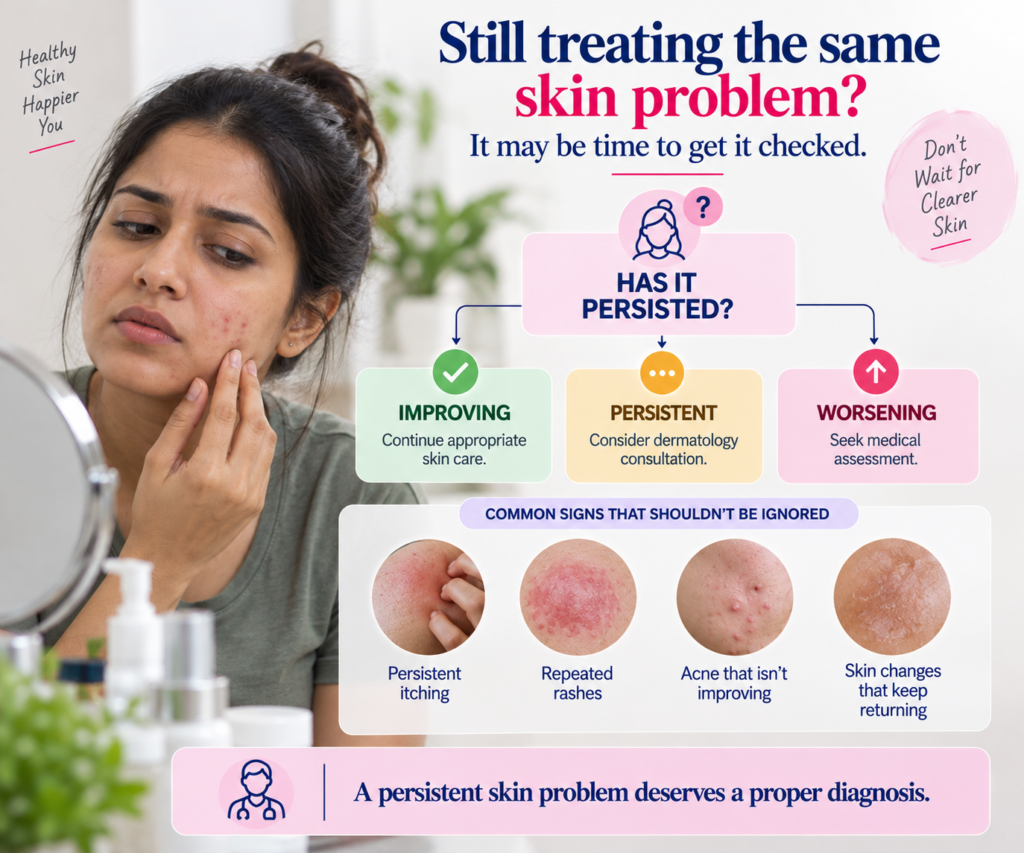
Consider arranging a dermatology consultation when a skin, hair or scalp problem:
- Does not improve with reasonable self-care
- Keeps returning
- Is becoming more severe
- Is painful, swollen or persistently itchy
- Spreads to other areas
- Causes bleeding, crusting or open sores
- Interferes with sleep, work or daily activities
- Causes unexplained changes in skin colour or texture
- Causes sudden or unexplained hair loss
- Involves a new or changing mole or skin growth
These symptoms do not automatically indicate a serious disease. They are reasons to have the problem examined instead of continuing to treat an unknown cause on your own.
Persistent or Severe Acne
Occasional pimples may settle without specialist treatment. Persistent, painful or recurring acne deserves more attention, particularly when it is leaving dark marks or scars.
A dermatologist can assess the type and severity of acne, how long it has been present, previous treatments and whether scarring or pigmentation is developing. The American Academy of Dermatology notes that you do not need to have severe acne before considering a dermatology consultation.
APTA Clinic’s supplied information states that its acne assessment considers factors including severity, skin type, duration, previous treatment and scarring.
When should acne be checked?
Consider professional assessment if you have:
- Frequent or persistent breakouts
- Painful or deeply inflamed acne
- Acne that keeps returning
- Dark marks or scars after breakouts
- Acne that has not responded to your current routine
- Concerns that your skincare products may be worsening the problem
Repeatedly squeezing or picking acne lesions can increase inflammation and contribute to marks or scarring.
Recurring Rashes
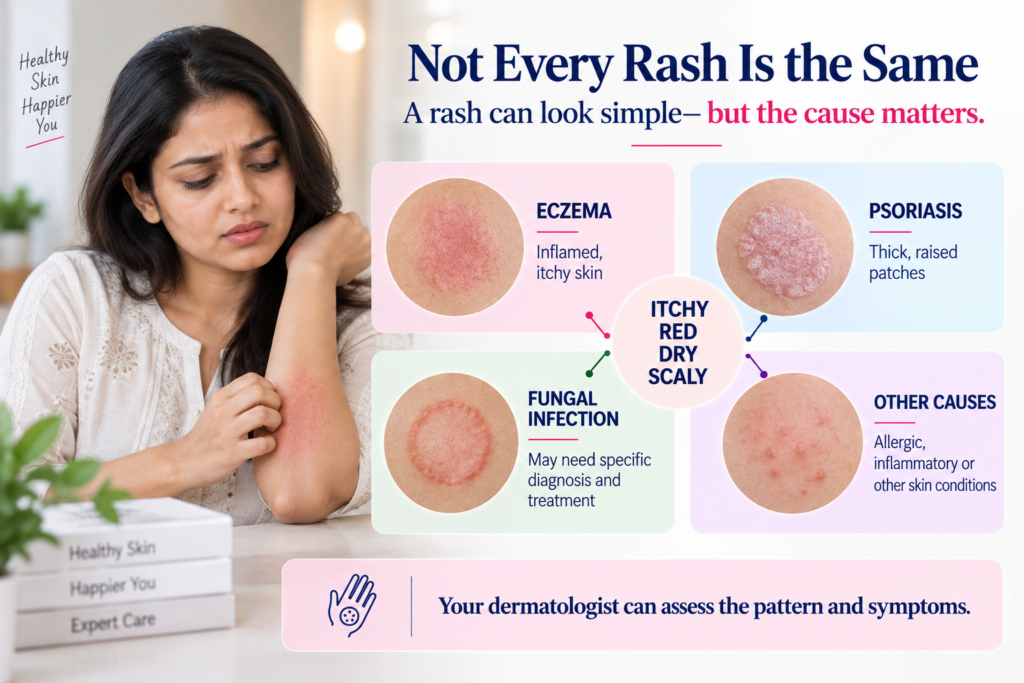
A rash can have several possible causes, including irritation, allergy, infection and inflammatory skin conditions. Appearance alone may not be enough to identify the cause.
The American Academy of Dermatology recommends medical attention for rashes that cover much of the body, spread rapidly, become painful, blister or develop into open sores, occur with fever or illness, or involve the eyes, lips, mouth or genital skin. Signs such as pus, swelling, warmth or increasing pain can also indicate infection.
The supplied source identifies similar warning signs and recommends assessment when a rash is worsening or associated with systemic symptoms.
If a rash repeatedly disappears and returns, make a note of possible triggers such as new skincare products, cosmetics, medicines, foods or environmental exposures. This information can help during the consultation.
Persistent Itching
Occasional itching can occur with dry skin or temporary irritation. Persistent or unexplained itching is different.
Consider seeing a dermatologist if itching:
- Continues without an obvious reason
- Keeps returning
- Affects your sleep
- Interferes with daily activities
- Occurs with other skin changes
It is possible to experience significant itching without an obvious rash. The underlying cause can vary, so repeatedly applying different creams without knowing what is causing the itching may not address the problem.
Unexplained Pigmentation or Changes in Skin Colour
Changes in pigmentation are common, but the reason may not always be obvious.
A dermatology assessment may be appropriate when you notice:
- New areas of pigmentation
- Pigmentation that is progressively changing
- Persistent dark or light patches
- Pigmentation after inflammation or injury
- Skin colour changes accompanied by itching, scaling or other symptoms
Not every pigmentation change represents a serious condition. Persistent or unexplained changes should, however, be assessed rather than diagnosed from an online photograph.
New or Changing Moles and Skin Growths
A new or changing mole should be assessed rather than ignored.
Pay attention to changes in:
- Size
- Shape
- Colour
- Border
- Surface
- Bleeding
- Crusting
- Itching
- Pain
The American Academy of Dermatology advises seeing a dermatologist when a mole is growing, itching, bleeding or changing. Its ABCDE guidance highlights asymmetry, irregular borders, varied colour, diameter and evolution as features that warrant assessment.
The NHS similarly recommends medical assessment when a mole changes size, shape or colour, becomes painful or itchy, or becomes inflamed, bleeding or crusty.
A changing mole does not automatically mean cancer. The reason for having it examined is to determine what the change represents.
Dry, Cracked or Inflamed Skin That Does Not Improve
Dry skin is common and can be related to frequent washing, harsh products, weather or other irritants.
Persistent dryness may need professional evaluation when it is accompanied by:
- Cracking
- Redness
- Significant itching
- Recurrent inflammation
- Bleeding
- Pain
- Thickening or scaling
This is particularly relevant when basic moisturising and avoiding obvious irritants have not helped.
Suspected Skin Infections
Some skin infections can cause redness, swelling, warmth, pain, scaling, blisters or discharge.
A red or itchy patch is not necessarily an infection because inflammatory and allergic conditions can look similar.
Medical assessment becomes more important when a suspected infection is worsening, spreading, becoming painful or producing pus. A rash accompanied by fever or significant illness should also be assessed promptly.
Excessive or Unexplained Hair Loss
Hair and scalp concerns can also fall within dermatological care.
Consider professional assessment for:
- Sudden hair loss
- Progressive thinning
- Increasing visibility of the scalp
- Receding hairline
- Patchy hair loss
- Hair loss accompanied by itching, burning, pain or scaling
Hair loss has many possible causes. A proper assessment may involve questions about when the problem began, its pattern, medical history, medicines, family history and the condition of the scalp. Further tests may be appropriate in some cases.
APTA Clinic separately lists trichology services for hair loss, hair thinning and scalp concerns.
Ongoing Scalp Problems
Persistent dandruff, itching, scaling, redness, inflammation or scalp sores should not always be treated as ordinary dandruff.
Different scalp conditions can produce similar symptoms, and some can also contribute to hair shedding or hair loss. A dermatology or appropriate hair-and-scalp assessment can help determine what may be causing the symptoms.
Chronic or Repeatedly Returning Skin Problems
Some skin conditions require ongoing management.
If the same problem keeps returning despite following a skincare routine or previous treatment, it may be worth reassessing the diagnosis and treatment plan.
Recurring symptoms are particularly relevant when they interfere with:
- Sleep
- Work
- Exercise
- Personal care
- Social activities
- General comfort
A recurring condition does not necessarily mean that something serious is wrong. It may indicate that the underlying cause or trigger needs another assessment.
Painful, Bleeding or Non-Healing Skin Lesions
A skin lesion that remains open, repeatedly bleeds, develops crusting, becomes painful or does not heal should be medically assessed.
Some skin cancers can present as changing or non-healing growths, and early lesions may cause little discomfort. The NHS advises medical assessment for skin growths that enlarge or change colour or texture, and for areas that hurt, itch, bleed, crust or scab for more than four weeks.
Do not try to identify a suspicious lesion from photographs alone. An examination is more appropriate.
When Should Children See a Dermatologist?
Children can develop many of the same skin, hair and scalp problems as adults.
A child’s skin problem deserves medical attention when it is:
- Persistent or repeatedly returning
- Spreading
- Painful
- Associated with fever or illness
- Causing significant itching
- Affecting sleep or normal activities
- Producing unusual growths or changing moles
- Not improving as expected
Parents should mention new medicines, skincare products, foods, environmental exposures and recent illnesses that may be relevant.
What Happens During a Dermatology Consultation?
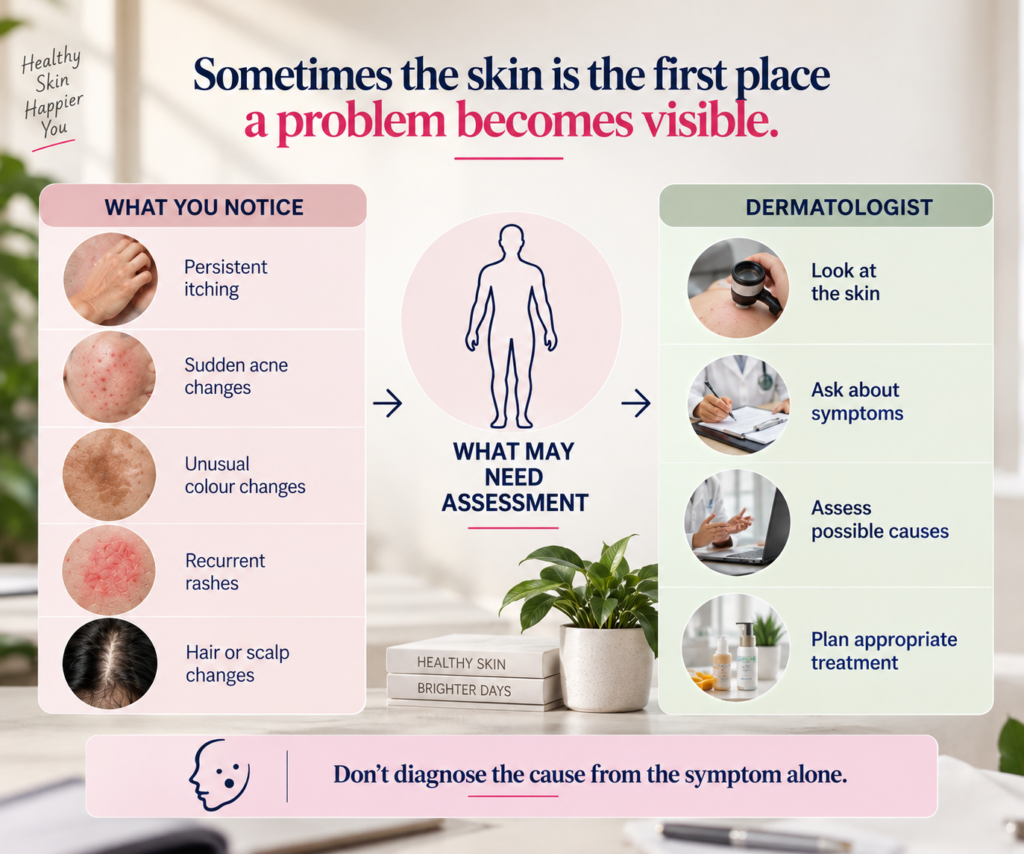
A dermatology consultation usually begins with a discussion about what has been happening and how the problem has changed.
The doctor may ask:
- When the symptoms started
- Whether they are constant or recurring
- What makes them better or worse
- Which treatments or products you have already used
- About relevant medical history and medicines
- About family history where relevant
- Where the affected skin, hair or scalp is located and how it looks
The affected area is then examined to determine whether further evaluation or treatment is appropriate. For hair-loss concerns, the doctor may assess the scalp and ask about the timing and pattern of shedding. Further tests may be considered when clinically necessary.
Why Self-Diagnosing Skin Problems Can Be Unreliable
Online searches can help you understand possible causes and prepare questions for a consultation. They cannot reliably establish a diagnosis.
The same symptom can occur with different conditions. Itching, for example, can occur with dry skin, allergic reactions, inflammatory conditions and infections. Pigmentation can also have several possible causes.
Using another person’s diagnosis or treatment routine may delay appropriate care or irritate the skin further.
When Is a Skin Problem an Emergency?
Some symptoms require urgent medical attention rather than a routine dermatology appointment.
A rash accompanied by difficulty breathing or swallowing, or swelling of the eyes or lips, can require emergency medical care. Rapidly worsening symptoms accompanied by significant illness should also not be left until a routine appointment.
If you believe you are experiencing a medical emergency, seek appropriate emergency medical care.
Dermatology Care at APTA Clinic in Mysore
APTA Clinic is a multi-specialty clinic in Mysuru with dermatology and trichology services alongside plastic surgery, facial surgery and dental care.
The supplied clinic information describes dermatology services for concerns including acne and allergic skin symptoms, while trichology services address hair and scalp concerns.
The source provided for this article lists APTA Clinic locations in Krishnamurthy Puram and Vijayanagar, Mysore, along with the published phone number and working hours. Verify these details with the clinic before publishing because clinic contact information and hours can change.
When Should You Book a Dermatology Consultation?
You do not necessarily need to wait until a skin problem becomes severe before asking for professional advice.
If acne keeps returning, a rash does not settle, itching continues, pigmentation changes without an obvious explanation, a mole changes, a skin lesion does not heal, or hair and scalp problems are progressing, a dermatology assessment can help determine what needs to happen next.
The purpose of a consultation is to identify the cause and decide on appropriate care rather than assuming that every symptom represents a serious condition.
If you are looking for a dermatologist in Mysore, you can contact APTA Clinic to discuss your concern and arrange an appropriate consultation.

Frequently Asked Questions (FAQs)
Consider seeing a dermatologist when a skin, hair or scalp problem is persistent, recurring, worsening, painful, spreading, unexplained or affecting your daily life. New or changing moles, non-healing lesions and unexplained hair loss also warrant professional assessment.
A consultation may be appropriate when acne is persistent, painful, recurring, leaving pigmentation or scars, or not improving with your current skincare routine. Severe acne is not the only reason to see a dermatologist.
Yes. Persistent or unexplained itching deserves medical evaluation, especially when it affects sleep, keeps returning or occurs with a rash, swelling, scaling or another skin change.
Dermatologists can evaluate many causes of hair loss. Assessment may include examining the scalp, understanding the pattern and timing of hair loss, reviewing medical history and considering additional tests when appropriate.
Yes. Persistent or unexplained changes in skin colour can have different causes. A dermatologist can examine the affected area and determine whether further evaluation is needed.
Yes. Children can develop skin, hair and scalp conditions that require professional assessment. Persistent, spreading, painful or recurring symptoms should be discussed with an appropriate healthcare professional.
Online information can help you understand possible causes and prepare questions, but it cannot reliably establish a diagnosis. Different conditions can produce similar symptoms, so persistent or concerning problems should be assessed professionally.
The consultation generally involves discussing symptoms, when they started, previous treatments, relevant medical history and possible triggers, followed by examination of the affected skin, hair or scalp. Additional tests may be recommended when clinically appropriate.
The supplied clinic information lists dermatology services and locations in Krishnamurthy Puram and Vijayanagar, Mysore. It also provides a published contact number. Contact the clinic directly to confirm current appointment availability and consultation details.
No. Minor, short-lived problems may settle with appropriate basic care. A dermatologist becomes more relevant when symptoms persist, recur, worsen, cause significant discomfort or have unusual or unexplained features.