
Why Do Teeth Turn Yellow? Common Causes & Solutions in Mysore
- Home
- Blog
- About Us
Teeth are not naturally pure white. Their colour can vary from person to person, and teeth may gradually look more yellow as you get older. However, a noticeable change in colour can also result from food and drink stains, tobacco use, enamel wear, certain medications, dental trauma or other dental conditions.
If your teeth have started looking yellow, the first step is to understand what is causing the discoloration. A surface stain may be managed differently from a change occurring within the tooth itself.
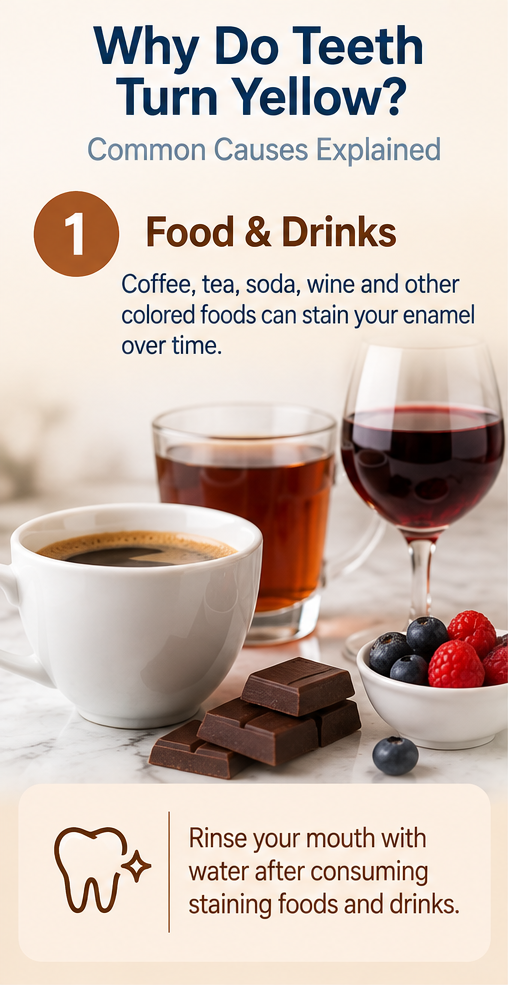
Why Do Teeth Turn Yellow?
Yellow teeth can develop for several reasons.
Some causes affect the outside of the tooth, creating surface stains. Others make the naturally yellowish dentin underneath the enamel more visible.
Common causes include:
- Coffee, tea and other strongly coloured foods and drinks
- Tobacco use
- Enamel becoming thinner with age
- Acid-related enamel erosion
- Inadequate plaque removal
- Certain medications
- Dental trauma
- Natural differences in tooth colour
- Some forms of tooth discoloration associated with dental conditions
Not every yellow tooth needs whitening. The appropriate approach depends on why the tooth has changed colour.
Common Causes of Yellow Teeth
-
. Coffee, Tea and Other Staining Foods and Drinks
Coffee and tea contain pigments that can attach to the enamel and contribute to surface staining.
Other strongly coloured foods and drinks can also affect the appearance of teeth over time.
Regular brushing and cleaning between the teeth can help maintain oral hygiene, but established stains may not disappear completely through brushing alone.
- Tobacco Use
Smoking and other tobacco use can stain teeth.
Tobacco-related stains may appear yellow or brown and can become more noticeable with continued exposure.
Tobacco can also affect gum health and overall oral health, so discoloration is only one reason to avoid tobacco products.
- Natural Tooth Colour and Dentin
A tooth has several layers. Enamel forms the hard outer covering, while dentin lies underneath it.
Dentin is naturally more yellow than enamel. As enamel becomes thinner, more of the underlying dentin can show through, making teeth appear yellower.
This means that slightly yellow teeth do not automatically indicate poor oral hygiene.
- Age-Related Enamel Changes
As people age, the enamel layer can gradually become thinner through normal wear.
Because the dentin underneath is naturally more yellow, this can make teeth appear less white over time.
Age-related colour changes are therefore not necessarily caused by a lack of brushing.
- Enamel Erosion
Acid exposure can gradually wear away tooth enamel.
Acidic foods and drinks can contribute to enamel erosion, and frequent exposure can affect both the appearance and sensitivity of teeth.
As enamel becomes thinner, teeth may develop a more yellowish appearance because more dentin becomes visible.
If you regularly consume acidic drinks or foods, reducing frequent acid exposure can help protect the remaining enamel.
- Plaque and Poor Oral Hygiene
Plaque is a sticky film that develops on teeth. If it is not removed effectively through regular brushing and cleaning between the teeth, it can contribute to staining and other oral-health problems.
Yellowish deposits near the gumline may sometimes be related to plaque or hardened deposits rather than a change in the natural colour of the tooth.
Professional dental cleaning may be appropriate when deposits cannot be removed effectively with normal brushing.
- Certain Medications
Some medications can contribute to tooth discoloration.
The type and timing of medication exposure matter. Certain medications taken while teeth are developing can cause internal discoloration, while some medications used later in life can also be associated with tooth darkening.
If you notice a significant colour change after starting a medication, do not stop the medication on your own. Discuss the concern with your dentist and, where appropriate, your doctor.
- Dental Trauma
An injured tooth can sometimes change colour.
Discoloration after an impact can be different from ordinary surface staining because the injury may affect the internal tissues of the tooth.
If one tooth becomes noticeably darker after an accident or injury, arrange a dental examination rather than treating it simply as a cosmetic stain.
- Tooth Decay or Other Dental Problems
Discoloration can sometimes be associated with tooth decay or another dental problem.
Tooth decay may produce white, brown or black changes as it progresses. A dark or unusually discoloured tooth therefore should not automatically be treated as a cosmetic issue.
A dental examination can help determine whether the colour change is simply staining or whether the tooth needs treatment.
Can Yellow Teeth Be Whitened?
Sometimes.
Professional or home whitening may help with certain types of tooth discoloration, particularly some surface and natural yellowish discoloration. However, whitening does not work equally well on every type of stain.
For example, discoloration caused by certain medications, trauma or dental restorations may not respond in the same way as ordinary yellow staining.
Whitening also does not change the colour of dental fillings, crowns, veneers or other restorations.
For this reason, a dental assessment before whitening can help determine whether whitening is appropriate and what result can reasonably be expected.
.
Yellow Teeth Even After Brushing: Why?
Yellow Teeth Even After Brushing: Why?
Brushing removes plaque and helps maintain oral health, but it cannot change the natural colour of every tooth.
If the yellow appearance comes from:
- Natural dentin showing through enamel
- Age-related enamel thinning
- Deeper discoloration
- Medication-related changes
- Previous dental trauma
then simply brushing more frequently may not make the teeth whiter.
In fact, aggressive brushing can contribute to enamel wear and gum problems. More pressure is not necessarily better cleaning.
If your teeth remain yellow despite good oral hygiene, identifying the cause is more useful than repeatedly increasing brushing pressure.
Is It Normal for Teeth to Look Slightly Yellow?
Yes. Healthy teeth are not necessarily bright white.
The natural colour of teeth varies, and the yellowish colour of dentin can become more visible as enamel becomes thinner.
The important distinction is between your natural tooth colour and a new or unusual change.
If your teeth have always had a slightly warm or yellow tone and there are no other symptoms, this may simply reflect your natural tooth colour.
If the colour has changed noticeably, particularly in one tooth, it is worth discussing
What About DIY Teeth-Whitening Remedies?
Be careful with home remedies that involve aggressively scrubbing the teeth.
Using highly abrasive substances can wear away enamel rather than safely removing discoloration. Acidic ingredients can also contribute to enamel erosion.
Natural-looking ingredients are not automatically safe for teeth.
Before trying a whitening product or home whitening method, consider discussing it with a dentist, particularly if you have sensitive teeth, cavities, gum problems, fillings or crowns.
Why Does Bad Breath Return After Brushing?
Bad breath, also called halitosis, can develop when bacteria in the mouth break down food particles and other substances. Brushing cleans the teeth, but bacteria can also collect on the tongue, around the gums, and between teeth. If these areas are not cleaned effectively, an unpleasant smell may return even after brushing.
Your Tongue May Be Contributing
Your Tongue May Be Contributing
Food Can Remain Between Your Teeth
Food particles can become trapped between teeth, particularly in areas that are difficult to reach with a toothbrush. Bacteria can act on these particles and contribute to bad breath. Cleaning between your teeth regularly with floss or another suitable interdental cleaning method can help keep these areas cleaner.
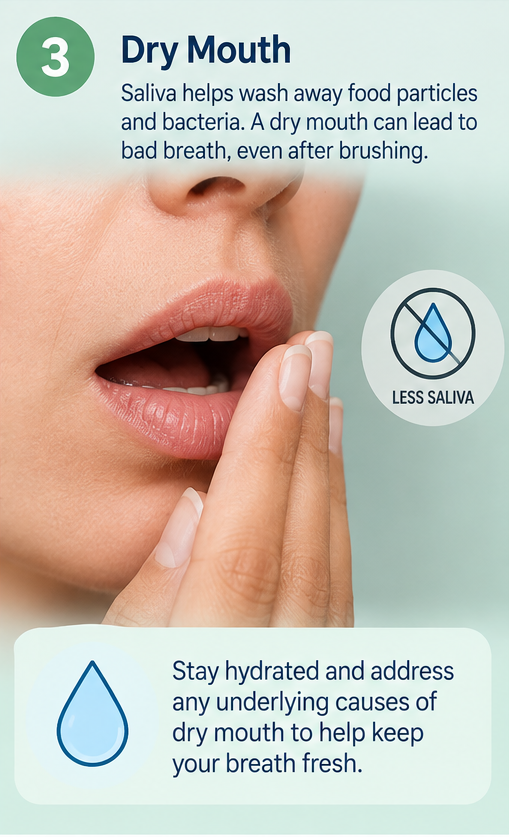
Dry Mouth Can Make Breath Smell Worse
Saliva naturally helps clean the mouth and remove food particles. When the mouth becomes dry, this cleaning effect can be reduced, allowing bacteria and debris to accumulate more easily. Dry mouth can occur for several reasons, including dehydration, certain medicines and other conditions. Drinking enough water and discussing persistent dry mouth with a healthcare professional may be helpful.
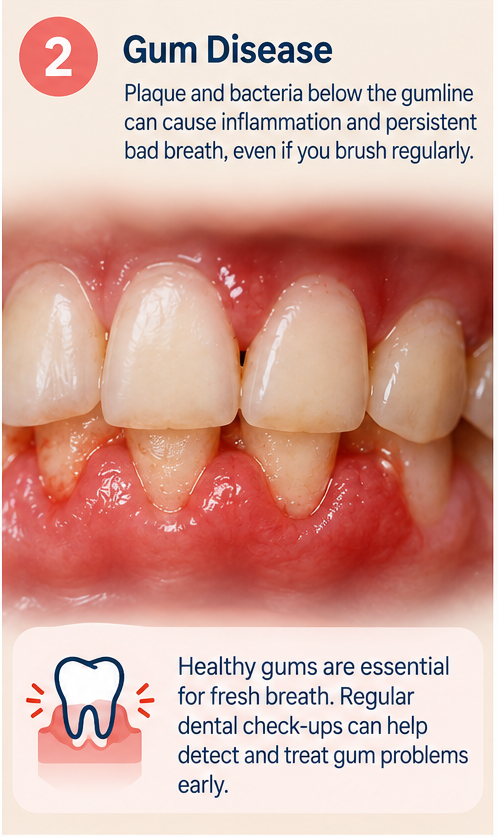
Gum Problems May Cause Persistent Bad Breath
Bad breath can sometimes occur alongside gum problems. Plaque buildup can irritate the gums and contribute to inflammation. Signs such as bleeding gums, swelling, redness, gum recession or persistent unpleasant breath may warrant a dental examination.
What Can You Do If Brushing Does Not Fix Bad Breath?
Good daily oral hygiene is an important first step. Brush twice a day with fluoride toothpaste, clean between your teeth regularly, and gently clean your tongue. Staying hydrated can also support normal saliva flow.
However, repeatedly using breath fresheners or mouthwash may only temporarily mask an unpleasant smell. If bad breath continues despite maintaining good oral hygiene, finding the underlying cause is more useful than simply covering the odour.
When Should You See a Dentist?
Consider consulting a dentist if your bad breath:
- Continues for several weeks
- Returns soon after brushing
- Occurs together with bleeding or swollen gums
- Is accompanied by tooth pain or sensitivity
- Comes with a persistent bad taste
- Does not improve despite good oral hygiene
A dental examination can help identify whether the problem is related to plaque, gum health, tooth decay, dry mouth or another oral condition.
Can Morning Bad Breath Be Normal?
Many people notice an unpleasant smell when they wake up, even if they brushed their teeth before going to bed. Saliva production can decrease during sleep, allowing bacteria and debris to remain in the mouth for longer. Morning breath often improves after drinking water, brushing, cleaning the tongue and eating, but persistent bad breath throughout the day may have another underlying cause.
Can Tonsil Stones Cause Bad Breath?
Not every case of persistent bad breath originates from the teeth. Tonsil stones can develop when debris becomes trapped in the small folds of the tonsils, and they may contribute to an unpleasant smell. If your oral hygiene is good but bad breath continues and you frequently notice throat discomfort or small white deposits around the tonsils, discussing the symptoms with a healthcare professional may be appropriate.
Can Certain Foods Cause Bad Breath Even After Brushing?
Some foods can temporarily affect the smell of your breath even after brushing. Foods such as garlic and onions contain compounds that can contribute to noticeable odour, and the effect may last beyond the time the food remains in your mouth. Brushing, cleaning between the teeth and drinking water can support oral hygiene, but some food-related odours may take time to naturally disappear.
Can Cavities Cause Bad Breath?
Tooth decay can sometimes contribute to an unpleasant smell or taste, particularly when food and bacteria collect around a damaged tooth or cavity. You may also notice other symptoms such as tooth sensitivity, pain or a visible change in the tooth. If bad breath occurs together with these symptoms, a dental examination can help determine whether tooth decay or another dental problem is involved. bleeds, a dentist can examine the tooth and gum around it and recommend appropriate care.
Does Mouthwash Permanently Get Rid of Bad Breath?
Mouthwash may help freshen breath, but it does not necessarily address the underlying reason for persistent bad breath. Depending on the cause, simply masking the odour may not resolve problems such as plaque buildup, gum inflammation, tooth decay or dry mouth. Good brushing and interdental cleaning remain important, while persistent symptoms may require professional evaluation.
Why Does My Breath Smell Bad Even Though My Teeth Look Clean?
Teeth can appear clean while bacteria or debris remain on the tongue, between the teeth or around the gumline. Some oral conditions also do not produce an obvious visible change in the early stages. If you consistently notice unpleasant breath despite brushing and maintaining good oral hygiene, a dental professional can examine your mouth and help determine what may be contributing to the problem.
Can Dehydration Make Your Breath Smell Bad?
Not drinking enough fluids can contribute to a dry mouth, which may allow bacteria and debris to remain in the mouth more easily. You may notice unpleasant breath when you have not been drinking enough water, particularly during hot weather or after physical activity. Maintaining adequate hydration can support normal saliva production and help keep the mouth more comfortable.
Can Sleeping With Your Mouth Open Cause Bad Breath?
Breathing through the mouth while sleeping can contribute to dryness, especially if you frequently wake up with a dry mouth. Reduced moisture in the mouth can make it easier for bacteria and debris to accumulate, which may contribute to morning breath. If you regularly wake with significant mouth dryness or persistent bad breath, discussing the issue with a healthcare professional can help identify possible contributing factors.
Consult APTA Clinic in Mysore for Your Dental Concerns
Book a Dental Consultation
Cold sensitivity does not always indicate a serious problem, but recurring sensitivity deserves attention.
A dental examination can help determine whether the cause is enamel wear, exposed roots, decay, a damaged tooth or another condition and whether treatment is necessary.
If you are looking for dental care in Mysore, you can contact APTA Clinic to discuss your symptoms and arrange an appointment.
Frequently Asked Questions (FAQs)
Brushing cleans the surfaces of your teeth but may not remove bacteria from the tongue, between the teeth or around the gums. Dry mouth, gum disease, cavities, foods and tobacco can also contribute.
If the underlying source of the odour remains, brushing may provide only temporary improvement. Bacteria on the tongue, gum problems, dry mouth or trapped food can cause the smell
Yes. Persistent bad breath can occur with gum disease, particularly when there is inflammation around the gums.
A cavity or damaged tooth can contribute to unpleasant breath, particularly if food and bacteria become trapped around the affected area.
It can. Bacteria, food particles and dead cells can accumulate on the tongue, so gently cleaning the tongue can be part of a good oral-hygiene routine.
Yes. Reduced saliva can allow bacteria and debris to accumulate more easily, which may contribute to bad breath.
If bad breath persists despite good oral hygiene, particularly if you also have bleeding gums, swelling, tooth pain, sensitivity or a persistent bad taste, consider arranging a dental examination.
Sometimes sensitivity can be associated with deeper inflammation or infection, but sensitivity alone does not mean that root canal treatment is required. A dentist must assess the tooth before recommending treatment.
APTA Clinic provides an appointment form and lists +91 7411 707 555 as its contact number. Its website lists dental services and locations in Mysore.
APTA Clinic lists locations in Krishnamurthy Puram and Vijayanagar, Mysore.