
Liposuction in Mysore: Who Is It For and What Should You Know Before Treatment?
- Home
- Blog
- About Us
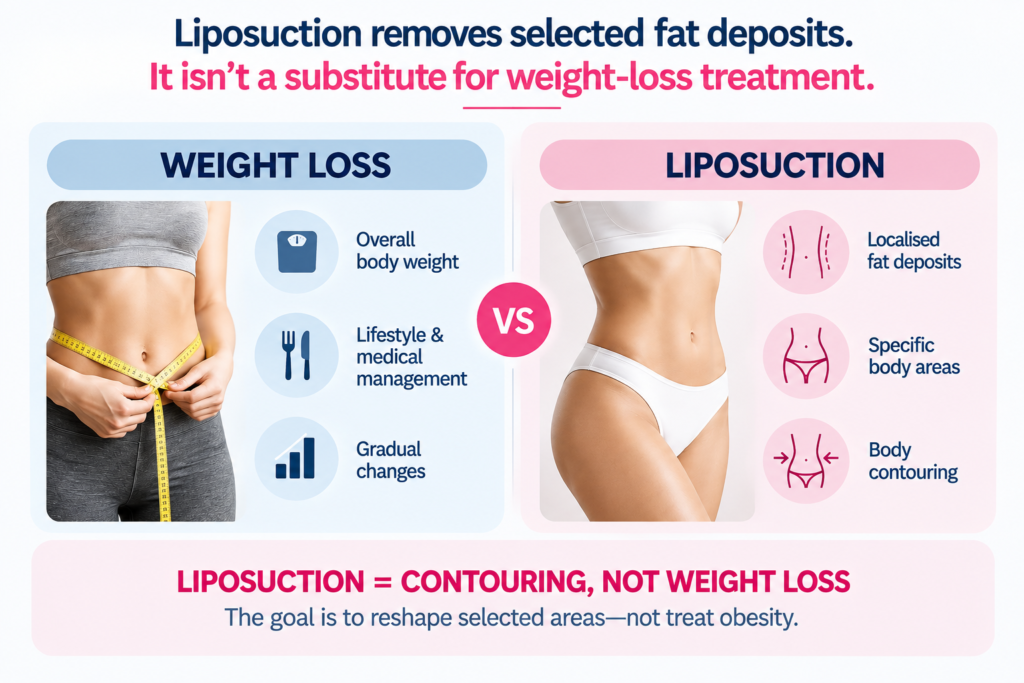
Liposuction is a surgical body-contouring procedure used to remove localized deposits of fat from selected areas of the body. It is intended to change the contour of treated areas rather than serve as a treatment for obesity or general weight loss.
If you are considering liposuction in Mysore, the important question is whether the procedure is suitable for your body, health, goals and expectations.
The information supplied for APTA Clinic describes liposuction as a treatment for stubborn fat deposits in areas such as the abdomen, thighs, arms, back and hips. It states that treatment begins with a consultation and an individualized treatment plan.
What Is Liposuction?
Liposuction, also known as lipoplasty, is a surgical procedure in which fat is removed from specific areas using suction.
It is generally used for body contouring. The aim is to reduce localized areas of fat that may remain despite diet and exercise.
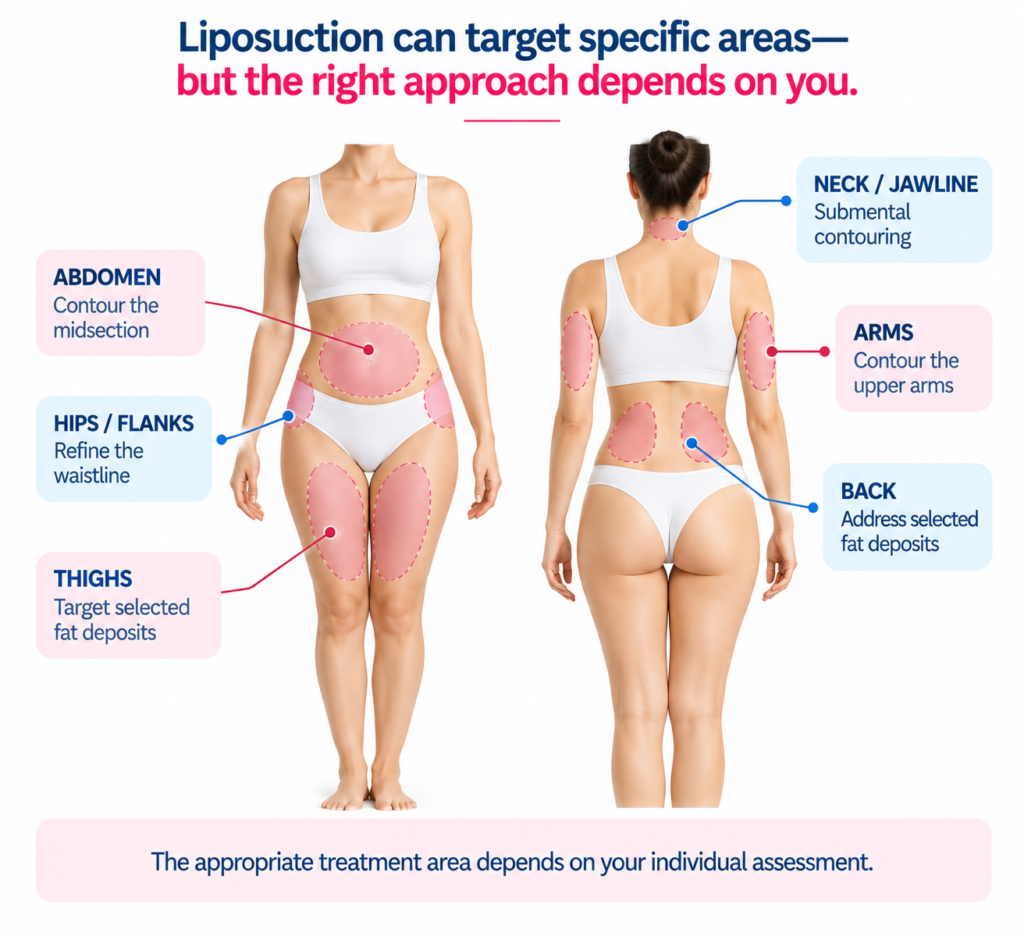
Common treatment areas can include:
- Abdomen
- Hips and waist
- Thighs
- Arms
- Back
- Other selected areas depending on the patient’s anatomy and treatment plan
The appropriate areas should be determined during an individual assessment rather than from photographs or examples seen online.
Is Liposuction a Weight-Loss Treatment?
No.
Liposuction is not a substitute for weight management and is not intended to treat obesity. Its purpose is to remove localized fat and alter the contour of selected areas. The NHS also states that liposuction is not a treatment for obesity.
Someone may lose weight through diet and physical activity and still have localized fat deposits. Removing those deposits does not address every factor involved in overall body weight.
If significant weight loss is your main goal, discuss your options with an appropriate healthcare professional before considering liposuction.
Who May Be Considered for Liposuction?
There is no single checklist that makes someone suitable for liposuction.
ASPS describes liposuction as an individualized procedure and notes that people with localized fat deposits that have not responded to diet or exercise may be candidates. It also considers factors such as health, skin elasticity, smoking or vaping status and expectations.
The assessment may include:
- Your general health
- Medical history
- Location and distribution of fat
- Skin quality and elasticity
- Previous surgery or scarring
- Medications and supplements
- Smoking or vaping
- Your expectations
- Your reasons for considering surgery
A consultation is needed to determine whether liposuction is appropriate for you.
Why Does Skin Elasticity Matter?
Liposuction removes fat beneath the skin. It does not remove significant loose skin.
When the skin has good elasticity, it may adapt better to the change in the underlying contour. If there is considerable loose skin, removing fat alone may not address the concern.
Your surgeon may therefore assess:
- Skin quality
- Skin elasticity
- Fat distribution
- Overall body proportions
- Amount and location of localized fat
- Previous surgery or scars
- General health
This helps determine whether liposuction alone is appropriate or whether another approach should be discussed.
What Can Liposuction Change?
Liposuction can remove selected fat deposits and alter the contour of the treated area.
People may seek treatment for localized fullness around areas such as the abdomen, hips, thighs, arms or back.
The amount of change varies between patients. Anatomy, skin characteristics, the area treated and healing can all affect the result.
A surgeon should discuss what can reasonably be achieved in your individual case rather than promise a particular body shape.
What Can Liposuction Not Do?
Liposuction has clear limitations.
It is not a treatment for:
- General obesity
- Overall weight management
- Significant loose skin
- Cellulite
- Stretch marks
The NHS specifically states that liposuction does not treat obesity, cellulite or stretch marks.
If your main concern is loose skin, muscle separation, significant weight loss or another structural issue, your surgeon may need to consider whether a different treatment would be more appropriate.
What Happens During a Liposuction Consultation?
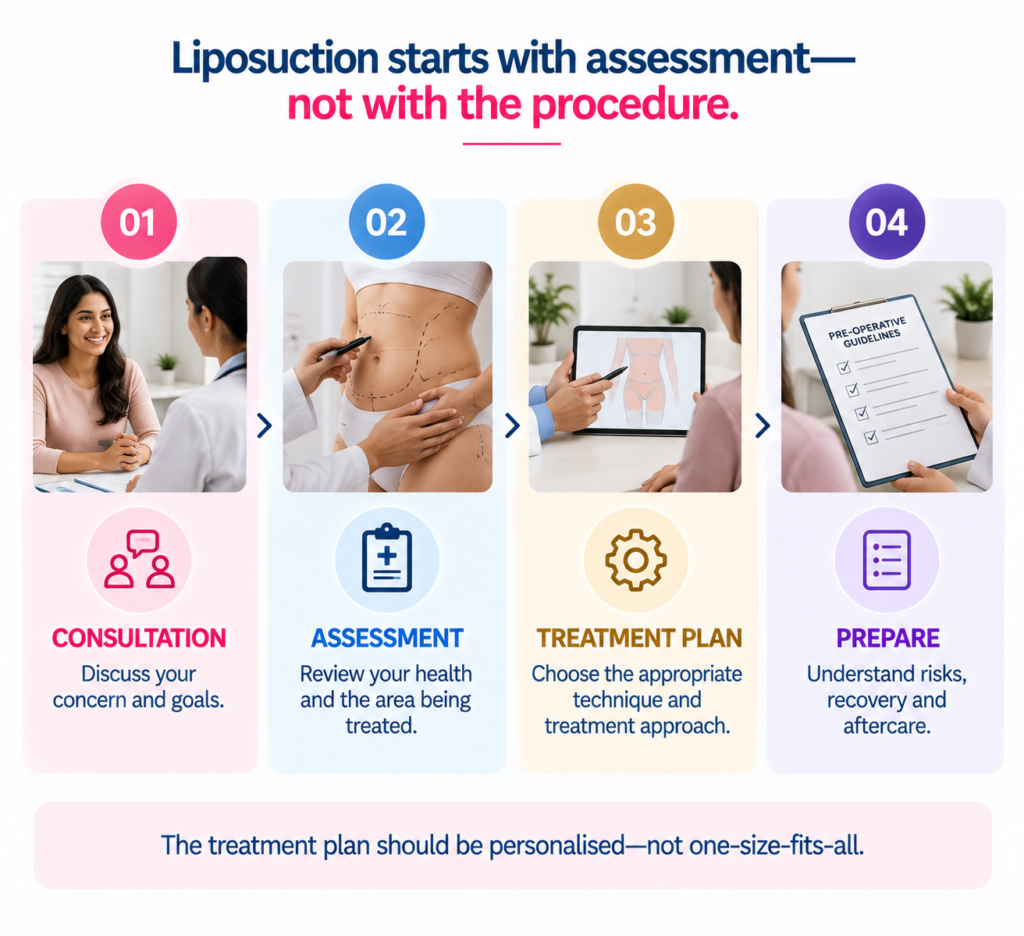
The consultation is where your suitability for treatment can be assessed.
Your surgeon will discuss your concerns and goals and examine the areas you are considering for treatment.
The assessment may consider:
- General health
- Medical history
- Location and distribution of fat
- Skin quality and elasticity
- Expectations
- Areas you want treated
- Whether liposuction is appropriate
- The surgical approach that may be suitable
- Expected recovery
- Potential risks and complications
ASPS similarly recommends discussing your goals, health, medical history, previous surgery, treatment options, expected outcomes and possible risks during consultation.
The supplied APTA information states that its liposuction treatment begins with a thorough consultation and personalized treatment plan.
Why Is Your Medical History Important Before Liposuction?
Liposuction is surgery, so your medical history matters when assessing whether treatment is appropriate and planning the procedure.
During your consultation, you may be asked about:
- Existing medical conditions
- Previous surgeries
- Current medications
- Drug allergies
- Vitamins and supplements
- Smoking or vaping
- Alcohol use
- Previous experiences with anaesthesia
- Your goals and expectations
ASPS recommends discussing medical conditions, medications, supplements, tobacco use and previous surgeries during a liposuction consultation.
Give your surgeon complete and accurate information. Do not leave out something simply because you are unsure whether it is relevant.
What Should You Ask a Plastic Surgeon Before Liposuction?
Before deciding on surgery, consider asking:
- Am I a suitable candidate for liposuction?
Your surgeon should assess your health, anatomy, fat distribution, skin quality and expectations.
- Which areas would you recommend treating?
Ask why a particular area is suitable based on your anatomy and goals.
- What can liposuction realistically change for me?
Ask for an explanation based on your individual circumstances rather than photographs of another patient.
- Is my skin elasticity suitable for liposuction alone?
This can help determine whether removing fat will address the concern you actually have.
- Are there alternatives I should consider?
Ask whether another body-contouring approach may be more appropriate.
- What risks are relevant to me?
Liposuction carries potential complications. Your surgeon should explain which risks are relevant to your medical history and planned procedure.
- Where will the procedure be performed?
Ask about the surgical facility and the arrangements for your procedure.
- What will recovery involve?
Ask about returning to work, driving, exercise and other normal activities.
- What follow-up will I need?
Understanding postoperative care is part of deciding whether surgery is right for you.
- What costs are included?
Ask whether the quotation includes the surgeon’s fee, anaesthesia, facility charges, medicines, supplies and follow-up care.
ASPS provides a similar checklist covering candidacy, training, facility, technique, recovery, risks, complications, dissatisfaction and realistic results.
What Happens During Liposuction?
The exact surgical approach depends on the individual procedure.
In general, liposuction involves small openings through which a cannula is used to remove fat from selected areas.
The technique, type of anaesthesia and surgical setting depend on the patient’s circumstances.
The supplied APTA information states that its liposuction service includes tumescent liposuction and laser-assisted lipolysis.
The appropriate technique should be selected by the treating surgeon after assessment. A technique should not be chosen simply because it is advertised as newer or more advanced.
Does Weight Stability Matter After Liposuction?
Liposuction does not replace healthy weight management.
The procedure removes fat from selected areas, but future changes in body weight can affect overall body shape.
Maintaining a stable, healthy weight can help preserve the contour achieved after treatment. The NHS notes that liposuction results are generally long-lasting when a healthy weight is maintained.
What Are the Risks of Liposuction?
Liposuction is surgery and carries potential risks.
Possible complications include:
- Bruising
- Swelling
- Changes in skin sensation
- Infection
- Fluid accumulation
- Irregular contours or asymmetry
- Poor wound healing
- Bleeding
- Blood clots
- Anaesthesia-related complications
- Injury to deeper structures
- Need for revision surgery
ASPS lists risks including anaesthesia-related complications, infection, fluid accumulation, contour irregularities, changes in sensation, blood clots, damage to deeper structures and revision surgery.
The NHS also notes possible complications such as bleeding, infection, blood clots, persistent numbness and damage to internal organs.
The exact risks depend on the procedure and individual patient. Your surgeon should explain the risks that apply to you and how complications would be managed.
When Will You See the Final Result?
The final contour is not necessarily visible immediately after liposuction.
Swelling can affect the appearance during the early recovery period. The treated area may continue to change as healing progresses.
The NHS notes that it can take up to six months for the treated area to settle completely.
Your surgeon can explain what changes to expect and when it is appropriate to assess the result.
What Is Liposuction Recovery Like?
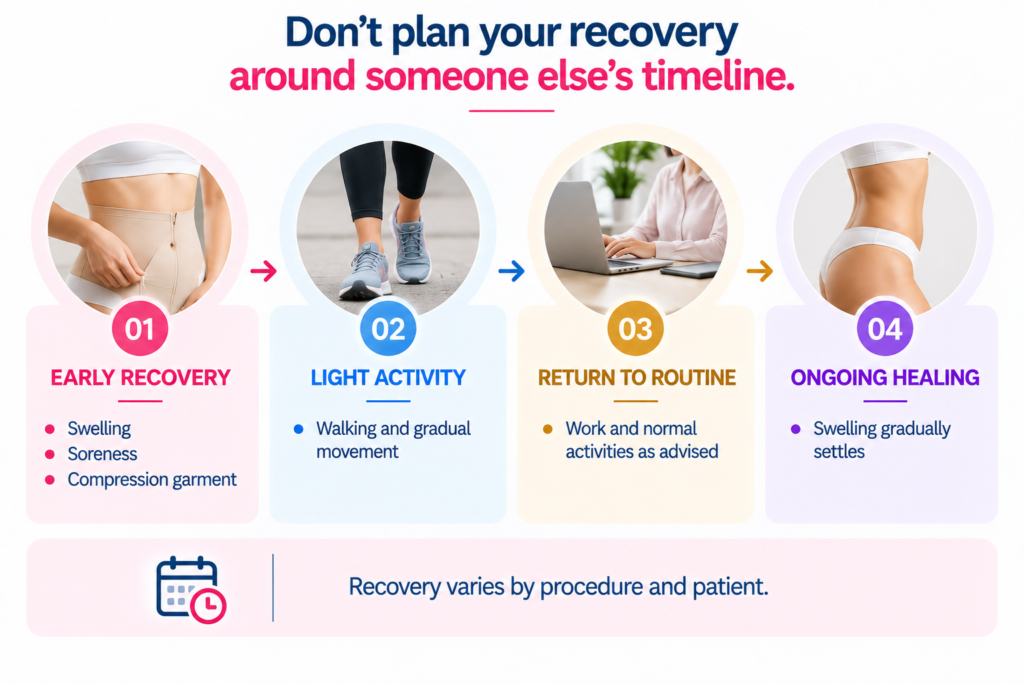
Recovery varies according to the areas treated, the extent of surgery and the individual patient.
Early recovery can involve:
- Swelling
- Bruising
- Discomfort
- Temporary changes in sensation
- Activity restrictions
Compression garments or dressings may be recommended depending on the procedure.
Your surgeon may give you specific instructions about:
- Returning to work
- Driving
- Exercise
- Bathing
- Compression garments
- Wound care
- Follow-up appointments
The NHS notes that return to work depends on factors including the type of job and how much of the body was treated. It also notes that swelling can take months to settle completely.
Do not use another person’s recovery timeline as your own. Follow the instructions provided for your surgery.
How Should You Prepare for Liposuction?
Preparation depends on your medical assessment and the planned procedure.
Before surgery, your surgeon may recommend:
- Medical evaluation
- Laboratory testing
- Medication adjustments
- Smoking or vaping cessation
- Changes to certain supplements or medicines
- Arranging transportation
- Someone staying with you after surgery
ASPS advises patients that medical evaluation or laboratory testing may be required and that medication instructions may need to be adjusted. It also recommends arranging transportation and someone to stay with the patient for the first night after surgery.
Do not stop prescribed medication on your own. Ask your surgical team what changes are appropriate for you.
Is Liposuction Suitable for Everyone?
No.
Having localized fat does not automatically mean that liposuction is appropriate.
Your surgeon needs to consider:
- General health
- Medical history
- Skin elasticity
- Fat distribution
- Anatomy
- Previous surgery
- Expectations
- Treatment goals
A consultation with a qualified plastic surgeon is the appropriate way to determine whether liposuction is suitable for you.
Liposuction at APTA Clinic in Mysore
APTA Clinic is described in the supplied information as a multi-specialty clinic in Mysuru offering plastic surgery and other medical services.
Its liposuction service describes treatment for localized fat deposits and states that treatment begins with consultation and individualized planning. The listed treatment areas include the abdomen, thighs, arms, back and hips.
The supplied business information lists Dr. B. Akshata Kamath, MBBS, MS, MCh, as a Plastic & Reconstructive Surgeon.
If you are considering liposuction in Mysore, a consultation can help you understand whether the procedure is appropriate for your concern, what approach may be considered, what recovery may involve and what risks you should discuss before making a decision.
Before You Decide on Liposuction
Liposuction may be considered for selected patients with localized fat deposits. It should not be treated as a shortcut to overall weight loss, and a particular body shape or result cannot be guaranteed.
Before deciding, make sure you understand:
- Why liposuction has been recommended
- Which areas will be treated
- What the procedure can realistically change
- Whether your skin elasticity is suitable
- Whether other treatments should be considered
- The potential risks and complications
- What preparation is required
- What recovery may involve
- When you may return to normal activities
- What follow-up care is expected
- What the total treatment cost includes
Your decision should be based on an individual medical assessment rather than social-media photographs, advertisements or another person’s experience.
If you are considering liposuction in Mysore, discuss your goals and concerns with a qualified plastic surgeon before deciding whether surgery is appropriate for you.
Medical Disclaimer
This article is for general educational purposes and does not replace an individual medical consultation. Suitability for liposuction, treatment approach, risks, recovery and expected results vary between patients. A qualified medical professional should assess your individual circumstances before treatment.
Frequently Asked Questions (FAQs)
Liposuction is a surgical body-contouring procedure that removes localized deposits of fat from selected areas of the body. It is not intended to replace general weight management or treat obesity.
No. Liposuction is primarily used to alter the contour of selected areas by removing localized fat. It is not a general treatment for obesity or overall weight loss.
Suitability depends on individual factors. Adults with localized fat deposits that have not responded sufficiently to diet and exercise may be considered, but overall health, skin elasticity, medical history, anatomy and expectations also matter.
Depending on the treatment plan, liposuction may be considered for areas such as the abdomen, hips, thighs, arms and back. The supplied APTA information lists these areas among its liposuction treatment areas.
Yes. Skin quality and elasticity can affect how the treated area adapts after fat is removed. Your surgeon should assess your skin and overall anatomy before recommending treatment.
Liposuction is not a treatment for obesity or general weight loss. Whether it is appropriate depends on your health, body composition, fat distribution and treatment goals.
Tell your surgeon about medical conditions, previous surgeries, current medications, allergies, supplements, smoking or vaping and other relevant health information. ASPS specifically recommends discussing these factors during consultation.
Recovery varies according to the areas treated and extent of surgery. Early recovery can involve swelling, bruising and activity restrictions. Your surgeon should provide individualized instructions about work, driving, exercise and follow-up.
It depends on the procedure, areas treated and type of work you do. Desk-based work and physically demanding work may require different recovery periods. Your surgeon should provide a timeline based on your surgery.
The supplied APTA Clinic information describes a dedicated liposuction service for localized fat deposits and states that treatment begins with consultation and individualized treatment planning.
The supplied APTA Clinic information lists Dr. B. Akshata Kamath, MBBS, MS, MCh, as a Plastic & Reconstructive Surgeon.