
Why Do Teeth Become Sensitive to Cold? In Mysore
- Home
- Blog
- About Us
A sip of cold water or a spoonful of ice cream should not normally make you wince. If cold foods or drinks repeatedly cause a sharp sensation in your teeth, you may be experiencing tooth sensitivity.
Cold sensitivity can happen when the protective layers of a tooth become thinner or when the tooth root becomes exposed. It can also occur because of a cavity, cracked tooth, gum recession, worn filling or another dental problem.
The important point is that sensitivity is a symptom, not a diagnosis. If it keeps happening, becomes stronger, affects one particular tooth or is accompanied by other symptoms, a dental examination can help identify the underlying cause.
Why Do Teeth Hurt When You Have Something Cold?
Could Bleeding Gums Be a Sign of Gum Disease?
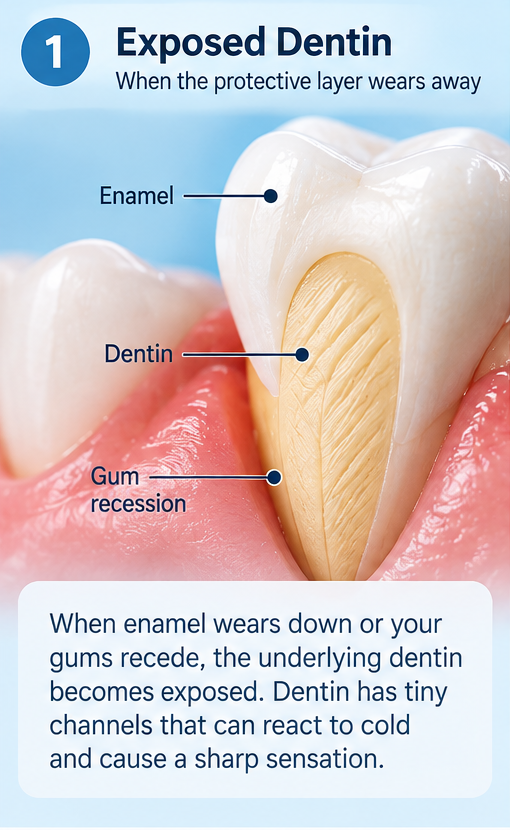
The outer part of a tooth is protected by enamel. Underneath the enamel is dentin, which contains microscopic channels connected toward the inner part of the tooth.
When dentin becomes exposed, temperature changes can stimulate these channels and produce a sudden, sharp sensation. This can happen when enamel wears away or when gum recession exposes the root surface.
That is why you may notice discomfort when drinking cold water, eating ice cream, having chilled foods or drinks, or sometimes even breathing cold air.
Common Causes of Cold Tooth Sensitivity
- Enamel Wear
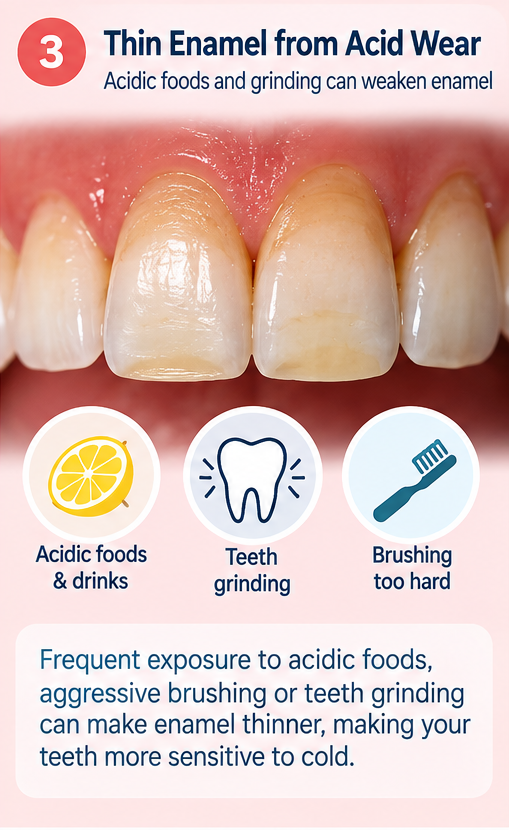
Enamel protects the more sensitive layers underneath it. Over time, enamel can become worn through factors such as acid exposure, aggressive brushing or tooth wear.
When the protective layer becomes thinner, cold temperatures can reach the underlying dentin more easily.
- Gum Recession
If the gums move away from the tooth, part of the root can become exposed.
Unlike the crown of a tooth, the root does not have the same enamel covering. An exposed root can therefore be more sensitive to cold, touch and other stimuli.
Gum recession can have several causes, including gum problems and excessive brushing pressure.
- Tooth Decay or a Cavity
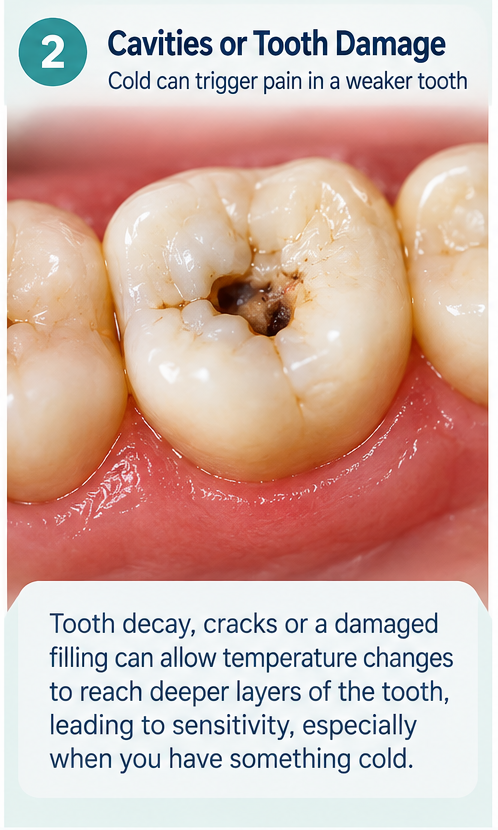
A cavity can cause sensitivity to cold, particularly as decay progresses.
A tooth that suddenly becomes sensitive to cold should not automatically be assumed to have a cavity, but recurring sensitivity is worth discussing with a dentist.
Early evaluation can help determine whether decay or another problem is responsible.
- A Cracked or Damaged Tooth
A crack or fracture can sometimes make a tooth sensitive to temperature changes.
Sensitivity may be particularly noticeable when eating or drinking something cold. If the sensitivity is concentrated in one tooth, especially after an injury or biting something hard, professional assessment is appropriate.
- Worn or Damaged Dental Fillings
Existing fillings can sometimes become worn or damaged over time. A tooth with a restoration may then develop sensitivity.
A dentist can examine the tooth and restoration to determine whether the filling is contributing to the problem.
- Acidic Foods and Drinks
Frequent exposure to acidic foods and beverages can contribute to enamel erosion.
Examples include certain soft drinks, citrus foods and fruit juices. As enamel becomes thinner, the underlying dentin may become more exposed and sensitivity can develop.
- Brushing Too Hard
Brushing harder does not necessarily mean cleaning better.
Excessive brushing pressure, particularly with a hard-bristled toothbrush, can contribute to enamel wear and gum recession. A gentle technique and appropriate toothbrush can help reduce unnecessary wear.
- Teeth Grinding or Clenching
Repeated grinding or clenching can contribute to tooth wear and may make teeth more vulnerable to sensitivity.
If you frequently wake with jaw discomfort, notice worn tooth surfaces or experience unexplained sensitivity, mention these symptoms during your dental examination.
- Recent Dental Treatment
Some people experience temporary sensitivity after certain dental procedures or treatments.
The duration and severity can vary depending on the procedure and the individual tooth. If sensitivity is severe, persistent or worsening rather than settling, contact your dental provider for advice.
How Is Tooth Sensitivity Treated?
Treatment depends on the cause.
A dentist first needs to determine why the tooth is sensitive. Depending on the findings, management may include:
Desensitizing Toothpaste
Toothpaste formulated for sensitivity can help reduce discomfort for some people. It generally needs consistent use rather than a single application.
If sensitivity continues despite appropriate use, a dental examination is still important.
Fluoride Treatment
Fluoride can strengthen enamel and may help reduce sensitivity in appropriate cases.
A dentist can determine whether professional fluoride treatment is suitable for your teeth.
When Should You See a Dentist?
Consider arranging a dental examination if:
- Cold sensitivity keeps returning.
- The problem is getting worse.
- One particular tooth is consistently affected.
- You have visible damage or a suspected cavity.
- You also experience pain while biting or chewing.
- The sensitivity continues after the cold stimulus is removed.
- Your gums are receding or bleeding.
- You have recently injured a tooth.
- You develop swelling around a tooth or gum.
Is Cold Sensitivity a Sign of a Cavity?
It can be, but cold sensitivity does not always mean you have a cavity.
Sensitivity may result from exposed dentin, gum recession, enamel wear, a cracked tooth, a worn restoration or tooth decay.
The pattern of the pain can provide useful information. For example, a brief sensation that stops quickly after the cold stimulus is removed can occur with exposed dentin. Pain that persists, becomes severe or occurs together with swelling or spontaneous toothache needs professional evaluation.
A dentist may examine the tooth, gums and surrounding structures and recommend additional diagnostic tests when necessary
Treatment for Tooth Decay
If a cavity is responsible for the sensitivity, treating the decay may be necessary.
APTA Clinic’s verified dental services include dental fillings for cavities .
Treatment for a Cracked or Damaged Tooth
The appropriate treatment depends on the location and severity of the damage.
A dentist can assess the tooth and explain whether restoration or another form of treatment is required.
Treatment for Advanced Dental Problems
If sensitivity is associated with significant decay or inflammation affecting the inner portion of the tooth, more extensive treatment may sometimes be necessary.
APTA Clinic provides root canal treatment for teeth affected by deep decay, infection or damage.
The appropriate treatment should always be determined after examination rather than based on sensitivity alone.
What Can You Do to Reduce Tooth Sensitivity?
While the underlying cause should be addressed, you can also reduce factors that may aggravate sensitivity.
- Use a soft-bristled toothbrush.
- Brush gently rather than applying excessive pressure.
- Use fluoride toothpaste.
- Clean between your teeth regularly.
- Reduce frequent exposure to highly acidic foods and drinks.
- Avoid repeatedly exposing sensitive teeth to very cold foods or drinks while the problem is being assessed.
- Do not ignore persistent sensitivity.
- Follow your dentist’s advice if you have an identified dental condition.
If you are unsure whether your brushing technique or oral-care routine is contributing to sensitivity, ask your dentist to review it with you.
Can a New Toothbrush Cause Gum Bleeding?
Changing to a new toothbrush may sometimes make your gums feel different, particularly if the new brush has firmer bristles or you are applying too much pressure. A soft-bristled toothbrush and gentle, controlled movements can help reduce unnecessary irritation. If bleeding continues even after adjusting your brushing technique, it is worth having your gums examined.
Does Diet Affect Gum Health?
A balanced diet supports overall oral health, while frequent consumption of sugary foods and drinks can contribute to plaque formation and tooth problems. Maintaining good nutrition alongside regular brushing and interdental cleaning can support healthier gums. If your gums continue to bleed despite good oral-care habits, a dental examination can help determine whether another factor is involved.
Can Bleeding Gums Happen Without Pain?
Yes, gum problems do not always cause noticeable pain. Inflammation can sometimes lead to bleeding during brushing or flossing before significant discomfort develops. This is why recurring bleeding should not be dismissed simply because your gums do not hurt. Paying attention to changes in gum colour, swelling, recession or bleeding can help prompt an appropriate dental assessment.
Why Do My Gums Bleed Around One Tooth?
Bleeding that consistently occurs around one particular tooth may have a local cause, such as plaque accumulation, trapped food, irritation or an issue affecting that tooth or its surrounding gum. The exact cause cannot be determined from bleeding alone. If the same area repeatedly bleeds, a dentist can examine the tooth and gum around it and recommend appropriate care.
Common Reasons Your Teeth Hurt After Eating Something Cold
1.Enamel Wear
Enamel protects the more sensitive layers of your teeth. Brushing too aggressively, frequent exposure to acidic foods and drinks, or other forms of enamel erosion can reduce this protective layer and make teeth more sensitive to cold.
2. Gum Recession
When gums recede, parts of the tooth that are normally covered may become exposed. These areas can be more sensitive because they do not have the same enamel protection as the visible crown of the tooth. Cold foods may therefore cause discomfort around teeth affected by gum recession.
3. Tooth Decay
A cavity can sometimes cause sensitivity to cold foods or drinks. As tooth decay progresses, the affected tooth may become increasingly sensitive. Sensitivity that is limited to one tooth or continues after the cold food has been removed should be evaluated by a dentist.
4. Cracked or Damaged Teeth
A cracked tooth, worn filling, or other damage can sometimes cause sensitivity. The discomfort may occur when eating or drinking something cold and may be difficult to identify without a dental examination.
5. Recent Dental Treatment
Some people experience temporary sensitivity after certain dental procedures. If sensitivity develops after dental treatment and does not gradually improve, contact your dentist for advice.
.
How Can You Reduce Tooth Sensitivity?
If cold foods regularly trigger sensitivity, consider these everyday habits:
- Use a soft-bristled toothbrush.
- Brush gently rather than applying excessive pressure.
- Maintain regular oral hygiene.
- Clean between your teeth regularly.
- Limit frequent exposure to acidic foods and drinks.
- Avoid extremely cold foods if they consistently trigger discomfort.
- Follow personalised advice from your dentist.
Do not ignore persistent sensitivity simply by avoiding cold foods. Avoidance may reduce the symptom without addressing its underlying cause.
When Should You See a Dentist?
Consider a dental examination if:
- Cold foods consistently cause tooth pain.
- Sensitivity affects only one tooth.
- The pain is becoming more frequent or intense.
- The discomfort continues after the cold food or drink is gone.
- You also have toothache, swelling or visible tooth damage.
- You notice a cavity, broken filling or cracked tooth.
- Sensitivity does not improve with changes to your oral-care routine.
A dentist can examine the affected tooth and surrounding gums and determine whether further treatment is necessary.
Consult APTA Clinic in Mysore for Your Dental Concerns
Book a Dental Consultation
Cold sensitivity does not always indicate a serious problem, but recurring sensitivity deserves attention.
A dental examination can help determine whether the cause is enamel wear, exposed roots, decay, a damaged tooth or another condition and whether treatment is necessary.
If you are looking for dental care in Mysore, you can contact APTA Clinic to discuss your symptoms and arrange an appointment.
Frequently Asked Questions (FAQs)
Cold can trigger pain when dentin becomes exposed because of enamel wear, gum recession or another dental problem. Cavities, cracks and worn restorations can also cause sensitivity.
Sensitivity isolated to one tooth can sometimes be associated with a cavity, crack, damaged filling or another localized problem. An examination can help identify the cause.
Yes. Tooth decay can cause sensitivity to cold, hot or sweet foods and drinks, particularly as the decay progresses.
Mild sensitivity can sometimes improve when the aggravating factor is removed, but persistent or worsening sensitivity should be evaluated rather than assumed to be harmless.
Excessive brushing pressure can contribute to enamel wear and gum recession, both of which can expose more sensitive tooth surfaces.
Desensitizing toothpastes can help some people reduce sensitivity. A dentist can also advise whether fluoride or another approach is appropriate for your situation.
Arrange an examination if sensitivity is persistent, worsening, concentrated in one tooth, accompanied by pain while biting, or associated with swelling, gum problems or visible tooth damage.
Sometimes sensitivity can be associated with deeper inflammation or infection, but sensitivity alone does not mean that root canal treatment is required. A dentist must assess the tooth before recommending treatment.
APTA Clinic provides an appointment form and lists +91 7411 707 555 as its contact number. Its website lists dental services and locations in Mysore.
APTA Clinic lists locations in Krishnamurthy Puram and Vijayanagar, Mysore.