
What Should You Ask a Plastic Surgeon Before Surgery in Mysore?
- Home
- Blog
- About Us
A plastic surgery consultation is your opportunity to understand what is being recommended and whether it fits your situation.
Before agreeing to surgery, you should know why the procedure has been suggested, whether other options are available, what risks may apply to you, how recovery could affect your daily routine and what kind of result can reasonably be expected.
If you are looking for a plastic surgeon consultation in Mysore, preparing your questions beforehand can make the appointment more useful. It also gives you time to discuss your medical history, expectations and concerns openly.

Here are the questions you can take with you.
What procedure are you recommending, and why?
Start by asking:
Why is this procedure being recommended for me?
You may have researched a particular procedure online or seen it discussed on social media. That does not mean it is necessarily the right option for your circumstances.
Ask your surgeon to explain:
- What the procedure is intended to address
- Why it may be appropriate for you
- Which areas will be treated
- What the procedure can and cannot change
- Whether your expectations are realistic
- Whether another approach may be more suitable
ASPS recommends discussing candidacy, how and where the procedure will be performed, expected recovery, risks and the results that are reasonable for you.
Are there alternatives to surgery?
Ask:
Are there non-surgical options or other procedures I should consider?
The procedure you have researched may not be the only option. Depending on your concern, another procedure may be more appropriate, while in some situations treatment may not be necessary.
Understanding the available choices allows you to discuss the decision with your surgeon rather than relying only on information from advertisements, social media or online trends.
The NHS also recommends discussing the available options with an appropriate professional before deciding on a cosmetic procedure.
What can the procedure realistically achieve?
Ask:
What improvement can I realistically expect?
This is particularly important if your expectations have been influenced by before-and-after photographs.
A procedure may improve a particular concern without producing the exact appearance shown in another person’s photograph. Your anatomy, the procedure selected and your healing can all affect the result.
Ask your surgeon about both the expected improvement and the limitations.
ASPS advises patients to discuss what results are reasonable for their individual circumstances.
What are the risks and possible complications?
Every surgical procedure has potential risks.
Ask:
- What are the common risks?
- Are there less common but serious complications?
- Are any risks particularly relevant to me?
- What symptoms should concern me after surgery?
- How would a complication be managed?
You should feel comfortable discussing complications before surgery. Understanding the possible risks is part of making an informed decision.
The risks depend on the procedure and the individual patient, so general information found online cannot replace a discussion with the surgeon caring for you. ASPS recommends asking about procedure-specific risks and how complications are handled.
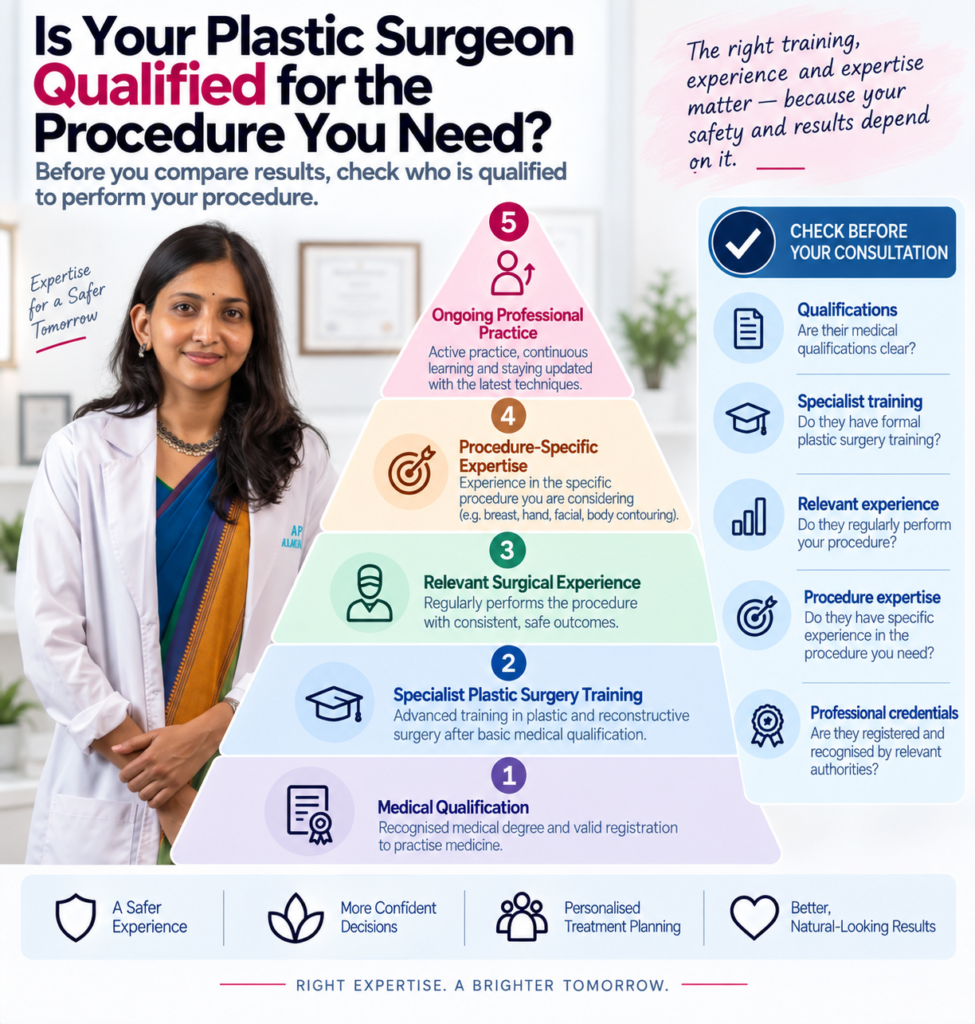
Does my medical history affect the surgery?
Your surgeon needs an accurate picture of your health before recommending surgery.
Ask:
Is there anything in my medical history that could affect the procedure or my recovery?
Tell your surgeon about:
- Existing medical conditions
- Previous operations
- Previous treatments
- Allergies
- Current medicines
- Vitamins and supplements
- Tobacco or nicotine use
- Other relevant health information
Do not leave out information because you think it is unrelated to plastic surgery. ASPS specifically recommends discussing medical history, allergies, previous treatments, medications, supplements and tobacco or alcohol use during the consultation.
What preparation is required before surgery?
Ask:
What do I need to do before the procedure?
Preparation varies between procedures and patients. Your surgeon may discuss medical assessments, investigations, medicines, lifestyle factors and arrangements for the day of surgery.
You can ask:
- Do I need any tests or medical evaluation?
- Do any medicines or supplements need special consideration?
- Are there activities I should avoid before surgery?
- Should I make changes to smoking or tobacco use?
- Will I need someone to accompany me?
- How should I prepare for the first few days after surgery?
Do not stop prescribed medication on your own. Ask your healthcare team whether any changes are necessary.
What will recovery be like?
Ask:
What should I expect during recovery?
Recovery is specific to the procedure and the individual patient.
Discuss:
- Swelling
- Bruising
- Discomfort
- Wound or incision care
- Activity restrictions
- Returning to work
- Driving
- Exercise
- Lifting
- Travel
- Follow-up appointments
Ask how much help you may need at home as well. ASPS recommends discussing the expected recovery period and the support that may be needed during recovery.
How much time will I need away from work?
Avoid relying on a general statement such as “you will be back to work in a week.”
Your time away from work can depend on:
- The procedure you have
- Your individual recovery
- The physical demands of your job
- Whether your work involves lifting or prolonged standing
- Your responsibilities at home
Someone with a desk-based job may have different restrictions from someone whose work is physically demanding.
Ask your surgeon for guidance based on your particular procedure and circumstances.
When can I exercise and return to normal activities?
Ask about each activity that matters to you.
For example:
- When can I walk normally?
- When can I drive?
- When can I return to the gym?
- When can I lift weights?
- When can I lift my child?
- When can I travel?
- When can I resume physically demanding work?
Feeling better does not necessarily mean that healing is complete. Follow the activity restrictions given by your surgical team and ask when each activity can be resumed safely.
What follow-up care will I need?
Ask:
How will my recovery be monitored after surgery?
Follow-up is an important part of postoperative care.
Ask:
- When will my first follow-up appointment be?
- How many follow-up visits might I need?
- How will the surgical site be monitored?
- What wound-care instructions will I receive?
- Who should I contact if I have a concern between appointments?
The exact follow-up schedule depends on the procedure and your individual recovery.
How Do You Know If a Procedure Is Right for You?
There is no online checklist that can determine whether a particular plastic surgery procedure is appropriate for you.
The discussion should take into account your goals, medical history, physical characteristics, expectations, available alternatives, potential risks and expected recovery.
That is why an individual consultation matters.
You should leave the appointment understanding what is being recommended, why it has been recommended, what other options may exist and what you can reasonably expect if you proceed.
Plastic Surgeon Consultation in Mysore: What Should You Take With You?
If you are planning a plastic surgeon consultation in Mysore, prepare a short list of questions before your appointment.
A useful checklist is:
- What procedure do you recommend and why?
- Are there alternatives?
- What can the procedure realistically achieve?
- What are the risks and possible complications?
- Does my medical history affect the procedure?
- What preparation is required?
- What will recovery involve?
- How much time might I need away from work?
- When can I exercise and return to normal activities?
- What follow-up care will I need?
- What happens if a complication occurs?
- What result should I realistically expect?
- What qualifications and experience do you have with this procedure?
- Who will perform the surgery?
- Where will it be performed?
- What should I avoid before and after surgery?
- What costs should I expect?
- Does insurance apply to my situation?
- Do I need someone to help me during recovery?
- Do I have enough information to make my decision?
Plastic Surgery Services at APTA Clinic
APTA Clinic is a multi-specialty clinic in Mysuru that lists plastic surgery among its services. The supplied page states that the clinic lists Dr. B. Akshata Kamath as a Plastic & Reconstructive Surgeon and lists services including facial rejuvenation, body contouring, mommy makeover and scar reduction.
The appropriate procedure and treatment plan should be determined through an individual consultation rather than from online information alone.
Do Not Base Your Decision Only on Price or Photographs
Online reviews, social media posts, before-and-after photographs and price comparisons can be useful during your initial research.
They cannot determine:
- Whether a particular procedure is suitable for you
- Which alternatives may be appropriate
- Which risks are relevant to your medical history
- How your recovery may progress
- What result is realistic for your circumstances
- What arrangements are available if an unexpected complication occurs
Those questions require a discussion with the healthcare professional involved in your care.
The NHS similarly recommends researching the procedure, speaking with an appropriate professional, understanding the costs and risks, and taking time before deciding.
What Should You Get From Your Plastic Surgery Consultation?
By the end of a consultation, you should have a clearer understanding of the proposed procedure and what it involves.
You should know why it has been recommended, what alternatives may exist, what risks and limitations apply, how recovery could affect your routine and what outcome is realistic.
If you are considering a plastic surgeon consultation in Mysore, prepare your questions before the appointment and give the surgeon complete information about your medical history and expectations.
The supplied page states that patients at APTA Clinic can discuss plastic or reconstructive surgery concerns and understand the appropriate next steps based on their individual situation.
Can I see relevant before-and-after photographs?
Before-and-after photographs can help you understand the type of result a procedure may produce.
Ask:
Can you show me examples relevant to the procedure I am considering and explain what I should realistically take from them?
Try to look at examples that are relevant to the procedure and, where appropriate, similar concerns or body characteristics.
Remember that another patient’s result does not guarantee the same outcome for you. ASPS includes before-and-after photographs and realistic expectations among topics patients can discuss during consultation.
What should I expect the result to look like over time?
Do not focus only on how the result may look immediately after surgery.
Ask:
How should I expect the result to change during healing?
Some procedures involve swelling and other temporary changes during the early recovery period. The appearance immediately after surgery may therefore differ from the eventual result.
Your surgeon can explain the expected healing process for the specific procedure you are considering.
What happens if there is a complication?
This is worth discussing before surgery.
Ask:
If something unexpected happens during recovery, who should I contact?
You should know:
- Which symptoms require prompt attention
- Who to contact during clinic hours
- What to do outside normal clinic hours
- Where to seek urgent medical attention if necessary
- How the surgical team handles unexpected recovery problems
ASPS recommends asking how complications are managed.
If you develop symptoms that may represent a medical emergency after surgery, seek urgent medical attention rather than waiting for a routine appointment.
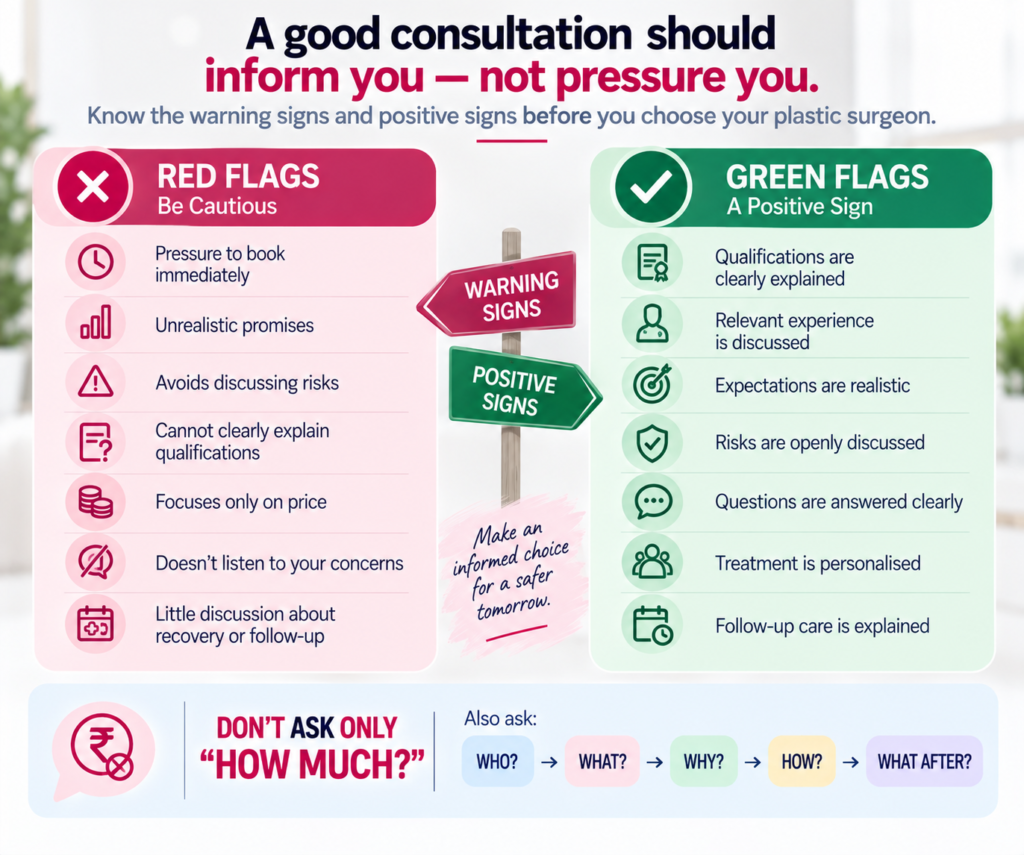
What qualifications and experience do you have with this procedure?
This is an important question to include in your consultation.
You can ask:
- What training do you have in plastic and reconstructive surgery?
- What qualifications or certifications do you hold?
- How frequently do you perform this procedure?
- How much experience do you have with this particular surgery?
- Where do you perform the procedure?
- Do you have relevant hospital affiliations or privileges?
The NHS recommends asking about a practitioner’s qualifications, training, experience and relevant professional association before choosing a cosmetic procedure. ASPS also recommends asking about training, procedure experience, hospital privileges and the surgical facility.
What should I avoid before and after surgery?
Ask your surgeon for instructions specific to your procedure.
Depending on the surgery, these may include guidance about:
- Certain medicines
- Supplements
- Smoking or tobacco
- Alcohol
- Exercise
- Food and drink before surgery
- Physical activity during recovery
- Wound care
Do not replace your surgical team’s instructions with a general checklist found online.
Who will actually perform my surgery?
Ask clearly:
Who will perform my surgery?
You can also ask:
- Who else will be involved in my care?
- Where will the procedure be performed?
- Who will provide anaesthesia, if applicable?
- What arrangements are in place for the surgical setting?
You should know who is responsible for your care and where the procedure will take place.
The NHS recommends consulting the person who will perform the procedure and asking about their qualifications, experience and aftercare arrangements.
What should I do if I am not ready to decide?
You do not have to make a decision simply because you attended a consultation.
Take time to understand:
- The proposed procedure
- Alternatives
- Risks
- Limitations
- Recovery
- Follow-up
- Costs
- Expected results
The NHS advises patients not to feel pressured or rushed into cosmetic treatment and to take time after a consultation before deciding.
If you remain uncertain, discuss your concerns with your surgeon or consider seeking another professional opinion.
Does insurance cover the procedure?
Do not assume that every plastic surgery procedure is either covered or excluded.
Ask your insurer whether your specific procedure and medical indication are covered. You can also ask the clinic what documentation may be required.
Insurance policies differ, so confirm the details for your individual situation.
Should I ask about the total cost?
Yes. Ask about the full cost rather than looking only at the advertised procedure price.
Find out whether the quoted amount includes:
- Consultation
- Surgery
- Anaesthesia
- Facility or hospital charges
- Medicines
- Follow-up
- Additional treatment if required
The actual cost depends on the procedure and individual treatment plan, so the clinic should confirm the applicable charges for your situation.
The NHS advises patients to consider the full cost, including possible aftercare and future costs.
What should I bring to my consultation?
A little preparation can make the appointment easier.
Bring information about:
- Current medicines
- Allergies
- Previous surgeries
- Relevant medical conditions
- Previous treatments
- Supplements
- Your main concern
- What you hope to change
- Questions you want answered
Writing your questions down beforehand can also help. ASPS recommends preparing questions before the consultation.
How Do You Know If a Procedure Is Right for You?
There is no online checklist that can determine whether a particular plastic surgery procedure is appropriate for you.
The discussion should take into account your goals, medical history, physical characteristics, expectations, available alternatives, potential risks and expected recovery.
That is why an individual consultation matters.
You should leave the appointment understanding what is being recommended, why it has been recommended, what other options may exist and what you can reasonably expect if you proceed.
Plastic Surgeon Consultation in Mysore: What Should You Take With You?
If you are planning a plastic surgeon consultation in Mysore, prepare a short list of questions before your appointment.
A useful checklist is:
- What procedure do you recommend and why?
- Are there alternatives?
- What can the procedure realistically achieve?
- What are the risks and possible complications?
- Does my medical history affect the procedure?
- What preparation is required?
- What will recovery involve?
- How much time might I need away from work?
- When can I exercise and return to normal activities?
- What follow-up care will I need?
- What happens if a complication occurs?
- What result should I realistically expect?
- What qualifications and experience do you have with this procedure?
- Who will perform the surgery?
- Where will it be performed?
- What should I avoid before and after surgery?
- What costs should I expect?
- Does insurance apply to my situation?
- Do I need someone to help me during recovery?
- Do I have enough information to make my decision?
Plastic Surgery Services at APTA Clinic
APTA Clinic is a multi-specialty clinic in Mysuru that lists plastic surgery among its services. The supplied page states that the clinic lists Dr. B. Akshata Kamath as a Plastic & Reconstructive Surgeon and lists services including facial rejuvenation, body contouring, mommy makeover and scar reduction.
The appropriate procedure and treatment plan should be determined through an individual consultation rather than from online information alone.
Do Not Base Your Decision Only on Price or Photographs
Online reviews, social media posts, before-and-after photographs and price comparisons can be useful during your initial research.
They cannot determine:
- Whether a particular procedure is suitable for you
- Which alternatives may be appropriate
- Which risks are relevant to your medical history
- How your recovery may progress
- What result is realistic for your circumstances
- What arrangements are available if an unexpected complication occurs
Those questions require a discussion with the healthcare professional involved in your care.
The NHS similarly recommends researching the procedure, speaking with an appropriate professional, understanding the costs and risks, and taking time before deciding.
What Should You Get From Your Plastic Surgery Consultation?
By the end of a consultation, you should have a clearer understanding of the proposed procedure and what it involves.
You should know why it has been recommended, what alternatives may exist, what risks and limitations apply, how recovery could affect your routine and what outcome is realistic.
If you are considering a plastic surgeon consultation in Mysore, prepare your questions before the appointment and give the surgeon complete information about your medical history and expectations.
The supplied page states that patients at APTA Clinic can discuss plastic or reconstructive surgery concerns and understand the appropriate next steps based on their individual situation.
Frequently Asked Questions (FAQs)
Ask about the recommended procedure, why it may be appropriate for you, alternatives, potential benefits and limitations, risks, preparation, recovery, follow-up care, realistic results and what happens if a complication occurs.
Useful questions include: What procedure do you recommend and why? Are there alternatives? What are the risks? What will recovery involve? How much time might I need away from work? What follow-up will I need? What result is realistic for me?
Yes. Ask whether a non-surgical option or a different procedure could address your concern. The appropriate option depends on your individual circumstances.
Tell your surgeon about relevant medical conditions, allergies, previous surgeries, previous treatments, medications, supplements and tobacco or nicotine use.
Bring information about your current medicines, allergies, previous surgeries and relevant medical history. A written list of questions can also help you cover the concerns you want to discuss.
Ask which complications are common, which serious complications are possible, whether any risks are particularly relevant to you and how complications would be managed.
Ask about the expected recovery period, returning to work, exercise and other activities, wound care, activity restrictions and follow-up appointments.
There is no universal recovery period. It depends on the procedure, your individual healing and the physical demands of your work. Your surgeon should provide guidance based on your circumstances.
Yes. Ask what is included in the quoted cost and whether there may be separate charges for consultation, surgery, anaesthesia, facility fees, medicines, follow-up or additional treatment.
Coverage depends on your individual policy and the reason for the procedure. Confirm the details with your insurer and the clinic.
You can ask to see relevant photographs. Remember that another patient’s result does not guarantee the same outcome for you.
Yes. Ask who will perform the procedure, who else will be involved in your care and where the surgery will take place.