
Why Is My Hair Breaking? Causes Near the Roots and Along the Length
- Home
- Blog
- About Us
Hair that snaps while brushing, breaks into short pieces or becomes uneven in length may be showing signs of damage. The location of the break can offer clues about what is happening, although it cannot identify the cause on its own.
Hair can break near the scalp or farther along the strand when the hair shaft becomes weakened. Heat styling, chemical processing, friction, rough detangling and repeated pulling are common contributors. Hair that appears to be breaking at the roots may also be affected by a scalp or hair-loss condition, so it is worth distinguishing breakage from shedding.
Understanding the pattern can help you adjust your hair-care routine and recognise when professional advice may be needed.

Why Does Hair Break?
Each hair has a visible shaft and a follicle within the skin. The shaft is the part you can see and touch. It can become weakened by repeated physical or chemical stress, making it more likely to snap.
Hair breakage is different from shedding. With breakage, part of the strand snaps off. With shedding, a strand is released from its follicle as part of the hair-growth cycle.
The distinction matters because reducing styling damage may help with breakage, while persistent shedding can have other causes that require assessment.
Hair Breakage Near the Roots vs Along the Length
The location of the break may help you identify habits or exposures worth reviewing. It is not enough, by itself, to diagnose a condition.
Hair breaking close to the scalp
If you notice many short hairs close to the scalp, consider whether you have recently changed your styling routine or used chemical treatments. Repeated pulling, tight hairstyles and rough handling may contribute to damage.
However, short hairs are not always broken hairs. They may be new growth. Some scalp and hair conditions can also cause fragile strands or patchy loss.
Pay attention to whether the hairline looks thinner, whether there are distinct patches, and whether the scalp is itchy, sore, red or scaly.
How to Recognise Hair Breakage
Each hair has a visible shaft and a follicle within the skin. The shaft is the part you can see and touch. It can become weakened by repeated physical or chemical stress, making it more likely to snap.
Hair breakage is different from shedding. With breakage, part of the strand snaps off. With shedding, a strand is released from its follicle as part of the hair-growth cycle.
The distinction matters because reducing styling damage may help with breakage, while persistent shedding can have other causes that require assessment.
Hair Breakage Near the Roots vs Along the Length
The location of the break may help you identify habits or exposures worth reviewing. It is not enough, by itself, to diagnose a condition.
Hair breaking close to the scalp
If you notice many short hairs close to the scalp, consider whether you have recently changed your styling routine or used chemical treatments. Repeated pulling, tight hairstyles and rough handling may contribute to damage.
However, short hairs are not always broken hairs. They may be new growth. Some scalp and hair conditions can also cause fragile strands or patchy loss.
Pay attention to whether the hairline looks thinner, whether there are distinct patches, and whether the scalp is itchy, sore, red or scaly.
Hair breaking along the length
Breakage along the middle or lower part of the strand is often associated with damage accumulated over time. The ends may look split, frayed or uneven, and the hair may tangle more easily.
Frequent straightening, curling, bleaching, colouring, rough towel drying and forceful brushing can weaken the hair shaft. If the same sections repeatedly tangle or snap, review how they are washed, dried and styled.
What the pattern may suggest
|
What you notice |
Possible explanation |
What to consider |
|
Short, uneven hairs after styling |
Mechanical or heat-related damage |
Review brushing, heat and styling habits |
|
Split ends and snapping along the length |
Cumulative shaft damage |
Reduce heat and chemical processing |
|
Breakage around a repeatedly tight hairstyle |
Repeated tension |
Choose a looser style and avoid pulling |
|
Short hairs with scalp redness or scaling |
A scalp problem may be contributing |
Seek professional assessment |
|
Increasing scalp visibility or distinct bald patches |
Hair loss rather than simple breakage may be involved |
Arrange a medical assessment |
These are general clues, not a diagnosis. Several causes can occur together.
Common Causes of Hair Breakage
- Heat styling
Hair dryers, straighteners, curling irons and hot combs can weaken hair when used frequently or at high temperatures. Repeated exposure may leave strands dry, fragile and more prone to snapping.
To reduce heat-related damage, allow hair to air-dry when practical, use a lower heat setting and limit how often hot tools are used. Avoid repeatedly passing a hot tool over the same section.
- Chemical treatments
Bleaching, colouring, relaxing and perming can change the structure of the hair shaft. Repeated processing, overlapping treatments or using products incorrectly may increase the risk of breakage.
If you notice snapping after a chemical treatment, pause further processing until the hair has been assessed or its condition improves. Do not assume that another treatment will repair the damage.
- Rough brushing and detangling
Forceful brushing can pull on strands and cause them to snap, especially when they are tangled or fragile. Rubbing hair vigorously with a towel may also increase friction.
Handle knots gently and work through them gradually. A wide-tooth comb can help with detangling. The most suitable technique depends on hair texture and curl pattern, so avoid a one-size-fits-all routine.
- Tight hairstyles and repeated pulling
Tight ponytails, buns, braids and extensions can place repeated tension on hair. This may cause breakage and, over time, can contribute to traction alopecia—a form of hair loss associated with pulling on the hair.
If you notice discomfort, bumps or thinning around the hairline, loosen the style and avoid repeatedly placing tension on the same area. Persistent hairline changes deserve medical assessment because prolonged traction can lead to lasting damage.
- Friction and everyday handling
Hair can experience friction while being washed, dried, brushed or rubbed against clothing and bedding. Fragile or chemically treated hair may be more vulnerable.
Try to avoid scrubbing the lengths aggressively with shampoo. Gently cleanse the scalp and allow the lather to rinse through the lengths. Use a towel to absorb water rather than rubbing the hair vigorously.
Hair-care products and unsuitable routines
Some routines can leave hair more vulnerable to tangling or damage. Frequent chemical processing, excessive use of high-hold styling products and rough removal of knots may all contribute.
A product that causes burning, persistent itching or a rash should not be ignored. Stop using the suspected product and seek advice if the symptoms continue or are severe.
Scalp or hair conditions
Not every case of breakage is caused by styling. Some hair and scalp conditions can make strands fragile or produce changes that look like breakage.
For example, certain scalp disorders may cause scaling, inflammation or patchy hair loss. If breakage appears alongside scalp discomfort, visible inflammation or distinct patches, a clinician can assess whether an underlying condition is involved.
Other health-related factors
Some people notice breakage and shedding at the same time. A person may have damaged hair lengths from styling while also experiencing a separate cause of increased shedding.
Changes in overall hair density, widening of the part or a receding hairline should not automatically be attributed to damaged ends. A clinician may need to consider the hair-growth pattern, medical history and other symptoms.
How to Reduce Hair Breakage
You do not need an elaborate routine to start reducing avoidable damage. Focus on how your hair is handled and whether it is exposed to repeated stress.
Try these practical steps:
- Reduce heat exposure. Use hot tools less often and choose lower settings.
- Space out chemical treatments. Avoid repeatedly processing the same sections of hair.
- Detangle gently. Work through knots without forceful pulling.
- Use conditioner. Conditioner can improve manageability and reduce friction during combing.
- Dry without rubbing. Gently wrap or pat the hair with a towel rather than scrubbing it.
- Avoid persistent tension. Choose hairstyles that do not pull tightly on the scalp.
- Review recent changes. Think about whether breakage started after a new product, treatment or styling habit.
- Watch for scalp symptoms. Persistent itching, redness, pain or scaling may require assessment.
These measures can help reduce avoidable hair damage, but they will not treat every cause of hair loss. If the problem continues despite gentler care, consider seeking professional advice.
Is It Hair Breakage or Hair Shedding?
Hair breakage and shedding can look similar, particularly when you see loose strands on a comb or in the shower.
Breakage usually involves a strand snapping somewhere along its length. You may notice short, uneven pieces, split ends or a change in texture.
Shedding involves a strand being released from the follicle. The strand may be close to its usual length. Some daily shedding is normal, but a noticeable or persistent increase can have several causes.
It is also possible to experience both. Do not rely only on the length of a strand or the appearance of its end to decide what is happening.
If your hair is becoming visibly thinner, you notice bald patches or the shedding continues, an assessment can help distinguish the possible causes.
When Should You Seek Professional Advice?
Consider a medical assessment if you notice:
- Breakage that continues despite changes to your hair-care routine.
- Increasing scalp visibility or progressive thinning.
- Sudden or unexplained hair loss.
- Distinct bald patches.
- Breakage accompanied by scalp pain, redness, marked itching, scaling or sores.
- Hairline thinning associated with tight hairstyles.
- Changes in hair growth alongside other unexplained symptoms.
Seek prompt medical advice for sudden or rapidly progressing hair loss, especially if the scalp is painful or inflamed. Do not assume that all hair changes can be corrected with a shampoo, conditioner or supplement.
During an assessment, a clinician may ask when the problem started, examine the scalp and hair, review styling practices and consider medical history. Further tests may be recommended if the findings suggest a possible underlying condition; not everyone needs testing.

Can Frequent Hair Washing Contribute to Hair Breakage?
Washing your hair does not usually cause the hair shaft to break when done gently, but the way you handle wet hair can make a difference. Hair is more vulnerable to mechanical damage when wet, particularly if the strands are already weakened by heat styling, chemical treatments or friction. Vigorous rubbing with a towel, pulling through tangles or brushing aggressively after washing can contribute to breakage near the roots or along the length. Using a suitable shampoo, applying conditioner where needed and gently detangling the hair can help reduce unnecessary stress. If breakage continues despite changes to your washing routine, consider whether other factors may be affecting hair strength.
The Effect of Heat Styling on Hair Shaft Strength
Frequent use of hair dryers, straighteners and curling irons can weaken the hair shaft, particularly when high temperatures are applied repeatedly. Heat may damage the protective outer layer of the hair, making strands more susceptible to dryness, roughness, split ends and breakage. Damage can become more noticeable along the middle and lower lengths, although shorter broken hairs may appear close to the scalp as well. Using lower heat settings, limiting repeated passes with heated tools and allowing hair to dry naturally when practical may help reduce damage. Heat protection products can reduce some styling-related stress, but they cannot completely prevent damage from excessive temperatures or frequent use.
How Tight Hairstyles Can Cause Hair Breakage Near the Scalp
Tight ponytails, braids, buns and other hairstyles that repeatedly pull on the hair can place excessive tension on the strands and follicles. This may cause broken hairs around the hairline, temples or areas where the hairstyle creates the most pulling force. Repeated tension can also contribute to traction alopecia, a form of hair loss associated with sustained pulling on the hair. Early signs may include tenderness, small broken hairs or thinning along the hairline. Alternating hairstyles, reducing tension and avoiding styles that cause discomfort can help limit further damage. Persistent thinning or changes in the scalp should be evaluated by a dermatologist because prolonged traction can sometimes lead to permanent hair loss.
Can Chemical Hair Treatments Cause Breakage at Different Points?
Hair colouring, bleaching, relaxing and permanent waving can alter the structure of the hair shaft. When these treatments are too strong, applied incorrectly or repeated before the hair has recovered, strands may become fragile and break at different points along their length. Previously damaged hair may be particularly vulnerable when additional chemical processing is performed. Signs can include uneven lengths, rough texture, split ends and strands that snap during brushing. Allowing sufficient time between chemical services and following professional aftercare advice may help reduce further damage. If the hair begins breaking severely after a chemical treatment, stop additional processing and seek professional advice about managing the damage.
5. Why Hair Breakage May Be More Noticeable Around the Hairline
The hairline can be particularly vulnerable to repeated tension, friction and styling practices. Frequent use of tight hairstyles, heavy extensions, headwear that rubs against the same area or repeated manipulation may contribute to short, broken hairs around the forehead and temples. However, hairline thinning is not always caused by breakage. Conditions such as traction alopecia and other forms of hair loss can produce similar changes. The distinction depends on the pattern of thinning, the appearance of the remaining hairs and the condition of the scalp. If the hairline continues to recede or the affected areas become progressively thinner, a dermatological assessment can help identify the cause and guide appropriate management.
How Friction From Bedding, Clothing and Accessories Affects Hair
Repeated friction can gradually damage fragile hair, especially when the strands are already weakened. Rubbing against rough fabrics, tightly secured accessories, helmet padding or clothing collars may contribute to tangling and breakage in areas exposed to repeated contact. This type of damage is often more noticeable in hair that is dry, chemically treated or difficult to detangle. Reducing friction, avoiding overly tight accessories and handling the hair gently after washing can help protect the strands. A smooth pillowcase may improve comfort and reduce some friction for certain hair types, although it is not a treatment for medical hair loss. Persistent breakage should be assessed in the context of other possible causes.
7. Can Nutritional Deficiencies Affect Hair Strength?
Hair health depends on adequate nutrition, and certain deficiencies may contribute to changes in hair growth or shedding. Insufficient protein intake and deficiencies involving nutrients such as iron can be relevant in some individuals, depending on their overall health and dietary pattern. However, hair breakage along the shaft is often associated with direct damage, and nutritional factors should not automatically be assumed to be the cause. A healthcare professional may review dietary habits, medical history and associated symptoms before deciding whether investigations are appropriate. Blood tests can be useful when there is a clinical reason to suspect a deficiency. Taking high-dose supplements without identifying a need is not recommended, as excessive intake of some nutrients can also cause harm.
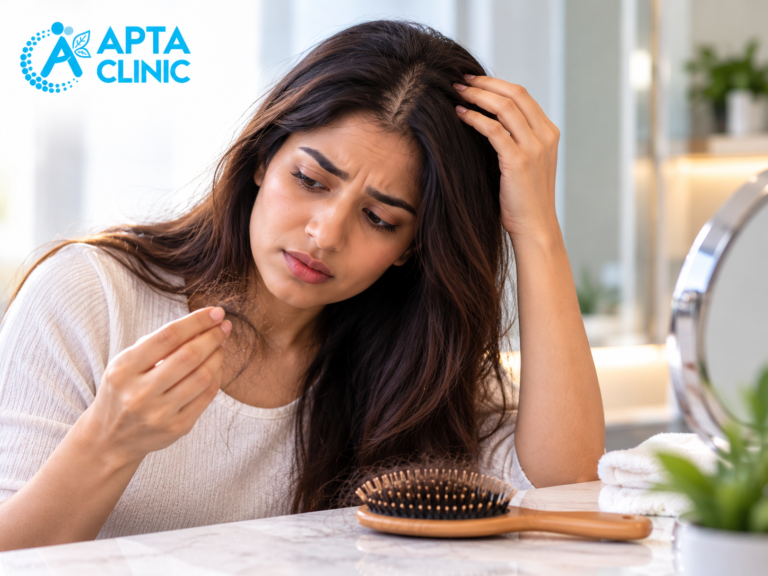
Hair and Scalp Assessment at APTA Clinic, Mysore
Hair and Scalp Assessment at APTA Clinic, Mysore
APTA Clinic lists trichology services for hair and scalp concerns, including hair loss and hair regrowth. If you are unsure whether you are experiencing breakage, shedding or thinning, a professional assessment can help clarify the next step.
During an appointment, be ready to explain:
- When you first noticed the change.
- Whether you see short broken pieces, full-length strands or both.
- Whether the change is general or concentrated in one area.
- Any recent illness, major stress, weight change or new medication.
- Hair colouring, chemical treatments, heat styling and hairstyles you use regularly.
- Any scalp itching, pain, scaling or redness.
The appropriate assessment and any recommended treatment depend on the findings. A consultation does not mean that you automatically need a procedure or hair-regrowth treatment.
To ask about hair and scalp consultations, contact APTA Clinic through its official page. Confirm current appointment availability and branch details directly with the clinic.
Frequently Asked Questions (FAQs)
Hair that breaks close to the scalp may be affected by repeated pulling, heat or chemical damage. However, short hairs may also be new growth, and some scalp conditions can cause fragile hair or patchy loss. The pattern alone cannot establish the cause.
Breakage along the length can be associated with repeated heat styling, chemical processing, friction, rough detangling and other forms of shaft damage. Review recent styling changes and reduce avoidable stress on the hair.
Yes. Tight hairstyles can place repeated tension on hair and may cause breakage. Prolonged pulling can also contribute to traction alopecia, a form of hair loss. Looser hairstyles can reduce tension, particularly around the hairline
Not necessarily. Breakage affects the hair shaft, while shedding involves the release of a strand from its follicle. If you notice thinning, bald patches or persistent hair loss, seek assessment rather than assuming it is only breakage.
Hair-care practices can contribute to damage, particularly when washing involves aggressive rubbing or detangling. A shampoo that irritates your scalp may also be unsuitable for you. Gentle handling and conditioner may help reduce friction, but persistent irritation should be assessed.
Start by reducing high heat, spacing out chemical treatments, detangling gently, using conditioner and avoiding tight hairstyles. These measures can reduce some forms of damage, but they may not address an underlying scalp or medical condition.
Nutritional problems can affect hair health, but breakage has many possible causes. Do not assume you have a deficiency or start high-dose supplements without advice. A clinician can decide whether investigation is appropriate based on your history and symptoms.
Seek advice if breakage persists, thinning progresses, bald patches appear or you have scalp pain, redness, scaling or significant itching. Sudden or rapidly progressing hair loss should be assessed promptly.
APTA Clinic lists locations in Krishnamurthy Puram and Vijayanagar, Mysore.